by Donnie Hayden © 2014, all rights reserved
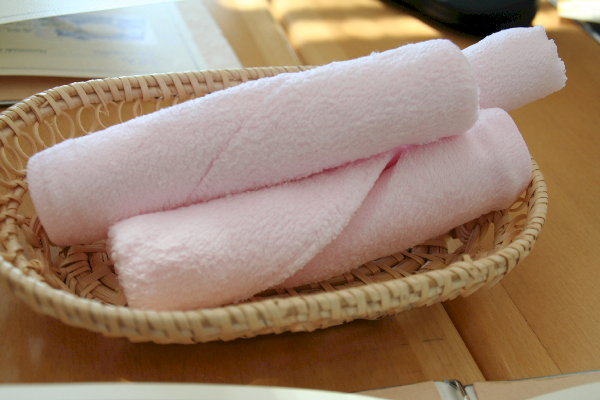
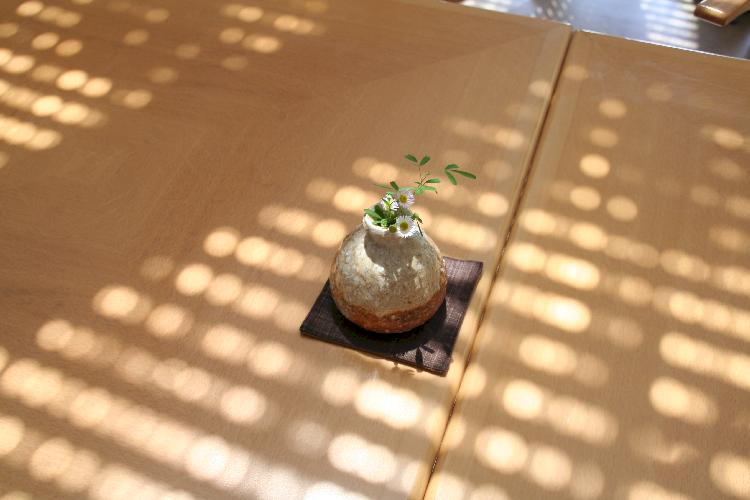
The Japanese have a simple and beautiful way of making simple things beautiful.

by Donnie Hayden © 2014, all rights reserved
The Japanese have a simple and beautiful way of making simple things beautiful.

by Donnie Hayden © 2014, all rights reserved
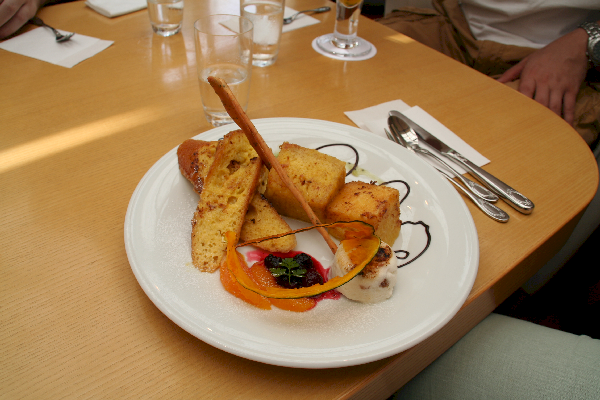
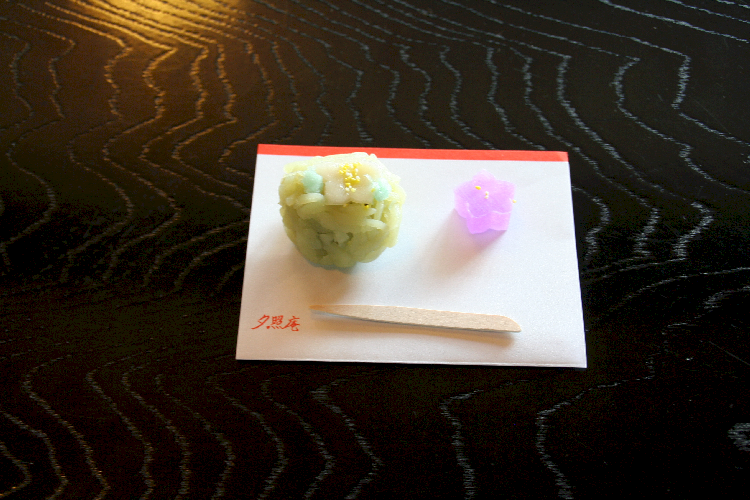
Desserts in Japan are not only delicious and beautifully sculpted, it is their garnishment that not only appeal to the senses, but actually help aide in digestion.
There are many sweet-eats in Japan to be enjoyed and savored, here is just a few of my favorites.
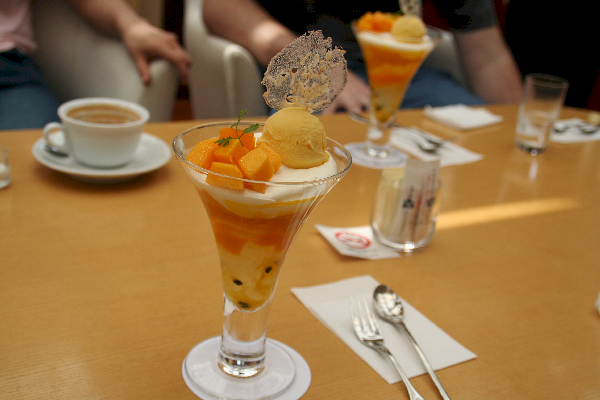
Do you notice the the strange thing sticking out of the mango parfait? It is actually a thin piece of spun sugar! 🙂

by Donnie Hayden © 2914, all rights reserved
Well, this title might seem a bit strange, but this is exactly what these delicious treats would be called in English, Octopus balls. 🙂
In Japan, they are called, Takoyaki (pronounced taco + yah-key).
Takoyaki (たこ焼き or 蛸焼 is a ball-shaped Japanese snack made of a wheat flour-based batter (like tempura). It is cooked in a special takoyaki pan, that resembles a muffin tin. Ours can be placed directly over flame or as most Japanese homes like the pictures show below, they are table top, propane units.
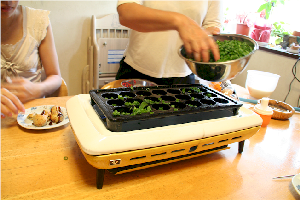
Takoyaki is typically filled with minced or diced octopus tako, tempura scraps tenkasu, negi (chopped Japenese green onion), pickled ginger, and sprinkled with green laver aonori (a type of seaweed) and shavings of dried bonito katsuobuschi (fish flakes).
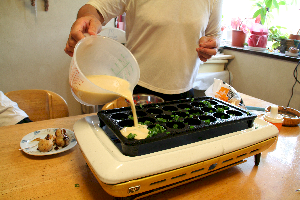
Once filled and as the batter cooks, the takoyaki is constantly prodded with a stick like a long metal toothpick and turned. This shapes the treat into balls while cooking. And once they are cooked on all sides, to a lovely golden brown, they are done and ready to eat, almost. 🙂
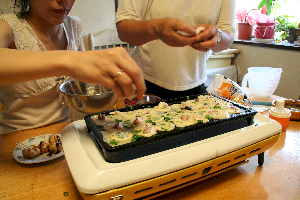
The Takoyaki are then brushed with takoyaki sauce, similar to Worcestershire sauce or soy sauce in color. There are many recipes for the takoyaki and variations for the sauce such as:
ponzu (soy sauce with dashi (a clear broth like used in meso soup) and citrus vinegar goma-dare (sesame-and-vinegar sauce) vinegared dashi.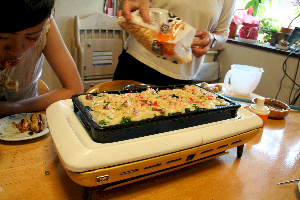
The final step is to squeeze some mayonnaise on top from a tipped-bottle like a ketchup or mustard squeeze bottle. I’m not exactly sure what makes Japanese mayonnaise different from that in our country (USA), but it is; it’s delicious and I love it! And Takoyaki? OMG, these are incredible!!! Eat with a a pointed stick (see last picture below). Each one is about a mouthful.
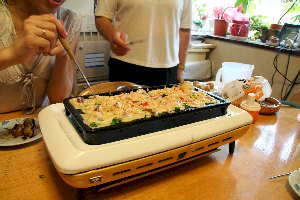
Takoyaki was first popularized in Osaka Japan when a street vendor named Tomekichi Endo, first introduced his culinary delight in 1935. Takoyaki was inspired by akashiyaki, a small round dumpling from the city of Akashi in Hyōgo Prefecture, made of an egg-rich batter and octopus.
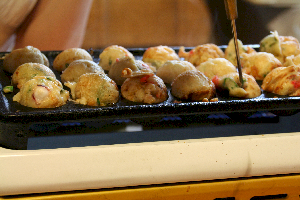
Today, Takoyaki is sold almost everywhere in Japan. They are very popular with children, young people and older people alike. And this is not only the Japanese, but many people love Takoyaki! It is not uncommon to see long lines of people, especially during festivals, waiting to be served their Takoyaki. They are sold in restaurants, on the street, super markets, 24 hour convenience stores and probably, even in vending machines.
I know, tako sounds like taco, but take care in using the sound as it may be Japanese slang for stupid? Tako means octopus. If you ask for tako, you might get an angry ‘look,’ some octopus salad Takosu タコス, or Taco rice (タコライス takoraisu. Taco rice is similar to a taco, only it is served on a plate without the shell. Now you might be able to actually find some Japanese tacos, but the shells are made out of rice flour and not corn. Just ask for Takoyaki (octopus balls) and you’ll be fine and happy that you did! 🙂
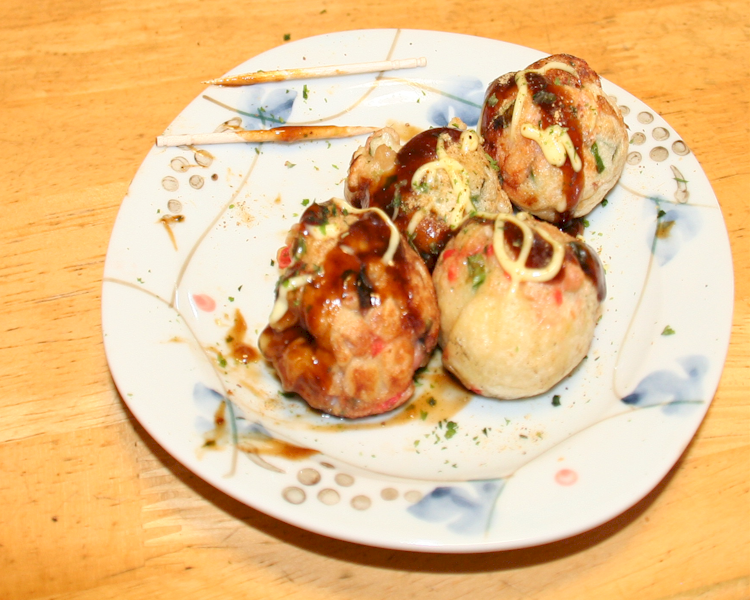

by Donnie Hayden © 2014, all rights reserved
In 2006, Susan and I were (together) 🙂 , in Japan.
Not everyday, but quite often I would begin my mornings with a cup of coffee from a McDonald’s in Moriyama, literally right across the street from where we were staying. It was always clean and always inviting. It was a comfortable place to hang out. I would listen to music over their sound system always in Japanese. And always, I was clueless to the meaning of the words being sung. This did not prevent me from enjoying it anyway as music, a universal language, has a way of communicating.
One particular morning when I came in, somewhere around the end of July, a new song was playing. I was instantly drawn to the beautiful sounds and the soothing voice of the singer. Armed with a book of Japanese words with pronunciations and English translations and my limited understanding, I set out to try and find out what I could about the song. Our friend and adopted daughter, Yukari, told me it was from an animated movie called Gedo Senki (Tales from Earthsea). Knowing that I had become fond of Japanese music (traditional and modern), her brother made me a DVD with several videos of Japanese Music, including this particular song. To this day, I cannot find this disk. But one day before we left Japan, I was inside a music store and all I could remember or pronounce was Gedo Senki. A store clerk helped me find the CD with this song as a single. It has taken me nearly eight years, to find out all the information I wanted to know then and the translation of the words in English. I share here with you friend-reader that you may enjoy this haunting and beautiful song as I have.
Gedo Senki (Tales from Earthsea ゲド戦記 is a feature anime film from Studio Ghibli, released in Japan on July 29, 2006. It was the first film directed by Gorō Miyazaki, son of Hayao Miyazaki. The movie is loosely based on a combination of plots and characters from the first, third, and fourth books of the Earthsea series, A Wizard of Earthsea, The Farthest Shore, and Tehanu, by Ursula K. Le Guin.
The singer is Aoi Teshima (手嶌葵 Teshima Aoi, born June 21, 1987 in Hakata, Fukuoka, Japan. Aoi Teshima is a Japanese singer and voice actor. In March 2005, she acted in “Japan-Korea slow music’s world” in South Korea and her performance was favorably received among the audience. Her performance attracted the attention of anime director Gorō Miyazaki. Toshio Suzuki was also very impressed when he listened to her demo version of Bette Midler’s “The Rose.” On June 7, 2006, she finally released a song called “Therru’s song” (テルーの唄 Terū no Uta.
Aoi Teshima is in essence, a shy and humble choir girl whose unobtrusive voice soothes your senses and reminds you of our love for nature, for the purity of life and for love itself. I love this song and more so in Japanese, but I will also share the English words and music to follow.
Music by Hiroko Taniyama – Lyrics by Miyazaki Goro
words in Japanese, and sung by Aoi Teshima
JAPANESE
Yuuyami semaru kumo no ue
Itsumo ichiwa de tonde iru
Taka wa kitto kanashi karou
Oto mo todaeta kaze no naka
Sora wo tsukanda sono tsubasa
Yasumeru koto wa deki nakute
Kokoro wo nani ni tatoe you
Taka no you na kono kokoro
Kokoro wo nani ni tatoe you
Sora wo mau yo na kanashi sa wo
Ame no sobo furui wakage ni
Itsumo chiisaku saite iru
Hana wa kitto setsuna karou
Iro mo kasunda ame no naka
Usu momo-iro no hanabira wo
Medete kureru te mo nakute
Kokoro wo nani ni tatoe you
Hana no you na kono kokoro
Kokoro wo nani ni tatoe you
Ame ni utareru setsuna sa wo
Hitokage taeta no no michi wo
Watashi totomo ni ayunderu
Anata mo kitto samishi karou
Mushi no sasayaku kusahara wo
Tomo ni michiyuku hito dakedo
Taete mono iu koto mo naku
Kokoro wo nani ni tatoe you
Hitori michiyuku kono kokoro
Kokoro wo nani ni tatoe you
Hitoribocchi no samishi sa wo
sung by, Aoi Teshima
Music by Hiroko Taniyama – Lyrics by Miyazaki Goro
words in English, arranged and sung by Saskia Kusrahadianti
ENGLISH Far, far above the clouds Soaring with the wind A falcon flies alone Silent as the sky I hear his lonely cry Never can he rest I walk with you alone An empty winding road We’re far from The ones we love Never can they turn Never can we see again Countries of our birth When will I ever find A place to call my home Sadness circling Like a falcon in the sky When will I ever find A way to speak my heart To someone who knows What it is to be alone Far, far above the clouds Against the setting sun A falcon flies alone Silent as the sky I hear his lonely cry Never can he rest I long to spread my wings And fly into the light Open this lonely heart To one who understands When will I ever find A way to speak my heart When will I ever find A place to call my home Sadness and loneliness A falcon in the sky When will I ever find A way to speak my heart To someone who knows What it is to be alone
sung and arranged by, Saskia Kusrahadianti
If you are interested in more information about this song, how I came to hear it and a higher quality mp3 audio file in Japanese, please start at the following page and click through:
http://dahni.com/DahniDaily/Japan3.htm
Note: The mp3 file is located at http://dahni.com/DahniDaily/Japan6.htm and is intended for HIGH SPEED Internet users, otherwise, it may take some time to download and hear it.

by Donnie Hayden © 2014, all rights reserved
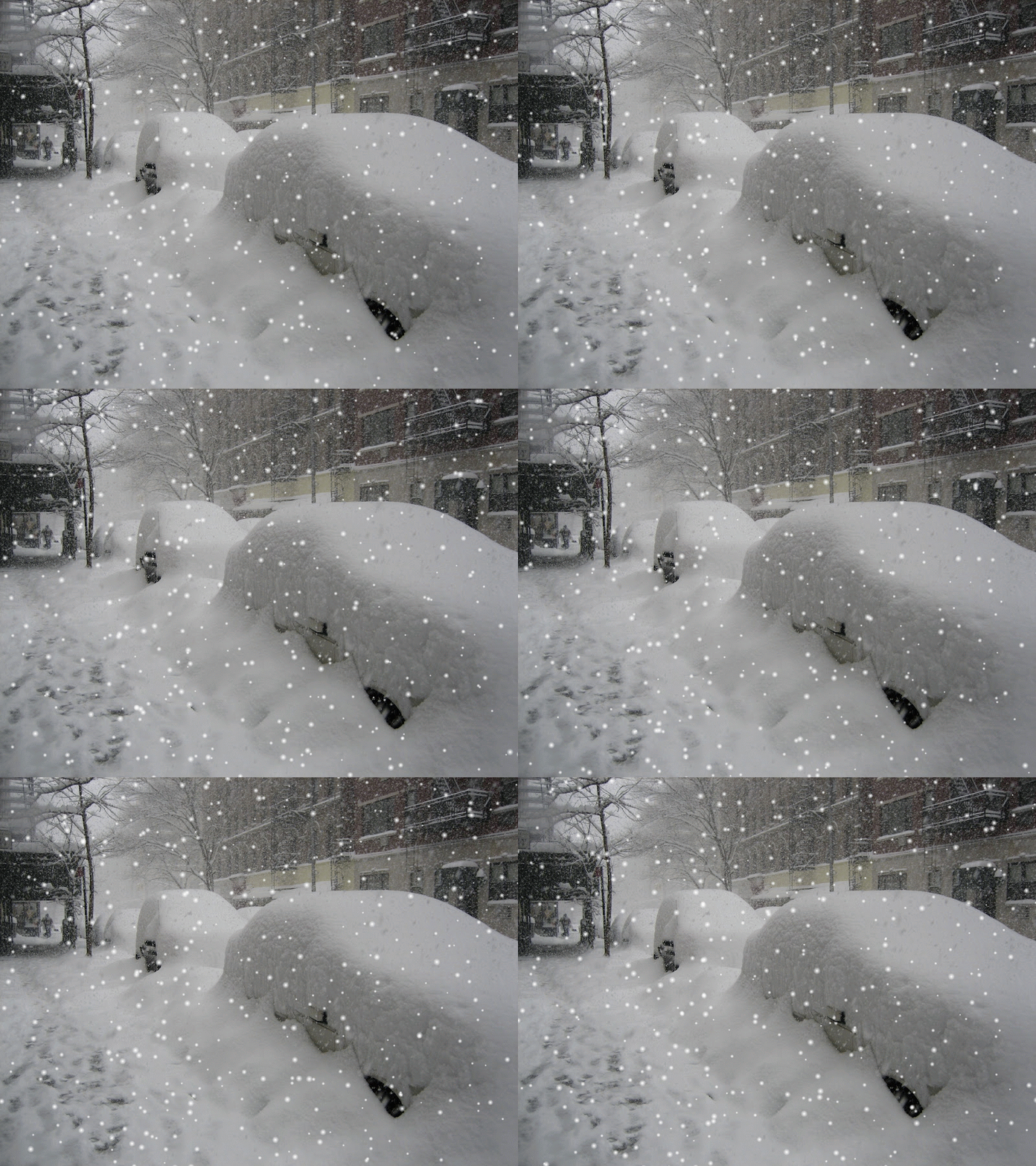
…Yeh, aren’t you glad that Instead of this, right now here…
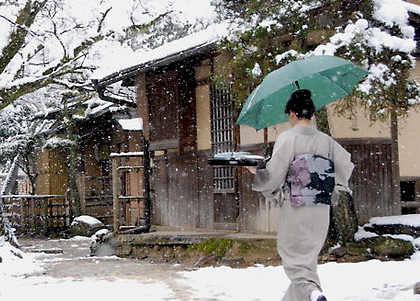
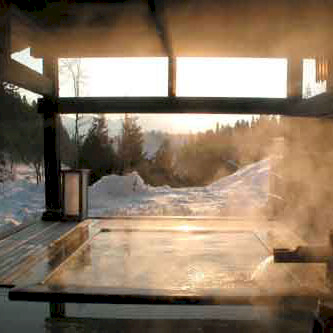
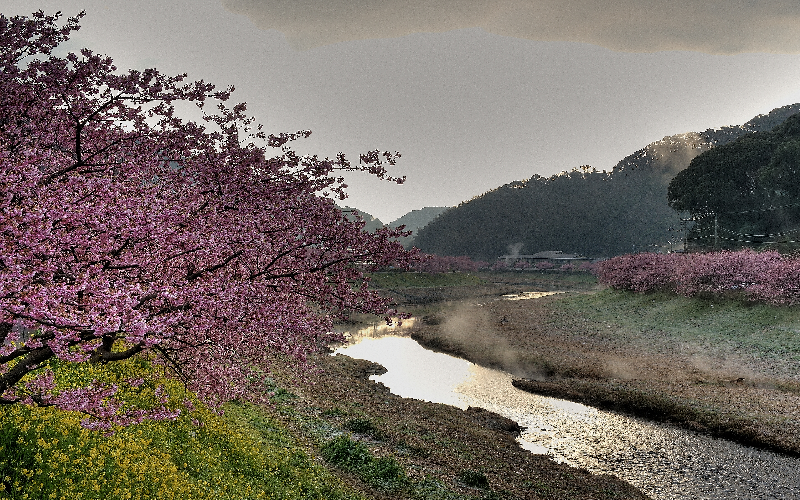
The Kawazu Cherry Blossom Festival 河津桜祭り, (Kawazuzakura Matsuri) is held yearly from early February to early March in the city of Kawazu, located on the Izu Peninsula. The popular event celebrates the flowering of the Kawazu Cherry Trees (Kawazuzakura) and attracts almost two million visitors annually as one of the earliest opportunities in the year to see large numbers of cherry blossoms near Tokyo Japan.
Yes, ‘Aren’t You Glad’ you are there instead of here!!
Hi Honey and everyone else! See you soon! 🙂
by Donnie Hayden © 2014, all rights reserved
Lessons you will learn and teach while you dance
Her name is Miyoko Shida [Rigolo]. She is Japanese and presently lives in Paris, France. She is approximately 52 years old. She has taken the last name of her mentor, Rigolo. Her art is called, The Sanddorn Balance.
The Sanddorn balance began over 15 years ago when Swiss theatre producer Mädir Eugster Rigolo developed a balancing act for the stage production SANDDORN. The play is set in knee-deep sand; the only props are the withered ribs of date and coconut palm leaves, which Maedir Eugster collected from the most beautiful beaches in the world. After many years it now enjoys worldwide success on vaudeville, museums, galas, exhibitions, circuses, and Cirque du Soleil among many other venues.
The Sanddorn balance astonishes nearly everyone it touches and has received the highest awards.
In February 2013, Mädir Eugster Rigolo was presented with the Kamiwaza award in Japan. In Japan, Kamiwaza is the title given to a master with superhuman abilities. The award of Kamiwaza meant that the art of Sanddornbalance had truly arrived in the land of Zen: concentration, mindfulness and conscious perception in search of absolute reality convene in the 15-minute-long performance.
This honour solidified the decision Mädir Eugster had made shortly beforehand: For more then 15 years, he was the only person to perform his fragile piece of art. He now teaches his two daughters and consults and trains and inspires many others.
“Now I will pass on this knowledge. I am very happy that I have found people who now share my experiences and will develop them further,” Maedir Eugster explains. “I trust my successors: They will guard this treasure, develop it further and give it a life of its own. The Sanddornbalance bears many secrets, and every single performer can draw one of them out and present it in their own way.”
Mädir Eugster Rigolo
Some sit in disbelief as the art unfolds. Some refuse to suspend that disbelief and mock such with stupid remarks as, I can think of better things to do with my time or with a feather.” Some think it is a mere trick or ‘magic.’ Though it can be explained by the laws of physics, it negates the concentration, the focus, balance, grace, physical strength and the actor’s ability to pull in the audience, absolutely required to MAKE THIS ALL HAPPEN! And if I have left anything else necessary to do this, I sincerely apologise!
What is this thing, this Sanddorn balance, you are about to see for yourselves? For one thing, it is beautiful! It is as much of a dance as any dance. It is being in the NOW. You can see this in the eyes, expressions, and movements of the dance. There are no doubts, no hesitations, no questions. Every moment is purposed and purposeful, and NEW and NOW, though the same dance has been performed countless times. There is a reason and a purpose for every movement, every expression, and every stick. Not only is the dancer drawn into their own dance, the audience is drawn in as well. Her breathing becomes our breathing; her heartbeat, our heartbeat. It is music. It is a story unfolding and we are not only on the same page, we each are its words.Time is suspended! We are not thinking about what’s for dinner or what we will put on tomorrow or do tomorrow. We are in the now!
Watching this will center you; anchor you into the moment of sublime beauty. Briefly, our ego is lost to the wonder of this poetry in motion.
What else can this teach us? Everything and everyone is connected in some way or another. As this drama unfolds, we can see how fragile and yet how vitally important each of these connections really are or we will collapse. This point is illustrated clearly, at its conclusion. But also, not one of us will be quite the same at the end as we were at the beginning. Ahh, yes, every moment of life is unique, to be enjoyed, savored; lived! Thus a great truth is reveled to us or re-revealed within us.
No matter what you may think or believe, life, all of life is, spiritual. Who among us does NOT desire peace and harmony? Zen masters, Buddhist priests, yoga practitioners and many others, spend often, years developing the ‘tuning.’ And yet who among us are also not deeply affected by some measure of peace and harmony, by being drawn into the very ballet of it, by those who have reached some measure of it?
It all starts with a feather and all we have that we bring into the dance, our sticks and the gravity-glue of all our stuff we use to prop ourselves up with. Then we let it all go. It is only the feather that remains! I am certain you will understand this more fully, when you get into the dance!
“All the master dancer Miyoko Shida required from me was the technique for the Sanddorn Balance; the expression and interpretation she brings to it is pure Miyoko Shida. I am proud that Miyoko Shida has also now taken the name Rigolo.”
Mädir Eugster Rigolo
http://www.miyokoshida.com/ – under construction

by Donnie Hayden © 2014, all rights reserved
Now the words in the title of this might sound like the Japanese word-sounds for sneezing, they are not, but they are words used in Japan.
Haiku is a three line, 17 syllable poem (in English anyway). It usually is about nature and the form has 5 syllables on the first line, 7 on the second and 5 on the third.
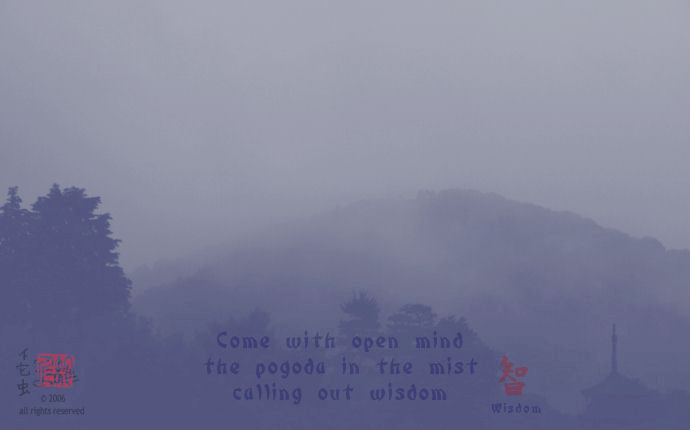
Kanji is a pictorial text originating in China where the characters/symbols have sounds. One definition of the word kanji is “listen.”
There are three basic components in the Japanese language: hiragana, katakana and kanji. Whereas the picture of kanji is used to pronounce the sounds, katakana is most often used to pronounce native words, where there is no kanji. Hiragana is often used in transcribing foreign words, for example:
ホットコーヒー
Hottokōhī
“hot coffee” in Japanese
It sounds very similar to “hot coffee” and trust me, it is something that I have used in the past and will use again shortly. 🙂
Speaking of coffee, did you know my favorite coffee is Jamaican Blue Mountain and that Japan has imported nearly 90% of all the Blue Mountain coffee and have for many years? True enough!
Many people use their own personal kanji for purposes of identification. Artists often use a more stylized kanji to sign their work by hand lettering or with a Chinese red stamp, along with their signed katakana or kanji in black, usually vertical and to the left or right of the kanji, but sometimes on top.
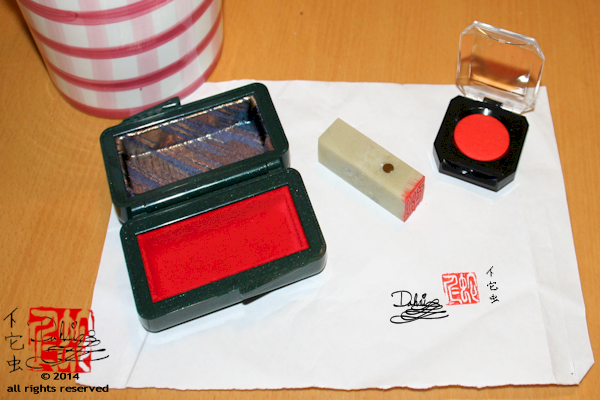
I very much wanted my own kanji and because I met the criteria, I was able to get mine.
Kanji is unique as the pronunciation of my kanji in Japanese is actually dah + knee. The characters (dah + knee) are the Japanese symbols da(h) + ni and are the sounds for either a coiled snake ready to strike or a samurai with blade, ready to strike or as a man (warrior) of action. Both examples are interpreted as being purposefully restrained by choice, which connotes, ‘wisdom.’
One of the signs of the Japanese zodiac is a snake. This corresponds to our zodiac as November/December or the sign of Sagittarius the archer. I was born in 1953, which was also, the year of the snake according to the Japanese zodiac. Since I was born in a year of the snake, in the month of December (under the sign of the snake) and my name combines the Japanese kanji(s) da + ni (pronounced dah + knee), I have a legitimate right to this kanji. Some people just call me, ‘snake man.’ 🙂
The kanji is as unique as a fingerprint (no two are alike) and can be used as legal identification in Japan. I’ve seen many people at banks in Japan, pull out their kanji kits (ink pad and kanji) and stamp important papers, cash checks and etc., just like we use our signatures in the United States. My interest in having my own kanji was purely artistic. But wanting a kanji and even having the right to one is not enough! It must be thoroughly researched and determined that it has never been used before. Specialists in this field pore over many books to assure this, before granting their authority and recording the kanji in a book. The last stage is, to make the actual kanji into something that can be used and duplicated by its owner. This is performed by an authorized hanko maker.
Hanko (seal) is typically a stone with the kanji cut into it so that when it is stamped in ink, it leaves the impression of the kanji. The hanko maker hand cuts the design into stone or other material. In Japan, seals in general are referred to as inkan 印鑑 or hanko 判子[4]. Inkan is the most comprehensive term; hanko tends to refer to seals used in less important documents.
A hanko, like a fingerprint, is one of a kind. The styles are either round or square as shown. The Kanji can either be actual or more stylized as shown in my design. The latter is preferred by most Asian artists. To the side of the design, the characters are usually hand signed with black ink and are the actual characters of the Japanese type script known as Katakana or kanji. The Katakana is the same as the Kanji in meaning and pronunciation as in mine, dah + knee.
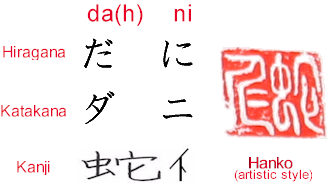
Yes, I am proud of my kanji, but I am not boasting. I thought perhaps you might find this whole thing interesting as do I?
I sometimes use my kanji on my original artwork and photographs. And I do one more thing. I place my actual signature within my kanji and it all becomes part of the design.
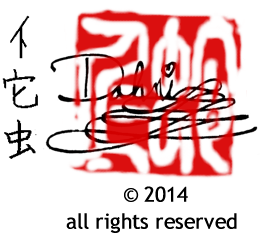
こんばんは
Konbanwa “good evening” in Japaneseeven though it is presently morning in Japan –
おはよう
Ohayō “good morning” in Japanesea.k.a.,
‘Snake Man’ 🙂

by Donnie Hayden © 2014, all rights reserved
Surely by now, the planes have landed?
The planes have landed, as scheduled and on time.
Have not heard a word from you! Not a single word, a message, note, picture, NOTHING!
I should not be so anxious. I’m not anxious, am I?
Should not worry. I am not a worrier. Am I worrying?
Be patient. It’s still early or is it?
It’s day here and night there. I’m not sure if it is day or night here?
Isn’t it obvious that something is…

What could possibly be missing? Everything is as right as rain here!? Except for the fact it’s snow-blowing!
I’m sure you are fine and having a great time.
Anyway, I’m writing here about allergies, the cat’s and mine.
Distracted, not sleeping well, not eating well. Pacing the floor, whining and pining, poor little cat!

OK, so what I wrote above, the same goes for me, but it must be, because of my allergies that I probably get from Bella? And my eyes are all watery and leaky too!
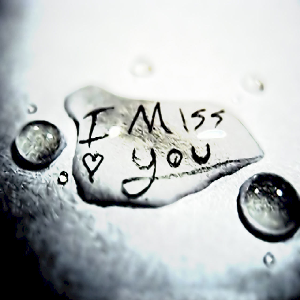
Sorry about messing up the note you left. It is your note right? Surely I did not write it. Did I?
It’s quiet here. So quiet, I can’t even hear myself think. I’m not even talking to myselves (me, myself and i). Don’t ask, we had a disagreement, but we are fine. We’ll be fine.
It’s cold here. Can’t get warm. Temps are UP on the furnace. Fireplace is blazing. Wind is howling. Two pair of socks. Double shirted. Covered in blankets. Nothing helps!
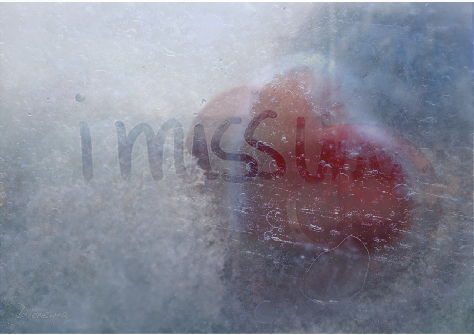
Took a hot bath, had some wine and stared at the picture on the wall. But as I looked at this…
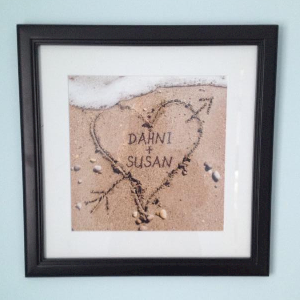
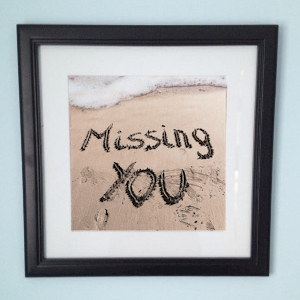
Must have been the steam, my allergy-related eye-wetness, the wine or all of these together that made my vision all askew? Rinsed off in the shower and yes, I did squeegee the shower door, just like I’m supposed to do, sort of.

Real men don’t eat quiche. It was pretty tasty. I did not know it was quiche until after. Maybe it was a pot pie?
Real men don’t cry. I’m not crying! My eyes are leaking that’s all!!

P.S. Not lonely, just looking for that first drop of wetness shed. The Dermatologist needs THAT ONE, as it contains more allergens than the rest, so he can analyze it to determine if I’m allergic to our cat or if it’s something else? But it’s in this ocean of my own making, along with all the rest of my allergic-drops. Please help me find it, before I drown! Do you possibly, think it possible that I may possibly be, allergic to, missing you????

And We’re You’re Off!! I’m coming! 3/12! 🙂


Happy Trails! 🙂


Have a safe trip Susan and everyone else! I’ll see you March 12! 🙂

