On: Bell Birds

by Donnie Hayden

© 2014, all rights reserved

I only thought we were in the country until we actually went into the country. It was a nice ride from Camden to Picton,  New South Wales, Australia about 16 miles. We saw rolling hills and cows and sheep much like anyplace I have ever seen. If not for driving on the right side of the car and on the left side of the road, it all looked similar to anything I’ve ever seen. On occasion there would be a sign that read, “Stay in line unless overtaking,” meaning the center lane was for passing ONLY. Somehow, before we leave, I will snap a picture  of the road sign for Kangaroo Crossing. But again, everything seemed quite the same. WOW, was I about to be surprised!

Our destination was the Razorback Inn, a quaint out-of-the-way place to eat that was established in 1849.
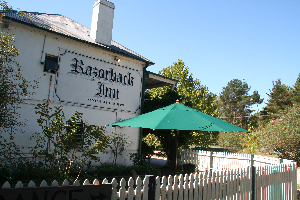
The Razorback Inn
The Razorback Inn
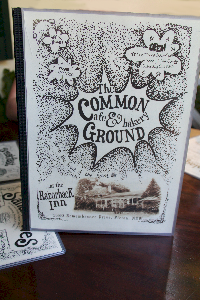
Menu from 'Common Gound'
Menu from ‘Common Gound’

The eatery is now run by a Christian Commune called, ‘Common Ground.’ They make their own clothes, live in the area, and run the restaurant including making all the food from scratch and natural and wholesome ingredients. A s delicious as the food was and as charming as the place was, this was not the most memorable experience, of this experience to me. It was in fact, the Bell Birds. Yes, that is what you read, what I wrote and what was meant! And as the name implies, the birds have some association with bells because, however they make this sound, they sound exactly like bells!!!!!!

The Bell Bird or the Bell Miner (Manorina melanophrys), commonly known as the Bellbird, is a colonial honeyeater found in southeastern Australia. The common name refers to their bell-like call. “Miner” is an old alternative spelling of the word “myna” and is shared with other members of the genus Manerina. The birds feed almost exclusively on the dome-like coverings of certain psyllid bugs, referred to as “bell lerps,” that feed on ucalyptus sap from the leaves. The “bell lerps” make these domes from their own honeydew secretions in order to protect themselves from predators and the environment.

Bell miners live in large, complex social groups. Within each group there are subgroups consisting of several breeding pairs, but also including a number of birds who are not currently breeding. The non-breeders help in providing food for the young in all the nests in the subgroup,  even though they are not necessarily closely related to them. The birds defend their colony area communally aggressively, excluding most other passerine species. They do this in order to protect their territory from other insect-eating birds that would eat the bell lerps on which they feed. Whenever the local forests die back due to increased lerp psyllid infestations, bell miners undergo a population boom.

The sound is beautiful and quite enchanting. It is difficult to believe that you are hearing  these sounds and that they are made by birds. Adding to this difficulty is their size. They are so small and so fast, it is almost next to impossible to see them in the trees and capture them with a camera. The following pictures of the Bellbird are not mine. I was able to capture their unimaginable and unbelievable sound, but I found a wonderful video on Youtube, so I will use this to share with you.
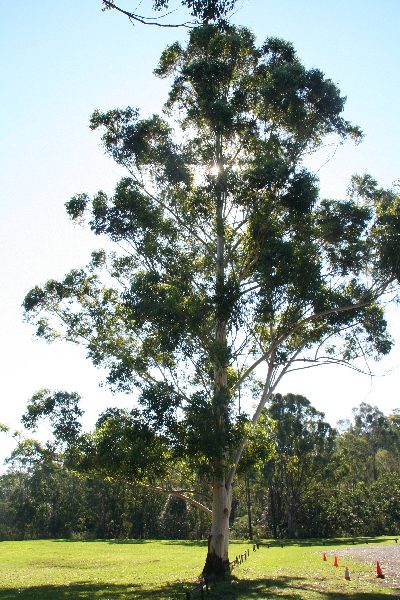
Gum Tree (a species of eucalyptus) where the Bellbirds feed
Gum Tree (a species of eucalyptus) where the Bellbirds love to feed


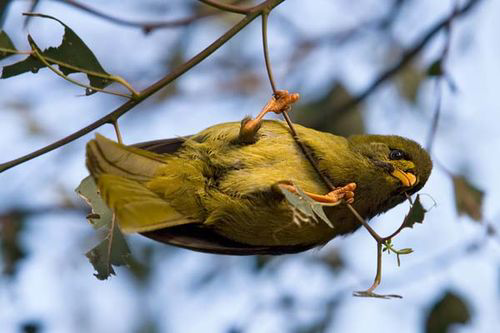
Leaf size Bell Bird
Leaf size Bellbird


On: Out N’ About I

by Donnie Hayden

© 2014, all rights reserved

Today, I would like you share with you, a mini-walkabout in the neighborhood. Let us just see visually, some house and shops within 2-3 blocks of where we are staying. But first, what is a “mini-walkabout?”

OB20
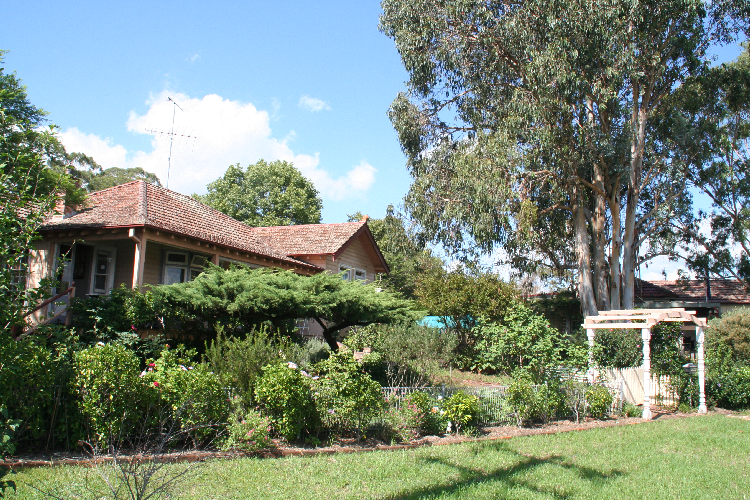
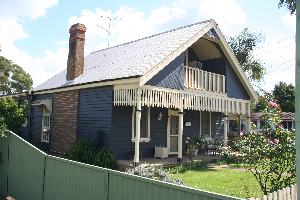
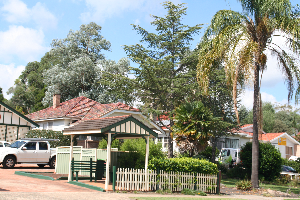
House on the corner of Little Street
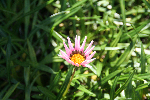
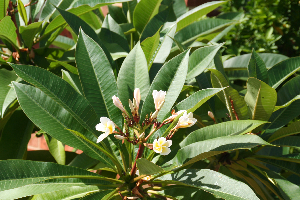
Pretty I
Pretty I

Walkabout refers to a rite of passage during which male Australian Aborigines would undergo a journey during adolescence and live in the wilderness for a period as long as six months. In practice they would trace the paths, or ‘Songlines’ that their ancestors took, and imitate, in a fashion, their heroic deeds. Merriam-Webster Dictionary, however, identifies the noun as a 1908 coinage referring to “a short period of wandering bush life engaged in by an Australian Aborigine as an occasional interruption of regular work”, with the only mention of “spiritual journey” coming in a usage example from a latter-day travel writer.

To white employers, this urge to depart without notice (and reappear just as suddenly) was seen as something inherent in the Aboriginal nature, but the reasons may be more mundane: workers who wanted or needed to attend a ceremony or visit relatives did not accept employers’ control over such matters (especially since permission was generally hard to get).

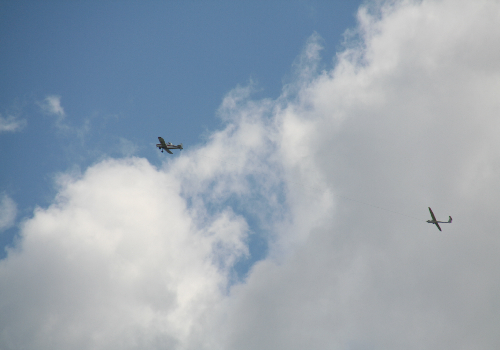
Plane & Glider
Plane & Glider

Another great possibility is that the Aborigine had no concept of time. If given a job to do, we may not completely finish the work in a day and would return at it’s end and continue the following day and so on until it is finished. The Aborigine would just take off and not return until the job was done.

OB4
Another Lovely Home

So, my mini-walkabout is just a short period of time, walking the neighborhood to see what I can find.

Most of the homes here have tile roofs and the rest have metal roofs. The ceilings inside most homes are around 8′ (eight feet) high. These construction materials and methods are to keep the interiors as cool as possible, for this area can reach temperatures as high as 115 degrees + Fahrenheit in peak summer.

Sometimes the relative humidity can be upwards of 90 percent, but at 115 degrees F., the heat burns off the humidity and it is a dry heat. This would be similar to the desert southwest in the United States. It is hard to imagine such beautiful and fragrant things surviving in such climates, but they seem to thrive.

Even though there are tropical birds, trees and plants here, it can become very dry and parched, due to lack of rain. Things could quickly turn brown, but as they say  in Australia, “No Worries,” because everything adapts to these extremes and fluctuations.

In the United States we might freak out if our grass turns brown due to lack of rain and start watering like crazy. But in this area, brown can be normal, Again, “No Worries,” the rains will come again and everything will turn green again, almost instantly. At present, most everything is nice a green here, so we are happy about that.

The weather of their fall is between 70-80 F. by day and 65-68 F. at night. It has been very nice during the day and pleasant sleeping. The air is clean and fragrant although I seem to be allergic to something and have a little upper respiratory congestion. I am told that it never snows here, but it can get somewhat cold in the winter, but it is short-lived. They may have around five seasons here. Spring, early summer, late summer, fall and a short winter. I am sure this has to do with Australia’s position below the equator and I am told the hole in the ozone layer, its effects are greatly experienced here. I’m not sure of the accuracy of this, but I’ve heard 1 out of every 2 people experience some type of skin cancer. This country does have the highest rate of melanomas in the world. THE SUN IS HOT, AND BLINDING HERE! Cover up and where skin protection.

In another post, I mentioned that everything needed to live here, is within a short walking distance. I meant it! And actually, within seven minutes!

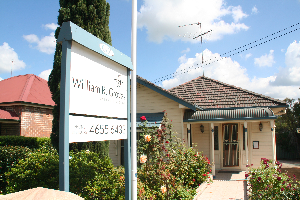
There is A family practice, Chiropractor, Orthopedic surgeon, a lawyer, hairstylist, Thai massage, a caterer, shed builder, engineer, daycare, a hospital, ambulance service, MRI & X-ray place for diagnostic images, cottages, houses, apartments and condos.

In a later post, I will share pictures of the downtown area. It’s only seven minutes from here on Little Street where we are staying. There you can get everything else you need!

And God forbid, there is even a funeral director in the neighborhood. 🙂


OB5
Another Lovely Home
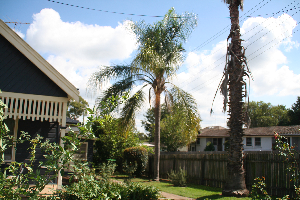
Palm trees
Palm trees
Pretty II
Pretty II
Office II
Office I
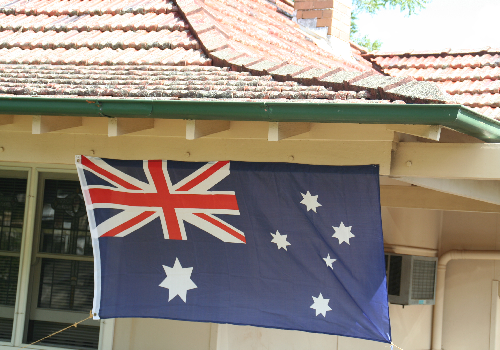
Aussie Pride
Aussie Pride
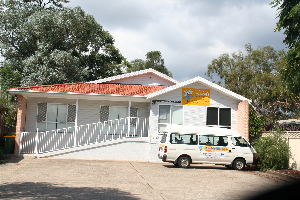
Childcare
Childcare
Pretty IV
Pretty III
Pretty V
Pretty IV
Condos
Condos
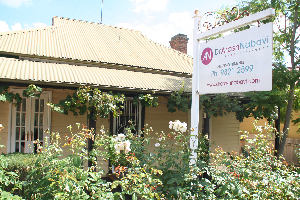
Office III
Office II
Office I
Office III
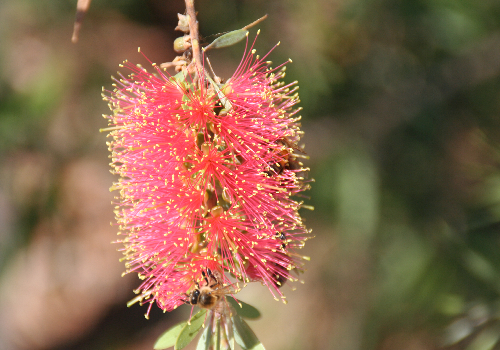
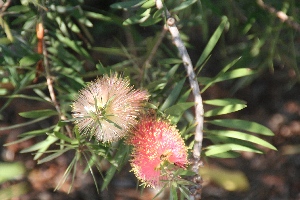
Bottle Brush
Bottle Brush
Bottle Brush II
Bottle Brush II
OB7
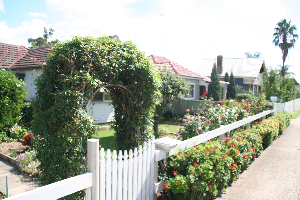
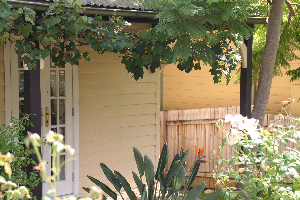
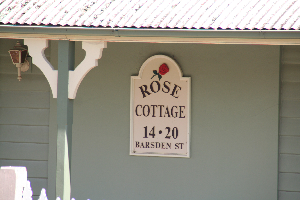
Cottages and yes, lot’s of roses


On: Golden Pond

by Donnie Hayden © 2014, all rights reserved


Actually this post is not about Golden Pond, but a Golden Palace on a pond or be it, a small lake. But one has to name something, something and it seemed like a good idea at the time.

I must digress here to state what may or may not be obvious. These posts from our travels are neither a journal or in day by day, hour by hour chronological order. Part of this is due to my love of words and my tendency to write many of them. I do try to think of others in that I ask myself, what would I want to see or want to learn about while in Japan? I try to keep these posts interesting and informative to the best of my ability.

Another issue is that even in the short time that we have been here, we have done so much; seen so many things. I have taken lots of pictures and when we return, I will just have to decide on what to do with them. Lastly, there is the lack of WIFI in Japan. With iPhones, an iPad and a laptop with us, we certainly have the means to post content and pictures in several ways, but outside of where we are staying, there is no internet access.

Oh, there are, WIFI access points everywhere and most are secured networks which require a password. In order to use one of these you have to pay for them by the day or even the month. In order to do that, you need to be living here basically, as the Japanese are not too particularly fond of sharing their WIFI or broadband internet with foreigners. Many Japanese have WIFI at home for their devices. Their smartphones are tied to a prepaid (monthly) satellite service so that they can use their phones, pads, and devices pretty much wherever they are. I have seen several people on trains here, communicating over the internet through social media like Facebook. But, alas for us, we have to wait until we get back to where we are staying to access the internet and use services that require WIFI. I do not know what it will be like in Australia, but we are soon to find out.

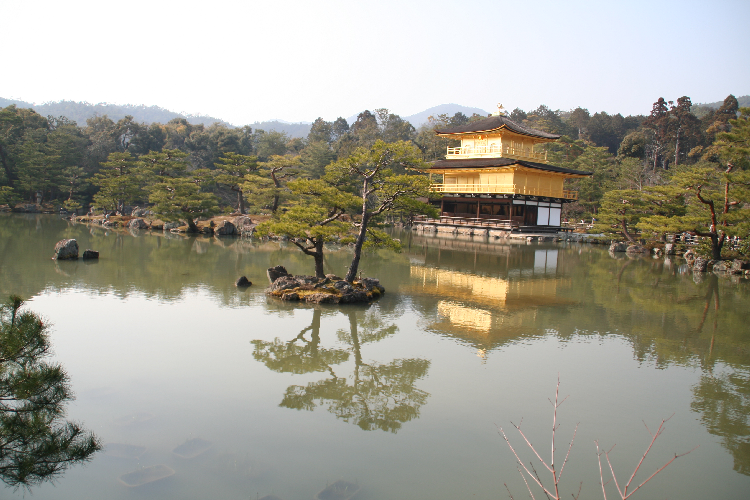
But as you walk in Kyoto, soon you find yourself within the woods and then suddenly in the distance, you see this beautiful and phenomenal sight with a background of nature like a picture frame as if made to feature it. Here is the Golden Palace, actually overlaid with 24k gold.

The Golden Palace
The Golden Palace

I’m not sure why the bottom first section is not gold, perhaps so that no one could scrape it from the structure?

It is beautiful, but I am more awestruck at how it blends in with nature and the angles and the way in which such structures are built.

The harmony of nature and the work wrought of humans
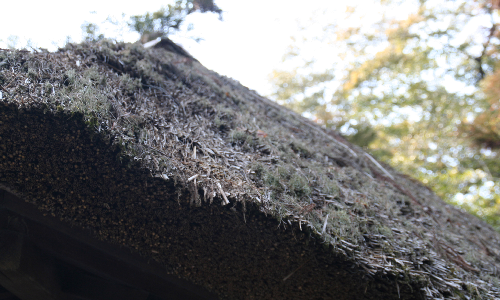
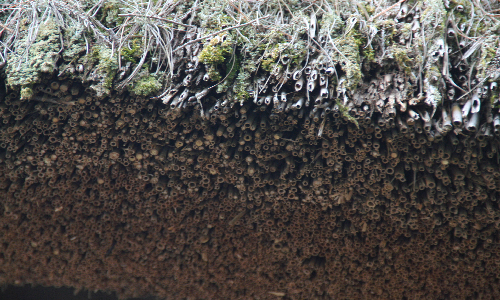
Roof construction
Roof construction
Natural reed roof
Natural reed roof

The material again is from nature and the construction by human binds hollow reed so tightly, it insulates and protects against insects, wind, snow and rain while keeping the structure warm in the colder months and cool in the warmer months.

Yes, it is the harmony of nature’s art and the art of humans which make so many things so beautiful in Japan! Though to build such a structure which still stands after so many centuries was long and difficult, naming things in Japan is often short and simple! These are contrasts or more like understatements, figures of speech that call our attention.

A golden palace on a pond is, what this is, but the words cannot describe its effects and affects upon the senses when they are first experienced and long remembered! The words are almost like a haiku poem of just three lines and 17 syllables, but hold great depth of meaning and purpose. But stated so simply and so matter-of-fact, they seem not able to convey the difficulty to master the art form and construct them like, the golden palace. It is just there as if it is supposed to be and always was, waiting only on you and I to discover its truths.

Oh sure, this place is a tourist attraction and many people come here to see it, both foreigners and the Japanese. And why not, wouldn’t you want to see a palace of gold on a pond, we did! So, perhaps this was an intention of its builders that even after the deaths of those it was built for, people would continue to be drawn here; support it and etc. But it’s importance is so much more to the Japanese and to me! It is an example of the art and harmony of, nature and humans simply drawing others to it as if calling out and stating simply; beautifully; poetically, here is…

…The Golden Palace on the Pond

I will close this post with another example of this understating and harmonious blending of the art of nature and humans.

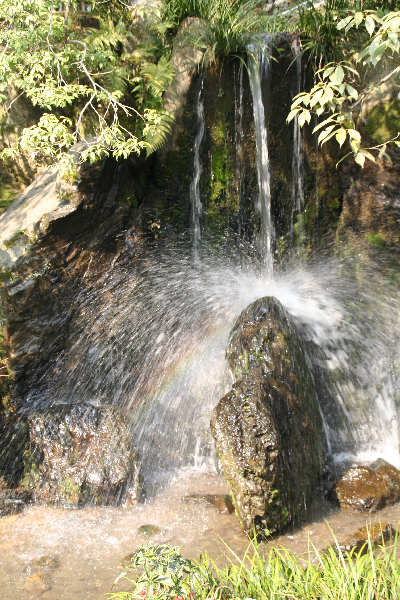
Leaping Fish Fountain

This fountain is also part of the compound of the Golden Palace. The up righted or vertical stone looks like a fish that is leaping up the fountain. Notice the rainbow! 🙂

On: A Familiar Sight

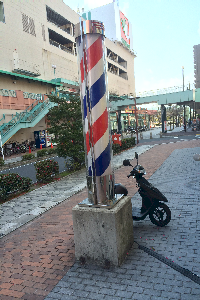
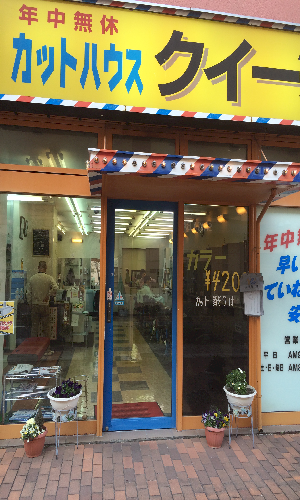
Barber pole
Barber pole

A familiar and common sight perhaps throughout the world is the spining; blue and red striped pole. Yes, the barber pole where one can get s haircut and a shave and a whole lot more in Japan. This an unforgettable and most enjoyable experience! 🙂

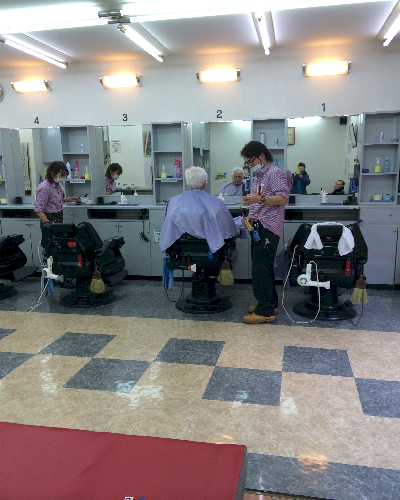
Barber shop in Japan

From the moment you walk in to a Japanese barber shop, you are greeted and everyone inside that works there, bow out of respect.

The shop, chair, ever person working there and everything is neat and tidy.

After being escorted from the waiting area and directed to a chair by a barber, you are seated and prepared.

You then communicate with the barber or though an interpreter (as I did) exactly how I wanted my hair cut, how much off, that I wanted a shave and a shampoo.

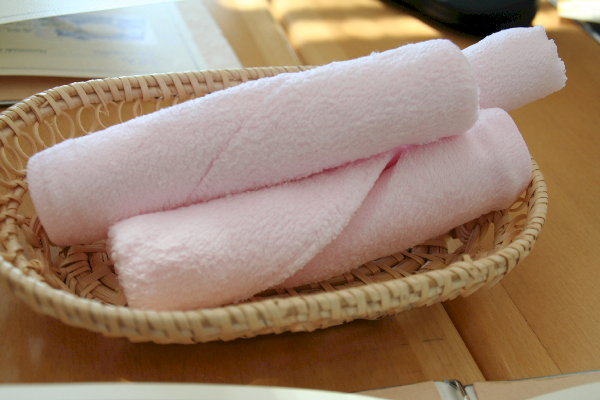
Next, I was given a hot towel to refresh myself. Hot towels are offered almost everywhere in Japan for nearly every experience. They are much appreciated to wipe your face and hands. Much of this and many practices of Japanese culture center around personal comfort, cleanliness and respect.

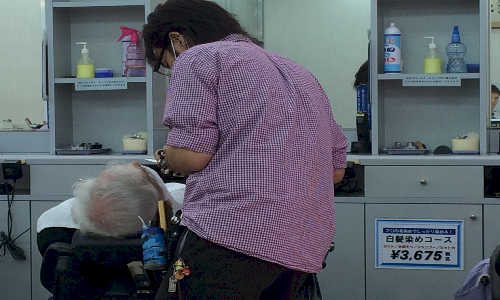
Discussing what is needed and wanted

As the barber skillfully and quickly cuts your hair as you desire, thrir movements are so precise and with such a light touch, it is as if they were not there and you can hardly feel a thing. I did mean “their” a plural personal pronoun meaning more than just one. Indeed, there are more than just one barber involved in serving you. My first experience, there were no less than six people that served me. There was the hot-towel person that constantly brought hot towels or covered your face as needed. There was what I call ‘Cut Barbers 1, 2 and 3. The first one started, the second one fished and the third checked to insure that 1 and 2 did all that was required and perform in touch-ups necessary. The last two would be involved with the shaving and shampooing.
Well, sitting in the chair yo are so impressed with their skill and that leads to confidence in their abilities. So this of course is part of the relation therapy. It is not uncommon to fall asleep or doze because, yo are so relaxed and almost unaware of their presence. In my experience, I could not tell when the first barber left and the second took over. The Japanese are very particular about touch. Once contact is made they keep it even when transferring to another person, Well, my eyes were closed and I only opened when the ‘touch’ changed from my heard to my face. And when I did, I was surprised to find another person starting the process of shaving me. I was surprised to find that this was a woman as it is uncommon to find female barbers.

Shave
Shave

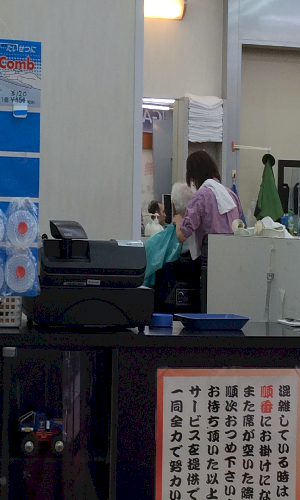
Note: The barbers in these pictures are wearing masks for their own protection because of, the pollution they believe is coming from China and has nothing to do with allergies or fear of the flu bug coming to them from foreigners.

Back to the shave. Again your face is covered with hot towels, it is rubbed with an emollient of some kind to reduce friction and then it is hand-lathered with shaving cream skillfully applied with a natural bristle brush. The shaving was so light and precise it was as if it could not possibly be close enough or the the blades used were very sharp. They were! And like almost any normal person, when someone is holding a blade at your throat, you have a tendency to be awake and have your eyes open! 🙂 No worries, Japanese barbers are incredible!

After shaving your face, it is hot-toweled again and a fragrant astringent is applied to tighten the pores and freshen your face. Facial hair is very important to the Japanese. Not a single hair can be missed or out of place. This means on the forehead (even the peach fuzz is shaved), eyebrows, the back of your neck mustache or beard, on, inside of and outside of your nose and ears and etc. Nothing get missed! It is by far the best shaves and the closest shaves that I have ever had. How close? Close enough that I did not have to shave myself for two days. How close? Baby’s butt smooth, close! 🙂

Shampoo/Massage
Shampoo/Massage

After the shave, I went for a shampoo. Instead of leaning back in my chair to the shampoo sink as with my barber in NY, I leaned forward towards the shampoo sink. Your hair is lathered and massaged through yor scalp like a million fingers dancing through your happy!! 🙂

The shampoo is incredible and warm water gently washes away the shampoo and your every care. Then your head, neck and shoulders are rubbed/massaged to release any last remaining negative energy and release you to peace and tranquility and whew, don’t I just feel like a million bucks!!!

The final thing is to blow-dry and hand sculpt every hair in place on your face. You get out of the chair and you feel like you look and you feel like a millions bucks! And how much did all this first-class pampering cost? About the same price with tip that I pay for just a trim by my barber at home – $18.00. And no tip is allowed in Japan, but I would have more than been willing to do for this kind of service.

If I can’t be handsome or handy, at least every hair on my face can be perfectly placed, and my skin as soft as a baby’s butt or face. Susan watched and she was pretty amazed. She gave me the kissable face seal of approval.

Every hair in place and skin baby's butt soft!
Every hair in place and  face is, baby’s butt soft!

I would love to have a Japanese barber where we live! I would love to import some Japanese barbers! Do yourself a favor. If you ever have the opportunity to have your hair cut, a shave and a shampoo by a Japanese barber, Carpe bar-be-um SEIZE the BARBER!!!  🙂

By the way, I am told that the experience of cutting your hair for women. In Japan, is 10 times better than for a man!

On: Perfection

by Dahni © 2014, all rights reserved

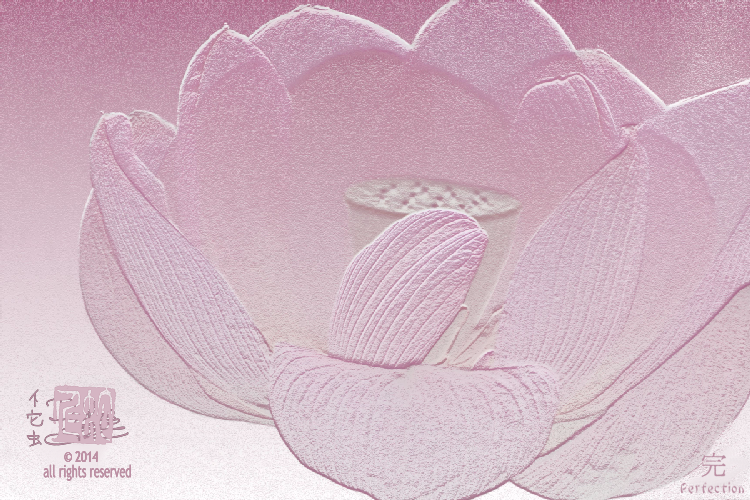
The Lotus is seen throughout Japan and is very significant to their way of life and their beliefs. They are  beautiful. I hope you enjoy my art made from a photograph I took in Japan and my haiku poem to follow.

'Perfection' by Dahni © 2006-14, all rights reserved
‘Perfection’ by Dahni © 2006-14, all rights reserved

Perfection2

‘Perfection’ by Dahni © 2006-14, all rights reserved

On: Land of the Rising Sun

Donnie Hayden © 2014, all rights reserved

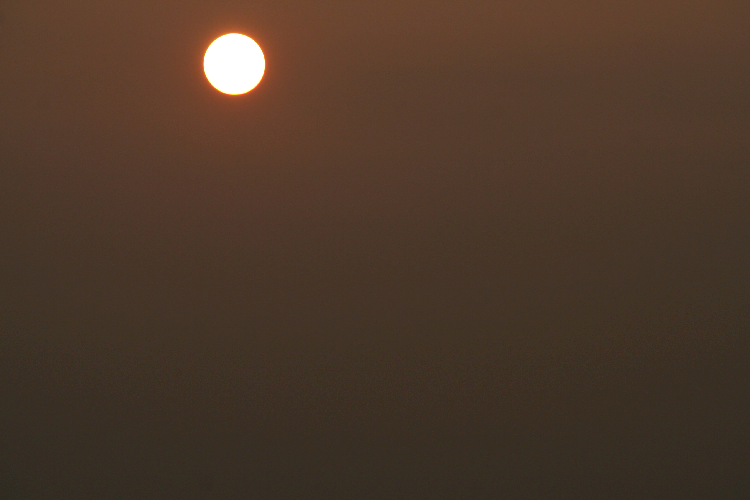
The Land of the Rising Sun? Tomorrow, I head into it!

Land of the Rising Sun
Land of the Rising Sun II
Land of the Rising Sun II, on the big-iron bird
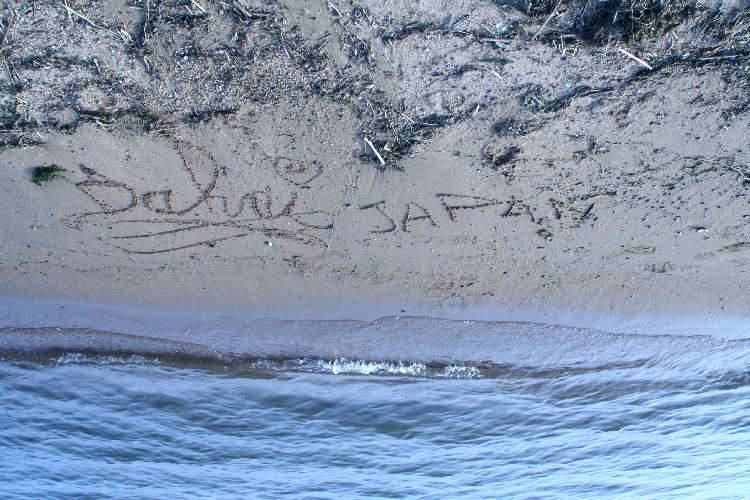
Dahni was here
Dahni was will be here

On: Simple-Beauty

by Donnie Hayden © 2014, all rights reserved

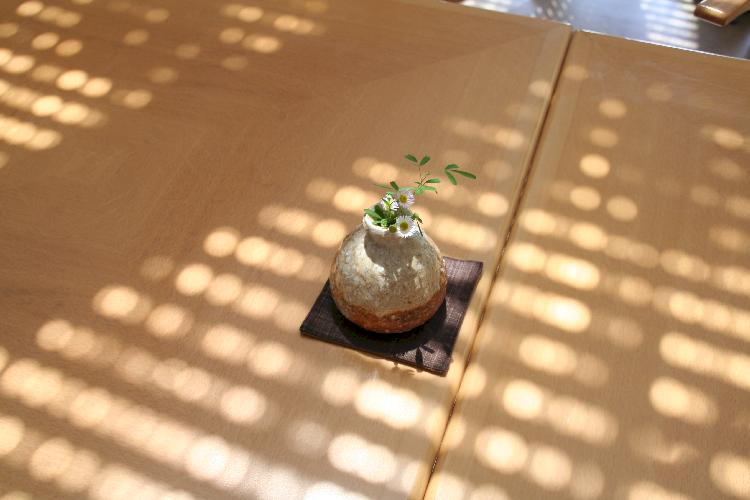
The Japanese have a simple and beautiful way of making simple things beautiful.

rolls of warm moist towels to freshen up
light, life and the works of hand all blend harmoniously

On Rainbows:

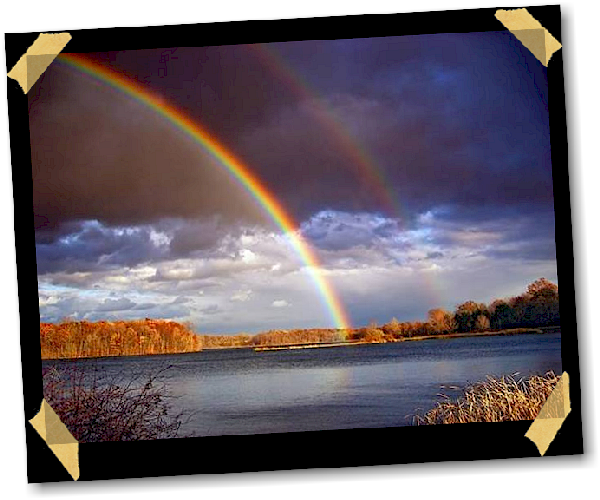
Double Rainbow
Double Rainbow

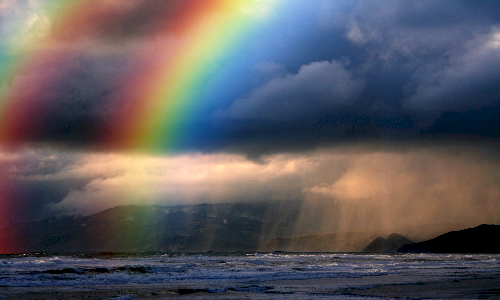
The R A I N B O W has long been a symbol of  life, fertility, as a bridge from and to the spirit world, an archer’s bow and of promise and of hope. I like to think of the double rainbow (pictured to your left) as, ‘Promises Made & Promises Kept!”

A rainbow is an optical and meteorological phenomenon that is caused by both reflection and refraction of light in water droplets in the Earth’s atmosphere, resulting in a spectrum of light.

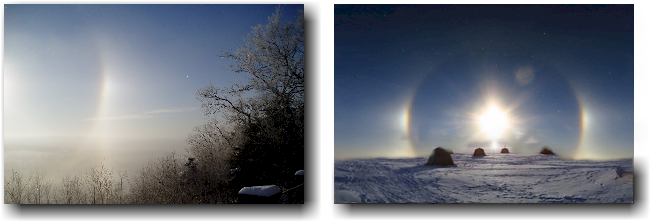
There are many other rare formations of color in the sky as the double rainbow. These other rainbow-like formations include: moonbows, seabows, icebows, sundogs and what I call snowbows.

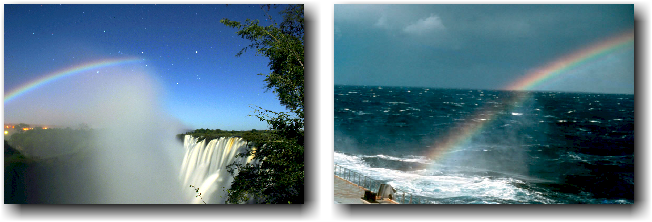
Moonbows form at evening or night with water and if occurring, the bow will be seen away from the moon which passes through the droplets bending the moon’s reflected light from the sun and form the moonbow. What I have personally seen is where mist or spray rising off a waterfall at night, mixes with the light of the moon to form the moonbow.

Seabows or waterbows form from the salt water spray or mist which bends the light of the sun. It may be possible to see both a rainbow and a seabow at the same time, but the seabow’s arch will never line up with that of the rainbow. They are formed separately.

Icebows or halos (from Greek ἅλως; also known as a nimbus, or gloriole. They are an optical phenomenon produced by ice crystals creating colored or white arcs and spots in the sky. Many are near the sun or moon, but others are elsewhere and even in the opposite part of the sky. They can also form around artificial lights in very cold weather when ice crystals called diamond dust, are floating in the nearby air.

Sundogs are commonly made by the refraction of light from plate-shaped hexagonal ice crystals in high and cold cirrus clouds. or during very cold weather. These ice crystals are called diamond dust, and drift in the air at low levels. These crystals act as prisms, bending the light rays passing through them with a minimum deflection of 22°. If the crystals are randomly oriented, a complete ring around the sun is seen — a halo. But often, as the crystals sink through the air, they become vertically aligned, so sunlight is refracted horizontally — in this case, sundogs are seen. They are so-called, as they sometimes appear on opposite sides of the sun or like smaller suns that appear to, ‘dog’ the sun.

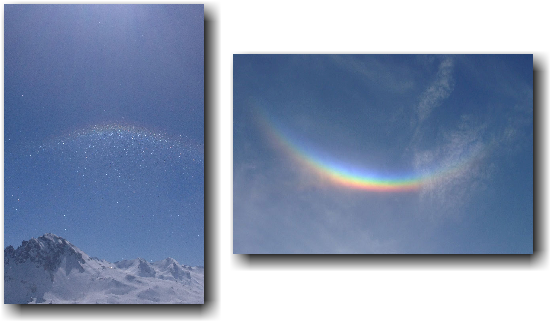
Snowbows may appear when it seems as if snow is falling, but it is actually, more like ice dust or what is referred to as, ‘diamond dust.’ Snowflakes if they melt, turn into water droplets and if these freeze, they will not become flakes again, but small particles of ice (dust) which may appear like falling snow. Snow does not allow light to pass-thru like water and ice crystals. But this floating dust might look like falling snow, so if the colored arc appears, I like to call this a snowbow.

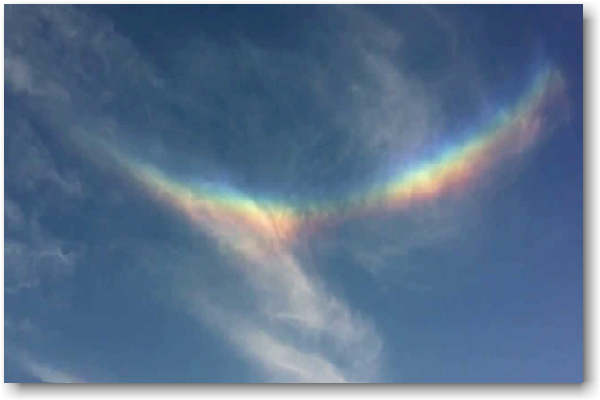
Another rare phenomenon and perhaps my personal favorite is what I call, ‘The Smile of God.’ The smile of God is an upside down rainbow. Technically this is  called, the circumzenithal arc, CZA. It is the most beautiful of all the halos. The first sighting is always a surprise. It is like an ethereal rainbow fled from its watery origins and wrapped improbably about the zenith. It is often described as an “upside down rainbow” or as, “a grin in the sky” I like, ‘The Smile of God.”

Moonbow and Seabow
Moonbow and Seabow
Icebow and Sundog
Icebow and Sundog
Snowbow & Smile of God
Smile of God
Smile of God

Somewhere Over the Rainbow!

Israel “Iz” Kaʻanoʻi Kamakawiwoʻole (Hawaiian pronunciation: [kəˌmɐkəˌvivoˈʔole]) translation: “The Fearless Eyed”; May 20, 1959 – June 26, 1997), also called Bruddah Iz (Brother Iz), was a Hawaiian musician. His voice became famous outside Hawaii when his album Facing Future was released in 1993. His medley of “Somewhere over the Rainbow/What a Wonderful World” was subsequently featured in several films, television programs, and television advertisement commercials. Through his skillful ukulele playing and incorporation of other genres (such as jazz and reggae), Kamakawiwoʻole’s music remains a very strong influence in Hawaiian music. http://en.wikipedia.org/wiki/Israel_Kamakawiwo%CA%BBole http://www.izhawaii.com/

Promise Keeper

by Donnie Hayden © 2014, all rights reserved
 

In gentle rain when Spring brings forth her tender blade

In warmth of Summer’s vibrant glade

In peak of Fall’s color, before the fade

oft’ fair-weather are promises made


But though storms break in Winter’s restless sleep

and earth has frozen and all the waters of the deep

and all troubles piled as snow upon a heap

Promises made are still, promises to keep

 
Promise Keeper
Be a Promise Keeper
 

It is easy to make promises, but it is often difficult to keep them. It is in our power to make promises. We should always strive to keep them! I think of promise and hope whenever I see a rainbow. And when I see a double rainbow I think of promises made and promises kept. Be a Promise Keeper!

Promise Made:

“I do set my bow in the cloud, and it shall be for a token of a covenant between me and the earth. And it shall come to pass, when I bring a cloud over the earth, that the bow shall be seen in the cloud: And I will remember my covenant, which is between me and you and every living creature of all flesh; and the waters shall no more become a flood to destroy all flesh. And the bow shall be in the cloud; and I will look upon it, that I may remember the everlasting covenant between God and every living creature of all flesh that is upon the earth”

The Bible Genesis 9:13-16, King James Version

Promise Kept:

“… doubled… twice; it is because the thing is established by God, and God will shortly bring it to pass.”

The Bible, Genesis 41:32, King James Version

Blog at WordPress.com.

Up ↑