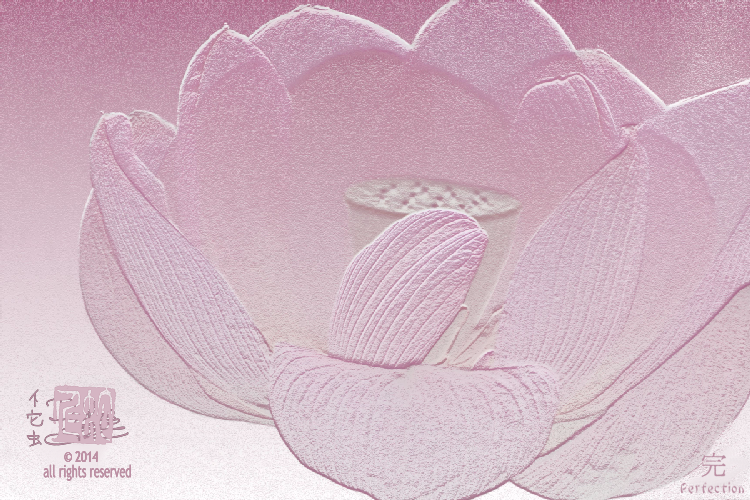
The Lotus is seen throughout Japan and is very significant to their way of life and their beliefs. They are beautiful. I hope you enjoy my art made from a photograph I took in Japan and my haiku poem to follow.
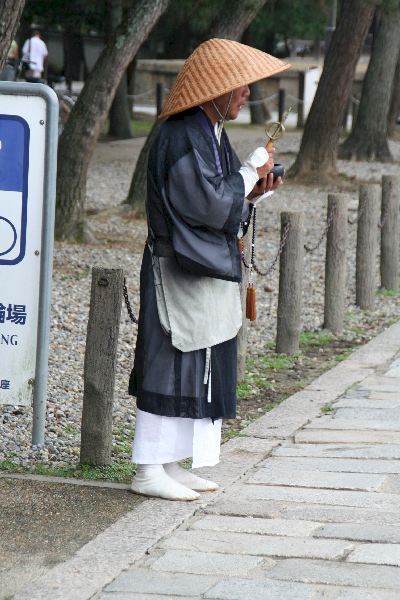
Right before you reach the gate to the temple, the picture on the left is a familiar sight. It is a Buddhist Priest. He is bowing continuously and continually.
He was at the exact same place doing the exact same thing, hours later after we left the temple.
He is holding an alms bowl. Yes. he is begging for money. But he is not poor.
In the United States, we may have seen people begging for money, but they are either really poor or trying to ‘guilt’ people out of their money. But this monk is begging, not because he needs the money, nor is he trying to ‘guilt’ anyone.
By the way, there are at least two things in Japan that are protected and precious, land and shrines! If you purchase property to build or to live there and it has a rice paddy and/or a shrine, you are responsible to maintain them, for as long as you own the property. This also includes, caring for any of the priests associated with the shrine.
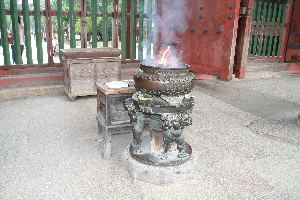
But anyway, the priest here, is just simply showing his willingness to be an example of humility, in order to obtain a higher level of consciousness. It is a purification process, much like burning a stick of incense to purify oneself, before entering the temple.
Incense for Purification
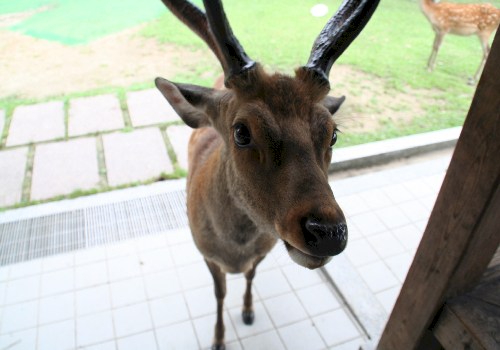
The dear, deer below is, just outside the gate to the courtyard of the Temple of Buddha. Even though he could walk through and he is probably hoping for one last biscuit from you, before you enter into the courtyard, no dear, deer will pass through.
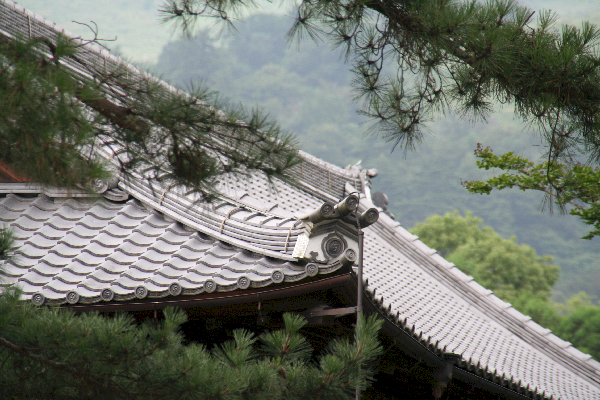
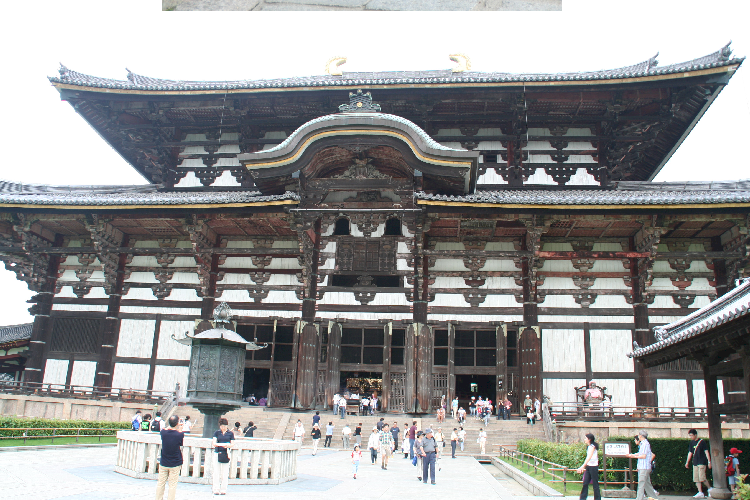
The dear will not enter into the courtyard of the Great BuddhaRoofline of the temple courtyardThe Great Buddha’s Temple, Nara Japan
Notice the size of the people in the above picture, in comparison to the size of the temple! The three sets of double doors are approximately 15′ tall and each pair are around 15-20′ wide. This temple is located in Nara Japan and is the largest wood temple of Buddha in the world. If memory serves me correctly, this was not the original structure, but was it was moved here and re-built, sometime in the 8th century and it still stands today!
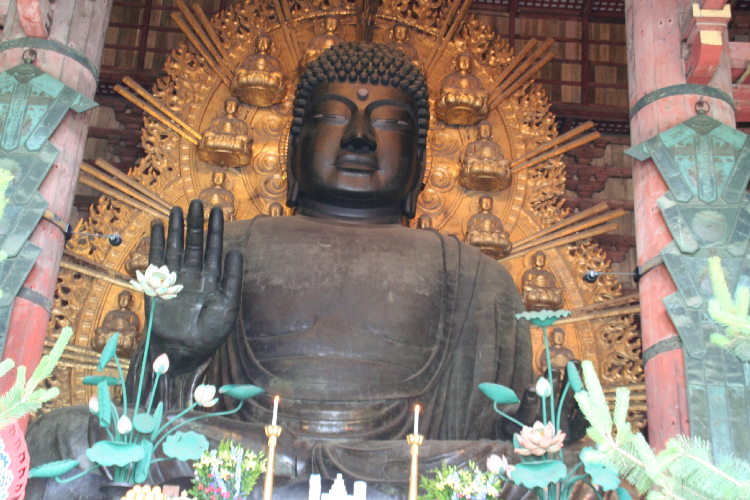
The Great Buddha
As one walks through the large doors into the temple, it is supported by massive wood beams. The height from the floor to the ceiling is about 30′ feet. This temple was hand-made thousands of years ago. Directly in the center as you walk through the doors is, the focal point of the temple, the Great Buddha.
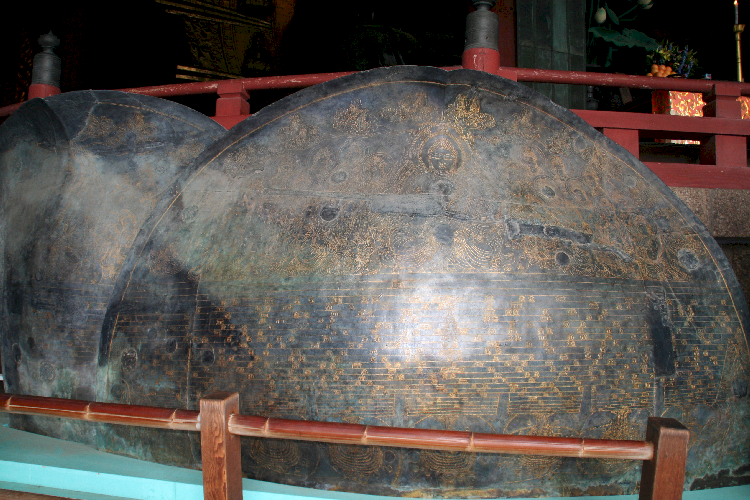
Directly beneath him are huge petals of the lotus blossom.
The Lotus Petals of the Great Buddha’s Pedestal
These are called: The petals of the Lotus Pedestal on the Great Buddha Vairocana. This is the Great Buddha’s celestial or cosmic embodiment. The Vairocana is regarded as the highest form of the three Buddhas, as a god of light, whose reflection throughout the universe is represented as endless. The petals are incised with pure gold in hairline engravings with identical designs, dating from the Nara period (8th century), which depicts the “Lotus-Matrix World-System.
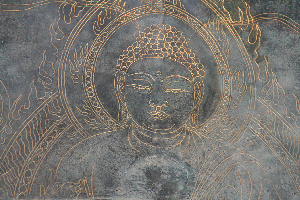
Closeup of engraving
Each petal is divided into two main parts. The upper half depicts a seated Tathāgata (name the Buddha uses when referring to himself) and means, “One who has thus gone” or “One who has thus come.” Those two opposites are interpreted to mean, “beyond all coming and going.”
He is seated in this upper petal, expounding the truths to eleven Bodhisattvas, those of great compassion that have obtained one of the four highest states of sublime consciousness in this life.
In the lower half there are twenty-six horizontal lines with small Buddha-images and palaces arrayed between them, and below these are seven pairs of lotus petals, each consisting of one petal turned upwards and the other facing downward. Stated simply, this is a pictorial representation of the spiritual world.
Nara Japan is the location of the world’s largest wood Buddhist Temple. To get there, one must park their vehicle and walk through this large park that are full of very unique and very small deer. The deer are tame and seem to sense that they are protected. Generation after generation of deer are born in this park and are free to roam. Even though they could easily walk out and away from the park, none ever have. You can purchase special biscuits and feed the deer, Dear! 🙂
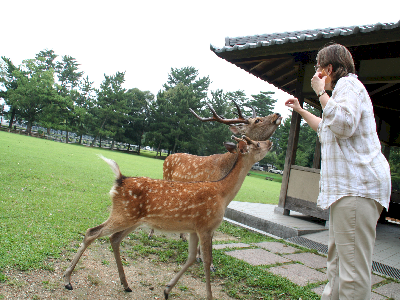
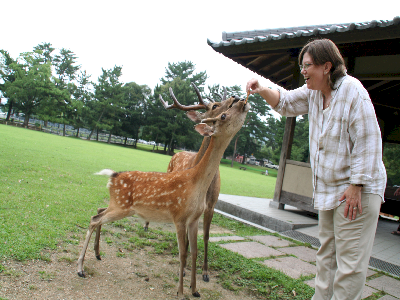
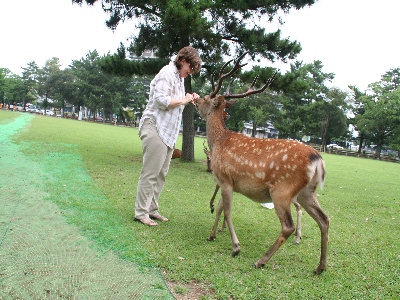
deer, DearSusan feeding the dear, deer
Susan is just so happy that she has finally met some dear, deer that are even more vertically challenged than she is! 🙂
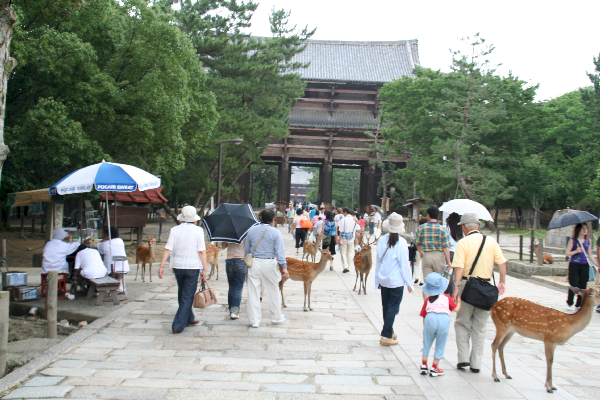
Me too!The dear, deer mingle about
In the above picture, you just cannot imagine the 100’s if not 1,000’s of dear, deer (not shown) that live here. The Building in front of the crowd is open and it is a gate which leads to the world largest wood Buddhist Temple. But the dear, deer will not cross into the temple area.
Please. please, please Susan, I know you have more!
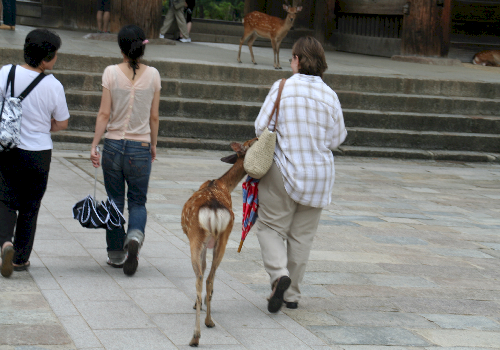
In the above picture, Susan is just about to climb the steps which leads to the gate. Notice the dear, deer, Dear, that has apparently climbed the steps? They will do this, but they will NOT pass through the gate!
What’s your sign? That question is familiar to many of us in the United States. Of course, the question relates itself to ‘signs’ of the Zodiac. Japan also, has a zodiac, but it is based on the year of one’s birth, not the month. Interestingly, in Japan they do not ask the month you were born or your age, just the year-sign of your birth.
The stories go that either the Jade emperor or before Buddha departed this earth, a zodiac of animals was set in the order that they came, when called to a race or a banquet (depending on who is telling the story). The rat responded first, so it is the rat that starts the zodiac. This zodiac basically cycles every 12 years and people born in a particular year are said to have characteristics of the animal of the year in which they were born. Oh, and if the people in Japan know the year-sign in which you were born, they can figure out how old you are without asking. 🙂
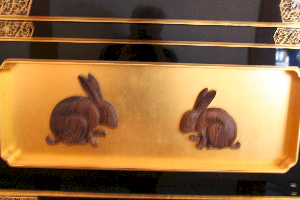
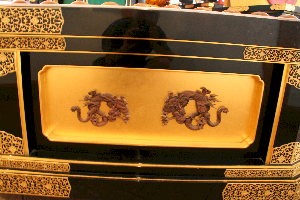
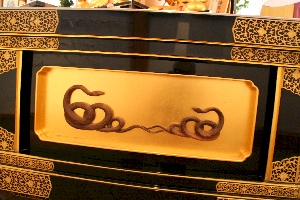
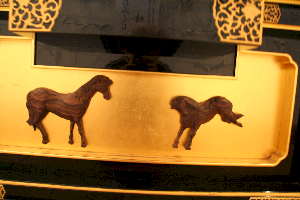
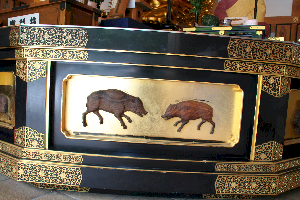
The order of the zodiac is as follows: rat, ox, tiger, rabbit, dragon, snake, horse, ram (sheep or goat) monkey, rooster, dog, and boar (or pig). Twelve signs, one per year and then they are repeated, over and over again.
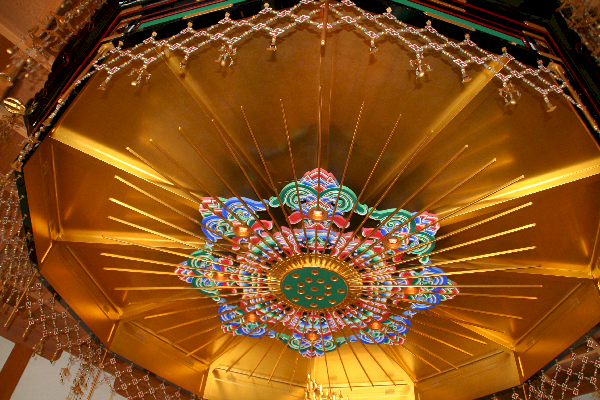
‘Canopy of the Sun’ Mt. Hei Japan
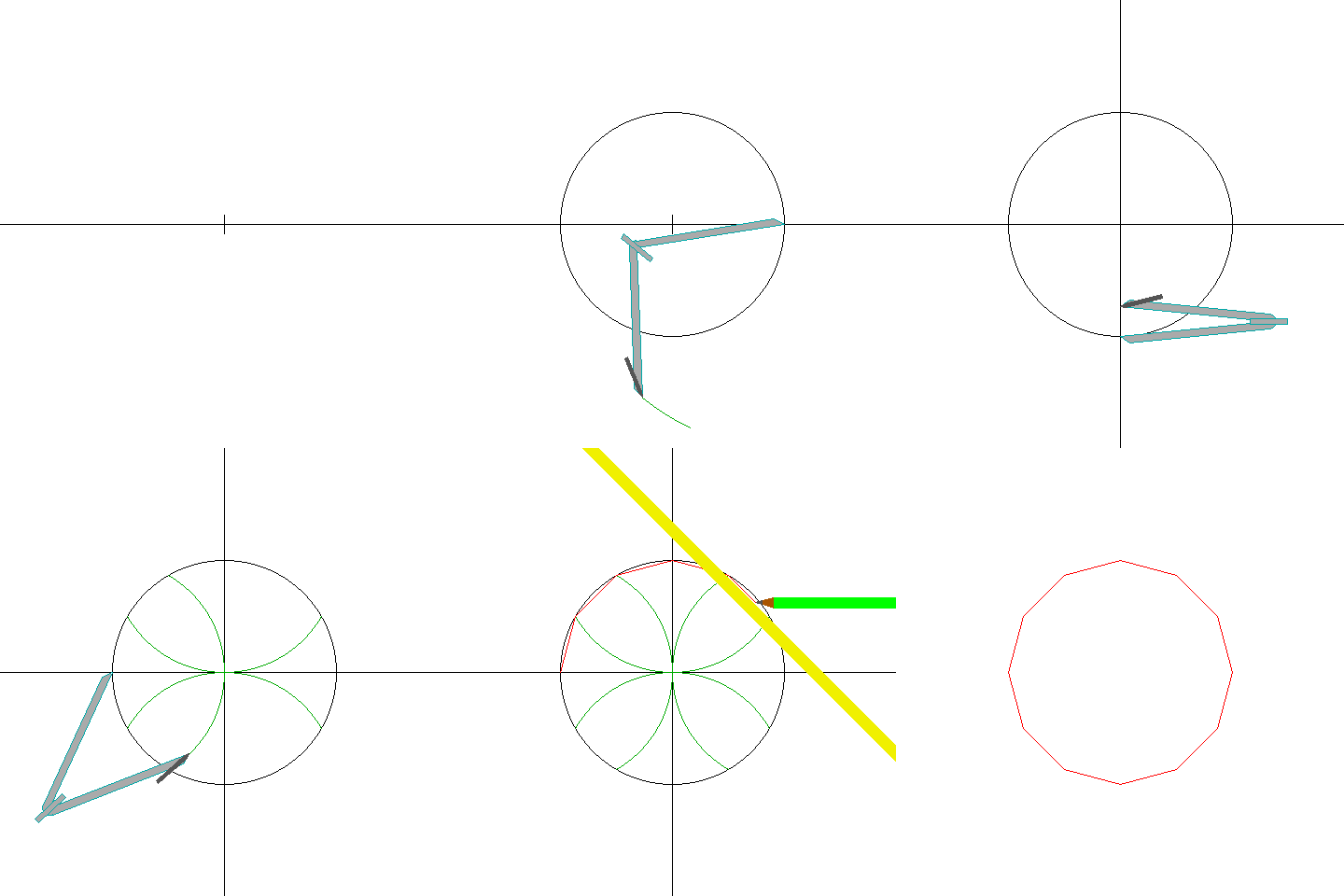
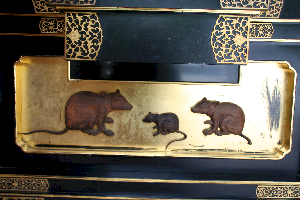
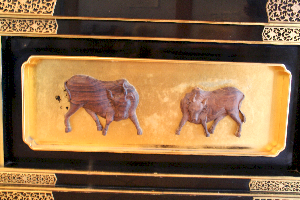
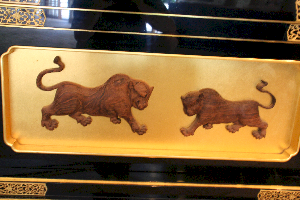
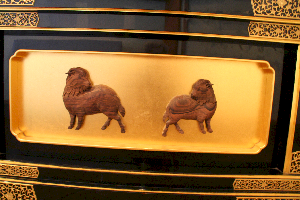
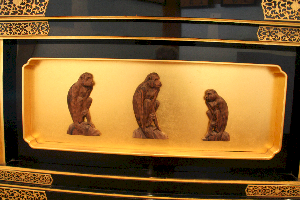
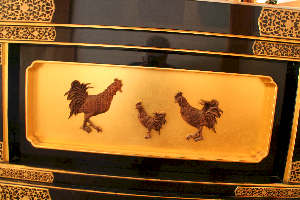
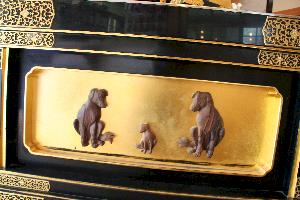
Below this beautiful canopy is a very ornate pedestal about 3 feet tall. It is made of hand carved wood animals, surrounded by gold leaf and beautiful black Japan lacquer. The geometrical polygon (many sides) is called a, Dodecagon (12 sides).
Dodecagon_ani.gif
Rat(nezumi)
Born 2008, 1996, 1984, 1972, 1960, 1948, 1936, 1924, 1912. People born in the year of the Rat are charming, honest, ambitious, and have a tremendous capacity for pursing a course to its end. They will work hard for their goals. They are easily angered, but maintain an outward show of control.
Rat (nezumi)
Ox(ushi)
Born 2009, 1997, 1985, 1973, 1961, 1949, 1937, 1925, 1913. People born in the year of the Ox are patient, mentally alert and when required to speak are skillful. They have a gift for inspiring confidence in others. This allows them to achieve a great deal of success.
Ox (ushi)
Tiger(tora)
Born 2010, 1998, 1986, 1974, 1962, 1950, 1938, 1926, 1914. People born in the year of the Tiger are sensitive, stubborn, short-tempered, courageous, selfish and slightly mean … yet they are deep thinkers and are capable of great sympathy for those they are close to and love.
Tiger (tora)
Rabbit (usagi)
Born 2011, 1999, 1987, 1975, 1963, 1951, 1939, 1927, 1915. People born in the year of the Rabbit are the most fortunate. They are smooth talkers, talented, ambitious, virtuous and reserved. They have exceedingly fine taste and are regarded with admiration and trust.
Rabbit (usagi)
Dragon(tatsu)
Born 2012, 2000, 1988, 1976, 1964, 1952, 1940, 1928, 1916. People born in the year of the Dragon are healthy, energetic, excitable, short-tempered and stubborn. However, they are honest, sensitive, brave and can inspire trust in most anyone. They are the most peculiar of the 12 signs of the Zodiac cycle.
Dragon (tatsu)
Snake(hebi)
Born 2013, 2001, 1989, 1977, 1965, 1953, 1941, 1929, 1917. I was born in the year of the snake. So if you think about it, you can figure out how old I am. 🙂
People born in the year of the Snake are (supposedly) deep thinkers, speak very little and possess tremendous wisdom. They are fortunate in money matters and will always be able to obtain it. They are determined in what they do and hate to fail. The other zodiac says I am a Sagitarian (archer) and if I was shooting straight, I would question that I, “speak very little,” have “tremendous wisdom,” and are “…fortunate in money matters!?” I would agree with the rest! And that would be that I am, determined and I’m not too happy about failure. 🙂
Snake (hebi)
Horse(uma)
Born 2014, 2002, 1990, 1978, 1966, 1954, 1942, 1930, 1918, 1906. People born in the year of the Horse are skillful in paying compliments and talk too much. They are skillful with money and handle finances well. They are quick thinkers, wise and talented. Horse people anger easily and are very impatient. In 2014, it is now, the Year of the Horse.
Horse (uma)
Sheep or Ram(hitsuji)
Born 2015, 2003, 1991, 1979, 1967, 1955, 1943, 1931, 1919, 1907. People born in the year of the Sheep (or Ram) are elegant, highly accomplished in the arts, passionate about nature. At first glance, they seem to be better off than the people born in other years. They are deeply religious and passionate in whatever they do and believe in.
Sheep or Ram (hitsuji)
Monkey (saru)
Born 2004, 1992, 1980, 1968, 1956, 1944, 1932, 1920, 1908. People born in the year of the Monkey are the erratic geniuses of the Zodiac cycle. They are clever and skillful in grand-scale operations and are smart when making financial deals. They are inventive, original and are able to solve the most difficult problems with ease.
Monkey (saru)
Rooster(tori)
Born 2005, 1993, 1981, 1969, 1957, 1945, 1933, 1921, 1909. People born in the year of the Rooster are deep thinkers and are always busy and devoted to their work. They always want to do more than they are able, and if they undertake a task beyond their abilities, they are disappointed. Rooster people have a habit of speaking out directly, whenever they have something on their minds.
Rooster (tori)
Dog (inu)
Born 2006, 1994, 1982, 1970, 1958, 1946, 1934, 1922, 1910. People born in the year of the Dog have all the fine qualities of human nature. They have a sense of duty and loyalty, they are extremely honest and always do their best in their relationships with other people. Dog people inspire confidence in others and know how to keep secrets.
Dog (inu)
Boar (or Pig) (inoshishi)
Born 2007, 1995, 1983, 1971, 1959, 1947, 1935, 1923, 1911. People born in the year of the Boar are brave. They have tremendous inner strength which no one can overcome. They display great honesty. They are short-tempered, yet hate to quarrel or have arguments. They are affectionate and kind to their loved ones.
Desserts in Japan are not only delicious and beautifully sculpted, it is their garnishment that not only appeal to the senses, but actually help aide in digestion.
There are many sweet-eats in Japan to be enjoyed and savored, here is just a few of my favorites.
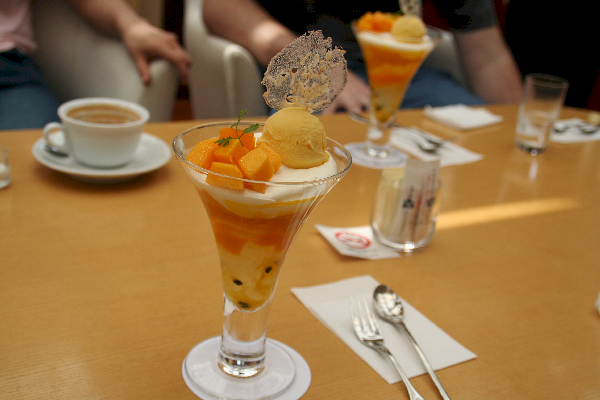
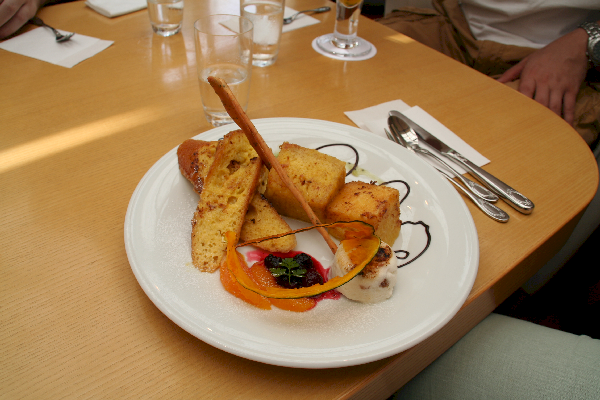
mango parfait
Do you notice the the strange thing sticking out of the mango parfait? It is actually a thin piece of spun sugar! 🙂
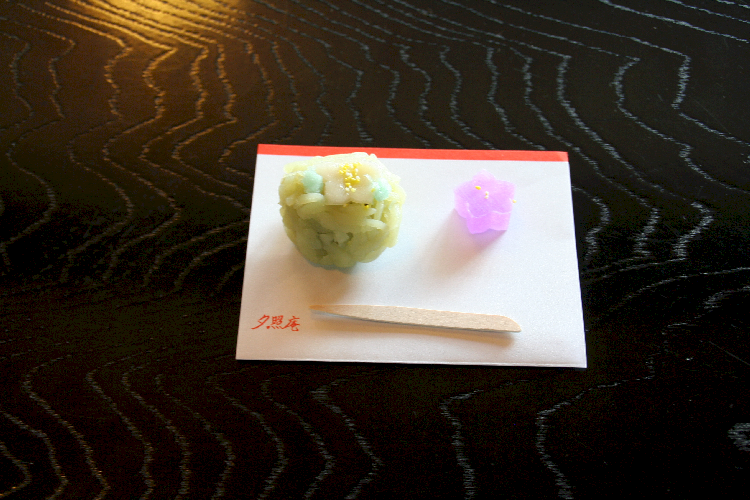
some kind of beautiful, some kind of yumsweet delights served during a Japanese ‘Tea Ceremony’
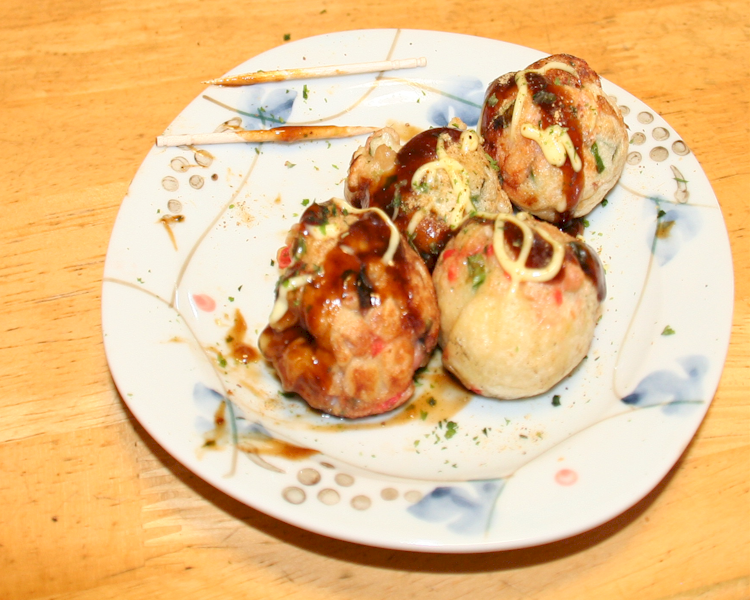
Well, this title might seem a bit strange, but this is exactly what these delicious treats would be called in English, Octopus balls. 🙂
In Japan, they are called, Takoyaki (pronounced taco + yah-key).
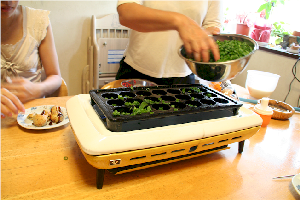
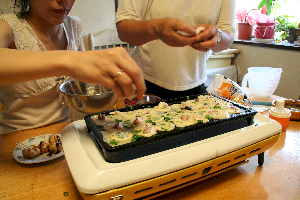
Takoyaki (たこ焼き or 蛸焼 is a ball-shaped Japanese snack made of a wheat flour-based batter (like tempura). It is cooked in a special takoyaki pan, that resembles a muffin tin. Ours can be placed directly over flame or as most Japanese homes like the pictures show below, they are table top, propane units.
Takoyaki pan, heating and filling with negi (green onion)
Takoyaki is typically filled with minced or diced octopus tako, tempura scraps tenkasu, negi (chopped Japenese green onion), pickled ginger, and sprinkled with green laver aonori (a type of seaweed) and shavings of dried bonito katsuobuschi (fish flakes).
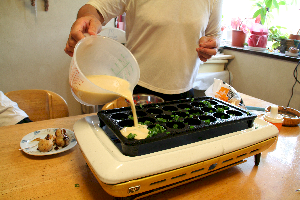
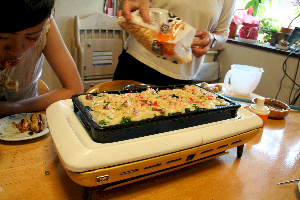
filling with the batter
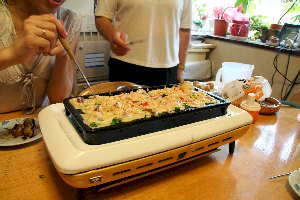
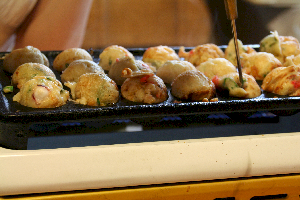
Once filled and as the batter cooks, the takoyaki is constantly prodded with a stick like a long metal toothpick and turned. This shapes the treat into balls while cooking. And once they are cooked on all sides, to a lovely golden brown, they are done and ready to eat, almost. 🙂
filling with pickled ginger
The Takoyaki are then brushed with takoyaki sauce, similar to Worcestershire sauce or soy sauce in color. There are many recipes for the takoyaki and variations for the sauce such as:
ponzu (soy sauce with dashi (a clear broth like used in meso soup) and citrus vinegar
goma-dare (sesame-and-vinegar sauce)
vinegared dashi.adding the fish flakes and etc.
The final step is to squeeze some mayonnaise on top from a tipped-bottle like a ketchup or mustard squeeze bottle. I’m not exactly sure what makes Japanese mayonnaise different from that in our country (USA), but it is; it’s delicious and I love it! And Takoyaki? OMG, these are incredible!!! Eat with a a pointed stick (see last picture below). Each one is about a mouthful.
prodding and turning while cooking
Takoyaki was first popularized in Osaka Japan when a street vendor named Tomekichi Endo, first introduced his culinary delight in 1935. Takoyaki was inspired by akashiyaki, a small round dumpling from the city of Akashi in Hyōgo Prefecture, made of an egg-rich batter and octopus.
almost ready
Today, Takoyaki is sold almost everywhere in Japan. They are very popular with children, young people and older people alike. And this is not only the Japanese, but many people love Takoyaki! It is not uncommon to see long lines of people, especially during festivals, waiting to be served their Takoyaki. They are sold in restaurants, on the street, super markets, 24 hour convenience stores and probably, even in vending machines.
I know, tako sounds like taco, but take care in using the sound as it may be Japanese slang for stupid? Tako means octopus. If you ask for tako, you might get an angry ‘look,’ some octopus salad Takosu タコス, or Taco rice (タコライス takoraisu. Taco rice is similar to a taco, only it is served on a plate without the shell. Now you might be able to actually find some Japanese tacos, but the shells are made out of rice flour and not corn. Just ask for Takoyaki (octopus balls) and you’ll be fine and happy that you did! 🙂
In 2006, Susan and I were (together) 🙂 , in Japan.
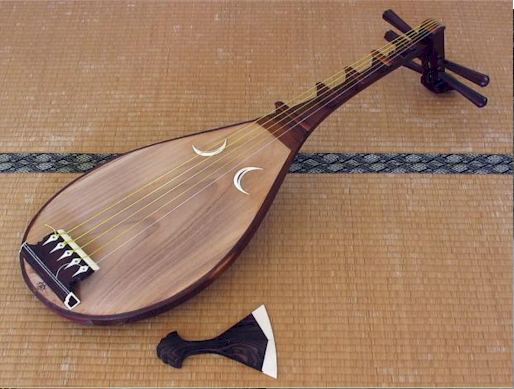
Not everyday, but quite often I would begin my mornings with a cup of coffee from a McDonald’s in Moriyama, literally right across the street from where we were staying. It was always clean and always inviting. It was a comfortable place to hang out. I would listen to music over their sound system always in Japanese. And always, I was clueless to the meaning of the words being sung. This did not prevent me from enjoying it anyway as music, a universal language, has a way of communicating.
One particular morning when I came in, somewhere around the end of July, a new song was playing. I was instantly drawn to the beautiful sounds and the soothing voice of the singer. Armed with a book of Japanese words with pronunciations and English translations and my limited understanding, I set out to try and find out what I could about the song. Our friend and adopted daughter, Yukari, told me it was from an animated movie called Gedo Senki (Tales from Earthsea). Knowing that I had become fond of Japanese music (traditional and modern), her brother made me a DVD with several videos of Japanese Music, including this particular song. To this day, I cannot find this disk. But one day before we left Japan, I was inside a music store and all I could remember or pronounce was Gedo Senki. A store clerk helped me find the CD with this song as a single. It has taken me nearly eight years, to find out all the information I wanted to know then and the translation of the words in English. I share here with you friend-reader that you may enjoy this haunting and beautiful song as I have.
Gedo Senki (Tales from Earthsea ゲド戦記 is a feature anime film from Studio Ghibli, released in Japan on July 29, 2006. It was the first film directed by Gorō Miyazaki, son of Hayao Miyazaki. The movie is loosely based on a combination of plots and characters from the first, third, and fourth books of the Earthsea series, A Wizard of Earthsea, The Farthest Shore, and Tehanu, by Ursula K. Le Guin.
The singer is Aoi Teshima (手嶌葵 Teshima Aoi, born June 21, 1987 in Hakata, Fukuoka, Japan. Aoi Teshima is a Japanese singer and voice actor. In March 2005, she acted in “Japan-Korea slow music’s world” in South Korea and her performance was favorably received among the audience. Her performance attracted the attention of anime director Gorō Miyazaki. Toshio Suzuki was also very impressed when he listened to her demo version of Bette Midler’s “The Rose.” On June 7, 2006, she finally released a song called “Therru’s song” (テルーの唄 Terū no Uta.
Aoi Teshima is in essence, a shy and humble choir girl whose unobtrusive voice soothes your senses and reminds you of our love for nature, for the purity of life and for love itself. I love this song and more so in Japanese, but I will also share the English words and music to follow.
Teru no Uta (Therru’s song)
Music by Hiroko Taniyama – Lyrics by Miyazaki Goro
words in Japanese, and sung by Aoi Teshima
JAPANESE
Yuuyami semaru kumo no ue
Itsumo ichiwa de tonde iru
Taka wa kitto kanashi karou
Oto mo todaeta kaze no naka
Sora wo tsukanda sono tsubasa
Yasumeru koto wa deki nakute
Kokoro wo nani ni tatoe you
Taka no you na kono kokoro
Kokoro wo nani ni tatoe you
Sora wo mau yo na kanashi sa wo
Ame no sobo furui wakage ni
Itsumo chiisaku saite iru
Hana wa kitto setsuna karou
Iro mo kasunda ame no naka
Usu momo-iro no hanabira wo
Medete kureru te mo nakute
Kokoro wo nani ni tatoe you
Hana no you na kono kokoro
Kokoro wo nani ni tatoe you
Ame ni utareru setsuna sa wo
Hitokage taeta no no michi wo
Watashi totomo ni ayunderu
Anata mo kitto samishi karou
Mushi no sasayaku kusahara wo
Tomo ni michiyuku hito dakedo
Taete mono iu koto mo naku
Kokoro wo nani ni tatoe you
Hitori michiyuku kono kokoro
Kokoro wo nani ni tatoe you
Hitoribocchi no samishi sa wo
sung by, Aoi Teshima
Teru no Uta (Therru’s song)
Music by Hiroko Taniyama – Lyrics by Miyazaki Goro
words in English, arranged and sung by Saskia Kusrahadianti
ENGLISH
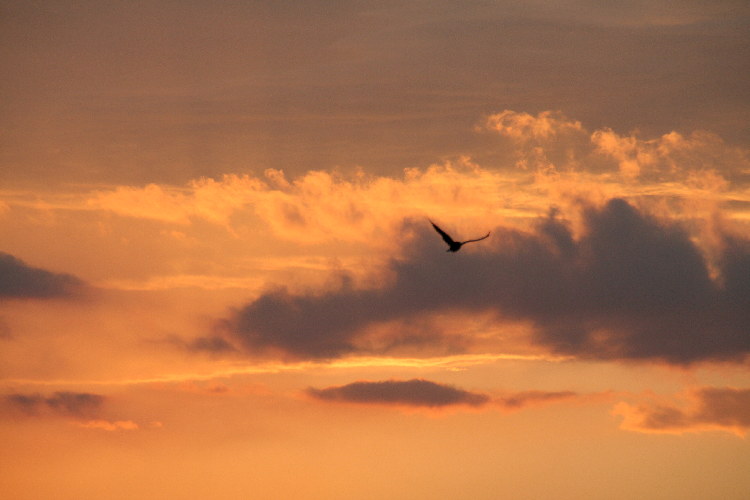
Far, far above the clouds
Soaring with the wind
A falcon flies alone
Silent as the sky
I hear his lonely cry
Never can he rest
I walk with you alone
An empty winding road
We’re far from
The ones we love
Never can they turn
Never can we see again
Countries of our birth
When will I ever find
A place to call my home
Sadness circling
Like a falcon in the sky
When will I ever find
A way to speak my heart
To someone who knows
What it is to be alone
Far, far above the clouds
Against the setting sun
A falcon flies alone
Silent as the sky
I hear his lonely cry
Never can he rest
I long to spread my wings
And fly into the light
Open this lonely heart
To one who understands
When will I ever find
A way to speak my heart
When will I ever find
A place to call my home
Sadness and loneliness
A falcon in the sky
When will I ever find
A way to speak my heart
To someone who knows
What it is to be alone
sung and arranged by, Saskia Kusrahadianti
If you are interested in more information about this song, how I came to hear it and a higher quality mp3 audio file in Japanese, please start at the following page and click through:
Note: The mp3 file is located at http://dahni.com/DahniDaily/Japan6.htm and is intended for HIGH SPEED Internet users, otherwise, it may take some time to download and hear it.
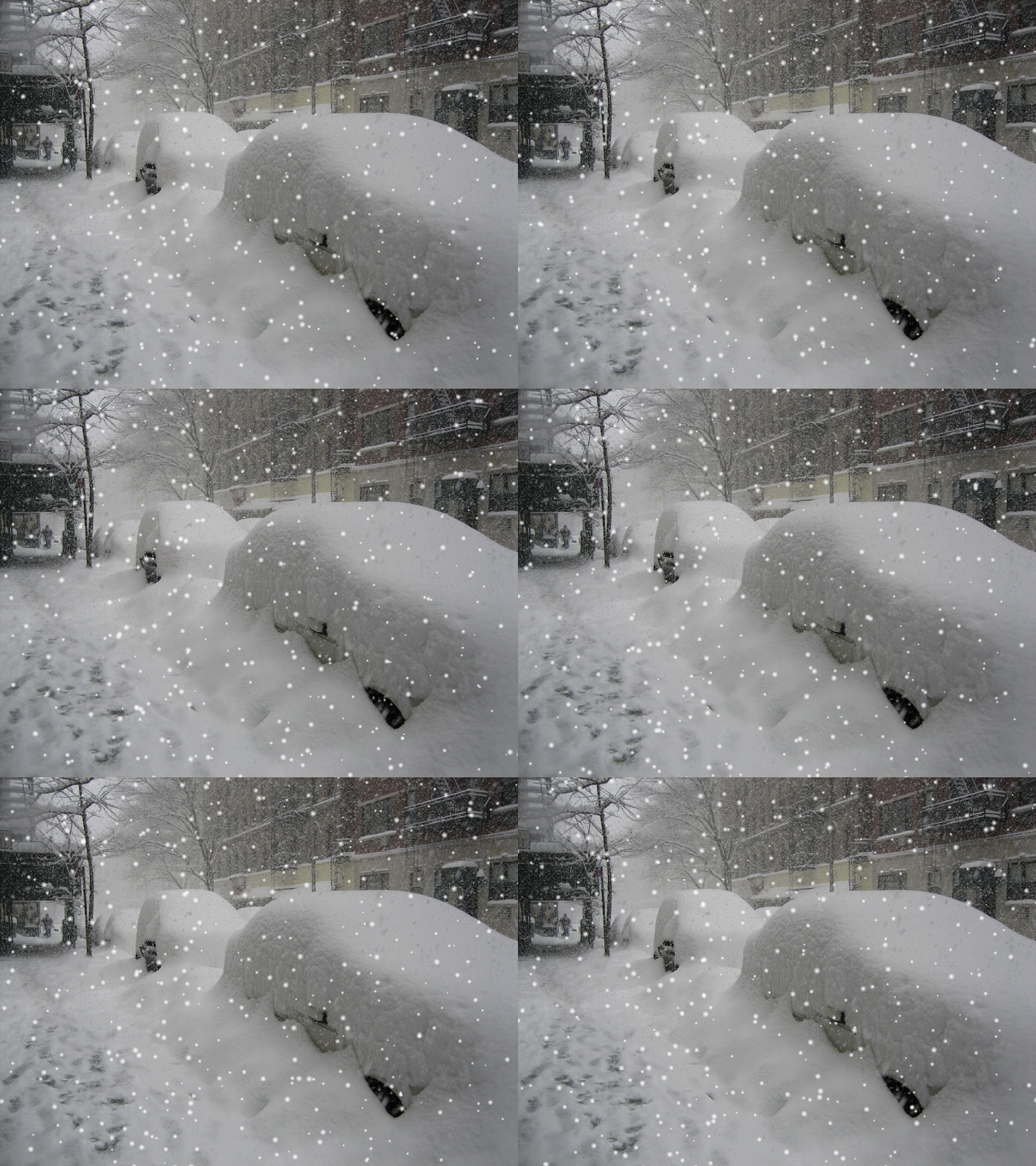
…Yeh, aren’t you glad that Instead of this, right now here…
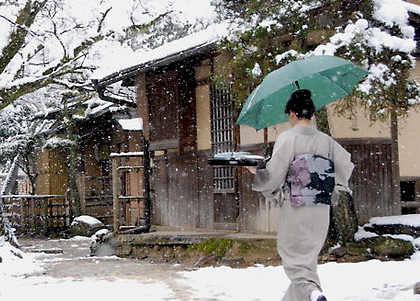
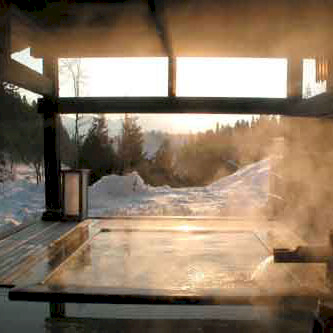
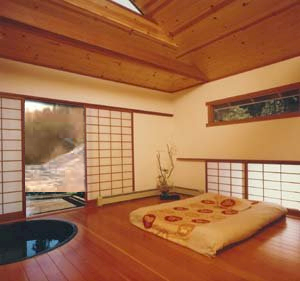
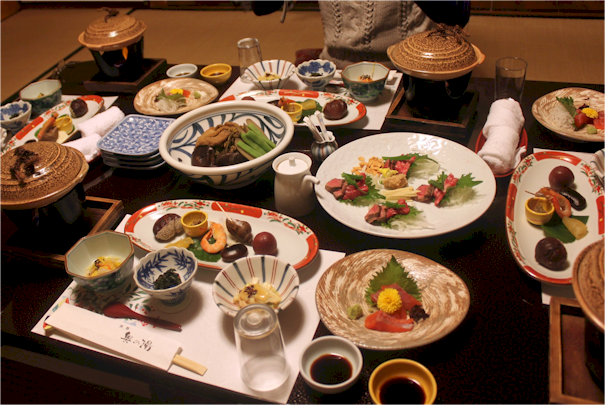
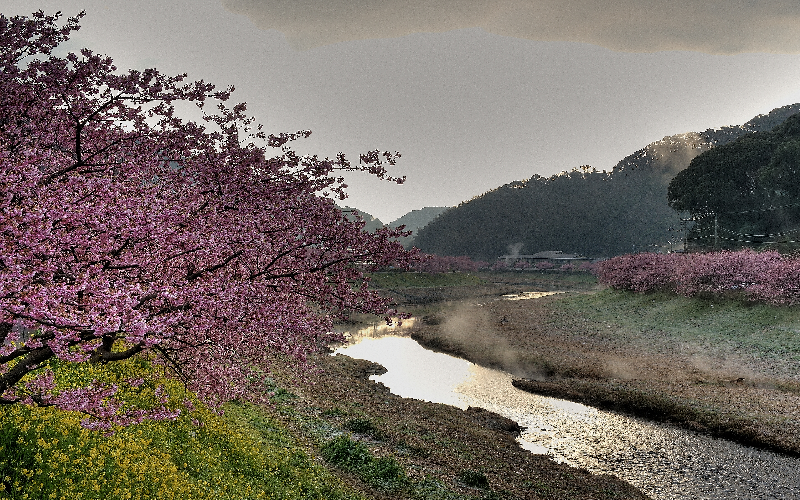
…and working on taxes, you could be here……and even if it was snowing you could be heading to this…… an onsen (hot springs) at the ……ryokan (Japanese Inn) and……enjoying this or……maybe even the first cherry festival in Japan!
The Kawazu Cherry Blossom Festival 河津桜祭り, (Kawazuzakura Matsuri) is held yearly from early February to early March in the city of Kawazu, located on the Izu Peninsula. The popular event celebrates the flowering of the Kawazu Cherry Trees (Kawazuzakura) and attracts almost two million visitors annually as one of the earliest opportunities in the year to see large numbers of cherry blossoms near Tokyo Japan.
Yes, ‘Aren’t You Glad’ you are there instead of here!!

























 gatheringplace.blog