Please return for a special presentation celebrating our 250th year since publishing The Declaration of Independence, July 4th, 1776. Please return 7/4/2026.
First of all, I would like to write to one and all and shout it from the rooftop, carried on the wings of the wind, in the streets as if an old time a town crier, or atop a steed, Happy Fourth of July, 2026.
This year marks special events such as the 250th year of the Declaration of Independence being announced, July fourth, 1776. 2026 is the 239th year of the publication of The Constitution of The United States for America, September 17, 1789
250 years is long enough for:
myth to replace memory
slogans to replace arguments
celebration to replace reckoning
Patriotism sells.
Remembrance requires presence.
Most anniversary products work by borrowing emotion—they assume affection for the nation and convert it into purchases. That isn’t wrong in itself, but it is shallow. It treats the Declaration as a brand asset, not a living claim.
What made 1776 singular was not symbolism. It was risk.
Men and women and even children, were signing with their names or signaling with their lives, knowing exactly what the penalty could be. The Declaration was not a celebration; it was an accusation, a severing, and a wager on truth. That quality cannot be merchandised without being diminished.
So the question becomes:
How do you honor a document that was written to be used, not admired?
The difference between commemoration and continuation
A wreath marks a grave. A declaration demands a response.
If the 250th is treated as a memorial, it will look backward only. If it is treated as a jurisdictional anniversary, it asks a present-tense question:
Does this still apply—and if so, to whom?
That question cannot be answered with products. It can only be answered with clarity, invitation, and time.
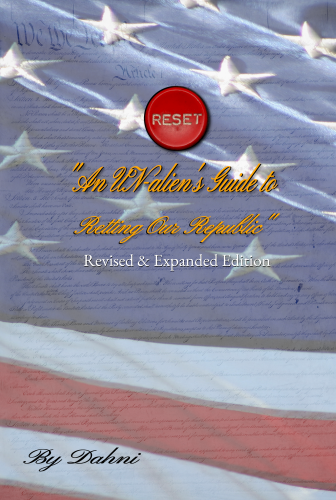
But it is all in this spirit of hopeful transformation that I offer to anyone that reads here, two gifts and one announcement, in honor of the 250th anniversary of The Declaration of Independence, the 239th anniversary of our Constitution and RESET-An Un-aliens Guide to Resetting Our Republic- Revised & Expanded. From today, 7/4/2026 and through 9/17/2026 and thereafter hopefully, are the following stories, recipes, a new blend of coffee and the release of something + over fourteen years in the making. And it begins with cake.
The Gathering Place Maple Molasses Ginger Bread
By Dahni
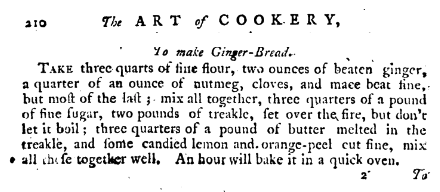
In 1747, an English woman named Hannah Glasse published a cookbook titled The Art of Cookery Made Plain and Easy. Unlike earlier cookbooks written by professional chefs for aristocratic kitchens, Glasse wrote for ordinary households — women, servants, and family cooks responsible for preparing daily meals.
Her purpose was simple: to make cooking understandable and practical. She avoided the complicated language and costly ingredients common in elite cookbooks of the time and instead offered clear instructions using foods available to everyday families. Because of this practical approach, her book quickly became one of the most widely used household cookbooks in England.
Copies of Glasse’s book traveled across the Atlantic with British settlers and were widely used in the American colonies throughout the mid-1700s. Colonial households — from merchants to farmers — relied on such books for guidance in preparing meals from available ingredients. Molasses (then called treacle) and ginger were common pantry items, often imported from Caribbean sugar-producing regions such as Jamaica. Recipes for gingerbread and treacle (molasses) loaves became familiar staples in both British and colonial kitchens.
The influence of Glasse’s work lasted for decades. Although first published in London in 1747, her recipes remained in active use well into the late eighteenth and early nineteenth centuries. The first American edition was printed in 1805, confirming how long her methods continued to shape everyday cooking in the early United States.
What made Glasse’s book enduring was not luxury or sophistication, but practicality. It was a working book — meant to be used in kitchens, not admired on shelves. Meals prepared from its pages fed families, travelers, and households on both sides of the Atlantic. Many traditional ginger and molasses loaves baked today trace their roots to the kind of straightforward household recipes found in her pages.
In that sense, baking a simple gingerbread or molasses loaf today connects directly to a tradition that stretches back nearly three centuries — from English hearths to colonial kitchens, and onward into modern homes where practical cooking still gathers people around the table.
I would like to think that Thomas Jefferson might have known of such cookbooks and perhaps enjoyed gingerbread or something like what was often called Jamaican molasses ginger cake. We once had such a delicious cake from a man who grew up with it in England. It was memorable — rich, fragrant, and deeply satisfying. I later made my own version, and it made me think of coffee and led me to try making something with historic roots.
As you know, in Boston, what became known as “taxation without representation” led to tea being thrown into the harbor. During the Boston Tea Party — December 16, 1773 — 342 chests of tea were thrown overboard into Boston Harbor. Three years later, during the hot summer of 1776 in Philadelphia, the doors were often shut so delegates could speak their minds in privacy. At night, when the air cooled, Jefferson might have sat at his table working late into the evening writing the Declaration of Independence, perhaps with a piece of gingerbread — and maybe even a cup of coffee.
Years later, Jefferson expressed his appreciation for coffee, writing:
“Coffee — the favorite drink of the civilized world.”
Before modern ovens, before printed recipe cards, before spiral-bound kitchen notebooks sat beside flour jars, there were books like this — worn, flour-dusted, and faithful to the work of feeding people.
In 1747, The Art of Cookery Made Plain and Easy helped bring practical cooking into everyday homes. The recipes were not fancy — they were meant to nourish, sustain, and gather people around the table.
My loaf carries that same spirit.
Not copied word for word, but carried forward in memory — in molasses, spice, warmth, and the slow patience of baking.
Somewhere between that old book and this modern kitchen… the loaf remembered. So let’s make some.
Cover of The Art of Cookery Made Plain and Easy (1747), a classic English cookbook from which many early loaf traditions were recorded. Public domain image via Internet Archive.
Original recipe page from Hannah Glasse, The Art of Cookery Made Plain and Easy (London, 1747), p. 210. Public domain. Source: Internet Archive.
🍞 The Gathering Place Maple Molasses Ginger Bread
(Fresh Jamaican Ginger • With Cloves • English-Style Loaf) By Dahni
🌾 Dry Ingredients
1¾ cups All-Purpose Einkorn flour
1 teaspoon baking soda
½ teaspoon salt
1½ tablespoons fresh grated Jamaican ginger (or what you have on hand)
1 teaspoon cinnamon
¼ teaspoon cloves
¼ teaspoon nutmeg
🍁 Wet Ingredients
½ cup butter (softened)
½ cup moist dark brown sugar
½ cup Jamaican molasses (or whatever you have on hand)
½ cup real maple syrup
1 large egg
½ cup + 2 tablespoons hot water
🔥 Directions
Preheat oven to 350°F.
Grease a 9×5 loaf pan(I used a buttery spray).
Cream the butter and brown sugar until smooth (not whipped).
Add egg, molasses, and maple syrup.
Mix until fully blended.
In a separate bowl, sift the flour.
In that same bowl, combine all dry ingredients.
Add dry mixture to wet ingredients and mix gently.
Add hot water and mix until smooth.
⏱️ Baking
Bake for 45 minutes.
Check with a toothpick at 45 minutes. If it comes out clean, it is done.
I left mine in for another 4 minutes, checked again with a toothpick, and it came out clean.
That made a total of 49 minutes(most loaves take about an hour).
Remove from oven and leave in the loaf pan to cool on a rack.
With a regular butter knife, go around the edge of the loaf and the pan to separate.
Using insulated gloves, turn the loaf upside down onto a plate.
Turn loaf right-side up onto a rack and allow it to cool about 10 minutes before slicing 3/8″ to ½” slices.
Flavor deepens and texture improves overnight.
🍁 Garnish
Using a mortar and pestle:
Grind about 2–3 tablespoons natural sugar into a fine powder
Finely chop about 2–3 tablespoons crystallized ginger
Rough-grind about 2–3 tablespoons espresso beans (RESET Blend- directions to follow)
To serve:
Dust lightly with powdered sugar
Spoon a bit of crystallized ginger on top
Add a few pieces of espresso grind
Drizzle a small amount of maple syrup
Serve with black coffee and enjoy.
🍁 Closing Reflection
Maybe Thomas J did relish the flavor 250 years ago. We enjoyed ours 250 years later.
Flavor deepens and texture improves overnight? Absolutely. Here is the chemistry if you will—
Molasses deepens overnight — flavor compounds settle and mellow.
Spices bloom — ginger, cinnamon, cloves become rounder and less sharp.
Moisture equalizes — crumb becomes more tender.
Cold slices concentrate flavor — especially with strong coffee.
“Tastes great cold with RESET coffee.”
This morning the gingerbread tasted deeper than yesterday — cold with coffee on the porch — while an osprey balanced on the telephone pole with breakfast of its own.
From English hearths to colonial kitchens to The Gathering Place Somewhere… the loaf remembered.
RESET™ Blend
From The Gathering Place Coffee Roasters by Dahni Hayden / I-Imagine Press
Most connoisseurs and experts of coffee would agree that coffee originally came from Africa. Specifically, Ethiopia. Then there are those even more exact, Yirgacheffe. Today it is still being grown and likely roasted at home in a skillet over a hot stove, stirring the roasting beans with a wooden spoon. I have tried this and it works great and especially if you are going camping and want to roast your own coffee over the romance of nature and a campfire. The history of roasting coffee over a fire, is all over these United States.
From the lengend of a goat herder observing his animated dancing goats, supposedly invigorated after having consumed the coffee cherries (beans) with caffeine, he took some of these beans to his local priest and the priest said it was evil, tossing it into a fire. Well, as the story goes, the fragrance filled the air and drew all the other priests to find this lovely aroma. True or not, coffee spread by trade routes even arriving in Europe. The then Pope, supposedly tried it, loved it and gave his blessing to it. So then by Protestants or Roman Catholics it spread. Cafe’s dotted the landscape everywhere. Even the word cafe is from an Arabian word, which literally means, coffee. Oh, by the way in this story of its origin, Muslims to this day, still drink coffee.
Back to Europe, coffee became so popular, even the famous composer Bach, of the Baroque period, wrote something special for coffee. One of the more unique works that he composed at this time was the secular cantata Schweigt stille, plaudert nicht (literally “be still, stop chattering”), better known as the Coffee Cantata (BWV 211). Composed probably between 1732 and 1735, the cantata is essentially a miniature comic opera that tells the story of a disgruntled father, Schlendrian, who argues with his caffeine-obsessed daughter, Lieschen, about what he perceives to be her bad habit of indulging in too much coffee.
Unless I leave off this important information, if Ethiopia was coffee’s origin, its transmission was from Yemen, where to this day, Mocha Java is known and distributed, all across the world. Whereas Ethiopia was coffee’s Origin, Yemen was its Transmission. So what was its Settlement into the New World?
A frenchman took plants to Saint-Domiique (colonial Haiti) and this became the Settlement in the new world and formed a particularly compelling history.
Saint-Domingue (colonial Haiti) was once one of the world’s great coffee producers
Haitian coffee spread through Caribbean and New World trade networks
coffee cultivation radiated into parts of:
the Caribbean
Central America
Mexico
South America
after the Haitian Revolution and later economic collapse, production declined dramatically, and the new center became coffee from Brazil. Not only is this still mostly true in 2026, Kona coffee in Hawaii, originally came by way of plants from Brazil. And the plants from Brazil, came from the plants that spread from Haiti.
Thomas Jefferson most assuredly had coffee roasted, brewed and consumed from Haiti. This was likely so since 1773 when a lot of tea was thrown into Boston Harbor. From that point on, many believed it unpatriotic to drink tea and coffee became more popular.
What I found intriguing and to make the RESET- Blend I had to get beans from Haiti. In order to get their industry back on track, they had to import coffee plants from Jamaica to help revive the industry. So what is RESET-Blend?
RESET™ Blend Formula
Origin → Transmission → Settlement
Coffee
%
Symbolic Role
Ethiopia — Yirgacheffe
45%
Origin
Yemen
30%
Transmission
Haiti
25%
Settlement
Note: To yield 16 ounces = 1 lb. Start with 20 ounces. This is 9 oz. of origin, 6 ounces of transmission, and 5 ounces of settlement = 20 ounces. One final note, beans from Yemen are often difficult to come by. After I ordered some, the supplier listed them as not available. So check.
Having made this several times I will suggest this. Roast to just medium. The color will be reddish brown and not dark like you may be used to. You will just either have to try it yourself, but medium tastes better than darker roasting. Store un-roasted beans in a vacuum sealed container before brewing. Whole beans stay fresher longer, than ground. Get yourself a good bean grinder. Roasting method is as you prefer. I just use either a lidded popcorn popper with a hand crank over an open flame, an induction cooktop, or sometimes in a skillet with a wooden spoon to stir them over an open flame or campfire. About that.
True story. During what people know as the Civil War that I call the Conflict Among the States, every soldier, both North and South had so many pounds of coffee as part of their provisions. No coffee, ot likely would not have even marched, let alone gone into battle. Without coffee, no way.
But if after a long battle and your were still alive and maybe even under your own power and you were able to get back to your camp, that very night, the hillsides of both the North and the South were aglow with campfires. Soldiers were roasting their coffee beans in a skillet, stirring them with a wooden spoon, over the fire, for their morning coffee.
Now let’s go back to another conflict around eighty-five years earlier. It was July. It was hot. It was in Philadelphia, PA There, many of our founders met, with closed blinds to protect their privacy so that all were free to speak their minds. Candles for light burning, made the temperature rise even more as did their clothing and powdered wigs.
Thomas Jefferson was tasked in writing this Declaration. Now I imagine he did a lot of drafting and writing in the cool of the evening. I would like to think he had accommodations somewhere near the Town Hall and he worked with windows open to let in any breeze. Since he would have likely experienced Jamaican Gingerbread cake and had coffee from Haiti, I would like to think that while he finished his work on the Declaration of Independence, he would have had a slice of my cake and a steaming cup of hot RESET-blend coffee. Beads of perspiration formed on his brow, cooling the skin as they evaporated.
From possibly the desk of Thomas Jefferson in 1776, to the imagination of 2026, Somewhere… the roast remembered.
From the quill of Thomas Jefferson, every signatory and participant of the Declaration of Independence, Abraham Lincoln, every signatory and participant of the Conflict Among the States, every signatory and participant of The Constitution of the United States for America, RESET “An Un-aliens’ Guide to Resetting our Republic” (2012 retired), and fourteen years later, RESET-Revised & Expanded (2026), COMING SOON, Somewhere the pen (quill) remembered.





 gatheringplace.blog