On: Damper

by Donnie Hayden

© 2014, all rights reserved
Guhday mates from Dahni,  Your Aussie Koala Swagman
Guhday mates from Donnie, Your Aussie Koala Swagman


Today, I had intended to share our experience with The Camden Show on Saturday April 5th, 2014, here in Camden NSW Australia. But there are so many pictures I would like to share, I’m still working on it. But, but again, today’s post has pictures from this amazing show. I separated the pictures out for this post because, even though they were taken at the Camden Show, this post should be considered as a whole other subject. The subject is, Damper. Before I explain what damper is, please allow me to set the stage.

In previous posts we looked at such things as the Kookaburra Song which mentions the Swagman. The swagman is a bit of a character in Australian folklore and a very real person or persons, that out of necessity lived very meagerly. Their common mode of transportation was their two feet. Their traveling companion was Matilda, the pack on their back. They traveled around in this manner because, many were poor and moved from place to place seeking better opportunity. If any were well-off-enough to have four-wheeled transportation, it was most likely well-worn and kept together with whatever they could find for parts and that their wit could muster. Their home and kitchen was a campfire. They took shade and some protection from a Coolabah tree, a kind of eucalyptus. Their Billy boil (a metal pot carried on their back for water and to make tea over fire) was essential. Food was often scarce and they needed something easily affordable, simple, easy to make and something filling,  to rid themselves of hunger. This common food was called Damper.

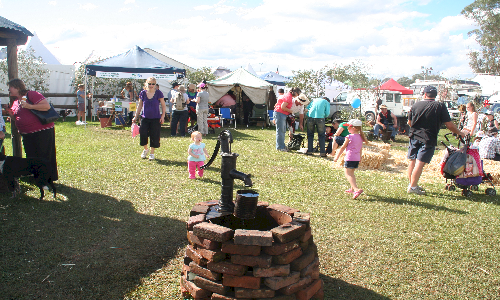
Let’s enter the campsite look of a Swagman. And kudos to those that presented this visual and informative and DELICIOUS display at the Camden Show!!! 🙂
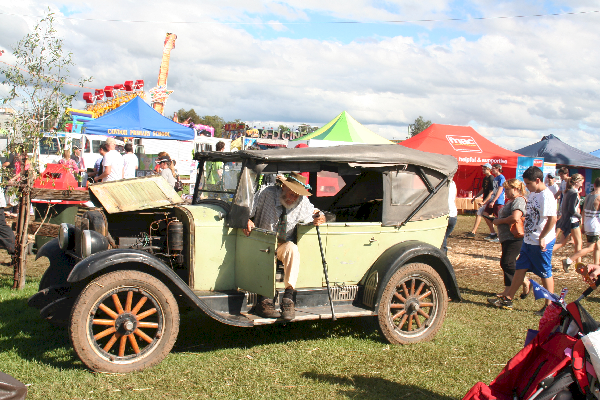
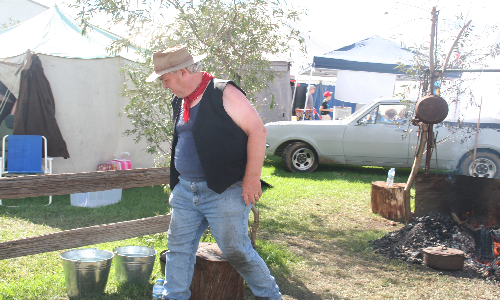
Some Swagmen might have had some old wheels like this
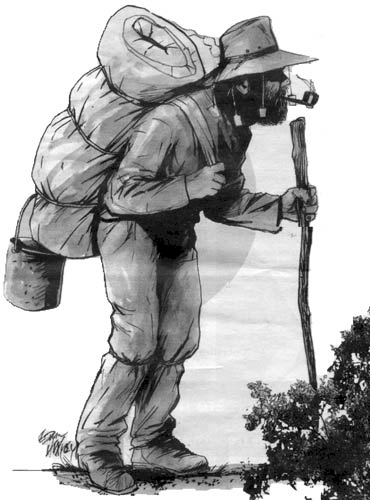
Bill the Swagman
Bill the Swagman

Bill the swagman.


They would look for a nice place to set up camp. Their campfire area would look something like this.
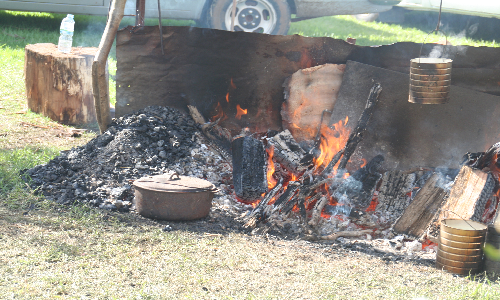
Swagman Kitchen
Swagman Kitchen
Must have water or bring it
Must have water or bring it to make your billy boil and damper

So what is damper? It’s delicious, that’s what it is! 🙂

Damper is a traditional Australian soda bread prepared by swagmen, drovers, stockmen and other travellers. It consists of a wheat flour based bread, traditionally baked in the coals of a campfire. Damper is an iconic Australian dish. It is also made in camping situations in New Zealand, and has been for many decades.
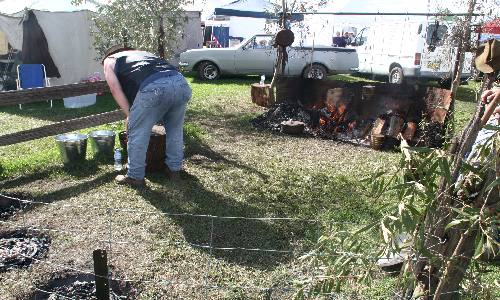
Preparing damper
Preparing damper

Damper was originally developed by stockmen who traveled in remote areas for weeks or months at a time, with only basic rations of flour, sugar and tea, supplemented by whatever meat was available. The basic ingredients of damper were flour, water, and sometimes milk. Baking soda could be used for leavening. The damper was normally cooked in the ashes of the camp fire. The ashes were flattened and the damper was placed in there for ten minutes to cook.
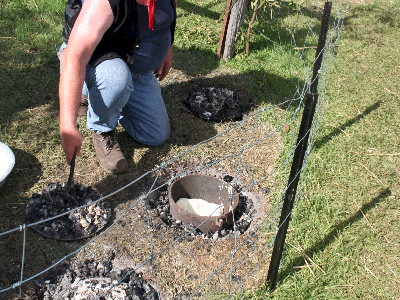
mixture over of pot in hot coals
mixture  in pot over hot coals

Following this, the damper was covered with ashes and cooked for another 20 to 30 minutes until the damper sounded hollow when tapped.
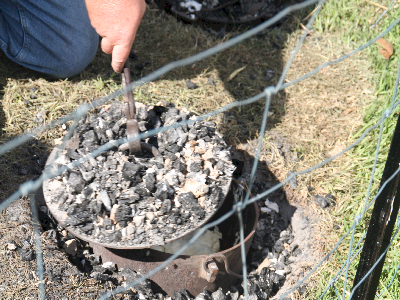
Damper is covered with a lid of hot coals

Alternatively, the damper was cooked in a greased camp oven. Damper was eaten with dried or cooked meat or golden syrup, also known as “cocky’s joy”. Cocky’s joy – were small farmers who settled or perched (like a bird) on the portions of his land that was resumed for agriculture. Some believe they were first called this from the area of Cockatoo Island, hence the word “perched.” So the joy of the Cocky’s was to be able to have land to settle and something to sweeten their damper, which was by tradition, golden syrup.
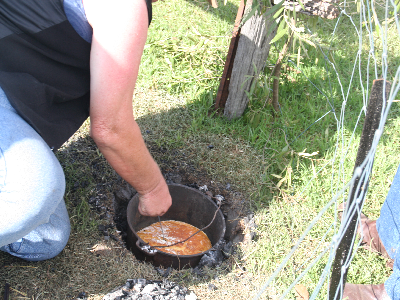
Damper done down under and ready to come up and eaten

Golden syrup is a pale treacle (un-crystallized syrup made from refining sugar). It is a thick, amber-colored form of inverted sugar syrup, made in the process of refining sugar cane or sugar beet juice into sugar, or by treatment of a sugar solution with acid. It is used in a variety of baking recipes and desserts. It has an appearance similar to honey, and is often used as a substitute by people who do not eat honey. I like to use this instead of Karo syrup (high fructose) when making my pecan pie. I think it is better for us than high fructose corn syrup and I like the added character it brings. It is more expensive than Karo syrup, but worth every extra cent!
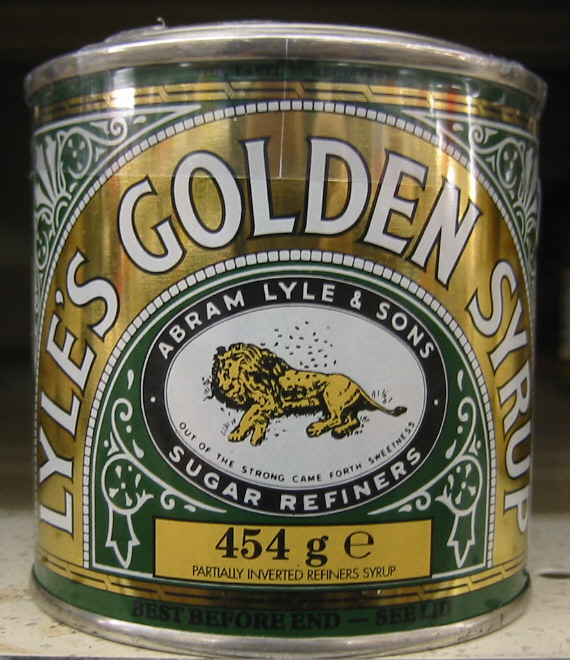
Golden Syrup
Golden Syrup

Molasses, or dark treacle, has a richer color than golden syrup, and a stronger, slightly bitter flavor.
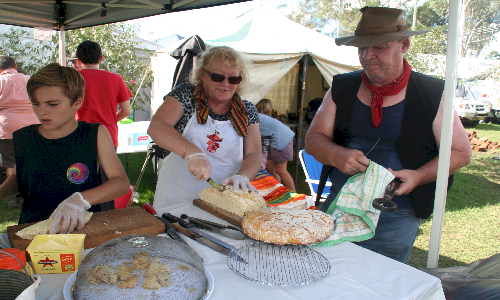
Slather some butter and golden syrup and dig in! :)
Slather on some butter and pour on some golden syrup and dig in! 🙂 Thank you Swagman Bill!

I have been promised an authentic Australian Damper recipe. Can’t wait to get it and make it for YOU, when we get home! 🙂

Take it away Dingo Dennis!
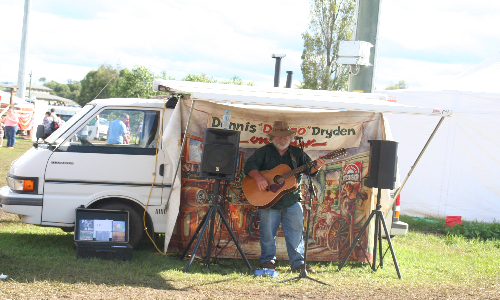
Dingo
Dennis Dingo Dryden

  Waltzing Matilda
Australian unofficial National Anthem
Lyrics by
A.B. Paterson

Once a jolly swagman camped by a billabong,
Under the shade of a Coolibah tree,
And he sang as he watched and waited till his billy boil,
You’ll come a Waltzing Matilda with me.

Waltzing Matilda, Waltzing Matilda,
You’ll come a Waltzing Matilda with me,
And he sang as he watched and waited till his billy boil
You’ll come a Waltzing Matilda with me.

………………..

Down came a jumbuck to drink at that billabong
Up jumped the swagman and grabbed him with glee,
And he sang as he shoved that jumbuck in his tucker bag
You’ll come a Waltzing Matilda with me.

Waltzing Matilda, Waltzing Matilda,
You’ll come a Waltzing Matilda with me,
And he sang as he shoved that jumbuck in his tucker bag
You’ll come a Waltzing Matilda with me.

…………………

Up rode the squatter mounted on his thorough-bred
Down came the troopers One Two Three
Whose that jolly jumbuck you’ve got in your tucker bag
You’ll come a Waltzing Matilda with me.

Waltzing Matilda Waltzing Matilda
You’ll come a Waltzing Matilda with me
Whose that jolly jumbuck you’ve got in your tucker-bag
You’ll come a Waltzing Matilda with me.

………………….

Up jumped the swagman sprang in to the billabong
You’ll never catch me alive said he,
And his ghost may be heard as you pass by that billabong
You’ll come a Waltzing Matilda with me.

Waltzing Matilda Waltzing Matilda
You’ll come a Waltzing Matilda with me
And his ghost may be heard as you pass by that billabong
You’ll come a Waltzing Matilda with me.

For more about Waltzing Matilda here, see also: http://wp.me/p4jGvr-k9


On: Australian Mailboxes

by Donnie Hayden

© 2014, all rights reserved

Guhday Mates
Guhday Mates, from Donnie, Aussie, your friendly Koala tour guide 🙂
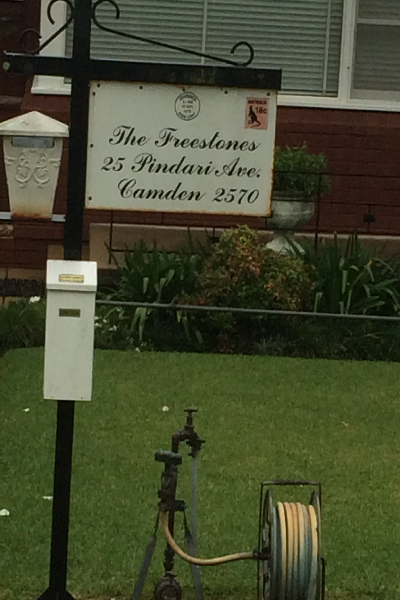
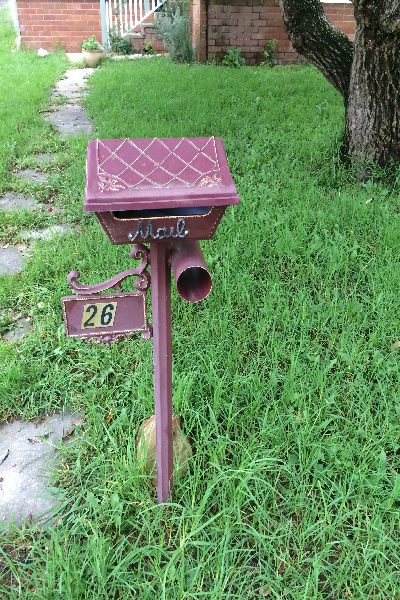
Mailbox where we are, 26 Little Street
Postcard mailbox
Postcard mailbox

Like many mailboxes the world over, many here are unique and suggest some of the personality of those they belong to.

I love the post card mailbox shown in the picture! 🙂

But since our short time here in Australia, at least here in Camden NSW Australia, I noticed the mailboxes are quite low to the ground. Having the type of perspiring mind, I mean inquiring mind that I do, 🙂 I wanted to know why?

I asked several people including our hosts for a reason. They did not know the answer. Along with my question about the mailboxes, I wanted to know how the mail is distributed here and if our hosts had ever seen their mail delivered. In the two years or so since Johnathan and Caitlin have lived here, neither had ever seen their mail delivered. It was just a matter of never being here or noticing when it was dropped off.

This is a really laid-back area. They are not so focused on the mail delivery as say, we in the United States might be. I know when our mail is delivered and sometimes, I wait for it and from time to time, even say “hello” and/or “thank you” to our mail person.

By the way, I’m sorry to use the politically correct crap word “person” which does not distinguish whether or not the deliverer is male or female. OK, I get the “equality thing,” but I’m glad I am am a man and that my wife is a woman and she’s pretty OK with it too. And our mail “person” is a woman. I call her our mail lady and she likes it.

In the pictures shown thus far, the mailboxes are approximately two and half to three feet off the ground. That’s a little low for the postal delivery vehicles in the United States that distribute mail is rural areas like where we live in the country. In this area of Australia, I have not seen any mailboxes attached to the homes. Each are about 5-10 feet from the curb of the street.

Well, as it happened and just the other day, I was outside when it was mail time. My mystery has been solved! 🙂

Mailbox3
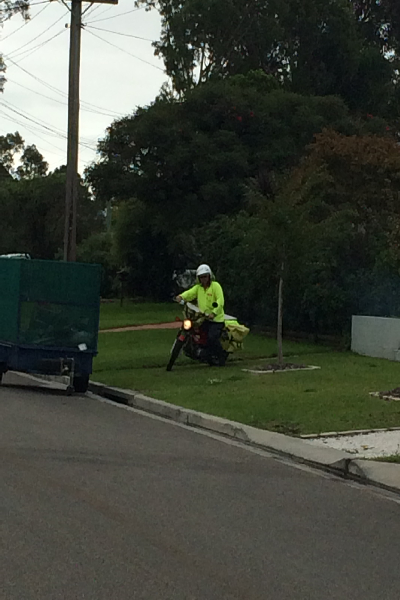
Motor Scooter Mail Delivery System

The scooter the driver is on, actually looks like something a child would drive as it is, pretty small. I’m sure it is great on gas here and/or natural gas. Natural gas is big here and many of the public transportation buses we saw in Sydney have signs above them that read: Powered By Natural Gas.

Most likely the other reason this vehicle is small is because, the driver actually drives up on the lawn, pulls the mail from the two side bags on the scooter and then drives to the next address. No tracks or treadmarks were left in anyone’s lawn that I could see. And the driver wearing rain gear because of it having rained this day. The ground was soft. So this scooter with mail and rider did not appear heavy enough to even leave a dent in anyone’s yard.

I am not sure how newspapers or magazines are delivered here. See round tube in picture #1 above.

Also, I’m not sure what happens if there are large packages as the mailboxes are quite small. I do think the driver in the picture actually delivered to the house, perhaps a larger package then what would fit in the box. I was down the street when I snapped the picture. The driver shutoff the scotter and was just getting back on when I took it.

Anyway, mail delivery in Australia seems quite efficient, the scootter was pretty quiet and overall, I think it’s pretty awesome!

On: Waltzing Matilda

 Waltzing Matilda
Australian unofficial National Anthem
Lyrics by
A.B. Paterson

Swagman
Swagman

 Once a jolly swagman camped by a billabong,
Under the shade of a Coolibah tree,
And he sang as he watched and waited till his billy boil,
You’ll come a Waltzing Matilda with me.

Waltzing Matilda, Waltzing Matilda,
You’ll come a Waltzing Matilda with me,
And he sang as he watched and waited till his billy boil
You’ll come a Waltzing Matilda with me.

………………..

Down came a jumbuck to drink at that billabong
Up jumped the swagman and grabbed him with glee,
And he sang as he shoved that jumbuck in his tucker bag
You’ll come a Waltzing Matilda with me.

Waltzing Matilda, Waltzing Matilda,
You’ll come a Waltzing Matilda with me,
And he sang as he shoved that jumbuck in his tucker bag
You’ll come a Waltzing Matilda with me.

…………………

Up rode the squatter mounted on his thorough-bred
Down came the troopers One Two Three
Whose that jolly jumbuck you’ve got in your tucker bag
You’ll come a Waltzing Matilda with me.

Waltzing Matilda Waltzing Matilda
You’ll come a Waltzing Matilda with me
Whose that jolly jumbuck you’ve got in your tucker-bag
You’ll come a Waltzing Matilda with me.

………………….

Up jumped the swagman sprang in to the billabong
You’ll never catch me alive said he,
And his ghost may be heard as you pass by that billabong
You’ll come a Waltzing Matilda with me.

Waltzing Matilda Waltzing Matilda
You’ll come a Waltzing Matilda with me
And his ghost may be heard as you pass by that billabong
You’ll come a Waltzing Matilda with me.

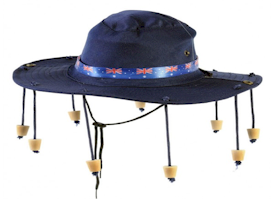
Swagman's cork hat
Swagman’s cork hat


Swagman a term describing an underclass of transient temporary workers, who traveled by foot from farm to farm carrying the traditional swag (bedroll). Also characteristic of swagman attire was a hat strung with corks to ward off flies. Kind of like a hobo or someone during the 1920-30’s during the depression when times were tough and work was hard to come by.
Billabong means drinking spot or pool in an intermittent stream. Because of the very dry conditions in out-back Australia, streams and rivers can often become dry leaving only a few water-holes where stock are able to drink
Coolibah tree is a type of Eucalyptus. It is is used to treat snake bites. The tree inhabits the arid and semi-arid open woodland areas of Australia. Its common name is of Aboriginal origin and Aborigines used part of the tree to treat snakebites.
billy boil is to make tea over a campfire
Waltzing Matilda is the knapsack on the back of a swagman. Where he goes, Maltilda waltzes with him.
Jumbuck is an Australian  slang word for sheep
Tucker bag – a storage bag for food
Squatter in this instance means landowner

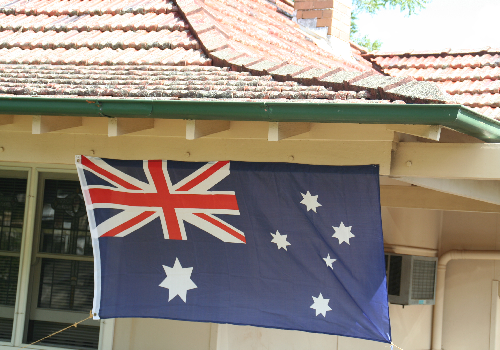
Australian Flag - British Union Jack in the left hand corner surrounded by the stars of "The Southern Cross"

This tune is a traditional Scottish Melody and the words are by A. B. Paterson who is generally referred to as Banjo Paterson.  He also wrote the Kookaburra Song.


On: Bell Birds

by Donnie Hayden

© 2014, all rights reserved

I only thought we were in the country until we actually went into the country. It was a nice ride from Camden to Picton,  New South Wales, Australia about 16 miles. We saw rolling hills and cows and sheep much like anyplace I have ever seen. If not for driving on the right side of the car and on the left side of the road, it all looked similar to anything I’ve ever seen. On occasion there would be a sign that read, “Stay in line unless overtaking,” meaning the center lane was for passing ONLY. Somehow, before we leave, I will snap a picture  of the road sign for Kangaroo Crossing. But again, everything seemed quite the same. WOW, was I about to be surprised!

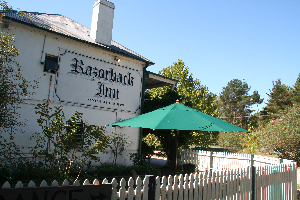
Our destination was the Razorback Inn, a quaint out-of-the-way place to eat that was established in 1849.

The Razorback Inn
The Razorback Inn
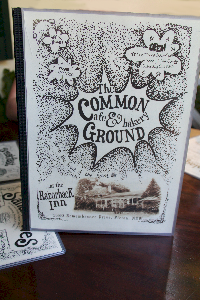
Menu from 'Common Gound'
Menu from ‘Common Gound’

The eatery is now run by a Christian Commune called, ‘Common Ground.’ They make their own clothes, live in the area, and run the restaurant including making all the food from scratch and natural and wholesome ingredients. A s delicious as the food was and as charming as the place was, this was not the most memorable experience, of this experience to me. It was in fact, the Bell Birds. Yes, that is what you read, what I wrote and what was meant! And as the name implies, the birds have some association with bells because, however they make this sound, they sound exactly like bells!!!!!!

The Bell Bird or the Bell Miner (Manorina melanophrys), commonly known as the Bellbird, is a colonial honeyeater found in southeastern Australia. The common name refers to their bell-like call. “Miner” is an old alternative spelling of the word “myna” and is shared with other members of the genus Manerina. The birds feed almost exclusively on the dome-like coverings of certain psyllid bugs, referred to as “bell lerps,” that feed on ucalyptus sap from the leaves. The “bell lerps” make these domes from their own honeydew secretions in order to protect themselves from predators and the environment.

Bell miners live in large, complex social groups. Within each group there are subgroups consisting of several breeding pairs, but also including a number of birds who are not currently breeding. The non-breeders help in providing food for the young in all the nests in the subgroup,  even though they are not necessarily closely related to them. The birds defend their colony area communally aggressively, excluding most other passerine species. They do this in order to protect their territory from other insect-eating birds that would eat the bell lerps on which they feed. Whenever the local forests die back due to increased lerp psyllid infestations, bell miners undergo a population boom.

The sound is beautiful and quite enchanting. It is difficult to believe that you are hearing  these sounds and that they are made by birds. Adding to this difficulty is their size. They are so small and so fast, it is almost next to impossible to see them in the trees and capture them with a camera. The following pictures of the Bellbird are not mine. I was able to capture their unimaginable and unbelievable sound, but I found a wonderful video on Youtube, so I will use this to share with you.

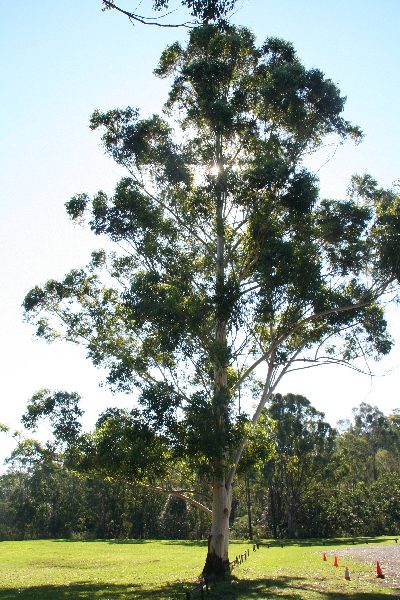
Gum Tree (a species of eucalyptus) where the Bellbirds feed
Gum Tree (a species of eucalyptus) where the Bellbirds love to feed


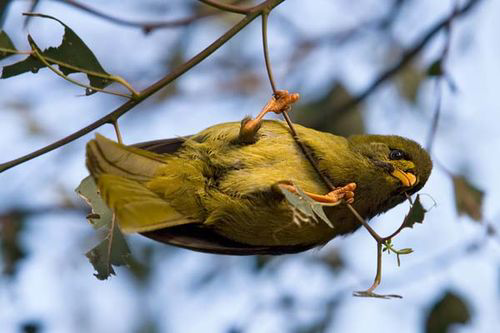
Leaf size Bell Bird
Leaf size Bellbird


On: Out N’ About I

by Donnie Hayden

© 2014, all rights reserved

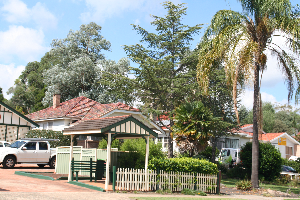
Today, I would like you share with you, a mini-walkabout in the neighborhood. Let us just see visually, some house and shops within 2-3 blocks of where we are staying. But first, what is a “mini-walkabout?”

OB20
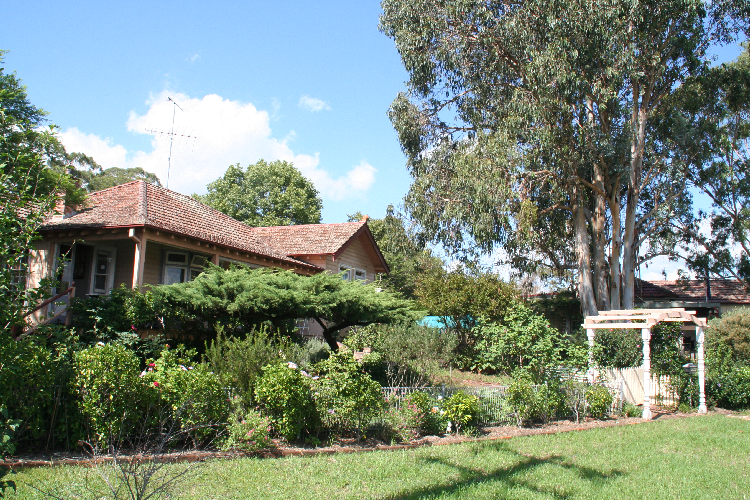
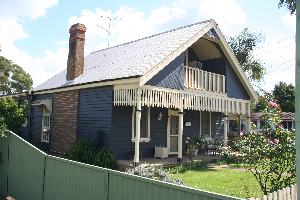
House on the corner of Little Street
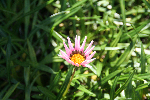
Pretty I
Pretty I

Walkabout refers to a rite of passage during which male Australian Aborigines would undergo a journey during adolescence and live in the wilderness for a period as long as six months. In practice they would trace the paths, or ‘Songlines’ that their ancestors took, and imitate, in a fashion, their heroic deeds. Merriam-Webster Dictionary, however, identifies the noun as a 1908 coinage referring to “a short period of wandering bush life engaged in by an Australian Aborigine as an occasional interruption of regular work”, with the only mention of “spiritual journey” coming in a usage example from a latter-day travel writer.

To white employers, this urge to depart without notice (and reappear just as suddenly) was seen as something inherent in the Aboriginal nature, but the reasons may be more mundane: workers who wanted or needed to attend a ceremony or visit relatives did not accept employers’ control over such matters (especially since permission was generally hard to get).

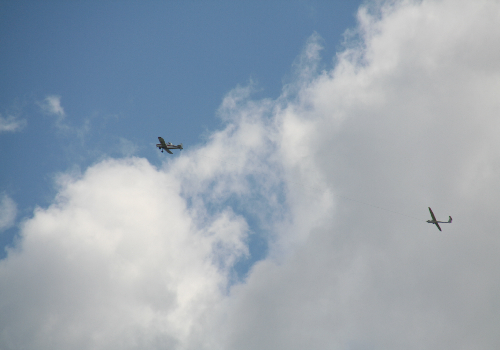
Plane & Glider
Plane & Glider

Another great possibility is that the Aborigine had no concept of time. If given a job to do, we may not completely finish the work in a day and would return at it’s end and continue the following day and so on until it is finished. The Aborigine would just take off and not return until the job was done.

OB4
Another Lovely Home

So, my mini-walkabout is just a short period of time, walking the neighborhood to see what I can find.

Most of the homes here have tile roofs and the rest have metal roofs. The ceilings inside most homes are around 8′ (eight feet) high. These construction materials and methods are to keep the interiors as cool as possible, for this area can reach temperatures as high as 115 degrees + Fahrenheit in peak summer.

Sometimes the relative humidity can be upwards of 90 percent, but at 115 degrees F., the heat burns off the humidity and it is a dry heat. This would be similar to the desert southwest in the United States. It is hard to imagine such beautiful and fragrant things surviving in such climates, but they seem to thrive.

Even though there are tropical birds, trees and plants here, it can become very dry and parched, due to lack of rain. Things could quickly turn brown, but as they say  in Australia, “No Worries,” because everything adapts to these extremes and fluctuations.

In the United States we might freak out if our grass turns brown due to lack of rain and start watering like crazy. But in this area, brown can be normal, Again, “No Worries,” the rains will come again and everything will turn green again, almost instantly. At present, most everything is nice a green here, so we are happy about that.

The weather of their fall is between 70-80 F. by day and 65-68 F. at night. It has been very nice during the day and pleasant sleeping. The air is clean and fragrant although I seem to be allergic to something and have a little upper respiratory congestion. I am told that it never snows here, but it can get somewhat cold in the winter, but it is short-lived. They may have around five seasons here. Spring, early summer, late summer, fall and a short winter. I am sure this has to do with Australia’s position below the equator and I am told the hole in the ozone layer, its effects are greatly experienced here. I’m not sure of the accuracy of this, but I’ve heard 1 out of every 2 people experience some type of skin cancer. This country does have the highest rate of melanomas in the world. THE SUN IS HOT, AND BLINDING HERE! Cover up and where skin protection.

In another post, I mentioned that everything needed to live here, is within a short walking distance. I meant it! And actually, within seven minutes!

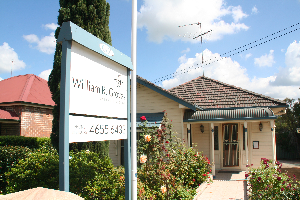
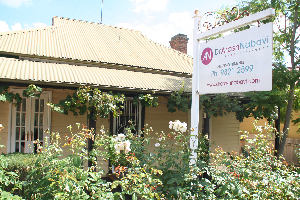
There is A family practice, Chiropractor, Orthopedic surgeon, a lawyer, hairstylist, Thai massage, a caterer, shed builder, engineer, daycare, a hospital, ambulance service, MRI & X-ray place for diagnostic images, cottages, houses, apartments and condos.

In a later post, I will share pictures of the downtown area. It’s only seven minutes from here on Little Street where we are staying. There you can get everything else you need!

And God forbid, there is even a funeral director in the neighborhood. 🙂


OB5
Another Lovely Home
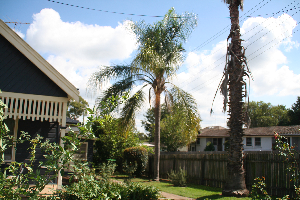
Palm trees
Palm trees
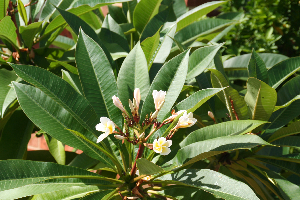
Pretty II
Pretty II
Office II
Office I
Aussie Pride
Aussie Pride
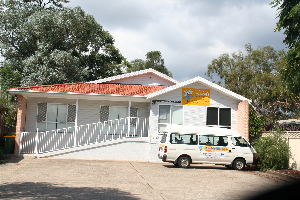
Childcare
Childcare
Pretty IV
Pretty III
Pretty V
Pretty IV
Condos
Condos
Office III
Office II
Office I
Office III
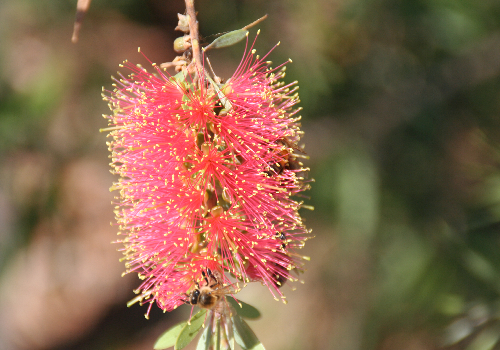
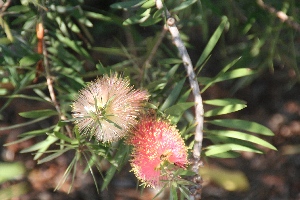
Bottle Brush
Bottle Brush
Bottle Brush II
Bottle Brush II
OB7
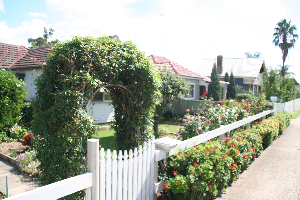
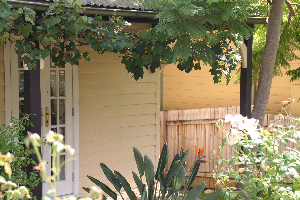
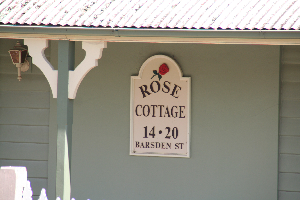
Cottages and yes, lot’s of roses


Blog at WordPress.com.

Up ↑