On: Damper

by Donnie Hayden

© 2014, all rights reserved

Guhday mates from Dahni,  Your Aussie Koala Swagman
Guhday mates from Donnie, Your Aussie Koala Swagman


Today, I had intended to share our experience with The Camden Show on Saturday April 5th, 2014, here in Camden NSW Australia. But there are so many pictures I would like to share, I’m still working on it. But, but again, today’s post has pictures from this amazing show. I separated the pictures out for this post because, even though they were taken at the Camden Show, this post should be considered as a whole other subject. The subject is, Damper. Before I explain what damper is, please allow me to set the stage.

In previous posts we looked at such things as the Kookaburra Song which mentions the Swagman. The swagman is a bit of a character in Australian folklore and a very real person or persons, that out of necessity lived very meagerly. Their common mode of transportation was their two feet. Their traveling companion was Matilda, the pack on their back. They traveled around in this manner because, many were poor and moved from place to place seeking better opportunity. If any were well-off-enough to have four-wheeled transportation, it was most likely well-worn and kept together with whatever they could find for parts and that their wit could muster. Their home and kitchen was a campfire. They took shade and some protection from a Coolabah tree, a kind of eucalyptus. Their Billy boil (a metal pot carried on their back for water and to make tea over fire) was essential. Food was often scarce and they needed something easily affordable, simple, easy to make and something filling,  to rid themselves of hunger. This common food was called Damper.

Let’s enter the campsite look of a Swagman. And kudos to those that presented this visual and informative and DELICIOUS display at the Camden Show!!! 🙂


Some Swagmen might have had some old wheels like this
Bill the Swagman
Bill the Swagman

Bill the swagman.


They would look for a nice place to set up camp. Their campfire area would look something like this.
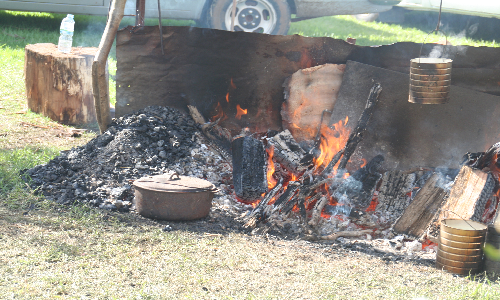
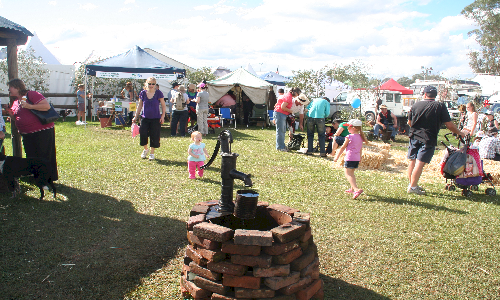
Swagman Kitchen
Swagman Kitchen
Must have water or bring it
Must have water or bring it to make your billy boil and damper

So what is damper? It’s delicious, that’s what it is! 🙂

Damper is a traditional Australian soda bread prepared by swagmen, drovers, stockmen and other travellers. It consists of a wheat flour based bread, traditionally baked in the coals of a campfire. Damper is an iconic Australian dish. It is also made in camping situations in New Zealand, and has been for many decades.
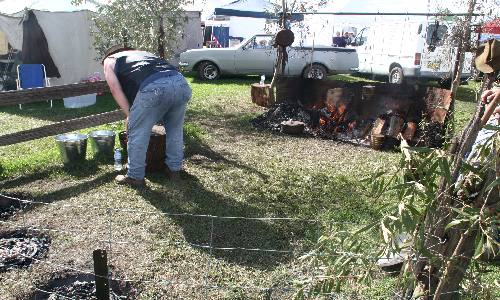
Preparing damper
Preparing damper

Damper was originally developed by stockmen who traveled in remote areas for weeks or months at a time, with only basic rations of flour, sugar and tea, supplemented by whatever meat was available. The basic ingredients of damper were flour, water, and sometimes milk. Baking soda could be used for leavening. The damper was normally cooked in the ashes of the camp fire. The ashes were flattened and the damper was placed in there for ten minutes to cook.
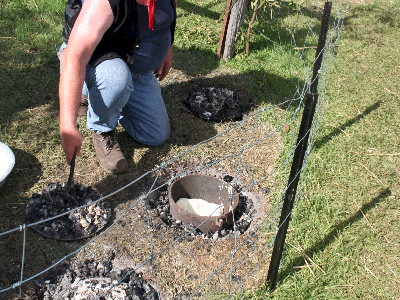
mixture over of pot in hot coals
mixture  in pot over hot coals

Following this, the damper was covered with ashes and cooked for another 20 to 30 minutes until the damper sounded hollow when tapped.
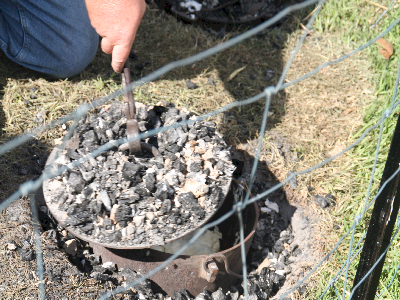
Damper is covered with a lid of hot coals

Alternatively, the damper was cooked in a greased camp oven. Damper was eaten with dried or cooked meat or golden syrup, also known as “cocky’s joy”. Cocky’s joy – were small farmers who settled or perched (like a bird) on the portions of his land that was resumed for agriculture. Some believe they were first called this from the area of Cockatoo Island, hence the word “perched.” So the joy of the Cocky’s was to be able to have land to settle and something to sweeten their damper, which was by tradition, golden syrup.
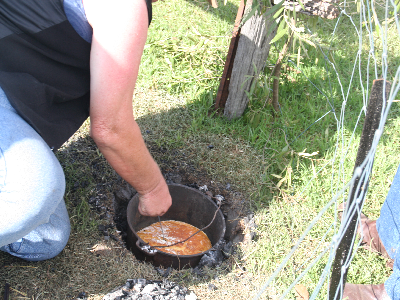
Damper done down under and ready to come up and eaten

Golden syrup is a pale treacle (un-crystallized syrup made from refining sugar). It is a thick, amber-colored form of inverted sugar syrup, made in the process of refining sugar cane or sugar beet juice into sugar, or by treatment of a sugar solution with acid. It is used in a variety of baking recipes and desserts. It has an appearance similar to honey, and is often used as a substitute by people who do not eat honey. I like to use this instead of Karo syrup (high fructose) when making my pecan pie. I think it is better for us than high fructose corn syrup and I like the added character it brings. It is more expensive than Karo syrup, but worth every extra cent!
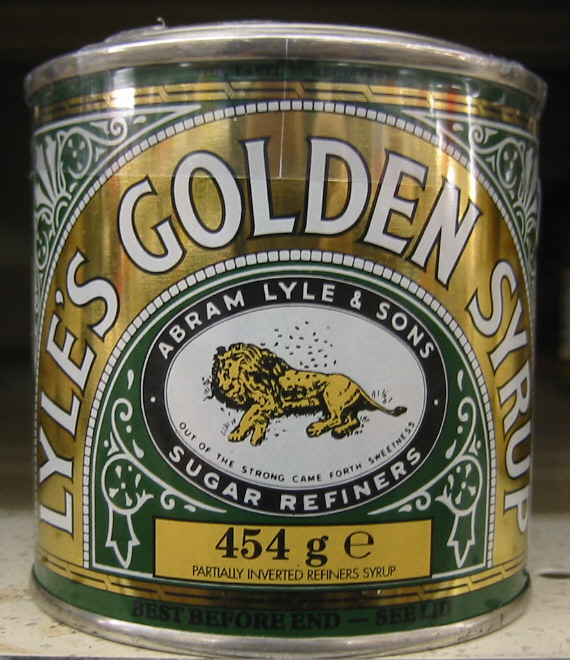
Golden Syrup
Golden Syrup

Molasses, or dark treacle, has a richer color than golden syrup, and a stronger, slightly bitter flavor.
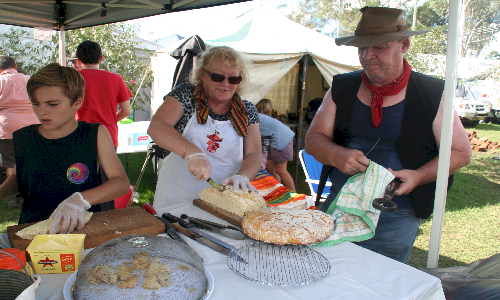
Slather some butter and golden syrup and dig in! :)
Slather on some butter and pour on some golden syrup and dig in! 🙂 Thank you Swagman Bill!

I have been promised an authentic Australian Damper recipe. Can’t wait to get it and make it for YOU, when we get home! 🙂

Take it away Dingo Dennis!

Dingo
Dennis Dingo Dryden

  Waltzing Matilda
Australian unofficial National Anthem
Lyrics by
A.B. Paterson

Once a jolly swagman camped by a billabong,
Under the shade of a Coolibah tree,
And he sang as he watched and waited till his billy boil,
You’ll come a Waltzing Matilda with me.

Waltzing Matilda, Waltzing Matilda,
You’ll come a Waltzing Matilda with me,
And he sang as he watched and waited till his billy boil
You’ll come a Waltzing Matilda with me.

………………..

Down came a jumbuck to drink at that billabong
Up jumped the swagman and grabbed him with glee,
And he sang as he shoved that jumbuck in his tucker bag
You’ll come a Waltzing Matilda with me.

Waltzing Matilda, Waltzing Matilda,
You’ll come a Waltzing Matilda with me,
And he sang as he shoved that jumbuck in his tucker bag
You’ll come a Waltzing Matilda with me.

…………………

Up rode the squatter mounted on his thorough-bred
Down came the troopers One Two Three
Whose that jolly jumbuck you’ve got in your tucker bag
You’ll come a Waltzing Matilda with me.

Waltzing Matilda Waltzing Matilda
You’ll come a Waltzing Matilda with me
Whose that jolly jumbuck you’ve got in your tucker-bag
You’ll come a Waltzing Matilda with me.

………………….

Up jumped the swagman sprang in to the billabong
You’ll never catch me alive said he,
And his ghost may be heard as you pass by that billabong
You’ll come a Waltzing Matilda with me.

Waltzing Matilda Waltzing Matilda
You’ll come a Waltzing Matilda with me
And his ghost may be heard as you pass by that billabong
You’ll come a Waltzing Matilda with me.

For more about Waltzing Matilda here, see also: http://wp.me/p4jGvr-k9


On: Bell Birds

by Donnie Hayden

© 2014, all rights reserved

I only thought we were in the country until we actually went into the country. It was a nice ride from Camden to Picton,  New South Wales, Australia about 16 miles. We saw rolling hills and cows and sheep much like anyplace I have ever seen. If not for driving on the right side of the car and on the left side of the road, it all looked similar to anything I’ve ever seen. On occasion there would be a sign that read, “Stay in line unless overtaking,” meaning the center lane was for passing ONLY. Somehow, before we leave, I will snap a picture  of the road sign for Kangaroo Crossing. But again, everything seemed quite the same. WOW, was I about to be surprised!

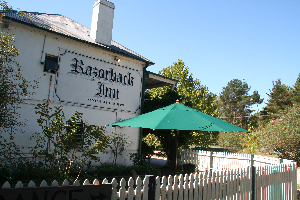
Our destination was the Razorback Inn, a quaint out-of-the-way place to eat that was established in 1849.

The Razorback Inn
The Razorback Inn
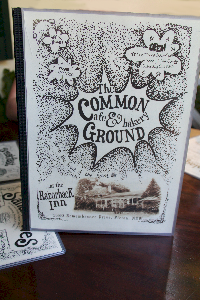
Menu from 'Common Gound'
Menu from ‘Common Gound’

The eatery is now run by a Christian Commune called, ‘Common Ground.’ They make their own clothes, live in the area, and run the restaurant including making all the food from scratch and natural and wholesome ingredients. A s delicious as the food was and as charming as the place was, this was not the most memorable experience, of this experience to me. It was in fact, the Bell Birds. Yes, that is what you read, what I wrote and what was meant! And as the name implies, the birds have some association with bells because, however they make this sound, they sound exactly like bells!!!!!!

The Bell Bird or the Bell Miner (Manorina melanophrys), commonly known as the Bellbird, is a colonial honeyeater found in southeastern Australia. The common name refers to their bell-like call. “Miner” is an old alternative spelling of the word “myna” and is shared with other members of the genus Manerina. The birds feed almost exclusively on the dome-like coverings of certain psyllid bugs, referred to as “bell lerps,” that feed on ucalyptus sap from the leaves. The “bell lerps” make these domes from their own honeydew secretions in order to protect themselves from predators and the environment.

Bell miners live in large, complex social groups. Within each group there are subgroups consisting of several breeding pairs, but also including a number of birds who are not currently breeding. The non-breeders help in providing food for the young in all the nests in the subgroup,  even though they are not necessarily closely related to them. The birds defend their colony area communally aggressively, excluding most other passerine species. They do this in order to protect their territory from other insect-eating birds that would eat the bell lerps on which they feed. Whenever the local forests die back due to increased lerp psyllid infestations, bell miners undergo a population boom.

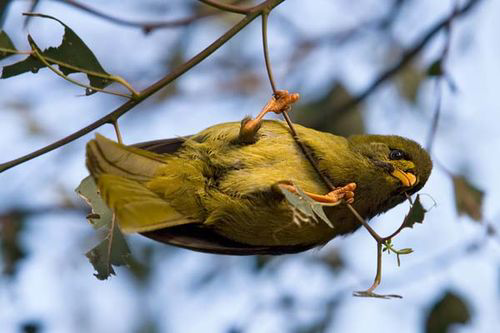
The sound is beautiful and quite enchanting. It is difficult to believe that you are hearing  these sounds and that they are made by birds. Adding to this difficulty is their size. They are so small and so fast, it is almost next to impossible to see them in the trees and capture them with a camera. The following pictures of the Bellbird are not mine. I was able to capture their unimaginable and unbelievable sound, but I found a wonderful video on Youtube, so I will use this to share with you.

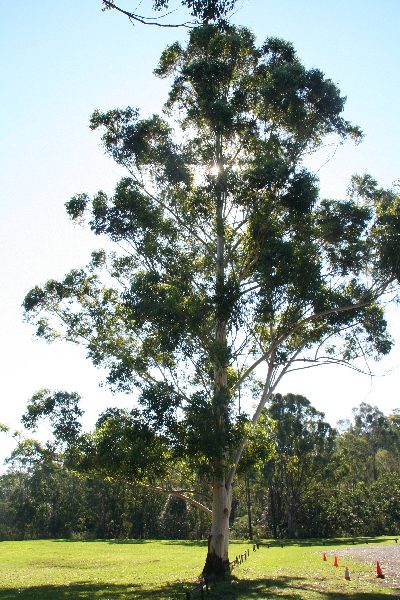
Gum Tree (a species of eucalyptus) where the Bellbirds feed
Gum Tree (a species of eucalyptus) where the Bellbirds love to feed


Leaf size Bell Bird
Leaf size Bellbird


On: Ramen Noodles

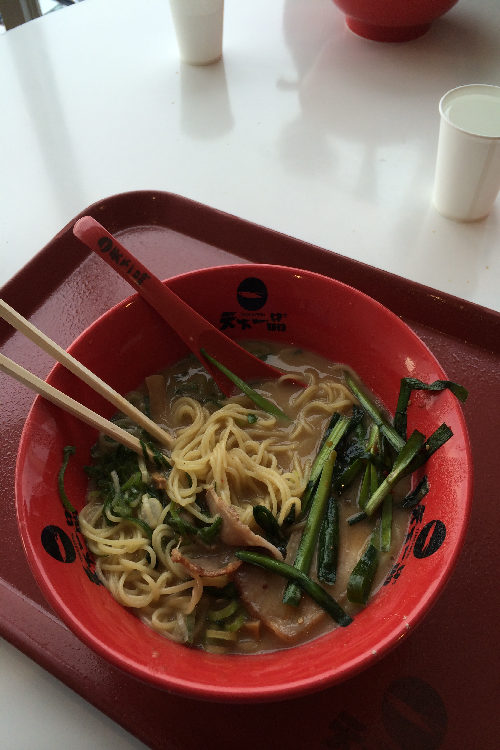
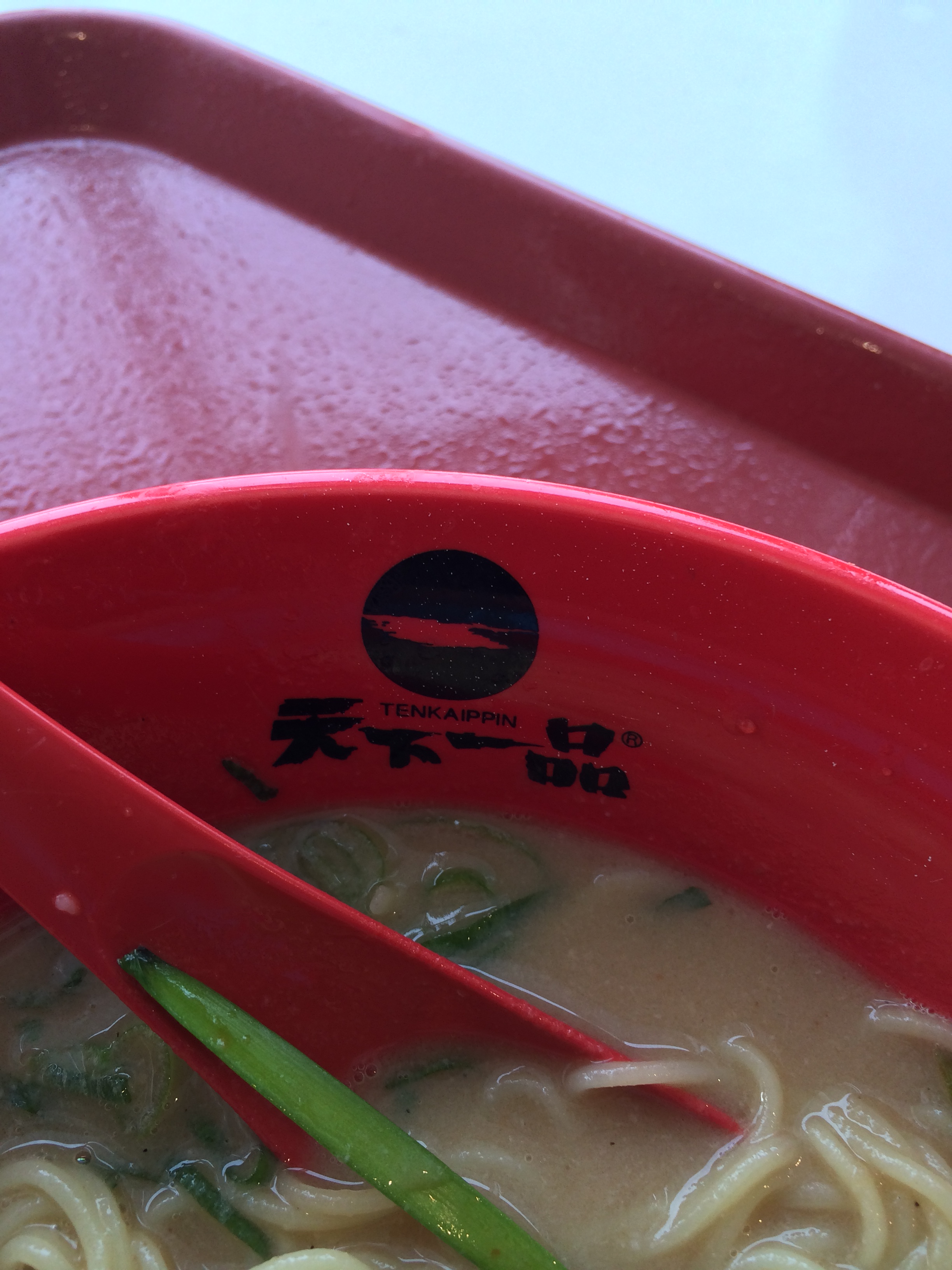
You know, a lot of people like those prepackaged dry Ramen noodles. Personally, I just never understood what the big deal is. Well, these pictures are the real deal and I love it. Real thick sauce of boiled down vegetables and peanut sauce. Add lots of green onion, thin sliced pieces of delicious meat (pork and beef) and of course, noodle. I am told the translation of the Japanese on the bowls in thee pictures mean,…

…”the best thing you can buy under heaven!”

I can believe it! There are people that eat this every day for lunch as it is very good for you and filling. I can understand why! 🙂

Chopsticks, spoon, slurp and enjoy! 🙂

REAL Ramen Noodles
REAL Ramen Noodles
"The Best You Can Buy Under Heaven"
“The Best Thing You Can Buy Under Heaven”

On: From Kyoto with Love

by Donnie Hayden © 2014, all rights reserved

kissable
kissable
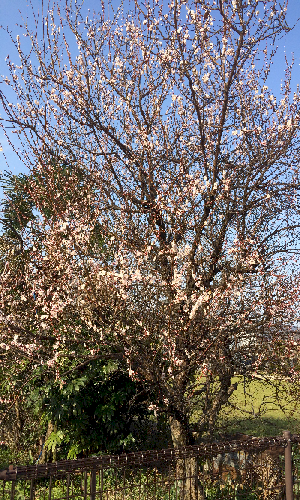
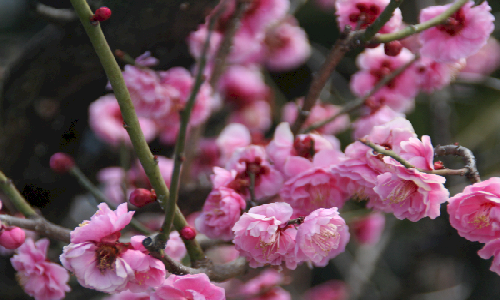
Cherry Blossoms
Cheery Cherry Tree

I am no expert just opinionated based on my limited observation, but I believe there are no better symbols for love and matters of the heart than the cherry blossoms and tea ceremonies.

Both take care and the proper time to make the ordinary into the extraordinary.

In Japan, cheery trees are spread out across the country and bloom in their own time and at different times from late February and March.

To your left is a is a picture of the cheery cherry tree outside where we are staying

Like love, both the cheery cherry blossoms and tea require patience in order to appreciate their beauty and all that they have to offer.

It is the measure of our details applied, the care and focus and patience which squeeze out every drop of tea or matters of the heart which make the experience from ordinary to the extraordinary. After all, is this not what extraordinary is, just adding extra to the ordinary!

This is what I believe and what I observed in this ceremony and what I will continue to believe about all of life!

carpe tea-um (seize every drop of tea)! 🙂

Cheery Cherry Blossoms

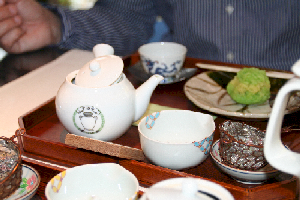
The tea ceremonies are also, time sensitive. Precise measurement of tea, water temperature and many other details are necessary to extract the full measure of its flavor and properties to perfect the whole experience.

Tea-licious
Tea-licious
Everything is important

While in the United States, we may be in such a rush that we’ve little time to prepare or even enjoy our teas and coffees, but this is not how tea is approached in Japan.

Whoever coined the Land of the Rising Sun, or thought of Japan as a country of extremes or opposites, I would like to suggest that it is a people and a culture that does so much with so little. To perhaps state this differently, they strive to maximize what they have with as little wasted as possible – time and resources.

Color and taste and texture

Japan is an island country formed by volcanoes and in their cooling; Japan is full of mountains almost everywhere. It is my understanding that Japan is 70% mountains which leaves 30% for land and its people to live on. So in this, it is not quantity that matters most, but quality and to acquire quality, it takes time.

Instead of extremes, I have come to think of Japan as a country with a culture of contrasts. This is beautifully illustrated by tea or tea ceremonies. To understand this more fully, we westerners need to understand taste.

The sensation of taste can be categorized into four basic tastes: sweetness, sourness, saltiness, and bitterness. A fifth, umami, must also be included. Umami uːˈmɑːmi, a savory taste, is a  loanword from the Japaneseうま味 Umami can be translated “pleasant savory taste”. This particular writing was chosen by Professor Kikunae Ikeda from umai うまい “delicious” and mi 味 “taste”. The kanji 旨味 are used for a more general sense of a food as delicious. People taste umami through receptors for glutamate, commonly found in its salt form as the food additive, monosodium glutamate (MSG).For that reason, scientists consider umami to be distinct from saltiness.

But taste also requires our sense of smell, sight, sound and touch. Actually, all of our senses, if focused like a magnifying glass focuses light and produce fire, will not only enhance the enjoyment, but will aide in digestion.

With this in mind, we enter a tea house of tea and tea ceremonies, in Kyoto Japan. There is tea, good tea, great tea and the best of the best tea. Our recent experience was with the best of the best.

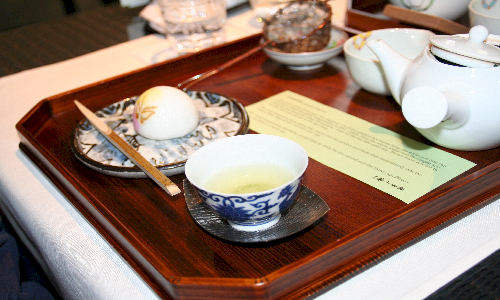
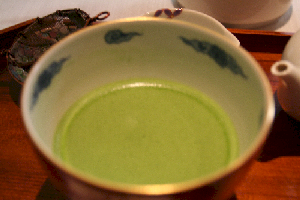
Extra fine, delicate and fragile green tea with something sweet for contrast
Color and texture and beauty
Everything has a reason and a purpose.

Our particular tea was a fine fresh cut tea. Its color was an intense and vibrant rich green. Sufficient quantity is placed into the tea pot. Hot water is poured into an empty cup and allowed to cool for about a minute. This is around 85 degrees Fahrenheit and then it is poured into the tea pot for about 20 seconds. Then it is poured into your cup with a strainer and the last drop has much of the flavor!! Too much heat for too long can burn and ruin this fragile tea.

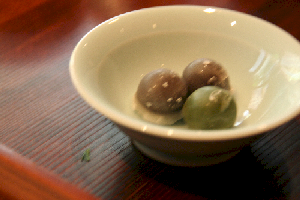
The tea is to be drunk slowly and along with the contrast of something delicate and sweet that you cut with a wooden knife and with a bite on the knife, you raise this to your lips and eat slowly. This continues until you have consumed your tea and sweet or until you have had sufficient.

The other type of green tea is crushed to a fine powder and is actually ingested. It is believed to have many health benefits as antioxidants and something that I am highly interested in, its possible ability to reduce and regulate blood pressure.

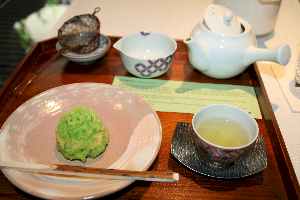
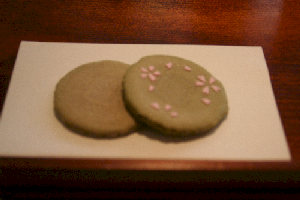
Because of its somewhat bitter taste, this tea is also served with contrasting sweetness made with the tea itself baked inside little cookies or some other soft and chewy sweet.

Green tea cookies Green tea soft and chewy sweets
Green tea cookies with candy pink cherry blossom designs
Soft and chewy tea infused sweets

But everything done is all to enhance the flavor of the tea.

It’s all about the Tea

Tea of this quality and experience can be quite expensive. But the experience is not common, but rare, so cost is not that great when compared to the infrequency of the experience. Like love, or fine wine, it is all about the quality of the experience, not the cost or the time required perfecting it. But at the end, there is a cost. For three people our bill was about $60. In the United States, I have no doubt that this would have been around a hundred or one hundred and twenty dollars. And our experience included the time it took to savor every bite, taste every sip, mouth every delight and enjoy every moment, plus, the wonderful clear, detailed and informative instruction by our server, the view of the garden and even the warm singing toilet in the bathroom! 🙂

And the company I was in and the conversation was exceptional too!

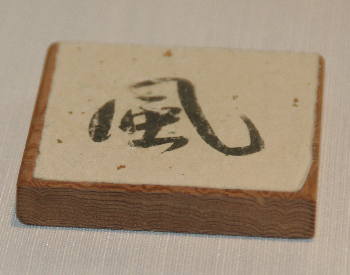
But someone must pay for this. And they receive the following wooden kanji tile.

Kanji tile to the one that pays

The tile, the kanji and the texture of the table upon which it sat was a work of art in and of itself and contributed to the whole experience.

Susan and I were invited here by son Chris and we certainly thank him for this precious gift and for the memory! We will return here before we leave Japan to attend a special class on how to do this at home and purchase tea to ship home to The Gathering Place, so we can share with you that come to visit.

Yesterday, Susan and I spent precious time with our dear friends here, Ted and Shohei that we have not seen for eight years. Shohei is from Japan and Ted is from Australia. But to use a word Ted is often using and seems quite fond of and rather than my usual word as ‘wonderful’ or something like it, I will use here what just seems so apropos. I am quoting Ted in context of this whole experience, “It’s just lovely!”

To conclude this post as it began, it’s all about love. It’s about quality. It’s about you! It’s, “from Kyoto with love!” 🙂

On: Some of my Favorites

by Donnie Hayden © 2014, all rights reserved

Well, where do I begin with “Some of my Favorites” from Japan? Just start!

In just a few short days since I have been here, I wanted to make sure I was able to get some of my favorites and I have! 🙂

On my list was tackoyaki (octopus ball), modanyaki (modern “as you like it”), green tea ice cream, anpan (sweet red bean filled buns) and calpis sour (made with calpis, citrus carbonated soda and shochu (Japanese-like vodka)

Check
Check…
Check
…Check and…
Check
…Check!

Note: In honor of St. Patrick’s Day, the above items have been triple checked with check marks encircled in green!  🙂

Takoyaki
Takoyaki
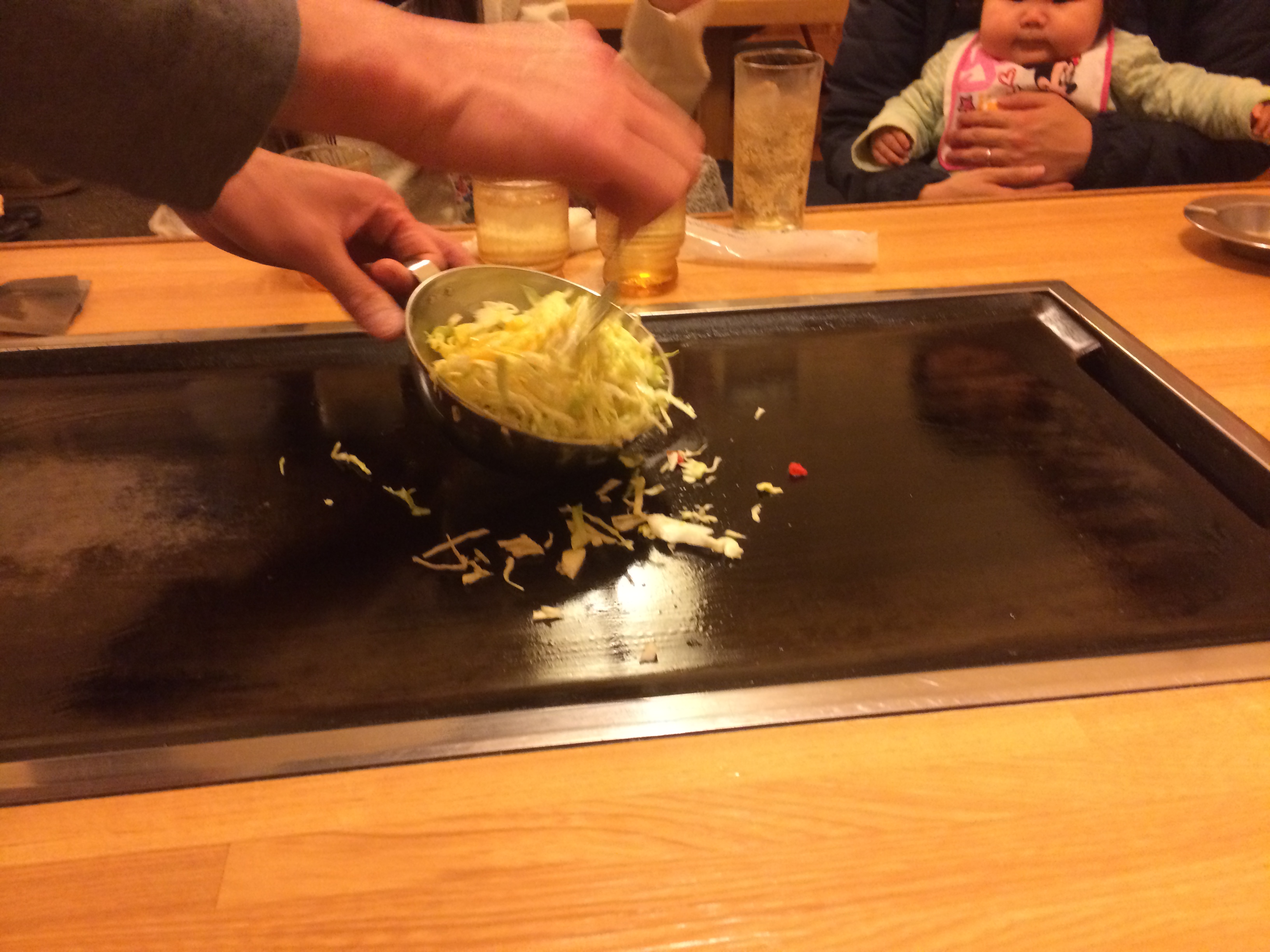
Modanyaki
Modanyaki

Modanyaki is a more modern way to enjoy this common food. Modan or modern is “with noodle.” It’s starts with cabbage and raw egg and pretty much whatever you have leftover, (shrimp, pork, beef etc.) and a sauce formed into a ball and cooked over a hot grill. After it is turned over you add noodle and sauce and cook and turn. When it is done you serve it with a sauce similar to bar-b-q suace and Japanese mayonnaise which is vinegar, oil and more eggs than traditional mayonnaise. OMG this common meal “as you like it,” is incredible!

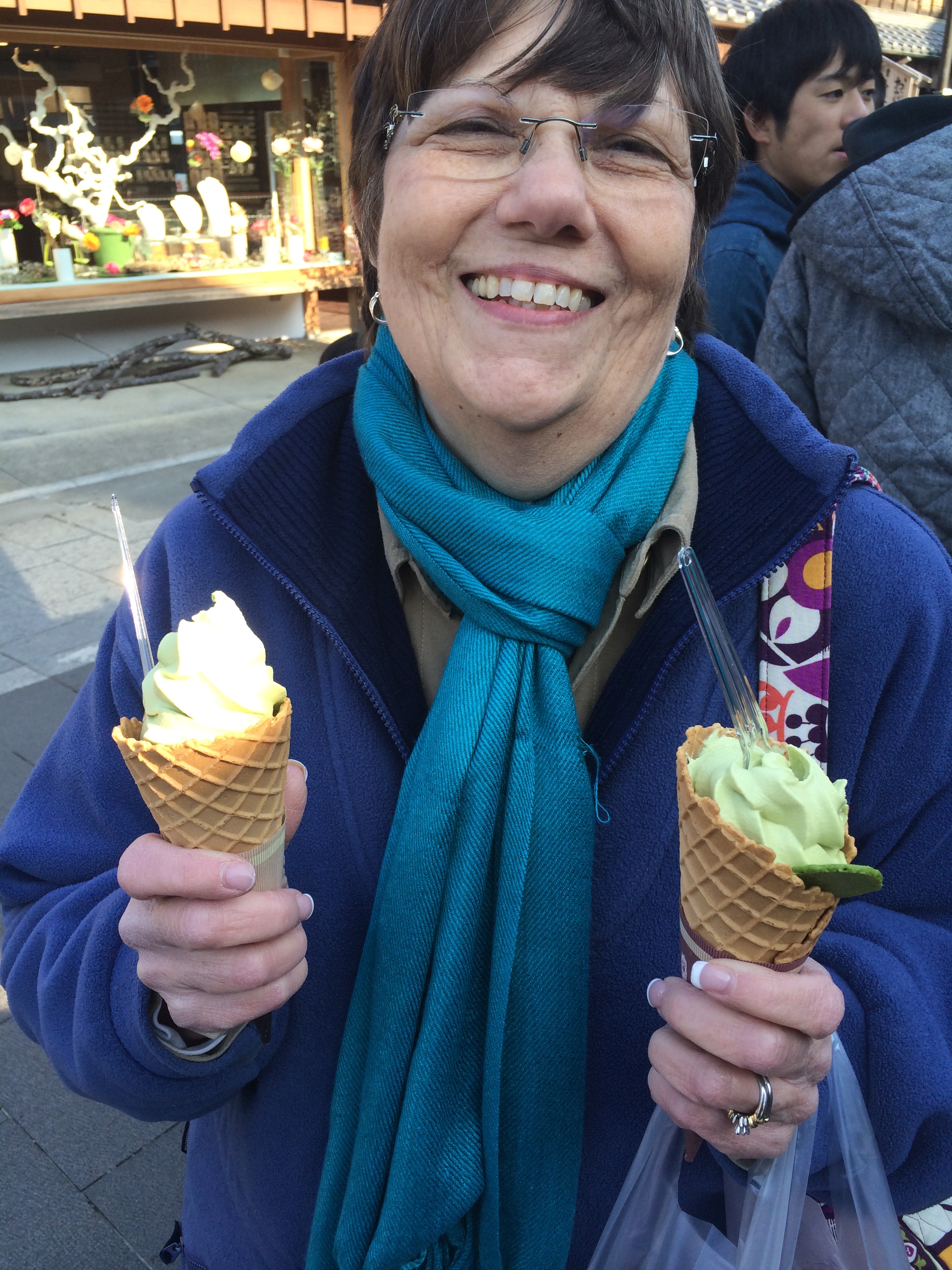
Susan and Green Tea Ice Cream

Oh, it might seem a little chilly for ice cream, but when it’s Green Tea ice cream, one just has to make an exception!

It is served in a waffle cone with a spoon and of piece of green tea white chocolate.

I love this stuff!

It is sweet like Susan and some pungent or strong taste of the green tea. This dessert is actually better for you than ice cream.

I have seen Green Tea gelato in the stores and would love to try this.

Surely though, green tea ice cream is a hard act to follow!

Onpan
Onpan

Sweetened red bean paste filled inside a typical white bread bun. But there is nothing typical about this! It is not only sweet and delicious, it is actually good for you. One of the most popular animated cartoons in Japan is Onpanmon, a red bean bun character that is a hero. So no wonder I love this, kids love them and I R !! 🙂

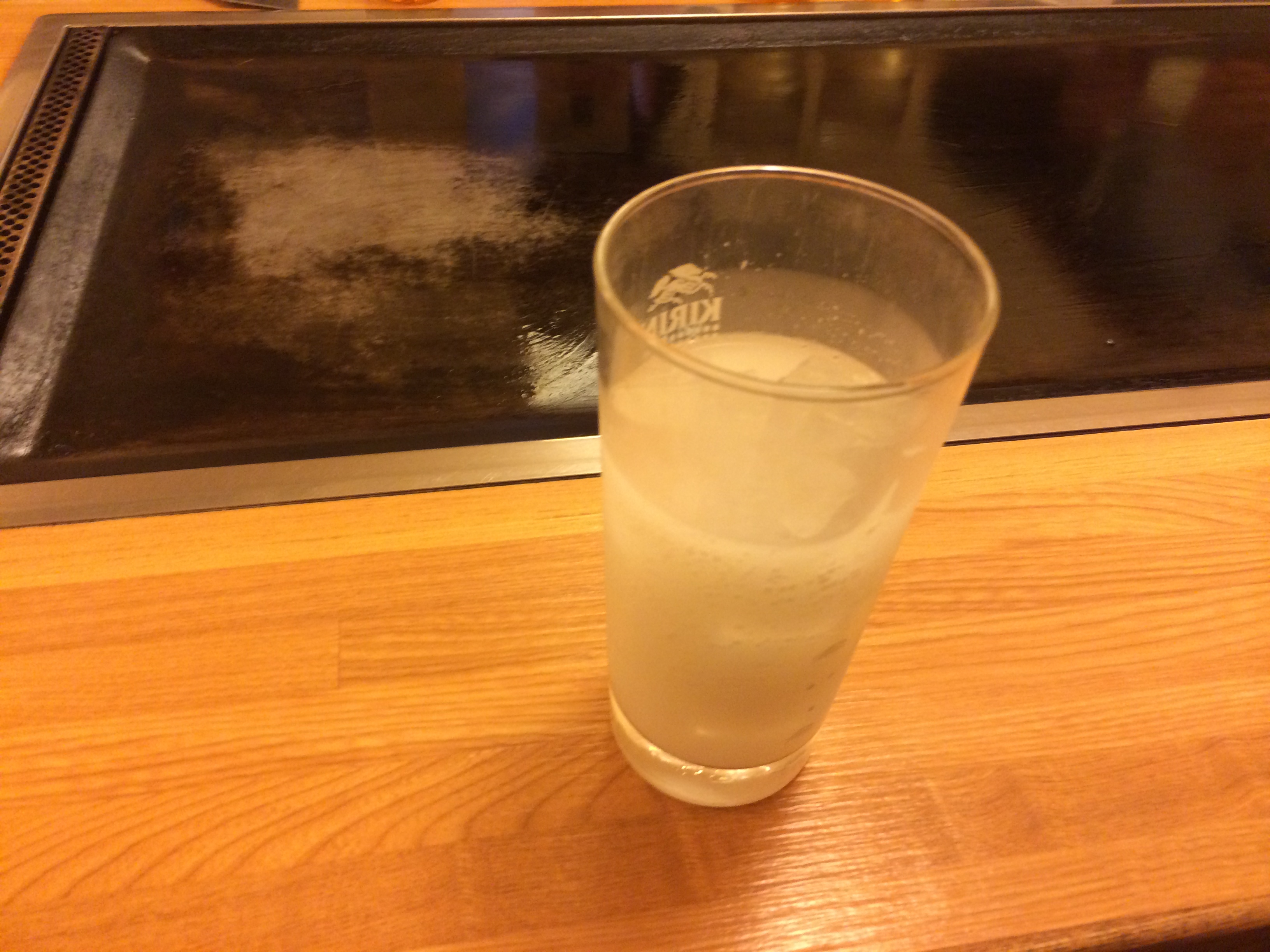
And last, but certainly not least is my Calpis Sour. Yes I know, it looks like it sounds like cow + pis. Westerner’s have a problem with this so the same company that makes it makes the same thing under the name of calpico.

Calpis Sour
Calpis Sour

Calpis is a fermented product made with milk and some citrus flavor as a preservative. Fermented yes, but it does not contain alcohol. It does have natural cane sugar and is good for you since it has calcium. It looks and tastes like watery yogurt with a citrus overtone.

A calpis sour contains calpis, citrus carbonated soda and shochu (which is like Japanese vodka). All in all this is a fantastic cocktail with some nice health benefits. Whatever, I love these!!! I have plans to find a way to make these at The Gathering Place when we (you and us) get back home!!! 🙂

On: Safely arriving in Japan

I suppose this could have been titled, ‘The Blizzard of 14,’ because this is what happened in the Rochester, NY area and where we live at The Gathering Place.

I booked a room at a motel across the street from the airport. Quite frankly, if I wasn’t on the plane, I’m not sure Susan would have spoken to me again, EVER! 🙂

Took off before the storm and made it to Chicago. Made the international flight to Narita airport near Tokyo Japan

Just for my willingness to help in case of an emergency, my seat was changed, it might as well been first class because that’s what it felt like to me -plenty of room to stretch out, two seats beside me were empty, galley and bathroom right in front.

Japan Airlines (JAL) has fantastic service by the way.

Until I get unpacked, settled in and the laptop up and running to post, I will close with a statement and a picture.

Nihonshu Sake & Rice crackers

Japanese food makes me happy! 🙂

OMG, Just here a day and the things I have done and the things I have seen, I just can’t wait to share with you. I will as internet WIFI access and when time allow!!!! 🙂

On: Desserts in Japan

by Donnie Hayden © 2014, all rights reserved

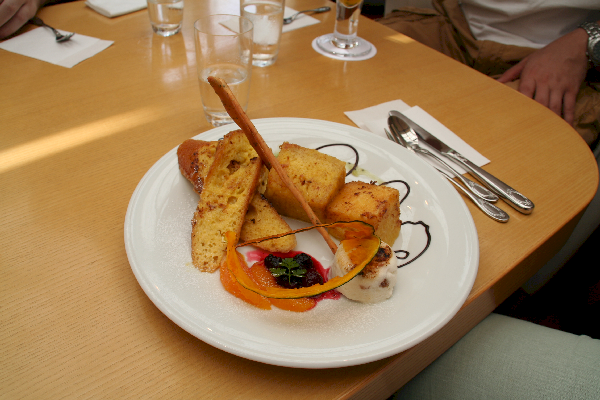
Desserts in Japan are not only delicious and beautifully sculpted, it is their garnishment that not only appeal to the senses, but actually help aide in digestion.

There are many sweet-eats in Japan to be enjoyed and savored, here is just a few of my favorites.

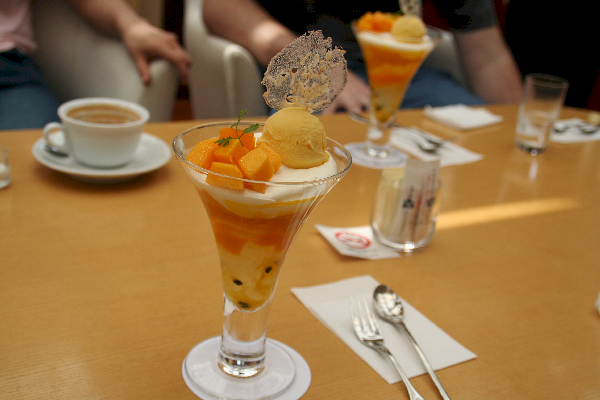
mango parfait
mango parfait

Do you notice the the strange thing sticking out of the mango parfait? It is actually a thin piece of spun sugar! 🙂

some kind of beautiful, some kind of yum
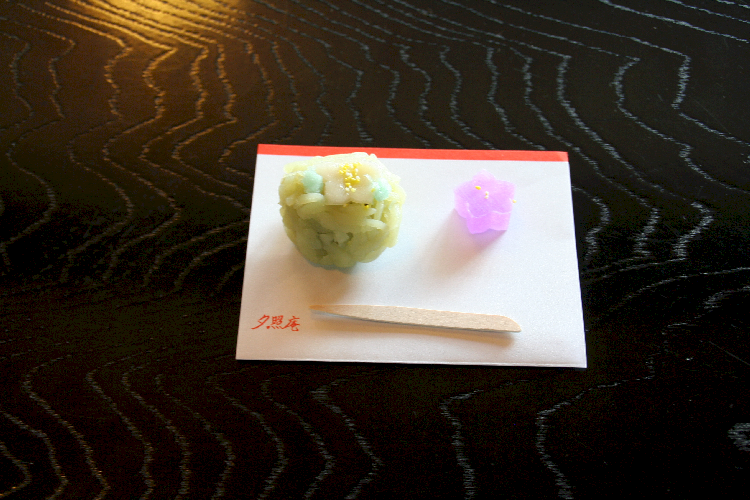
sweet delights served during a Japanese 'Tea Ceremony'
sweet delights served during a Japanese ‘Tea Ceremony’

On: Octopus Balls

by Donnie Hayden © 2914, all rights reserved

Well, this title might seem a bit strange, but this is exactly what these delicious treats would be called in English, Octopus balls. 🙂

In Japan, they are called, Takoyaki (pronounced taco + yah-key).

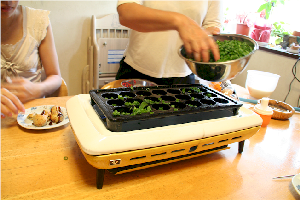
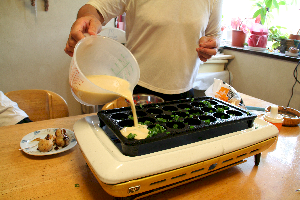
Takoyaki (たこ焼き or 蛸焼 is a ball-shaped Japanese snack made of a wheat flour-based batter (like tempura). It is cooked in a special  takoyaki pan, that resembles a muffin tin.  Ours can be placed directly over flame or as most Japanese homes like the pictures show below, they are table top, propane units.

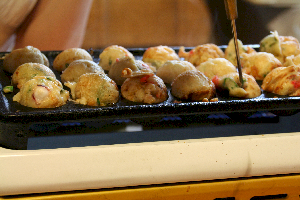
Takoyaki pan, heating and filling with negi (green onion)

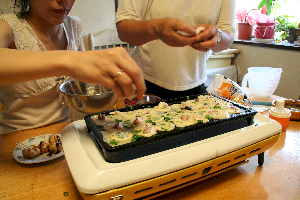
Takoyaki  is typically filled with minced or diced octopus tako, tempura scraps tenkasunegi (chopped Japenese green onion), pickled ginger, and sprinkled with green laver aonori (a type of seaweed) and shavings of dried bonito katsuobuschi (fish flakes).

filling with the batter

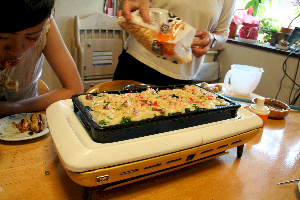
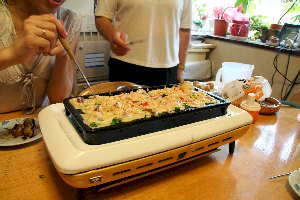
 Once filled and as the batter cooks, the takoyaki is constantly prodded with a stick like a long metal toothpick and turned. This shapes the treat into balls while cooking. And once they are cooked on all sides, to a lovely golden brown, they are done and ready to eat, almost. 🙂

filling with pickled ginger

The Takoyaki are then brushed with takoyaki sauce, similar to Worcestershire sauce or soy sauce in color. There are many recipes for the takoyaki and variations for the sauce such as:

ponzu (soy sauce with dashi (a clear broth like used in meso soup) and citrus vinegar
goma-dare (sesame-and-vinegar sauce)
vinegared dashi.
adding the fish flakes and etc.

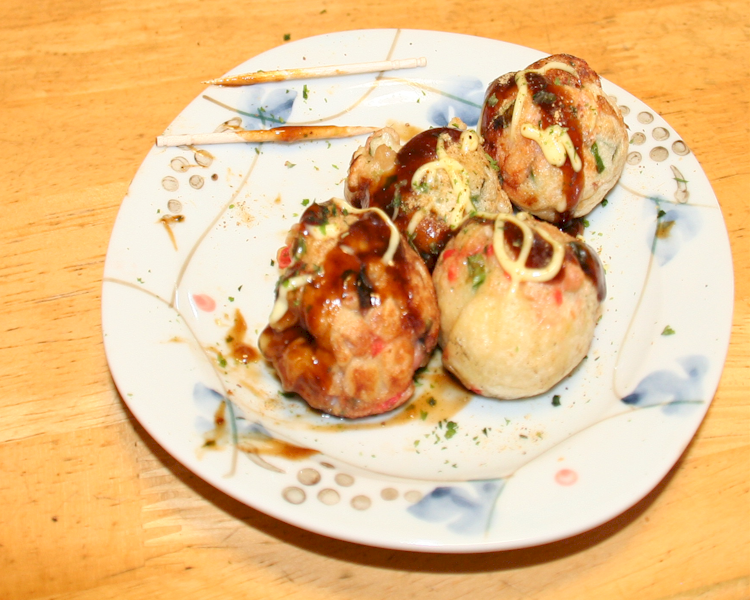
The final step is to squeeze some mayonnaise on top from a tipped-bottle like a ketchup or mustard squeeze bottle. I’m not exactly sure what makes Japanese mayonnaise different from that in our country (USA), but it is; it’s delicious and I love it! And Takoyaki? OMG, these are incredible!!! Eat with a a pointed stick (see last picture below). Each one is about a mouthful.

prodding and turning while cooking

Takoyaki was first popularized in Osaka Japan when a street vendor named Tomekichi Endo, first introduced his culinary delight in 1935. Takoyaki was inspired by akashiyaki, a small round dumpling from the city of Akashi in Hyōgo Prefecture, made of an egg-rich batter and octopus.

almost ready
almost ready

Today, Takoyaki is sold almost everywhere in Japan. They are very popular with children, young people and older people alike. And this is not only the Japanese, but many people love Takoyaki! It is not uncommon to see long lines of people, especially during festivals, waiting to be served their Takoyaki. They are sold in restaurants, on the street, super markets, 24 hour convenience stores and probably, even in vending machines.

I know, tako sounds like taco, but take care in using the sound as it may be Japanese slang for stupid? Tako means octopus. If you ask for tako, you might get an angry ‘look,’ some octopus salad Takosu タコス, or Taco rice (タコライス takoraisu. Taco rice is similar to a taco, only it is served on a plate without the shell. Now you might be able to actually find some Japanese tacos, but the shells are made out of rice flour and not corn. Just ask for Takoyaki (octopus balls) and you’ll be fine and happy that you did! 🙂

Takoyaki
Takoyaki

Blog at WordPress.com.

Up ↑