by Donnie Hayden © 2014, all rights reserved
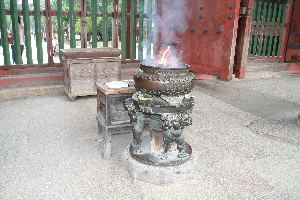
Perhaps there is no better way to title this post than by the word, purification and using a single picture showing incense burning? It will be the only picture given in the post, but as it is written, said and known, “A picture is worth a thousand words.” One picture here and we will just have to see how many words will follow. OK, maybe two pictures? 🙂
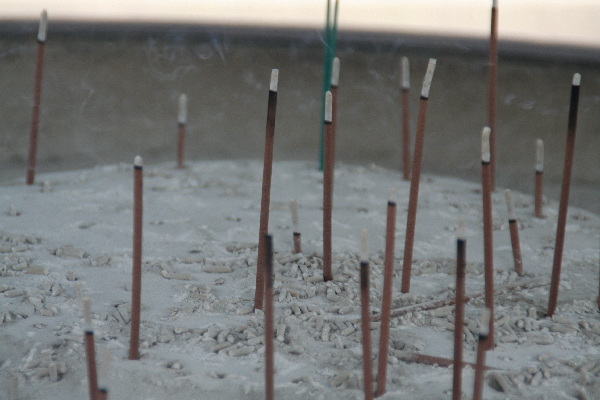
Burning incense may be thought of as having a spiritual and a practical implication, for both purification and cleanliness. Both the words are interchangeable or synonymous in Japan.
Every temple and shrine has an incense burner, sticks of incense to share and some means to light them to burn. Throughout Japan and our travels here, the lovely fragrance of incense fills the air and is seen burning as sticks and sometimes like clouds, clouds of smoke rising in the sky. Indeed, this does have spiritual significance and is symbolic of purification. Items you purchase in Japan, often have the aroma of incense. And I just love the smell of it and the surprise of it upon my senses when least expected. Whether for spiritual reasons or not, I would love the West adopting this custom to make our countries, communities, shops and homes fragrant and conducive to the promotion of peace and harmony, it seems to bring with it as it burns and purifies the world around us, our consciousness and the attitudes we harbor within us.
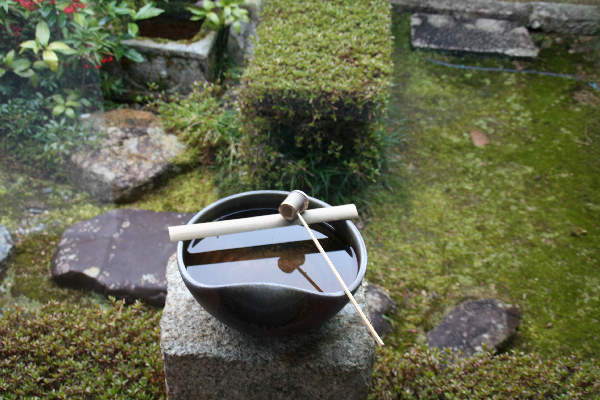
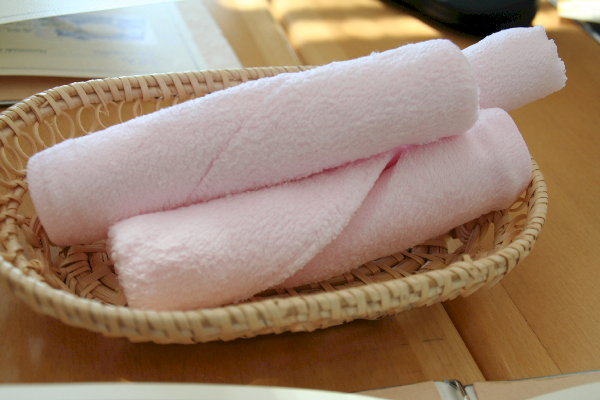
Water is important in Japan for both spiritual and the practical application of purification. There is a lot of washing of hands in Japan especially when entering in to a temple or shrine area. Warm moist towels are common everywhere in restaurants, tea houses and in homes prior to the consumption of a meal, to freshen your face and hands. One side of the towel is used for your face and the other for your hands. For the purpose of cleanliness or purification, it is extremely important not to commingle. Another example of this is understood from the picture of the water bowl above. The long-handled dipper is usually made out of bamboo. It’s purpose is to keep your hands as far away from the pure water as is possible. You dip the cup into the water and pour some over one hand (outside of the bowl), change hands and pour more over the other hand. The last step is to pour the last remaining water over the handle where your hand was to clean it for the next person and then placing the dipper back to its original state as shown in the picture. The purpose of this again, is for purification. The cup stays clean, the handle stays clean for the next person, water in the bowl stays clean and nothing is supposed to commingle.
Purification and cleanliness is seen and observed throughout Japan. It is not a mere novelty or even just a tradition or a custom, it is a way of life here. Cabdrivers, bus drivers and train personnel all wear clean and freshly pressed suits and ties or uniforms. The vehicles they drive or work in are always clean inside and out and void of trash and debris. Efforts to remove trash and debris are kept at a minimum because, people in Japan for the most part, just do not leave their trash. For the longest time, I could not understand why it is next to impossible to find public trashcans anywhere I have been in Japan. Now I think I might? The Japanese do not encourage the placing of trash in public. They want their surroundings to be clean and to reflect their desire for peace and harmony. Trash is not solely the responsibility of refuse collectors, it is everyone’s! Also, along with what is to follow here, in Japan, space is just limited so there is a conservative aspect to cleanliness-purification.
There is an order to order here. People generally only smoke in designated areas inside and out and generally, only while standing. There is a lot of bowing that takes place here – towards places of significance and out of respect for others.
Bathrooms in homes, businesses and shops are always separated into three parts and are compact areas. I humorously suppose when England refers to a bathroom as a water closet (WC), they must be talking about Japanese toilet rooms. These are are not much bigger than a closet. 🙂
Toilets have a tank for filling the flushed bowl and it fills at the top from a curved pipe that acts like a waterfall. I suppose you could rinse your hands in this clean water, but I would have a personal issue with washing my hands in toilet water, even if it is clean. Besides, the sink and laundry facilities are in another separate room, next to the shower and bathing room.
The shower and bath are in the same room but they are separate. You turn on the hot & cold water to adjust to your desired temperature then turn a lever to activate just the shower. A custom of the Japaneses is to fill the tub with hot water and shower first getting clean as possible, then soak in the tub for a few minutes. This same tub may be shared by all the members of a family. The water in the tub is already clean, each person has already washed in the shower and well, water is not to be wasted. Still, space is limited in Japanese homes so public bath houses, a sento, are not only popular here, they too, are a way of life.
A sento allows for much more space to stretch out, more features than are found in a typical home and are a way for families and friends to spend more time together. Most people here visit a sento at least once or twice a week at around about $7.00 per visit. Some do this daily for the added extra space and the features offered by the sento. These bath houses just relax you after a hard day or a week’s built-up stress.
At first, even though men and women bathe separately, one’s first experience at a sento can be a little intimidating, because in Japan, you bathe nude, just like everyone else. Fathers bring their young sons, other male family members and I suppose, a friend or neighbor’s child? And the same goes here for women. Public nudity is no big deal in Japan, only to westerners I guess like I once was somewhat uncomfortable the first time. But as the saying goes, “When in Rome, do as the Romans do.” However, body piercings and tattoos are not allowed inside a sento. The only focus the Japanese want in a sento is, the result of the experience, not looking at anyone’s body. The result of the experience? You feel great, clam, refreshed, relaxed and ready to conquer whatever life throws your way.
For the price of admission, you are given a locker to store your stuff and a key which you can either wear around your ankle or wrist. You are given another wrist or anklet bracelet to purchase anything you might need. Most people bring their own towels to save money or they can be rented. Shampoo, conditioner and body soap are pump containers and are supplied by the sento. They are fragrant and really good products, for your skin and hair.
First, you enter the bathing stations which have the pump dispensers, a mirror, a small bucket and plastic seat with a hole in the top. You rinse out the bowl and the rinse off the seat then sit and wash yourself as clean as is possible. Then you clean the bucket and the seat for the next person. Now one is ready to enter the bathing facilities, clean!
There is a hot sauna (one of my favorites). When entering, again, you clean the seat and area where you will be sitting and again, when you leave. In this hot, steamy environment, there is a large container of course salt. The salt is rubbed and scrubbed all over your body except for the face, any sensitive areas or obviously not any cut or wounded area as the salt would burn. The salt removes many callouses and polishes your skin smooth. It is an incredible and wonderful feeling. You stay in as long as you desire then move on to the next area. This could be a dry sauna, cold or hot tubs, individual or groups. There are fountain areas and waterfalls. Some areas are surrounded by walls with no ceiling so you can sort of be outside and seen the moon and stars and feel the cool night breeze on your heated skin.
There was one area where you lay flat on a constant stream of warm water and your head is slightly raised on a rectangle block. You place the rolled towel you have been carrying throughout that is wet from constant cleaning, rinsing and drying under your head for extra support. I call this the horizontal stretching pool as this is what it is does, stretches out your spinal column and makes your possibly otherwise aching or sore back from a lot of walking, just feel terrific.
There was a mineral warm pool of minerals and ginseng and etc. designed to relax, refresh and rejuvenate you. These baths are changed from time to time with other minerals etc. which are supposed to do give other therapeutic benefits and give variety. On two corners of this bath is a series of electrical pulses that have different cycles and degrees of duration and intensity. One side is mild and the other corner is more robust. It’ like getting a lower back massage with magic fingers.
There are many other areas we did not have time to explore. We chose to be here only for an hour, but I suppose if you wanted to, one could stay all day or night until they closed. The facility is constantly being monitored, inspected and cleaned for the maximum amount of efficiency, purity and cleanliness that it humanly possible. The Japanese have been using sentos or public baths for centuries, so they are masters at it!
Men and women, young and old come out of their separated areas fully refreshed and clothed and meet in the center area to share in food, fun, frivolity, conversation and drink. Special (private areas) are stationed all along the perimeter of the central common area. These are for more specialized areas like a special massage, yoga and etc.
But the whole point I am trying to make here is that in about 1 hours time, you leave the sento just feeling great!! 🙂
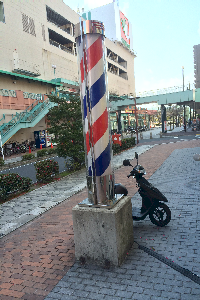
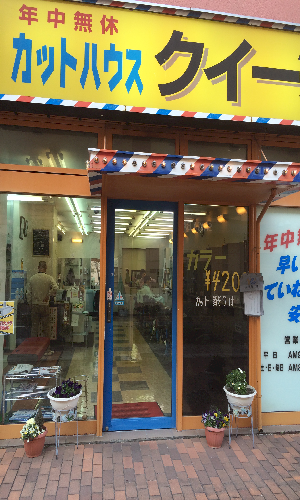
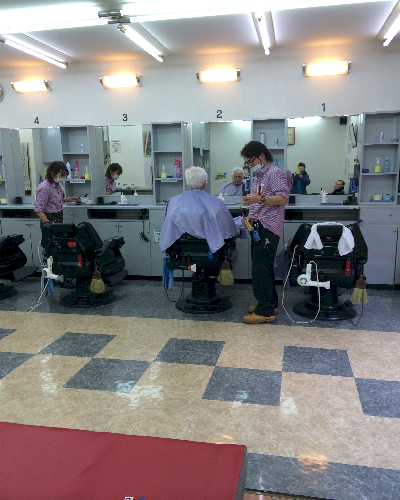
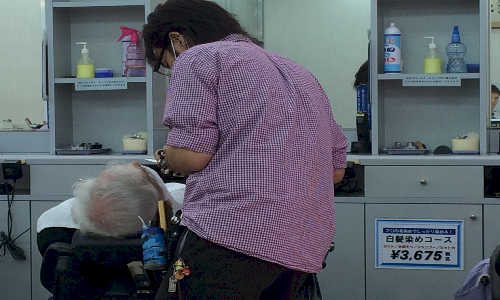
You leave the facility, turn in your bracelets, pay any charges, pickup and and put on your shoes and off you go into the night air FULLY SMILED AND RECHARGED. I would love to have a sento at home where we live, but due to our western thinking about public nudity and perverts lurking almost everywhere in the United States, this will probably never happen. Still, I would love this to be possible along with importing the Japanese art of barbering and so I’m told, hair styling for you ladies.
I mentioned shoes earlier. Most rooms that I have seen in Japanese homes are separated with raised thresholds when leaving one area into the next. As you enter through the front door, you immediately remove your shoes and leave them by the door. There is a step up to enter the hallway. There you find sandals/slippers and place them onto your feet. This act keeps dust and debris confined and kept to a minimum so the next area you enter remains, relatively clean. Every entrance to every room has a raised threshold, keeping each room clean from the others, as much as possible. The toilet area have their own set of shared slippers/sandals. You remove the ones on your feet and leave them outside the door while slipping on the ones in the toilet area and leaving them there when you leave. It may be possible for a man to stand at the toilet to urinate, but it would be pretty difficult to do, so is is preferred and appreciated if all remain seated. Japanese people are for the most part, pretty non-confrontational. They do not like to offend or confront. I have even seen a little wall mounted picture with visual descriptive images and instructions in French, to make the point that men should remain seated. 🙂
We of the west with our large bathrooms, wall to wall carpeting and one level surface between rooms might think the Japanese way is all fuss, much-ado-about-nothing and unnecessary? You might think the same about this post and its length of time to write it and to read it? But the entire subject and purpose of it is, purification.
The Japanese work very hard and quite often have limited time, space and resources. Adopting some of their customs in the west for a practical reason is that, if our stuff just stays cleaner, we may actually use less time for cleaning and have more for living life. And I may have discovered a practical reason for bowing too? If you change your shoes/sandals/slippers a lot between rooms, as you bow or bend over, you can turn your shoes in the direction of your exit so it’s easier to slip them on and go! 🙂
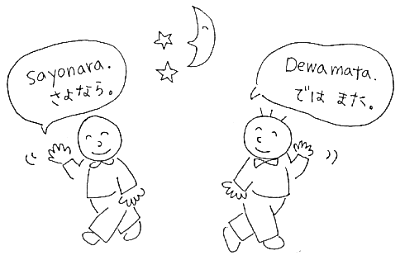
This may be my last post until we reach Australia for the 2nd leg of our travels. Susan is by far the better journal-er as she posts a series of pictures and brief overall descriptions on her Facebook time-line. I am, obviously more wordy or be it, verbose. But I am a visual learner and a post-processor. It take me a long time to process the incredible amount of information and experiences I have had here in Japan. Why just yesterday, I believe I took over 800 photographs. And that is just one day and does not even begin to suggest all the places we have been to or seen. It will take me some time to process all this information, edit, choose or discard the pictures taken and to decide what to do with them. But I will share something with you at some time later. At the present and I’m sure while in Australia it will be just, experience-point-and shoot! 🙂
I am told that the best way to learn a new language is immersion. By immersing yourself into the culture and being constantly exposed to the hearing, seeing and reading the language, you have a great opportunity to pick it up rather quickly. Although I did not come here to learn the language, but have picked up some words, I have for the most part, immersed myself in the Japanese culture. This is not our first time in Japan and perhaps some of my previous experience spilled over into me, this time. I was paid a very nice recently by Yoshi, the father of of Saiko and father-in-law of of Chris, whom we came here to see and his their new child Kai. Yoshi in speaking about me told Chris, “He (me) takes Japan with ease.” Whether this is by nature or something that has just evolved in me, I must make a confession.
In 2006 (our first trip to Japan), if I was not prejudiced, I at least harbored a lot of stereotypical attitudes about the Japanese and the culture and especially their food. But I am by nature, curious and generally like people. Still, despite my profound experiences here, I am quite sure that there are many things I would never try, repeat or eat in my own country. Food like the title of this post if pure, it is a fresh as is humanly possible, free of additives and chemicals often found in the United States. At home, I can hardly even drink a single beer or glass of wine without falling asleep. I am very selective about eating fish at home because, if I can smell it, I’m not eating it, Here in Japan like Yoshi told Chris, I seem to take Japan with ease and it has seemed to be genial towards me. If this is immersion than, it has served me well and I only hope that it continues in Australia.
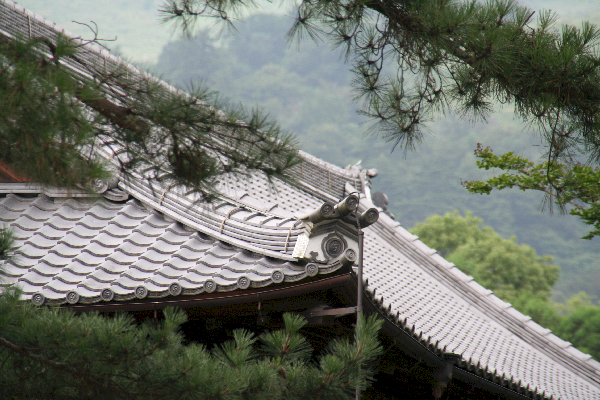
When you really think about it, prejudices, fears, intimidation, and stereotypes are really just the consequences of ignorance. If memory serves me correctly, the rising awe inspiring pagodas are symbols of wisdom. The carry the message, ‘Come with an open mind!’
Where ever I have had the blessing to go in my life and the privildge to share with others, I have found people to have more in common then we might first believe.
From my point of view, the main difference between the United States and every other person in the world is that we put into writing, into our form of government that, “all men are created equal and that they are endowed by their creator with certain unalienable rights that among these are…-
…Life, Liberty and the Pursuit of happiness.”
excerpt from: The Declaration of Independence
And those those certain truths are universal we all hold and that about purification!