Well, where do I begin with “Some of my Favorites” from Japan? Just start!
In just a few short days since I have been here, I wanted to make sure I was able to get some of my favorites and I have! 🙂
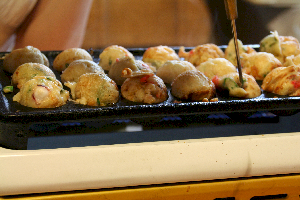
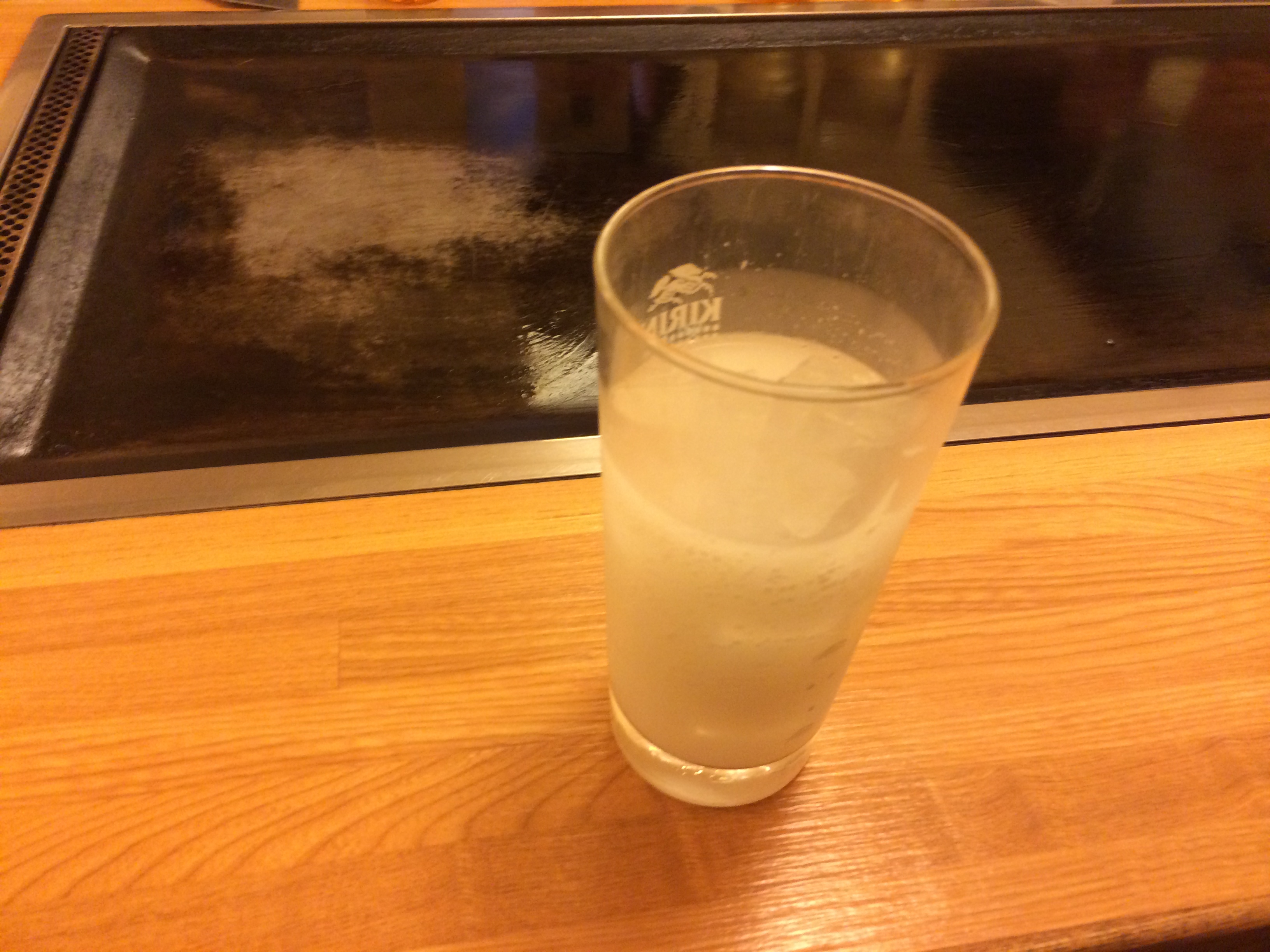
On my list was tackoyaki (octopus ball), modanyaki (modern “as you like it”), green tea ice cream, anpan (sweet red bean filled buns) and calpis sour (made with calpis, citrus carbonated soda and shochu (Japanese-like vodka)
Check……Check and……Check!
Note: In honor of St. Patrick’s Day, the above items have been triple checked with check marks encircled in green! 🙂
TakoyakiModanyaki
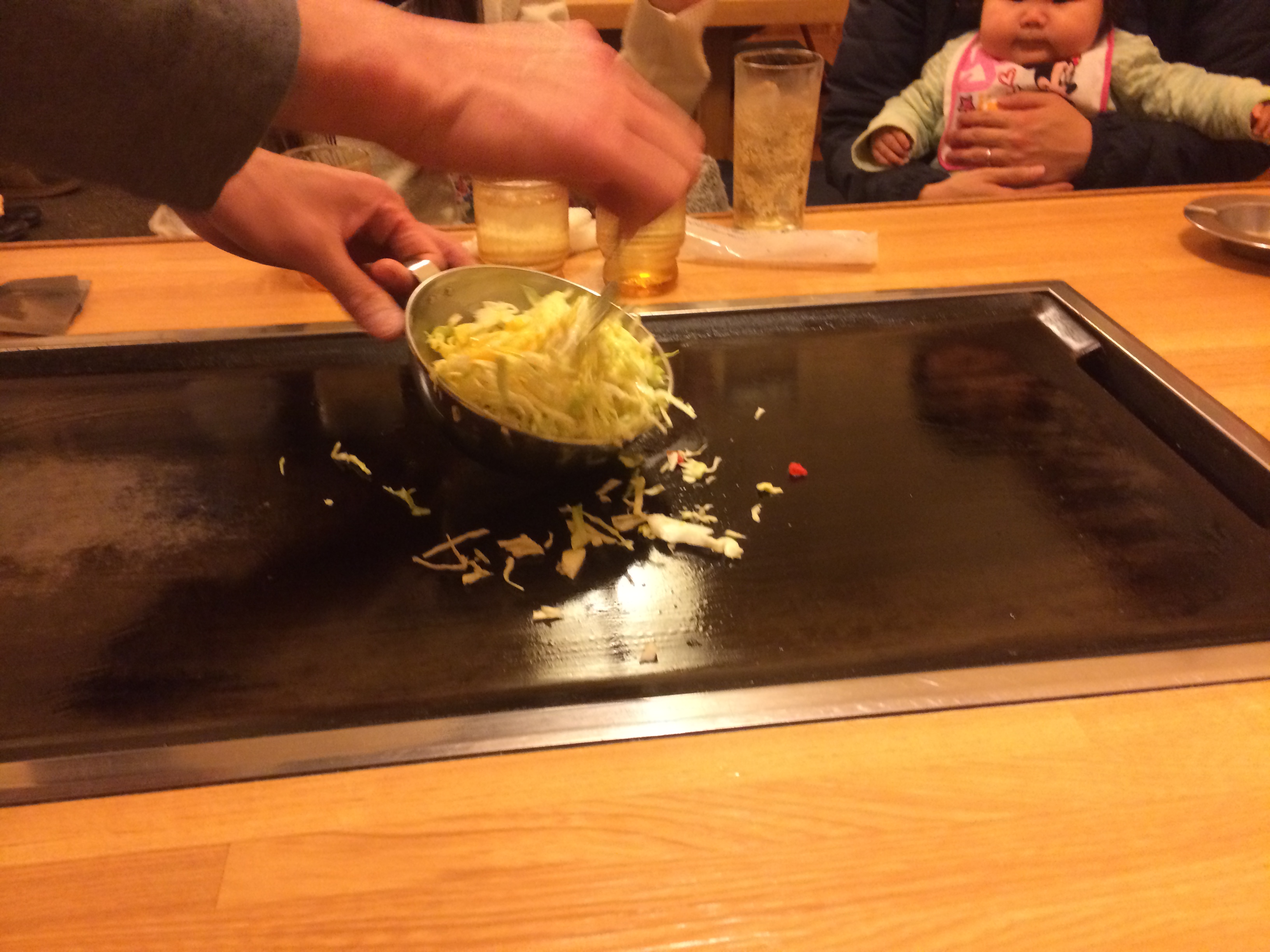
Modanyaki is a more modern way to enjoy this common food. Modan or modern is “with noodle.” It’s starts with cabbage and raw egg and pretty much whatever you have leftover, (shrimp, pork, beef etc.) and a sauce formed into a ball and cooked over a hot grill. After it is turned over you add noodle and sauce and cook and turn. When it is done you serve it with a sauce similar to bar-b-q suace and Japanese mayonnaise which is vinegar, oil and more eggs than traditional mayonnaise. OMG this common meal “as you like it,” is incredible!
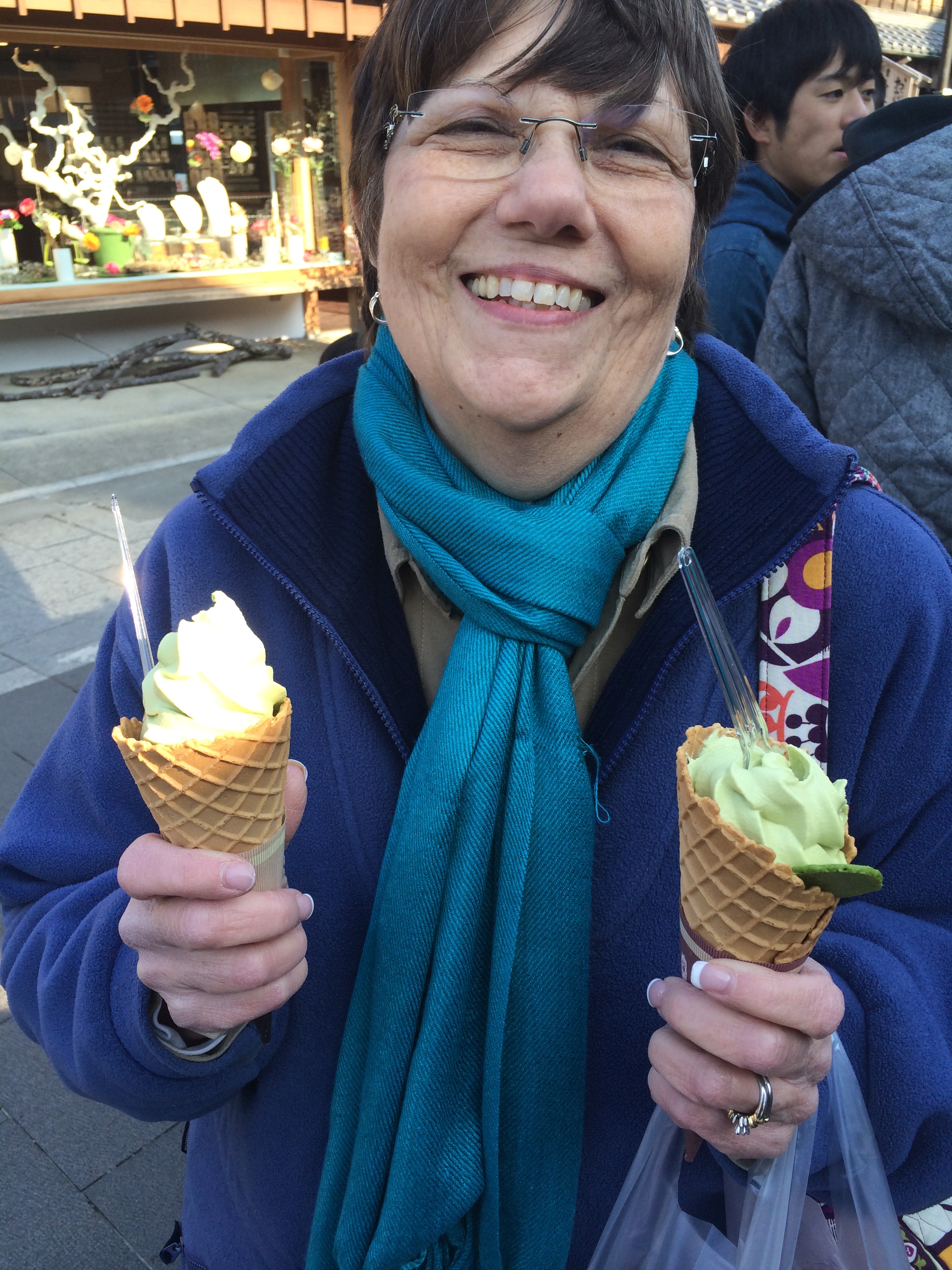
Susan and Green Tea Ice Cream
Oh, it might seem a little chilly for ice cream, but when it’s Green Tea ice cream, one just has to make an exception!
It is served in a waffle cone with a spoon and of piece of green tea white chocolate.
I love this stuff!
It is sweet like Susan and some pungent or strong taste of the green tea. This dessert is actually better for you than ice cream.
I have seen Green Tea gelato in the stores and would love to try this.
Surely though, green tea ice cream is a hard act to follow!
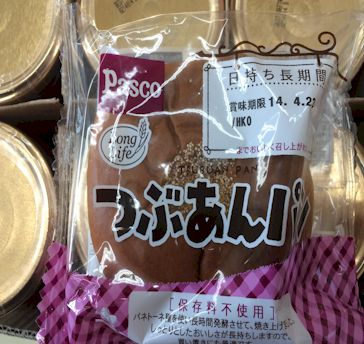
Onpan
Sweetened red bean paste filled inside a typical white bread bun. But there is nothing typical about this! It is not only sweet and delicious, it is actually good for you. One of the most popular animated cartoons in Japan is Onpanmon, a red bean bun character that is a hero. So no wonder I love this, kids love them and I R !! 🙂
And last, but certainly not least is my Calpis Sour. Yes I know, it looks like it sounds like cow + pis. Westerner’s have a problem with this so the same company that makes it makes the same thing under the name of calpico.
Calpis Sour
Calpis is a fermented product made with milk and some citrus flavor as a preservative. Fermented yes, but it does not contain alcohol. It does have natural cane sugar and is good for you since it has calcium. It looks and tastes like watery yogurt with a citrus overtone.
A calpis sour contains calpis, citrus carbonated soda and shochu (which is like Japanese vodka). All in all this is a fantastic cocktail with some nice health benefits. Whatever, I love these!!! I have plans to find a way to make these at The Gathering Place when we (you and us) get back home!!! 🙂
A familiar and common sight perhaps throughout the world is the spining; blue and red striped pole. Yes, the barber pole where one can get s haircut and a shave and a whole lot more in Japan. This an unforgettable and most enjoyable experience! 🙂
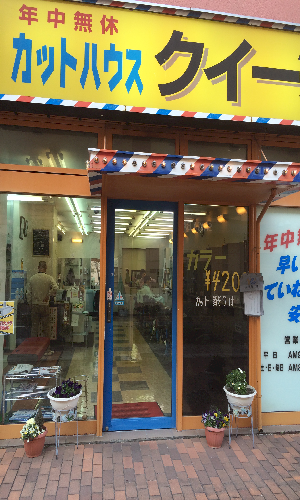
Barber shop in Japan
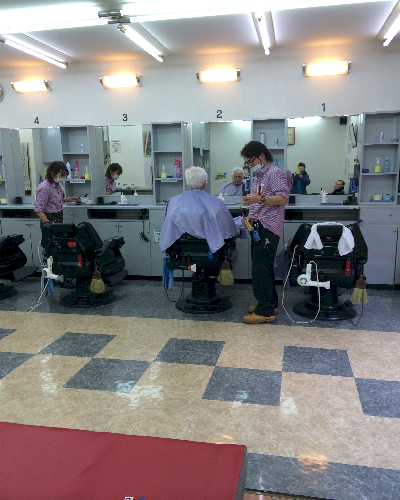
From the moment you walk in to a Japanese barber shop, you are greeted and everyone inside that works there, bow out of respect.
The shop, chair, ever person working there and everything is neat and tidy.
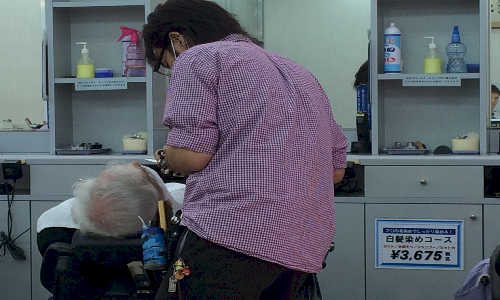
After being escorted from the waiting area and directed to a chair by a barber, you are seated and prepared.
You then communicate with the barber or though an interpreter (as I did) exactly how I wanted my hair cut, how much off, that I wanted a shave and a shampoo.
Next, I was given a hot towel to refresh myself. Hot towels are offered almost everywhere in Japan for nearly every experience. They are much appreciated to wipe your face and hands. Much of this and many practices of Japanese culture center around personal comfort, cleanliness and respect.
Discussing what is needed and wanted
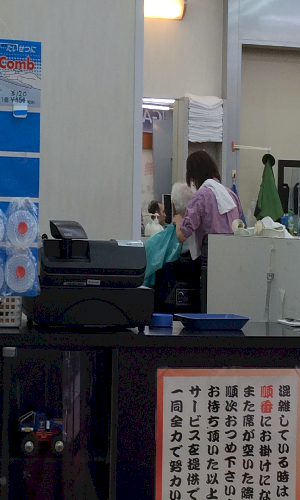
As the barber skillfully and quickly cuts your hair as you desire, thrir movements are so precise and with such a light touch, it is as if they were not there and you can hardly feel a thing. I did mean “their” a plural personal pronoun meaning more than just one. Indeed, there are more than just one barber involved in serving you. My first experience, there were no less than six people that served me. There was the hot-towel person that constantly brought hot towels or covered your face as needed. There was what I call ‘Cut Barbers 1, 2 and 3. The first one started, the second one fished and the third checked to insure that 1 and 2 did all that was required and perform in touch-ups necessary. The last two would be involved with the shaving and shampooing.
Well, sitting in the chair yo are so impressed with their skill and that leads to confidence in their abilities. So this of course is part of the relation therapy. It is not uncommon to fall asleep or doze because, yo are so relaxed and almost unaware of their presence. In my experience, I could not tell when the first barber left and the second took over. The Japanese are very particular about touch. Once contact is made they keep it even when transferring to another person, Well, my eyes were closed and I only opened when the ‘touch’ changed from my heard to my face. And when I did, I was surprised to find another person starting the process of shaving me. I was surprised to find that this was a woman as it is uncommon to find female barbers.
Shave
Note: The barbers in these pictures are wearing masks for their own protection because of, the pollution they believe is coming from China and has nothing to do with allergies or fear of the flu bug coming to them from foreigners.
Back to the shave. Again your face is covered with hot towels, it is rubbed with an emollient of some kind to reduce friction and then it is hand-lathered with shaving cream skillfully applied with a natural bristle brush. The shaving was so light and precise it was as if it could not possibly be close enough or the the blades used were very sharp. They were! And like almost any normal person, when someone is holding a blade at your throat, you have a tendency to be awake and have your eyes open! 🙂 No worries, Japanese barbers are incredible!
After shaving your face, it is hot-toweled again and a fragrant astringent is applied to tighten the pores and freshen your face. Facial hair is very important to the Japanese. Not a single hair can be missed or out of place. This means on the forehead (even the peach fuzz is shaved), eyebrows, the back of your neck mustache or beard, on, inside of and outside of your nose and ears and etc. Nothing get missed! It is by far the best shaves and the closest shaves that I have ever had. How close? Close enough that I did not have to shave myself for two days. How close? Baby’s butt smooth, close! 🙂
Shampoo/Massage
After the shave, I went for a shampoo. Instead of leaning back in my chair to the shampoo sink as with my barber in NY, I leaned forward towards the shampoo sink. Your hair is lathered and massaged through yor scalp like a million fingers dancing through your happy!! 🙂
The shampoo is incredible and warm water gently washes away the shampoo and your every care. Then your head, neck and shoulders are rubbed/massaged to release any last remaining negative energy and release you to peace and tranquility and whew, don’t I just feel like a million bucks!!!
The final thing is to blow-dry and hand sculpt every hair in place on your face. You get out of the chair and you feel like you look and you feel like a millions bucks! And how much did all this first-class pampering cost? About the same price with tip that I pay for just a trim by my barber at home – $18.00. And no tip is allowed in Japan, but I would have more than been willing to do for this kind of service.
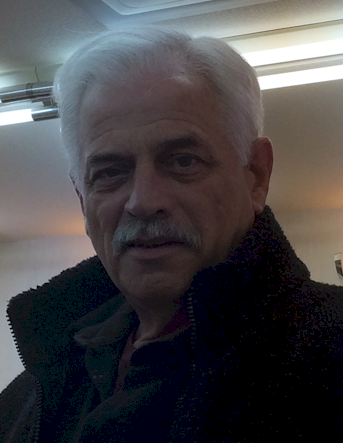
If I can’t be handsome or handy, at least every hair on my face can be perfectly placed, and my skin as soft as a baby’s butt or face. Susan watched and she was pretty amazed. She gave me the kissable face seal of approval.
Every hair in place and face is, baby’s butt soft!
I would love to have a Japanese barber where we live! I would love to import some Japanese barbers! Do yourself a favor. If you ever have the opportunity to have your hair cut, a shave and a shampoo by a Japanese barber, Carpe bar-be-um SEIZE the BARBER!!! 🙂
By the way, I am told that the experience of cutting your hair for women. In Japan, is 10 times better than for a man!
Sake or saké (“sah-keh”) is an alcoholic beverage of Japanese origin that is made from fermented rice. Sake is sometimes called “rice wine” but the brewing process is more akin to beer, converting starch to sugar for the fermentation process, by using Aspergillus oryzae.
In the Japanese language, the word “sake” (酒, “liquor”, also pronounced shu) generally refers to any alcoholic drink, while the beverage called “sake” in English is usually termed nihonshu (日本酒, “Japanese liquor”). Under Japanese liquor laws, sake is labelled with the word “seishu” (清酒, “clear liquor”), a synonym less commonly used colloquially.
Sake averages between 11-16% alcohol content.
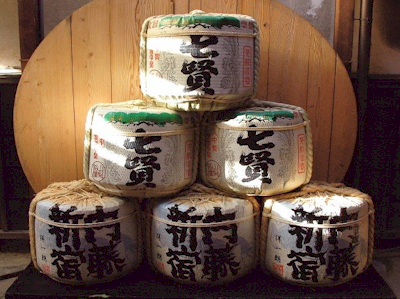
First you start with the rice. Rice is grown all over the country, but some are better producers due to climate, purity of water and other important considerations. The same is said of of Sake rice, some areas just produce better sake rice rice for the “:clear liquid” than others. The rice is hand harvested and placed into the familiar rice bales. The bales are both artistic and informative that they are inbound to the brewers and that it will become some specific crafted sake. But the quality of the sake is only as good as the master that brews it and only as good as the rice from which it is made. There are many different kinds and flavors of sake.
Sake bales
Sake in Japan is as diverse, particular and is as highly opinionated as any other wine made throughout the world. Those that enjoy it swear their favorite is the best in all of Japan.We shared some with our friend Yukari’s parents in Nara. Last night we shared some with Yukari and her husband some ‘holy’ sake that was blessed and presented to her at the dedication of their daughter. The sake from Nara had a clean dry taste. The ‘holy sake’ seemed to have a smoky taste as if absorbing smoke from burning incense, a common practice in Japan for purification.
Sake may not be enjoyed by everyone and not all that do like sake, like all sake. It is has a distinct taste and perhaps one that must be acquired over time. But it gives one a ‘warm glow’ and for lack of a better description, when the alcohol sets in, it just leads me personally, to a very happy place. Like clinking glasses of wine, beer and other drinks we may say “Cheers.” In Japan, the word used is often, kampai (pronounced com + pie).
“乾杯” (kanpai), lit. “Dry the glass”, similar to “bottoms up” in English). 🙂
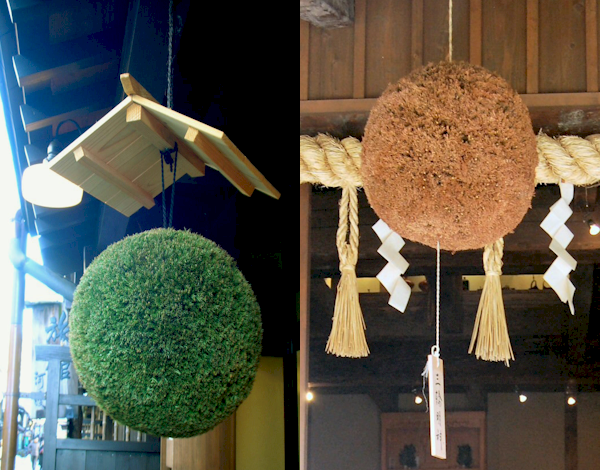
Once the sake is ready, if it is really good or a particularly a good year, well then, it is important to let people know. The exceptional sake is advertised by what may look like to all the world as fuzzy, brownish-green disco-balls. These are formed with cedar needles — also known as sugidama (literally, “cedar balls”). They can be found hanging above the entrance to shops, bars, taverns, and a fine izakaya (small local establishment for food and drink) that specialize in quality sake. These time-honored symbols of fine sake make no promises about the caliber of the food where the sake is sold. But my experience has shown us that wherever premium drink is sold, you are likely to find food of similar quality.
Cedar Balls
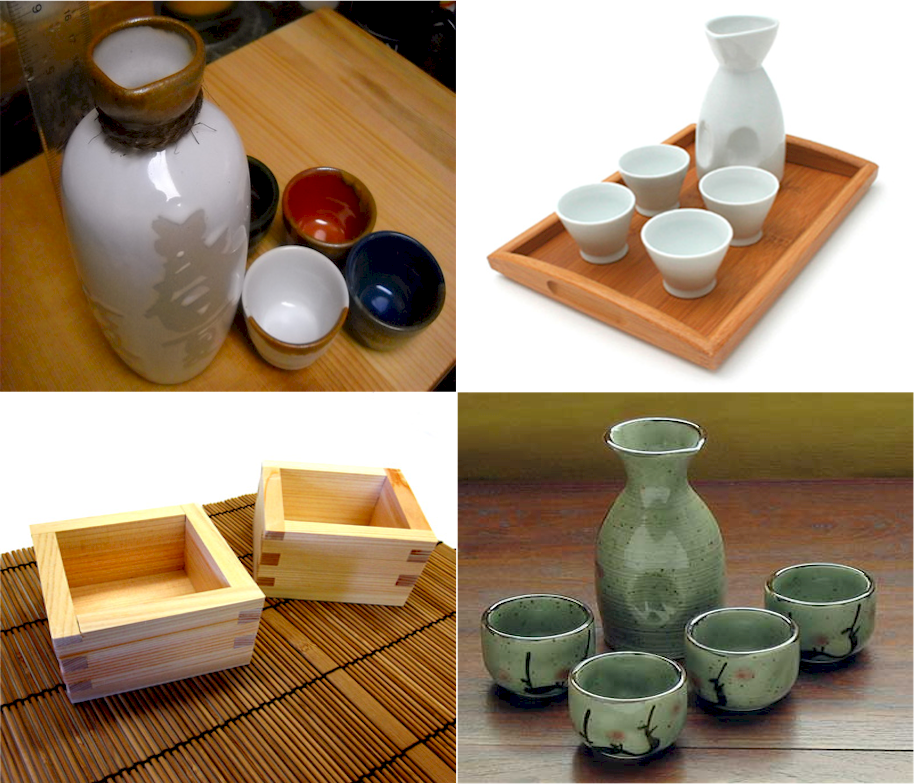
Before serving sake, you must first have some things to serve from and in. Sake servers and cups can range from simple, colorful, elaborate,ver expensive and relatively inexpensive.
Many types of Sake servers and cups
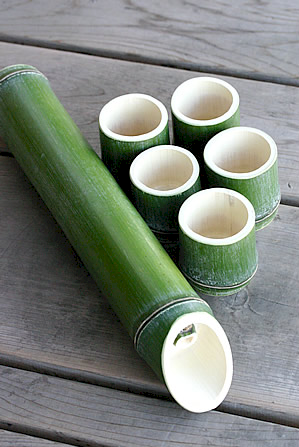
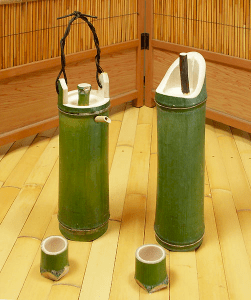
Materials can be glass, ceramic, metal, plastic and my favorite, bamboo.
It is doubtful that many or any Japanese would use bamboo pitcher or cups. These are probably marketed to tourists and westerners. We had a very nice dinner at a specialized restaurant that featured so many delicious ways (tastes and textures) of bean curd. This same restaurant served our sake in green bamboo cups from a bamboo pitcher. I love the natural look and traditional or not, we are on a search to bring back to the USA, something that looks like the following.
I suppose this could have been titled, ‘The Blizzard of 14,’ because this is what happened in the Rochester, NY area and where we live at The Gathering Place.
I booked a room at a motel across the street from the airport. Quite frankly, if I wasn’t on the plane, I’m not sure Susan would have spoken to me again, EVER! 🙂
Took off before the storm and made it to Chicago. Made the international flight to Narita airport near Tokyo Japan
Just for my willingness to help in case of an emergency, my seat was changed, it might as well been first class because that’s what it felt like to me -plenty of room to stretch out, two seats beside me were empty, galley and bathroom right in front.
Japan Airlines (JAL) has fantastic service by the way.
Until I get unpacked, settled in and the laptop up and running to post, I will close with a statement and a picture.
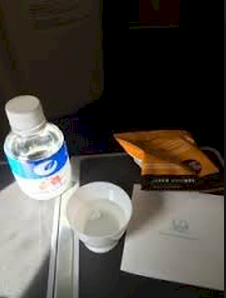
Nihonshu Sake & Rice crackers
Japanese food makes me happy! 🙂
OMG, Just here a day and the things I have done and the things I have seen, I just can’t wait to share with you. I will as internet WIFI access and when time allow!!!! 🙂
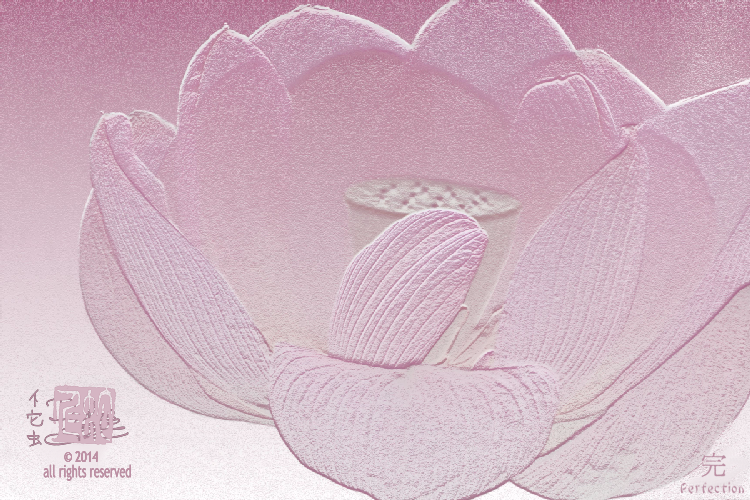
The Lotus is seen throughout Japan and is very significant to their way of life and their beliefs. They are beautiful. I hope you enjoy my art made from a photograph I took in Japan and my haiku poem to follow.
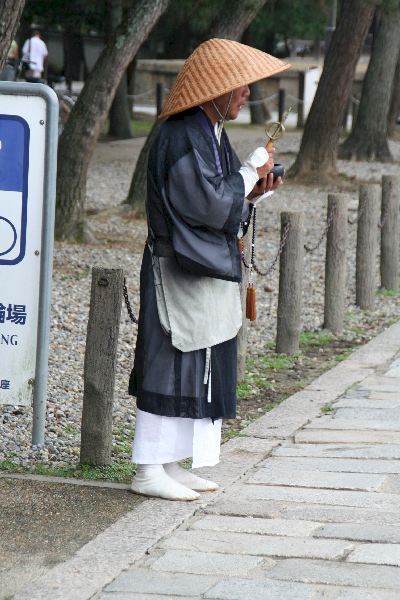
Right before you reach the gate to the temple, the picture on the left is a familiar sight. It is a Buddhist Priest. He is bowing continuously and continually.
He was at the exact same place doing the exact same thing, hours later after we left the temple.
He is holding an alms bowl. Yes. he is begging for money. But he is not poor.
In the United States, we may have seen people begging for money, but they are either really poor or trying to ‘guilt’ people out of their money. But this monk is begging, not because he needs the money, nor is he trying to ‘guilt’ anyone.
By the way, there are at least two things in Japan that are protected and precious, land and shrines! If you purchase property to build or to live there and it has a rice paddy and/or a shrine, you are responsible to maintain them, for as long as you own the property. This also includes, caring for any of the priests associated with the shrine.
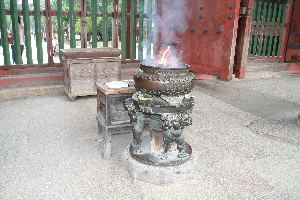
But anyway, the priest here, is just simply showing his willingness to be an example of humility, in order to obtain a higher level of consciousness. It is a purification process, much like burning a stick of incense to purify oneself, before entering the temple.
Incense for Purification
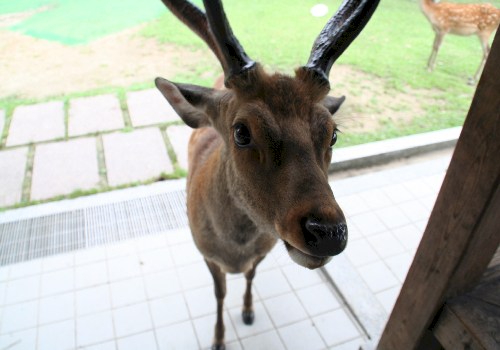
The dear, deer below is, just outside the gate to the courtyard of the Temple of Buddha. Even though he could walk through and he is probably hoping for one last biscuit from you, before you enter into the courtyard, no dear, deer will pass through.
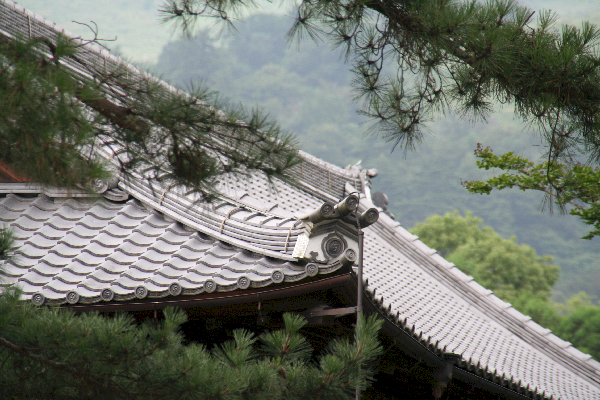
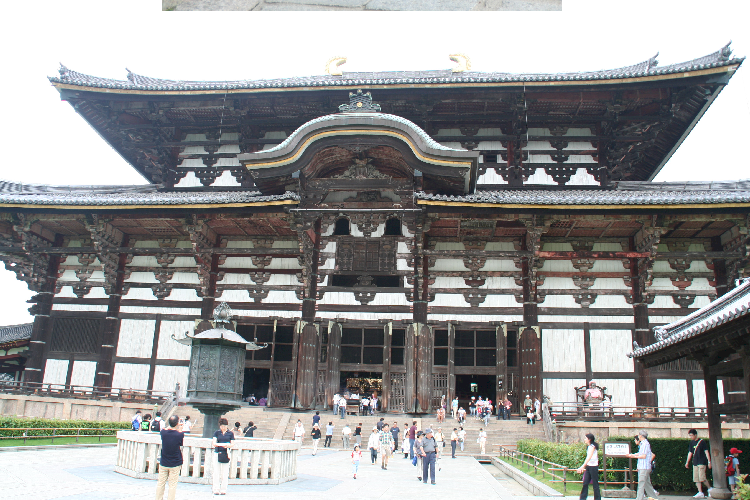
The dear will not enter into the courtyard of the Great BuddhaRoofline of the temple courtyardThe Great Buddha’s Temple, Nara Japan
Notice the size of the people in the above picture, in comparison to the size of the temple! The three sets of double doors are approximately 15′ tall and each pair are around 15-20′ wide. This temple is located in Nara Japan and is the largest wood temple of Buddha in the world. If memory serves me correctly, this was not the original structure, but was it was moved here and re-built, sometime in the 8th century and it still stands today!
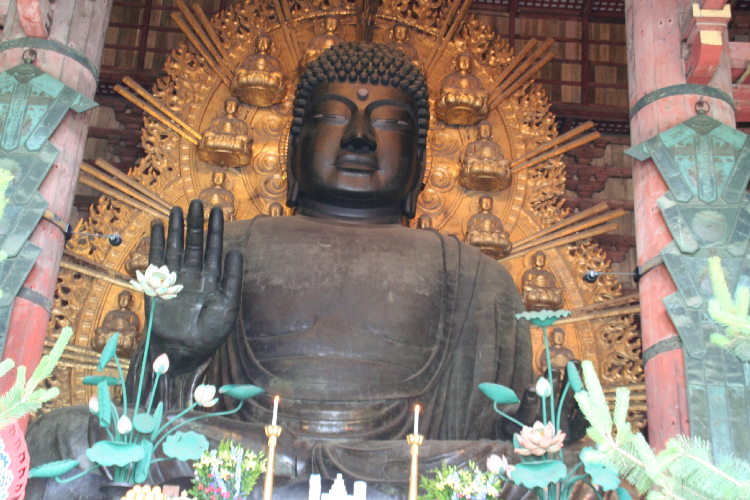
The Great Buddha
As one walks through the large doors into the temple, it is supported by massive wood beams. The height from the floor to the ceiling is about 30′ feet. This temple was hand-made thousands of years ago. Directly in the center as you walk through the doors is, the focal point of the temple, the Great Buddha.
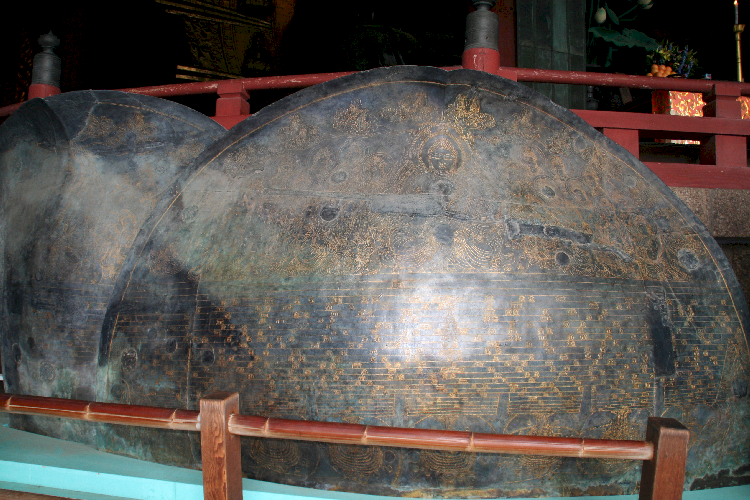
Directly beneath him are huge petals of the lotus blossom.
The Lotus Petals of the Great Buddha’s Pedestal
These are called: The petals of the Lotus Pedestal on the Great Buddha Vairocana. This is the Great Buddha’s celestial or cosmic embodiment. The Vairocana is regarded as the highest form of the three Buddhas, as a god of light, whose reflection throughout the universe is represented as endless. The petals are incised with pure gold in hairline engravings with identical designs, dating from the Nara period (8th century), which depicts the “Lotus-Matrix World-System.
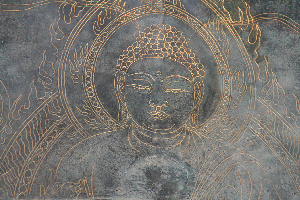
Closeup of engraving
Each petal is divided into two main parts. The upper half depicts a seated Tathāgata (name the Buddha uses when referring to himself) and means, “One who has thus gone” or “One who has thus come.” Those two opposites are interpreted to mean, “beyond all coming and going.”
He is seated in this upper petal, expounding the truths to eleven Bodhisattvas, those of great compassion that have obtained one of the four highest states of sublime consciousness in this life.
In the lower half there are twenty-six horizontal lines with small Buddha-images and palaces arrayed between them, and below these are seven pairs of lotus petals, each consisting of one petal turned upwards and the other facing downward. Stated simply, this is a pictorial representation of the spiritual world.
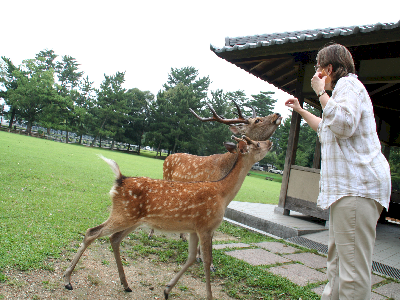
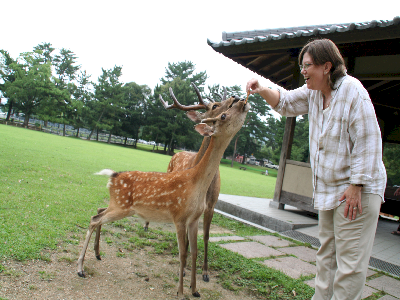
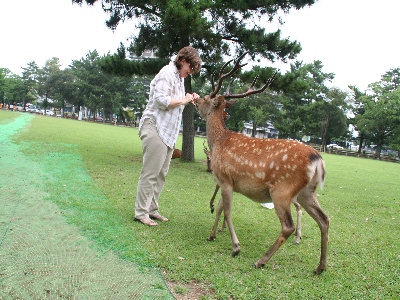
Nara Japan is the location of the world’s largest wood Buddhist Temple. To get there, one must park their vehicle and walk through this large park that are full of very unique and very small deer. The deer are tame and seem to sense that they are protected. Generation after generation of deer are born in this park and are free to roam. Even though they could easily walk out and away from the park, none ever have. You can purchase special biscuits and feed the deer, Dear! 🙂
deer, DearSusan feeding the dear, deer
Susan is just so happy that she has finally met some dear, deer that are even more vertically challenged than she is! 🙂
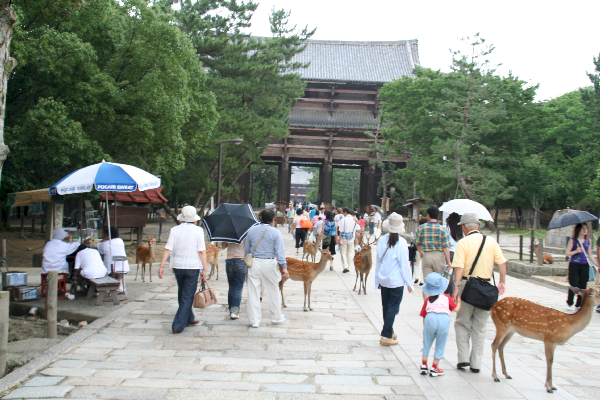
Me too!The dear, deer mingle about
In the above picture, you just cannot imagine the 100’s if not 1,000’s of dear, deer (not shown) that live here. The Building in front of the crowd is open and it is a gate which leads to the world largest wood Buddhist Temple. But the dear, deer will not cross into the temple area.
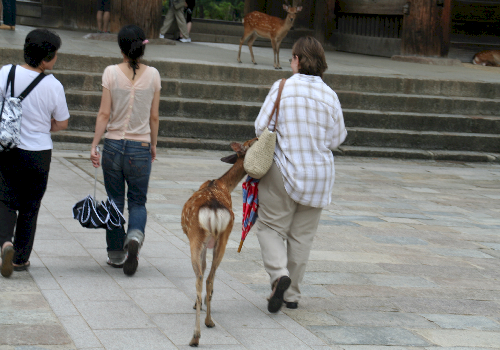
Please. please, please Susan, I know you have more!
In the above picture, Susan is just about to climb the steps which leads to the gate. Notice the dear, deer, Dear, that has apparently climbed the steps? They will do this, but they will NOT pass through the gate!
What’s your sign? That question is familiar to many of us in the United States. Of course, the question relates itself to ‘signs’ of the Zodiac. Japan also, has a zodiac, but it is based on the year of one’s birth, not the month. Interestingly, in Japan they do not ask the month you were born or your age, just the year-sign of your birth.
The stories go that either the Jade emperor or before Buddha departed this earth, a zodiac of animals was set in the order that they came, when called to a race or a banquet (depending on who is telling the story). The rat responded first, so it is the rat that starts the zodiac. This zodiac basically cycles every 12 years and people born in a particular year are said to have characteristics of the animal of the year in which they were born. Oh, and if the people in Japan know the year-sign in which you were born, they can figure out how old you are without asking. 🙂
The order of the zodiac is as follows: rat, ox, tiger, rabbit, dragon, snake, horse, ram (sheep or goat) monkey, rooster, dog, and boar (or pig). Twelve signs, one per year and then they are repeated, over and over again.
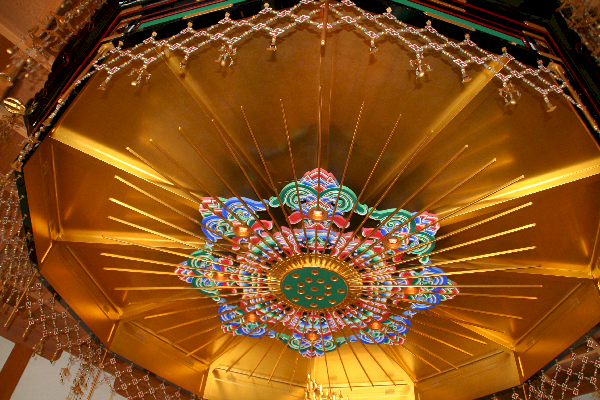
‘Canopy of the Sun’ Mt. Hei Japan
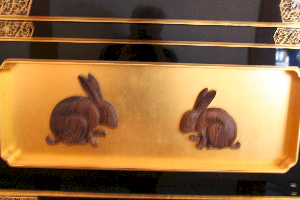
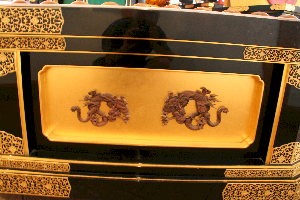
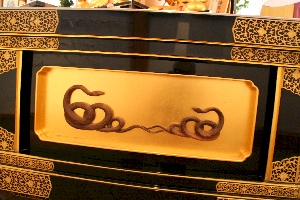
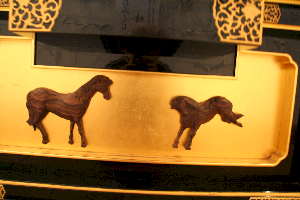
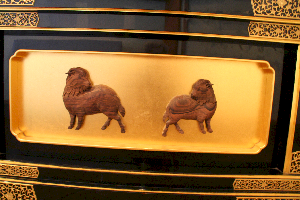
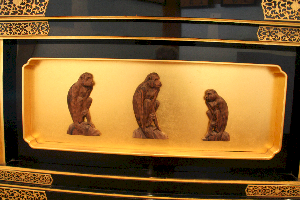
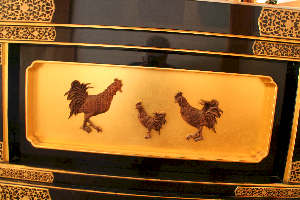
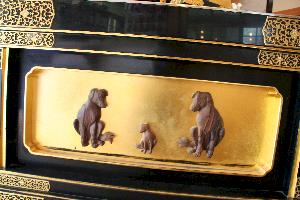
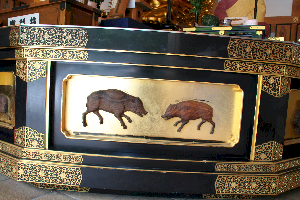
Below this beautiful canopy is a very ornate pedestal about 3 feet tall. It is made of hand carved wood animals, surrounded by gold leaf and beautiful black Japan lacquer. The geometrical polygon (many sides) is called a, Dodecagon (12 sides).
Dodecagon_ani.gif
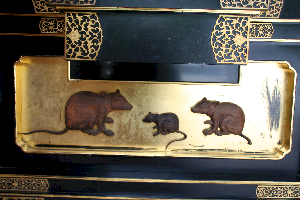
Rat(nezumi)
Born 2008, 1996, 1984, 1972, 1960, 1948, 1936, 1924, 1912. People born in the year of the Rat are charming, honest, ambitious, and have a tremendous capacity for pursing a course to its end. They will work hard for their goals. They are easily angered, but maintain an outward show of control.
Rat (nezumi)
Ox(ushi)
Born 2009, 1997, 1985, 1973, 1961, 1949, 1937, 1925, 1913. People born in the year of the Ox are patient, mentally alert and when required to speak are skillful. They have a gift for inspiring confidence in others. This allows them to achieve a great deal of success.
Ox (ushi)
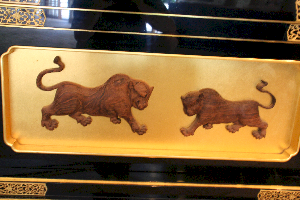
Tiger(tora)
Born 2010, 1998, 1986, 1974, 1962, 1950, 1938, 1926, 1914. People born in the year of the Tiger are sensitive, stubborn, short-tempered, courageous, selfish and slightly mean … yet they are deep thinkers and are capable of great sympathy for those they are close to and love.
Tiger (tora)
Rabbit (usagi)
Born 2011, 1999, 1987, 1975, 1963, 1951, 1939, 1927, 1915. People born in the year of the Rabbit are the most fortunate. They are smooth talkers, talented, ambitious, virtuous and reserved. They have exceedingly fine taste and are regarded with admiration and trust.
Rabbit (usagi)
Dragon(tatsu)
Born 2012, 2000, 1988, 1976, 1964, 1952, 1940, 1928, 1916. People born in the year of the Dragon are healthy, energetic, excitable, short-tempered and stubborn. However, they are honest, sensitive, brave and can inspire trust in most anyone. They are the most peculiar of the 12 signs of the Zodiac cycle.
Dragon (tatsu)
Snake(hebi)
Born 2013, 2001, 1989, 1977, 1965, 1953, 1941, 1929, 1917. I was born in the year of the snake. So if you think about it, you can figure out how old I am. 🙂
People born in the year of the Snake are (supposedly) deep thinkers, speak very little and possess tremendous wisdom. They are fortunate in money matters and will always be able to obtain it. They are determined in what they do and hate to fail. The other zodiac says I am a Sagitarian (archer) and if I was shooting straight, I would question that I, “speak very little,” have “tremendous wisdom,” and are “…fortunate in money matters!?” I would agree with the rest! And that would be that I am, determined and I’m not too happy about failure. 🙂
Snake (hebi)
Horse(uma)
Born 2014, 2002, 1990, 1978, 1966, 1954, 1942, 1930, 1918, 1906. People born in the year of the Horse are skillful in paying compliments and talk too much. They are skillful with money and handle finances well. They are quick thinkers, wise and talented. Horse people anger easily and are very impatient. In 2014, it is now, the Year of the Horse.
Horse (uma)
Sheep or Ram(hitsuji)
Born 2015, 2003, 1991, 1979, 1967, 1955, 1943, 1931, 1919, 1907. People born in the year of the Sheep (or Ram) are elegant, highly accomplished in the arts, passionate about nature. At first glance, they seem to be better off than the people born in other years. They are deeply religious and passionate in whatever they do and believe in.
Sheep or Ram (hitsuji)
Monkey (saru)
Born 2004, 1992, 1980, 1968, 1956, 1944, 1932, 1920, 1908. People born in the year of the Monkey are the erratic geniuses of the Zodiac cycle. They are clever and skillful in grand-scale operations and are smart when making financial deals. They are inventive, original and are able to solve the most difficult problems with ease.
Monkey (saru)
Rooster(tori)
Born 2005, 1993, 1981, 1969, 1957, 1945, 1933, 1921, 1909. People born in the year of the Rooster are deep thinkers and are always busy and devoted to their work. They always want to do more than they are able, and if they undertake a task beyond their abilities, they are disappointed. Rooster people have a habit of speaking out directly, whenever they have something on their minds.
Rooster (tori)
Dog (inu)
Born 2006, 1994, 1982, 1970, 1958, 1946, 1934, 1922, 1910. People born in the year of the Dog have all the fine qualities of human nature. They have a sense of duty and loyalty, they are extremely honest and always do their best in their relationships with other people. Dog people inspire confidence in others and know how to keep secrets.
Dog (inu)
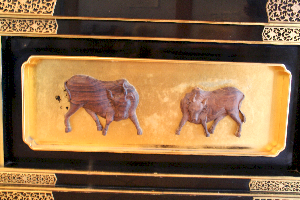
Boar (or Pig) (inoshishi)
Born 2007, 1995, 1983, 1971, 1959, 1947, 1935, 1923, 1911. People born in the year of the Boar are brave. They have tremendous inner strength which no one can overcome. They display great honesty. They are short-tempered, yet hate to quarrel or have arguments. They are affectionate and kind to their loved ones.





























 gatheringplace.blog