On: Money

by Donnie Hayden

© 2014, all rights reserved

Money? Yes! Let’s face it, we all like it and we all need at least some! And after almost 2 months abroad, we are running out of it. 🙂

Today, I thought I would share some pictures of local currency from Japan and Australia and compare these with what in my country have been referred to as “green backs,” ever since President Abraham Lincoln basically took over the banks in 1861. Ever since then, US currency has pretty much remained the same.

Oh sure, over the years since the 1800’s (probably always), there have been issues with counterfeit money or what some refer to as, “funny money.’ It’s really not so funny if you, businesses or the banks get caught holding it, but it’s “funny,” as in odd or not real.

One of the jobs of the same people that guard the president of our country and other dignitaries (the Secret Service), is investigation of counterfeit money.

The US Mint that is responsible for printing our dollars and minting our coins have introduced many anti-counterfeit measures over the years and especially since the technology of the digital press, scanners and computer software has made counterfeiting a state of art and can produce a lot of this “funny money” so close to the original that even many experts can be fooled into thinking it’s the real deal.

But again, and despite such techniques as micro printing, the insertion of encoded magnetic strips and other measures into US currency, it still pretty much looks the same, ever since the 1800’s. Oh sure, there are some newer presidents and signatures that are used, a special commemorative coin here and there once in awhile, but the flat stuff, the paper money is still basically green. Not until very recently, has any other color been used, other than green.

With all due respect to the skill of engravers that make the printing plates from which our money is printed and the coins are minted, the US is far behind the world, at least as far as my experience has been, in Japan and Australia. In short, the currency from these two countries is beautiful. They are works of art! I do not know how safe their currency is and how much of a problem in either of these two countries have with counterfeiting, but their money is impressive!

I want to thank my wife Susan for taking all these pictures below (except the one of US money that I copied from the Internet. Even though I stole these pictures from Japan and Australia from Susan, thanks Honey! 🙂

Let’s start with some money from Japan.
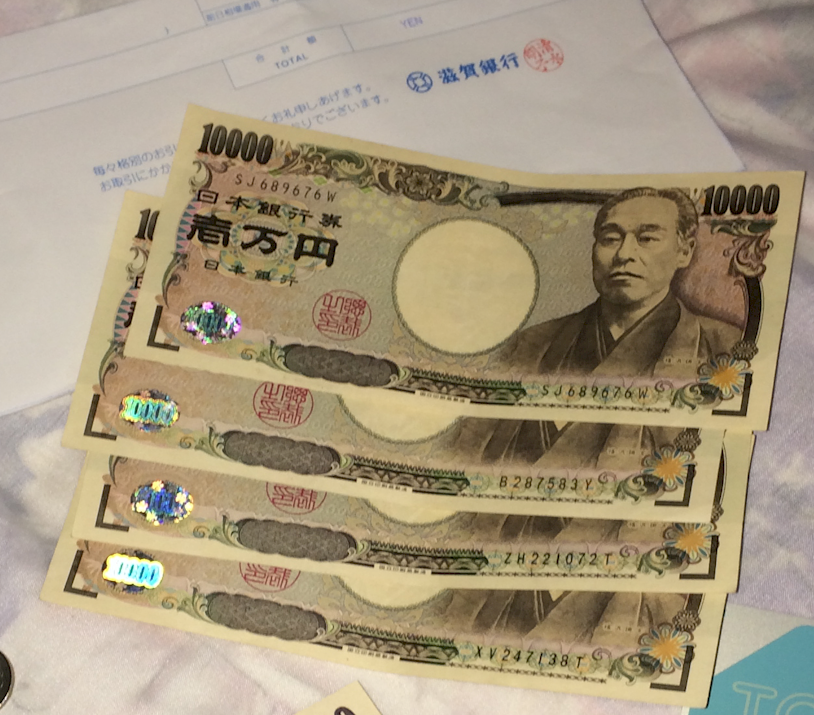
Currency from Japan (paper)

Japanese dollars are beautiful works of art and contain many colors. The common name is Yen. The multiple colored item in lower left corner of the paper money is, actually a holographic image, most likely used as an anti-counterfeiting measure, but it adds to its beauty.
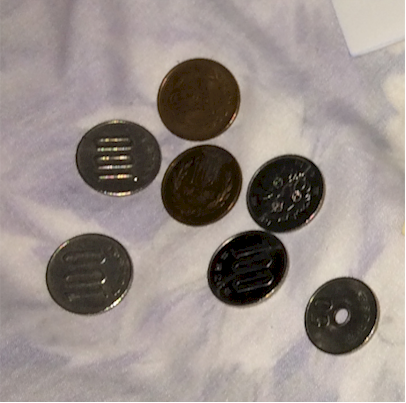
Currency from Japan (coins)

Various coins from Japan are easy to distinguish by design and color of metal used, including the ‘Lucky coins’ with the hole in the center. Most products for sale including the appropriate tax is in rounded numbers. No one in Japan wants to deal with the 1 yen coin which is like a 1 cent coin in the US. The 100 yen was really beneficial to me as I could get a cup of coffee most of the time for 100 yen which is about $1 in US money. In the US we have the Dollar Stores for all kinds of inexpensive (cheap as crap stores), but both Susan and I love those stores! She is not allowed to shop in one brand name dollar store during the holidays, as it is my own personal stocking-stuffer store to stuff her stocking! 🙂

In Japan, they have the same kind of stores only these are called the 100 yen stores. Yes the stuff sold in a 100 yen store is inexpensive, but it’s not crap like the dollar stores usually are in the US.
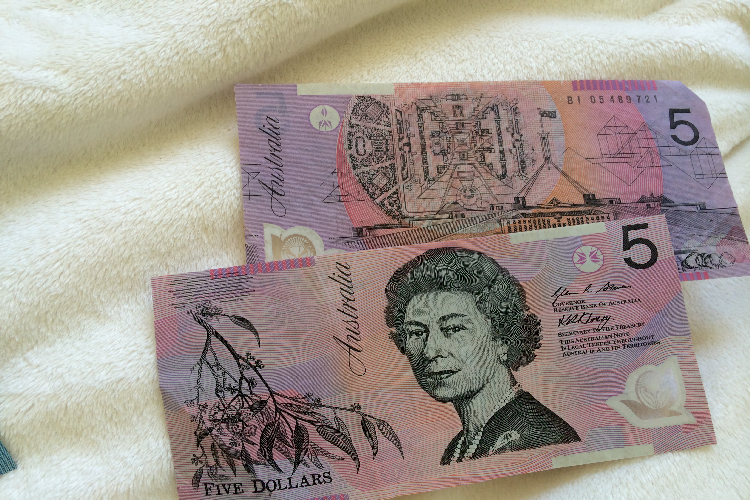
Currency from Australia (paper)

The picture above is the front an back of the Australian 5 dollar bill. It too is a very beautiful work of art and shows the Queen of England. The newer paper currency has a colored transparent plastic window in each bill making it difficult to counterfeit. In fact, all the Australian dollars (new) are made out of plastic mostly, wear longer than paper and probably float on the water if you fall out of a boat while fishing. 🙂
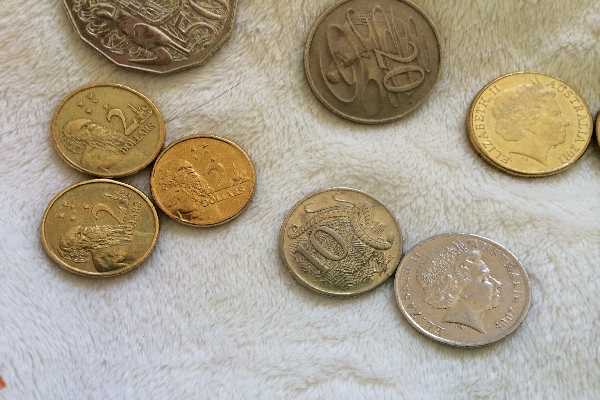
Currency from Australia (coins)

The coin top left is a heavy coin with cut edges. It is the Australian 50 cent piece and is used in many sporting events in Australia to “toss the coin.” The brass 2 dollar coin is very valuable and preferred in Australia over most other coins. Like Japan, Australia usually price everything including tax in whole amounts. They do not like their 1 cent coins either.
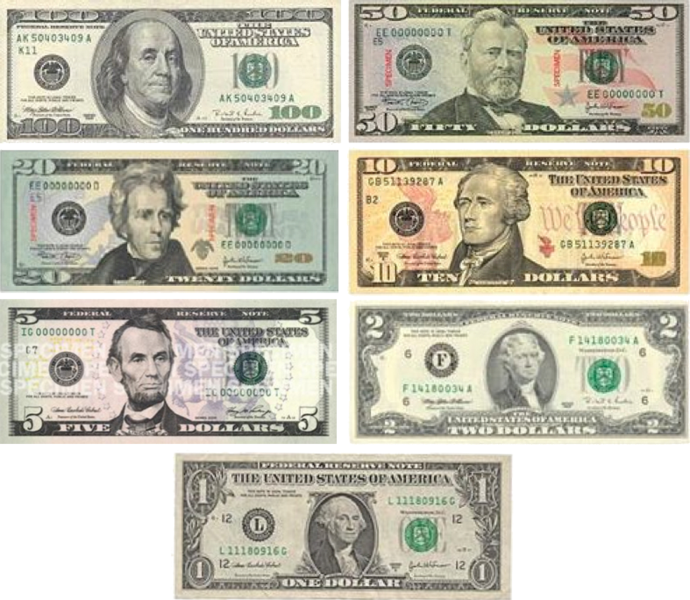
Currency from The United States (paper)

Although I appreciate the pictures of our favorite and famous presidents, the skill of the engravers, the anti-counterfeit measures installed on and within the bills and even the attempt at adding some color, come on US, get with the world! Update your designs, add colors and make some beautiful works of art like the world has been doing or is and perhaps has been, for a very long time!

In fact, if you search online for the most beautiful currency and the safest currency (hardest to counterfeit), the US is not on any of the top lists! Why is this? Get with the world and quit making and thinking and charging in terms of cents. WE the people don’t like the 1 cent penny either. Round or make everything for sale including tax, in whole amounts.

On: Golden Pond

by Donnie Hayden © 2014, all rights reserved


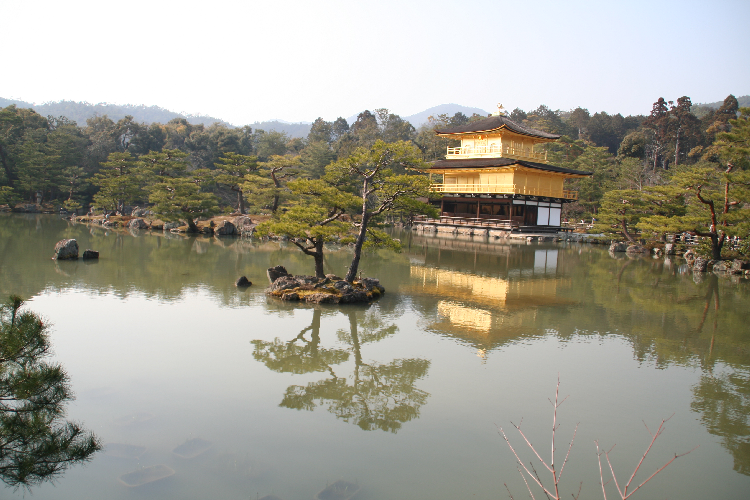
Actually this post is not about Golden Pond, but a Golden Palace on a pond or be it, a small lake. But one has to name something, something and it seemed like a good idea at the time.

I must digress here to state what may or may not be obvious. These posts from our travels are neither a journal or in day by day, hour by hour chronological order. Part of this is due to my love of words and my tendency to write many of them. I do try to think of others in that I ask myself, what would I want to see or want to learn about while in Japan? I try to keep these posts interesting and informative to the best of my ability.

Another issue is that even in the short time that we have been here, we have done so much; seen so many things. I have taken lots of pictures and when we return, I will just have to decide on what to do with them. Lastly, there is the lack of WIFI in Japan. With iPhones, an iPad and a laptop with us, we certainly have the means to post content and pictures in several ways, but outside of where we are staying, there is no internet access.

Oh, there are, WIFI access points everywhere and most are secured networks which require a password. In order to use one of these you have to pay for them by the day or even the month. In order to do that, you need to be living here basically, as the Japanese are not too particularly fond of sharing their WIFI or broadband internet with foreigners. Many Japanese have WIFI at home for their devices. Their smartphones are tied to a prepaid (monthly) satellite service so that they can use their phones, pads, and devices pretty much wherever they are. I have seen several people on trains here, communicating over the internet through social media like Facebook. But, alas for us, we have to wait until we get back to where we are staying to access the internet and use services that require WIFI. I do not know what it will be like in Australia, but we are soon to find out.

But as you walk in Kyoto, soon you find yourself within the woods and then suddenly in the distance, you see this beautiful and phenomenal sight with a background of nature like a picture frame as if made to feature it. Here is the Golden Palace, actually overlaid with 24k gold.

The Golden Palace
The Golden Palace

I’m not sure why the bottom first section is not gold, perhaps so that no one could scrape it from the structure?

It is beautiful, but I am more awestruck at how it blends in with nature and the angles and the way in which such structures are built.

The harmony of nature and the work wrought of humans
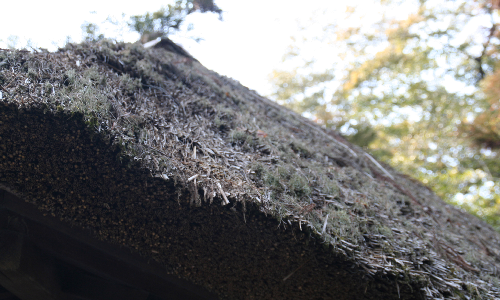
Roof construction
Roof construction
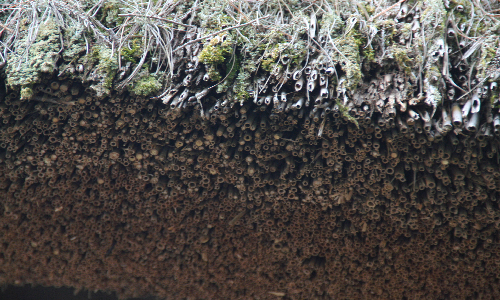
Natural reed roof
Natural reed roof

The material again is from nature and the construction by human binds hollow reed so tightly, it insulates and protects against insects, wind, snow and rain while keeping the structure warm in the colder months and cool in the warmer months.

Yes, it is the harmony of nature’s art and the art of humans which make so many things so beautiful in Japan! Though to build such a structure which still stands after so many centuries was long and difficult, naming things in Japan is often short and simple! These are contrasts or more like understatements, figures of speech that call our attention.

A golden palace on a pond is, what this is, but the words cannot describe its effects and affects upon the senses when they are first experienced and long remembered! The words are almost like a haiku poem of just three lines and 17 syllables, but hold great depth of meaning and purpose. But stated so simply and so matter-of-fact, they seem not able to convey the difficulty to master the art form and construct them like, the golden palace. It is just there as if it is supposed to be and always was, waiting only on you and I to discover its truths.

Oh sure, this place is a tourist attraction and many people come here to see it, both foreigners and the Japanese. And why not, wouldn’t you want to see a palace of gold on a pond, we did! So, perhaps this was an intention of its builders that even after the deaths of those it was built for, people would continue to be drawn here; support it and etc. But it’s importance is so much more to the Japanese and to me! It is an example of the art and harmony of, nature and humans simply drawing others to it as if calling out and stating simply; beautifully; poetically, here is…

…The Golden Palace on the Pond

I will close this post with another example of this understating and harmonious blending of the art of nature and humans.

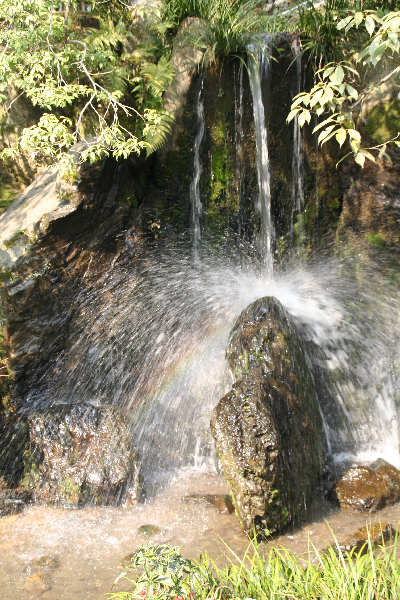
Leaping Fish Fountain

This fountain is also part of the compound of the Golden Palace. The up righted or vertical stone looks like a fish that is leaping up the fountain. Notice the rainbow! 🙂

On: From Kyoto with Love

by Donnie Hayden © 2014, all rights reserved

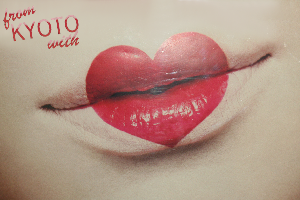
kissable
kissable
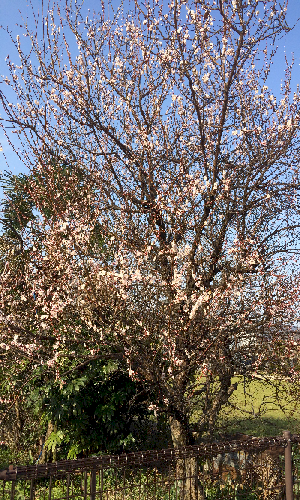
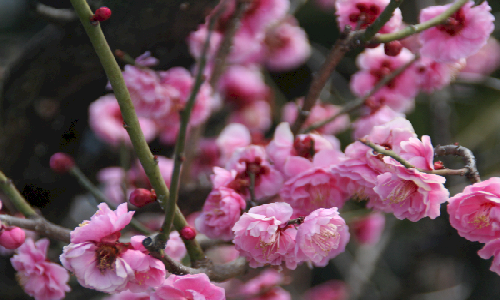
Cherry Blossoms
Cheery Cherry Tree

I am no expert just opinionated based on my limited observation, but I believe there are no better symbols for love and matters of the heart than the cherry blossoms and tea ceremonies.

Both take care and the proper time to make the ordinary into the extraordinary.

In Japan, cheery trees are spread out across the country and bloom in their own time and at different times from late February and March.

To your left is a is a picture of the cheery cherry tree outside where we are staying

Like love, both the cheery cherry blossoms and tea require patience in order to appreciate their beauty and all that they have to offer.

It is the measure of our details applied, the care and focus and patience which squeeze out every drop of tea or matters of the heart which make the experience from ordinary to the extraordinary. After all, is this not what extraordinary is, just adding extra to the ordinary!

This is what I believe and what I observed in this ceremony and what I will continue to believe about all of life!

carpe tea-um (seize every drop of tea)! 🙂

Cheery Cherry Blossoms

The tea ceremonies are also, time sensitive. Precise measurement of tea, water temperature and many other details are necessary to extract the full measure of its flavor and properties to perfect the whole experience.

Tea-licious
Tea-licious
Everything is important

While in the United States, we may be in such a rush that we’ve little time to prepare or even enjoy our teas and coffees, but this is not how tea is approached in Japan.

Whoever coined the Land of the Rising Sun, or thought of Japan as a country of extremes or opposites, I would like to suggest that it is a people and a culture that does so much with so little. To perhaps state this differently, they strive to maximize what they have with as little wasted as possible – time and resources.

Color and taste and texture

Japan is an island country formed by volcanoes and in their cooling; Japan is full of mountains almost everywhere. It is my understanding that Japan is 70% mountains which leaves 30% for land and its people to live on. So in this, it is not quantity that matters most, but quality and to acquire quality, it takes time.

Instead of extremes, I have come to think of Japan as a country with a culture of contrasts. This is beautifully illustrated by tea or tea ceremonies. To understand this more fully, we westerners need to understand taste.

The sensation of taste can be categorized into four basic tastes: sweetness, sourness, saltiness, and bitterness. A fifth, umami, must also be included. Umami uːˈmɑːmi, a savory taste, is a  loanword from the Japaneseうま味 Umami can be translated “pleasant savory taste”. This particular writing was chosen by Professor Kikunae Ikeda from umai うまい “delicious” and mi 味 “taste”. The kanji 旨味 are used for a more general sense of a food as delicious. People taste umami through receptors for glutamate, commonly found in its salt form as the food additive, monosodium glutamate (MSG).For that reason, scientists consider umami to be distinct from saltiness.

But taste also requires our sense of smell, sight, sound and touch. Actually, all of our senses, if focused like a magnifying glass focuses light and produce fire, will not only enhance the enjoyment, but will aide in digestion.

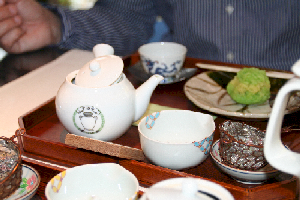
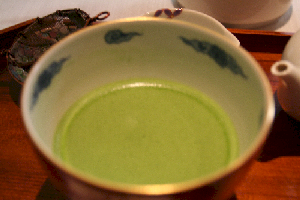
With this in mind, we enter a tea house of tea and tea ceremonies, in Kyoto Japan. There is tea, good tea, great tea and the best of the best tea. Our recent experience was with the best of the best.

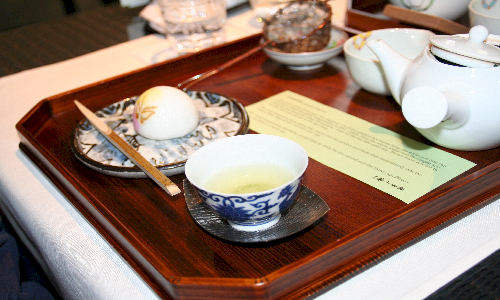
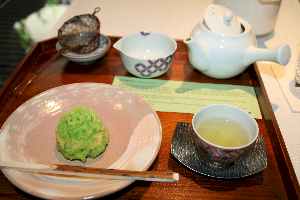
Extra fine, delicate and fragile green tea with something sweet for contrast
Color and texture and beauty
Everything has a reason and a purpose.

Our particular tea was a fine fresh cut tea. Its color was an intense and vibrant rich green. Sufficient quantity is placed into the tea pot. Hot water is poured into an empty cup and allowed to cool for about a minute. This is around 85 degrees Fahrenheit and then it is poured into the tea pot for about 20 seconds. Then it is poured into your cup with a strainer and the last drop has much of the flavor!! Too much heat for too long can burn and ruin this fragile tea.

The tea is to be drunk slowly and along with the contrast of something delicate and sweet that you cut with a wooden knife and with a bite on the knife, you raise this to your lips and eat slowly. This continues until you have consumed your tea and sweet or until you have had sufficient.

The other type of green tea is crushed to a fine powder and is actually ingested. It is believed to have many health benefits as antioxidants and something that I am highly interested in, its possible ability to reduce and regulate blood pressure.

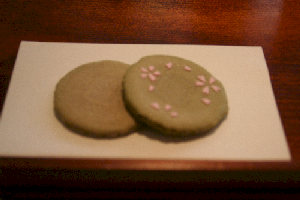
Because of its somewhat bitter taste, this tea is also served with contrasting sweetness made with the tea itself baked inside little cookies or some other soft and chewy sweet.

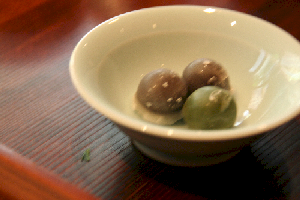
Green tea cookies Green tea soft and chewy sweets
Green tea cookies with candy pink cherry blossom designs
Soft and chewy tea infused sweets

But everything done is all to enhance the flavor of the tea.

It’s all about the Tea

Tea of this quality and experience can be quite expensive. But the experience is not common, but rare, so cost is not that great when compared to the infrequency of the experience. Like love, or fine wine, it is all about the quality of the experience, not the cost or the time required perfecting it. But at the end, there is a cost. For three people our bill was about $60. In the United States, I have no doubt that this would have been around a hundred or one hundred and twenty dollars. And our experience included the time it took to savor every bite, taste every sip, mouth every delight and enjoy every moment, plus, the wonderful clear, detailed and informative instruction by our server, the view of the garden and even the warm singing toilet in the bathroom! 🙂

And the company I was in and the conversation was exceptional too!

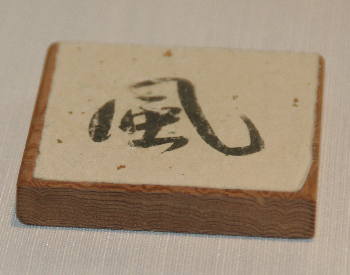
But someone must pay for this. And they receive the following wooden kanji tile.

Kanji tile to the one that pays

The tile, the kanji and the texture of the table upon which it sat was a work of art in and of itself and contributed to the whole experience.

Susan and I were invited here by son Chris and we certainly thank him for this precious gift and for the memory! We will return here before we leave Japan to attend a special class on how to do this at home and purchase tea to ship home to The Gathering Place, so we can share with you that come to visit.

Yesterday, Susan and I spent precious time with our dear friends here, Ted and Shohei that we have not seen for eight years. Shohei is from Japan and Ted is from Australia. But to use a word Ted is often using and seems quite fond of and rather than my usual word as ‘wonderful’ or something like it, I will use here what just seems so apropos. I am quoting Ted in context of this whole experience, “It’s just lovely!”

To conclude this post as it began, it’s all about love. It’s about quality. It’s about you! It’s, “from Kyoto with love!” 🙂

On: A Familiar Sight

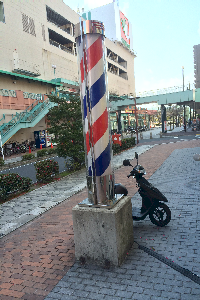
Barber pole
Barber pole

A familiar and common sight perhaps throughout the world is the spining; blue and red striped pole. Yes, the barber pole where one can get s haircut and a shave and a whole lot more in Japan. This an unforgettable and most enjoyable experience! 🙂

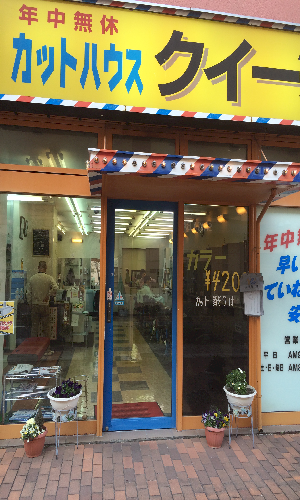
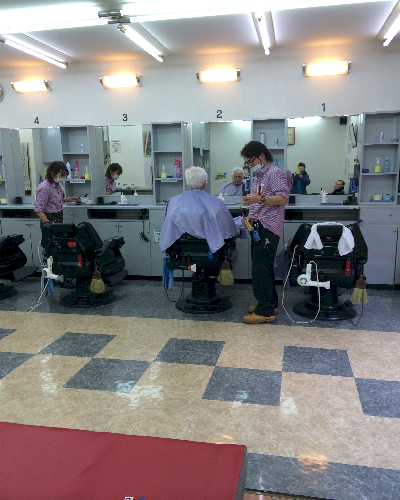
Barber shop in Japan

From the moment you walk in to a Japanese barber shop, you are greeted and everyone inside that works there, bow out of respect.

The shop, chair, ever person working there and everything is neat and tidy.

After being escorted from the waiting area and directed to a chair by a barber, you are seated and prepared.

You then communicate with the barber or though an interpreter (as I did) exactly how I wanted my hair cut, how much off, that I wanted a shave and a shampoo.

Next, I was given a hot towel to refresh myself. Hot towels are offered almost everywhere in Japan for nearly every experience. They are much appreciated to wipe your face and hands. Much of this and many practices of Japanese culture center around personal comfort, cleanliness and respect.

Discussing what is needed and wanted

As the barber skillfully and quickly cuts your hair as you desire, thrir movements are so precise and with such a light touch, it is as if they were not there and you can hardly feel a thing. I did mean “their” a plural personal pronoun meaning more than just one. Indeed, there are more than just one barber involved in serving you. My first experience, there were no less than six people that served me. There was the hot-towel person that constantly brought hot towels or covered your face as needed. There was what I call ‘Cut Barbers 1, 2 and 3. The first one started, the second one fished and the third checked to insure that 1 and 2 did all that was required and perform in touch-ups necessary. The last two would be involved with the shaving and shampooing.

Well, sitting in the chair yo are so impressed with their skill and that leads to confidence in their abilities. So this of course is part of the relation therapy. It is not uncommon to fall asleep or doze because, yo are so relaxed and almost unaware of their presence. In my experience, I could not tell when the first barber left and the second took over. The Japanese are very particular about touch. Once contact is made they keep it even when transferring to another person, Well, my eyes were closed and I only opened when the ‘touch’ changed from my heard to my face. And when I did, I was surprised to find another person starting the process of shaving me. I was surprised to find that this was a woman as it is uncommon to find female barbers.

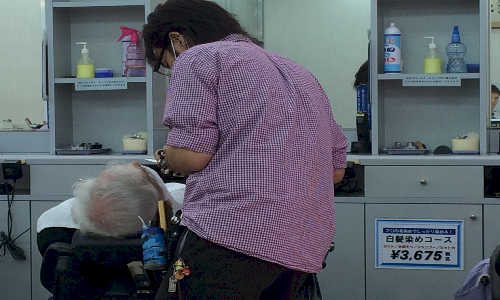
Shave
Shave

Note: The barbers in these pictures are wearing masks for their own protection because of, the pollution they believe is coming from China and has nothing to do with allergies or fear of the flu bug coming to them from foreigners.

Back to the shave. Again your face is covered with hot towels, it is rubbed with an emollient of some kind to reduce friction and then it is hand-lathered with shaving cream skillfully applied with a natural bristle brush. The shaving was so light and precise it was as if it could not possibly be close enough or the the blades used were very sharp. They were! And like almost any normal person, when someone is holding a blade at your throat, you have a tendency to be awake and have your eyes open! 🙂 No worries, Japanese barbers are incredible!

After shaving your face, it is hot-toweled again and a fragrant astringent is applied to tighten the pores and freshen your face. Facial hair is very important to the Japanese. Not a single hair can be missed or out of place. This means on the forehead (even the peach fuzz is shaved), eyebrows, the back of your neck mustache or beard, on, inside of and outside of your nose and ears and etc. Nothing get missed! It is by far the best shaves and the closest shaves that I have ever had. How close? Close enough that I did not have to shave myself for two days. How close? Baby’s butt smooth, close! 🙂

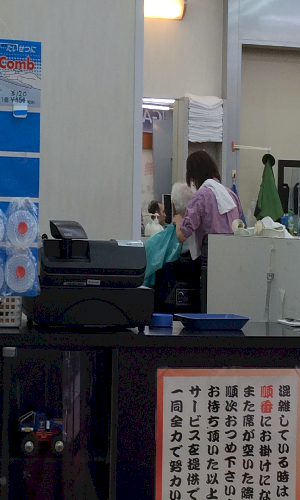
Shampoo/Massage
Shampoo/Massage

After the shave, I went for a shampoo. Instead of leaning back in my chair to the shampoo sink as with my barber in NY, I leaned forward towards the shampoo sink. Your hair is lathered and massaged through yor scalp like a million fingers dancing through your happy!! 🙂

The shampoo is incredible and warm water gently washes away the shampoo and your every care. Then your head, neck and shoulders are rubbed/massaged to release any last remaining negative energy and release you to peace and tranquility and whew, don’t I just feel like a million bucks!!!

The final thing is to blow-dry and hand sculpt every hair in place on your face. You get out of the chair and you feel like you look and you feel like a millions bucks! And how much did all this first-class pampering cost? About the same price with tip that I pay for just a trim by my barber at home – $18.00. And no tip is allowed in Japan, but I would have more than been willing to do for this kind of service.

If I can’t be handsome or handy, at least every hair on my face can be perfectly placed, and my skin as soft as a baby’s butt or face. Susan watched and she was pretty amazed. She gave me the kissable face seal of approval.

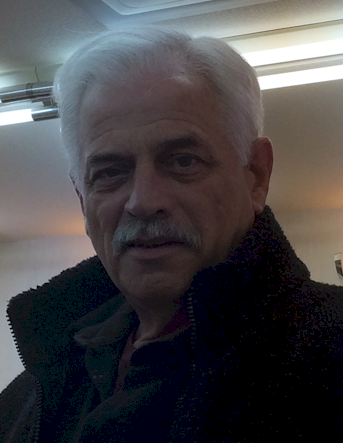
Every hair in place and skin baby's butt soft!
Every hair in place and  face is, baby’s butt soft!

I would love to have a Japanese barber where we live! I would love to import some Japanese barbers! Do yourself a favor. If you ever have the opportunity to have your hair cut, a shave and a shampoo by a Japanese barber, Carpe bar-be-um SEIZE the BARBER!!!  🙂

By the way, I am told that the experience of cutting your hair for women. In Japan, is 10 times better than for a man!

Blog at WordPress.com.

Up ↑