A Sweet Little Nutcracker Suite history and the Ballet
Plan now to check and see if a local performance of The Nutcracker Suite, by Tchaikovsky will be playing in your area. If you have never seen it, you are in for a real treat. If you have already tasted of it, re-treat yourself and see it again.
The Nutcracker Suite is a sparkly little box of jewels made up of highlights from Pyotr Ilyich Tchaikovsky’s fairy tale ballet The Nutcracker, which has become a Christmas, staple around the world. Conductor Simon Rattle calls it “one of the great miracles in music.” The ballet’s title comes from a story, The Nutcracker And The Mouse King, written in 1814 by the German fantasy writer ETA Hoffmann.
After the pair had worked together on The Sleeping Beauty, the choreographer Marius Petipa worked with Tchaikovsky to write the music for a new scenario he had chosen and written out, based on a version by Alexandre Dumas of Hoffmann’s story. Yes, Dumas the Frenchman, is the same author that wrote ‘The Count of Monte Crisco’ of which the sandwich is named after. There is no charge for this little extra. 🤣
But, Petipa instructed Tchaikovsky down to the last detail, including the tempo and the number of bars in each section.
Sweet Nutcracker
The Nutcracker, a fairytale ballet in two acts, is centered on a young girl’s Christmas Eve celebration and romantic awakening. She creeps downstairs to play with her favorite present, a nutcracker, which comes to life as a handsome prince who whisks her off to the Land of Sweets. The ballet was first performed on 18 December 1892 at the Mariinsky Theatre in St Petersburg, Russia. The Nutcracker Suite became instantly popular and was featured in Disney’s — ‘Fantasia’.
Mushroom Dance from Disney Fantasia — 1940
The Nutcracker Suite is a sparkly little box of jewels made up of highlights from Tchaikovsky’s fairy tale ballet The Nutcracker, which has become a Christmas staple around the world: conductor Simon Rattle calls it “one of the great miracles in music.” The ballet’s title comes from a story, The Nutcracker And The Mouse King, written in 1814 by the German fantasy writer ETA Hoffmann. Oh, but there is so much more.
Little Nutcrackers and some of their history
As children we had small nutcrackers. These brightly painted, carved, nut-cracking decorative toys with functional mouths were quality pieces mostly found and made in Germany. But who knew there would one day be a man and his little fledgling company, making them here in the United States? Enter Glenn Crider.
Making Nutcrackers in the USA and Little Ginger Cottages
Crider was a small-town born and raised in Virginia. Who knew that after 30 years in the IT sector of building software for a food service, he would be laid off. At age 54 his prospects were dim so, he plunged headlong into doing his own custom woodworking. He installed tools in his backyard shed and started making wooden circus toys: trains full of animals with bobbing heads and unicycle riders that danced through the air on a wire. TRC (Three Ring Circus), the name of his company, was born. “Then one day at a show I had this little toy soldier, maybe an inch tall,” says Crider. “A customer was looking at that, and she said to me, ‘Can you make a miniature nutcracker for my dollhouse?’ “That’s when the light bulb came on.”💡
So he started to make nutcrackers — designing, constructing them and even making the mechanical jaws, to crack nuts. He made them in all kinds of sizes. But he was still basically a starving artist.
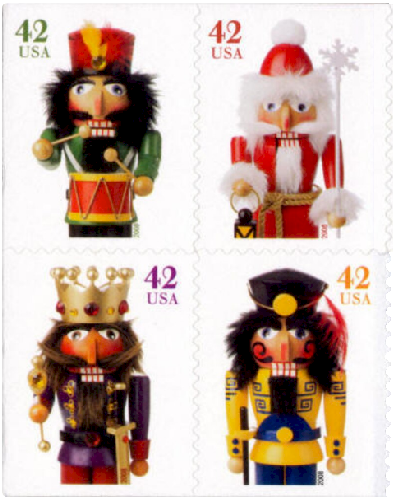
Official U.S. Postage – Photographs of Glenn Crider’s work
It’s OK if you have not heard of Glenn Crider and TRC, but the United States Post Office and the Smithsonian Institute came calling anyway. Stamps were made from designs he made and shipped to them that they photographed and turned into stamps. The Smithsonian Institute houses some of his original designs. Larger versions were commissioned and made for the Nutcracker Suite ballet, for Richmond, VA and other cities.
Birth of ‘Ginger Cottages’
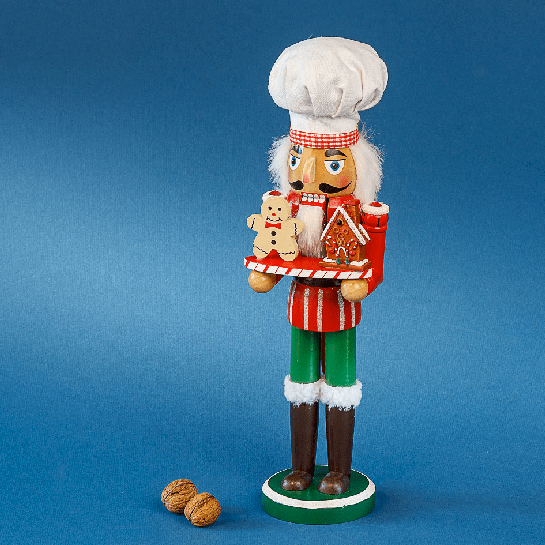
“Among Crider’s nutcrackers is a baker holding a tray of treats including a tiny gingerbread cottage. In 2009, a customer unable to afford the doll asked whether she could just buy the gingerbread house. Using a laser engraver he had purchased to inscribe the company’s name on wooden nutcracker boxes, he began cutting out plywood roofs, floors, and walls and assembling tiny structures that looked like real estate from Santa’s Village. The Ginger Cottage line was born.”
Sweet Nutcracker baker that became the inspiration for ‘Ginger Cottages’
To this day, each ‘Ginger Cottage’ has several surprises including a little gingerbread cookie man hiding somewhere. I wonder if the little girl (now grown up), could ever imagine what was going to happen when she just wanted to buy a little gingerbread house for her dolls? So how did a guy with mechanical skills (woodcarving), use his former training in computer software that laid him off? The game changed in 2010 when Crider discovered he could design his products on a computer then send them to a laser engraver for production. The development grew the business exponentially, Crider said.
‘Santa’s Workshop’ – Ginger Cottage (actual size compared to human hands)
About 15 percent of TRC’s business is custom work, and it grew dramatically. Cracker Barrel came calling and at one point, they were responsible for selling 30% of TRC’s designs. They even commissioned him to make a miniature cottage for ‘Cracker Barrel. I have one of those in my little collection of ‘Ginger Cottages’ that I put on display every Christmas season.
My Little Village with some ‘Ginger Cottages’ and original piano music (look closely and you will see my Cracker Barrel cottage)
Among clients that have ordered site-specific Ginger Cottages or ornaments for their gift shops: Busch Gardens – ‘Santa’s Workshop’ in the amusement park’s German section; Mount Rushmore for the studio where Gutzon Borglum designed the monument; and Colonial Williamsburg (six historical buildings at the living-history museum). “It turns out they have 400 buildings they want done,” says Crider about his Colonial Williamsburg work. “I don’t think I’m going to live long enough.”
TRC Designs eventually had tour busses stopping by to tour the only Nutcracker making company in America at the time. They were the only one that made them with the functional nut-cracking jaws, for a very long time. They had 58 sales representatives in 40 states and worked diligently to pick up the other ten states. They did. Initially, states like Alaska, Texas, Hawaii and South Carolina did not have TRC Designs representatives. But they still shipped to stores and individuals, and collectors everywhere in the USA and all over the world.
In 2019, ‘Old World Old World Christmas’ of Spokane, Washington bought TRC Designs Inc. and its Ginger Cottages collection of wood ornaments. Glenn Crider, the founder and designer of the clever ornaments and figurines, joined the Old World Christmas team and continues to design all Ginger Cottage products.
Glenn Crider ‘Ginger Cottages’ for Old World Christmas
Back to the Sweet Nutcracker Suite
A Tradition in Rochester, NY – Where I first experienced the Nutcracker Suite Ballet just a very short few years ago.
Please note: I am neither sure of the local dates or ticket prices for Rochester, NY, but wherever you may be, find a venue, purchase some seats and go experience for yourself, a Sweet Nutcracker Suite for the holidays. Maybe get started on your own miniature Nutcrackers and ‘Ginger Cottage collections too!
Do yourself a favor, go see a live concert of the Trans Siberia Orchestra. You should award yourself with doing this at least once in your lifetime. If you really like Rock N’ Roll’ or reminded that you do, you will especially appreciate TSO (Trans Siberian Orchestra), as it is known by its three letters.
I am writing this now because it is still possible to grab a couple of seats for a show near you. Just click on the following link and look for “all dates.” – https://www.trans-siberian.com/
What is the Trans Siberian Orchestra. The same website above will answer all these questions and more, but I will give you some perspective as one that has seen a live TSO show.
What really sets them apart is their combination of classical Christmas music and songs with Rock N. Roll quite possibly. Inspiration was no doubt from the first album ever titled a ‘Rock Opera’ from the Band, ‘The Who’ – ‘Tommy’ in 1969. ‘Jesus Christ Superstar’ was a commercial and ‘Broadway’ success in 1970. David Bowie’s – ‘The Rise and Fall of Ziggy Stardust and the Spiders from Mars’ in 1972, was another ‘Rock Opera.’ ‘Rocky Horror Picture Show’ in 1973 was another ‘Rock Opera from Broadway to motion pictures, can likely be found running in some cities somewhere at any time. Each Rock Opera have several things in common as full orchestras, multiple guitars, drums, keyboards, singers and large productions. They each have their own unique calling and attraction to participants. Trans Siberian Orchestra has its own unique brand too. For starters, they use incredible light and sound techniques, fire and lasers along with spellbinding storytelling virtuosity. There is not a bad seat in any auditorium where you may experience a TSO show. Cranes and other elaborate props and sets will bring the musicians to you or at least close.
The other thing I find unique about TSO is they will employ local musicians and singers in every show. It gives a real homey touch especially if there is someone you actually know in your community, in the production.
I just cannot put into words what it is like, witnessing a TSO in person. You will just have to see at least one and experience it yourself. But I will say these few final things. Be prepared to meet people from all walks of life, ages, skin color, intellect economic background, whole families and even some that have been to many, many of these TSO shows for years. The programs are beautiful and the gift store filled with treasures enough for there to be, something for everyone. Finally, have you ever heard the term –
“close enough to feel the heat?” My wife Susan and I set in the balcony of a TSO show several years ago and with blazing flames of fire from the stage, everything they would burst into flames, moments later, we could feel the heat! If you think about $120 bucks for 2 seats is expensive, let me just encourage that a perhaps a once-in-a-lifetime event as a TSO show has so much interest, value and will produce so many memories, $120 is nothing. Besides, if you couples want to do something together, let this be the gif you give each other for Christmas.
How on earth did they come up with the name – ‘Trans Siberian Orchestra’? The original founder of TSO, was Paul O’Neill in 1996. O’Neill said it was inspired by his trip to Russia in the 1980s. He was particularly moved by the Russian province of Siberia, known for its freezing cold climate. One of its most distinctive features is the Trans-Siberian Railway, which is the longest railroad in the world that connects western Russia to the eastern part of Russia which touches Northeast Asia.
“If anyone has ever seen Siberia, it is incredibly beautiful but incredibly harsh and unforgiving as well. The one thing that everyone who lives there has in common that runs across it . . . is the Trans-Siberian Railway,” O’Neill allegedly told Citizen’s Voice in 2011, using the railway as a metaphor for how music connects people across the world. “Life, too, can be incredibly beautiful but also incredibly harsh and unforgiving, and the one thing that we all have in common that runs across it . . . is music. It was a little bit overly philosophical, but it sounded different, and I like the initials, TSO.”
In closing, I will share three videos. Two you have liekly seen before, thesey are all of the Internet, YouTube and etc.
Trans-Siberian Orchestra – Christmas Eve / Sarajevo (Timeless Version) (Official Music Video) [HD]
Wizards of Winter by TSO – Background music for this home with an incredible light show for the holidays
Dahni & Susan, the WallKnocker Singers. Just two people, two toilets, an extensive musical repertoire and one wall between them. People that wallknock out tunes together, stay together! 🙂
“Any road“ is, an English colloquialism. You know, “English” as from England or British (Britain). Instead of how many of us use and say “anyway” (any way), “any road” (anyroad), takes on a similar meaning. example: Anyway as I was saying, I have to get to the dentist or anyroad (any road), traveled, I must get to the store. 🙂
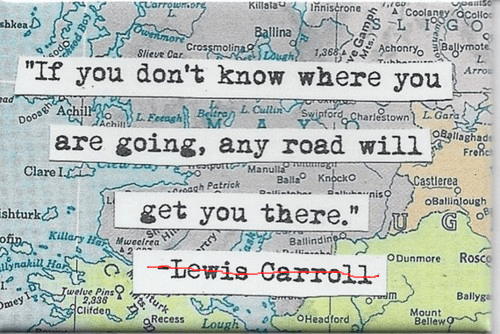
There is an exchange between Alice and the Cheshire Cat, in Lewis Carroll’s Alice’s Adventures in Wonderland, where the following line has been incorrectly attributed to, Lewis Carroll. It appears all over the Internet and all kinds of merchandise are being sold with the line, falsely quoting Lewis Carroll, as its author. The line reads as follows:
“If you don’t know where you are going, any road will get you there.”
This MAY (?), have been someone’s paraphrase of the exchange between Alice and the Cheshire Cat, but Louis Carroll never wrote those words!
BrainyQuotes inaccurately attributes this to Carroll.
And you could even buy a vinyl decal from Amazon (and other places), with the line and supposed quote by Lewis Carroll. Note: Currently this item is not available from Amazon (but it was, just do a search). Maybe they figured out they were selling something falsely quoted?
The Cheshire Cat, NEVER said this!
Anyway or Anyroad, back to ‘Alice.’ 🙂 Below are the actual words of the conversation between Alice and the Cheshire Cat, from Chapter 6, ‘Pig and Pepper’ of Alice’s Adventures in Wonderland:
Alice Would you tell me, please, which way I ought to go from here?
Cheshire Cat That depends a good deal on where you want to get to, said the Cat.
Alice I don’t much care where— said Alice.
Cheshire Cat Then it doesn’t matter which way you go, said the Cat.
Alice So long as I get SOMEWHERE, Alice added as an explanation.
Cheshire Cat Oh, you’re sure to do that, said the Cat, “if you only walk long enough.
Excerpts: Chapter 6, ‘Pig and Pepper’ – Alice’s Adventures in Wonderland, by Lewis Carroll
Oh NO, he did NOT say or write this!
So, if neither Alice or the Cheshire Cat never said the line or the words “any road” (and they didn’t), and Lewis Carroll never wrote them (and he did NOT), who did?
It MAY(?), also, be found in the ancient Jewish Babylonian Talmud?
But if not Lewis Carroll, Alice, the Cheshire Cat, someone’s paraphrase of the three or the Jewish Babylonian Talmud, who else could have written these words?
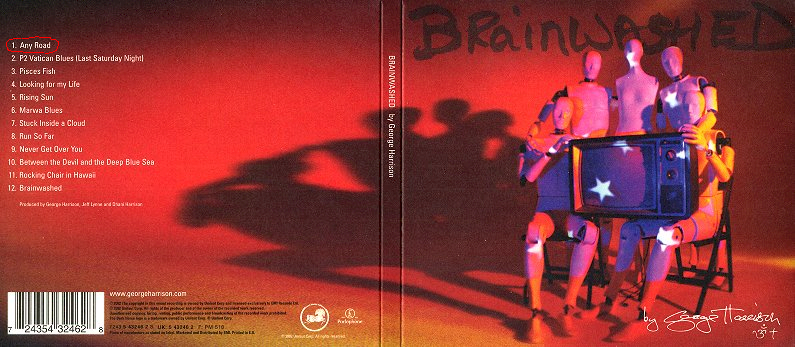
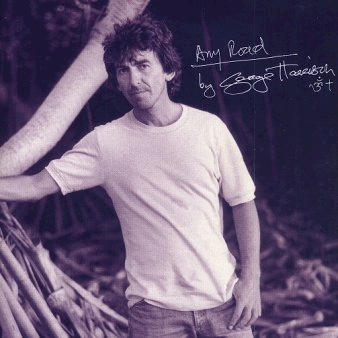
‘Any Road’ is, a song written by the late, former Beatle, George Harrison, who passed in 2001. The song was released as a single and from his posthumous album ‘Brainwashed,’ in 2002. Notice in the lyrics to follow, the line is NOT “…any road will get you there,” but “…any road will take you there.”
CD Jacket of ‘Brainwashed’Oh YES, He said it, sung it and wrote it!
Any Road
By George Harrison
Oh I’ve been traveling on a boat and a plane
In a car on a bike with a bus and a train
Traveling there and traveling here
Everywhere in every gear
But oh Lord we pay the price with a
Spin of a wheel with the roll of a dice
Ah yeah you pay your fare
And if you don’t know where you’re going
Any road will take you there
And I’ve been traveling through the dirt and the grime
From the past to the future through the space and the time
Traveling deep beneath the waves
In watery grottoes and mountainous caves
But oh Lord we’ve got to fight
With the thoughts in the head with the dark and the light
No use to stop and stare
And if you don’t know where you’re going
Any road will take you there
You may not know where you came from
May not know who you are
You may not even wondered how
How You got this far
I’ve been traveling on a wing and a prayer
By the skin of my teeth by the breadth of a hair
Traveling where the four winds blow
With the sun on my face, in the ice and the snow
But ooee it’s a game
Sometimes you’re cool, sometimes you’re lame
Ah yea it’s somewhere
And if you don’t know where you’re going
Any road will take you there
But oh Lord we pay the price
With the spin of a wheel, with the roll of a dice
Ah yea, you pay your fare
And if you don’t know where you’re going
Any road will take you there
I keep traveling around the bend
There was no beginning, there is no end
It wasn’t born and never dies
There are no edges, there is no sides
Oh yea, you just don’t win
It’s so far out – the way out is in
Bow to God and call him Sir
But if you don’t know where you’re going
Any road will take you there
♦ ♦ ♦ ♦ ♦ ♦ ♦ ♦ ♦ ♦ ♦ ♦ ♦ ♦ ♦ ♦
The only known public recording of this song by George Harrison was on VH1 in 1997. For your enrichment and enjoyment, the link to the YouTube video follows here.
The last song on the last album by all four Beatles (Abbey Road) was ‘The end.’ The last words are:
“And in the end, the love you take is equal to the love you make.”
But all things considered, in the end, for me-
“All things must pass” [G. Harrison] “Let It Be” [the Beatles]
All the unknown and undone and what I’ve left this life, showing
I’d rather to have been on the road and known, where I am going!
-Dahni-
PS And at my end, I’m taking more love with me and in me, than it is possible, for me to have ever made, in 10,000 X 10,000 lives! I cannot equal, out-give, out-love and out-live God, but His Road will take me there!
As the end word (a suffix actually), in the title suggests, this is all about a Martini.
I call it, The Mano a Mano Martini.or The Mano-tini for Short. I am a curios fellow in that when I become interested in something, I dig or dig into the details. Perhaps this in part due to my training in journalism in that the very first paragraph should contain— WHO, WHAT, WHERE, WHEN, WHY and HOW. It is my intention to fulfill this by paragraph’s end. I am a gregarious fellow in that I like to share my discoveries with others (YOU)! I would like to think that even if you do not drink alcohol or like martinis, you might find the following interesting and maybe even humorous, for your time spent here. This perhaps ‘long in the tooth’ piece will conclude for you that do like martinis, would like to try one and try a new recipe for one IF, you keep reading until the end. You could, skip or scroll all the way to the bottom if you want to. 🙂
Like a bartender’s or mixologist’s list of ingredients and preparation, here, there are some parts of fact, parts of fiction and some history in our list of ingredients, for preparing this alcoholic libation.
Often ingredients are mixtures of other ingredients combined or infused in certain ways, like our word “libation,” for example. Libation has its roots in Greek and Latin and its simple definition was an offering, a liquid poured out. Well, this is certainly how we may think of it today and with this liquid being offered and it being most likely an alcoholic liquid or beverage with its effects, bringing up the ideas of ‘Happy Hour,” “getting a buzz” or “high,” it’s a drink most likely shared at least between two lovers, two friends, two people or two associates, for a good time, to celebrate or just for a happy time among people, even if the two are the bartender and the bar-sitter. 🙂
That’s great, but not so fast. Libation was originally a beverage offered to some deity (god or goddess), as a form of sacrifice, seeking favor of the gods?
OK, just suppose there were no gods or goddesses, but the root word of mythology is, myth. 🙂
Alright, maybe they were made up, but people did and may still believe in them (the gods). How easy would it be to pour out some liquid as an offering for some god or goddess and when others weren’t looking, get yourself a nice, free drink! “WOW,” so they might think, “Not only did the gods take the drinks, they must have accepted them (liked them),” especially if, the beverages constantly just seemed to disappear. 🙂
Cue the myth reel for our next word, ‘Ambrosia.’
“In the ancient Greek myths, ambrosia (pronounced am-bro-ze-yah Greek: ἀμβροσία, “immortality”) is sometimes the food or drink of the Greek gods, often depicted as conferring longevity or immortality upon whoever consumed it. It was brought to the gods in Olympus by doves. Ambrosia is sometimes depicted in ancient art as distributed by a nymph labeled with that name. In the myth of Lycurgus, an opponent to the wine god Dionysus, violence committed against Ambrosia turns her into a grapevine.”
Also, at the above link, there is an image of a plate (a majolica plate), thought to have been made in 1530 by Nicola da Urbino. It’s title is, ‘The Foods of the Gods on Mount Olympus’. Oh, that sounds familiar, like the 19th Century USA invention, most of us know as, ‘Ambrosia Salad.’ Well, if this fruit, whipped topping concoction was or is the modern-day equivalent of, “Food for the gods,” what about Mead, originally a fermented beverage of honey, water and yeast some called, ‘Ambrosia’ or, “nectar of the gods?”
Forget the fact that in an area where grapes were not grown too well, but they had to have something alcoholic to drink. And forget the idea that real mead does not taste much more than like just watered down honey water. But like a bartender’s or mixologist’s special add-ins, add some folklore and a little bit of well, whad-di-yah-know’ there is something to be said about all those B vitamins that do increase as the stuff ages. Could they actually help a hangover from too much drinking the night before with drinking some more of the ‘tail of the dog that bit you?’ Supposedly, the word ‘honeymoon’ (honey + moon), came from the celebratory wedding drinking of Mead. The couple was to wed when she was close to being able to conceive. They were to wed during a lunar cycle and drink Mead for a month. WOW, how about that, a month long honeymoon, for you that may have never had one? Mead was supposed to make him more virile and the lady more fertile. Hmmm, is there something more to those B Vitamins in Mead, the ‘Nectar of the gods?’ I don’t know, but people believed it. So what’s my point? Drinking is supposed to be associated with special times and happy and high’ times. Get some gods and goddesses involved and the traditions continue. 🙂
So what? So what does this have to do with Martinis? We’re going there next? 🙂
According to all the sources I checked, a martini may in fact, be a ‘Made in America thing, what it is, but not its name. You ‘re gonna’ love this!
In 1863, an Italian vermouth maker started marketing their product under the brand name of Martini, after its director, Alessandro Martini and the brand name may be the source of the cocktail’s name?
Then another theory is, ‘The Martini’ evolved from a cocktail called the Martinez, served sometime in the early 1860’s at the Occidental Hotel in San Francisco, CA. People hung out there before taking an evening ferry ride to the nearby town of Martinez. And of course, the people of Martinez say, the drink was first created by a bartender in their town? But a, “Martinez Cocktail,” was first described in Jerry Thomas’ 1887 edition, of his “Bartender’s Guide, How to Mix All Kinds of Plain and Fancy Drinks”
Are you ready for the following? 🙂
“By 1922 the Martini (the vermouth), reached its most recognizable form in which London dry gin and dry vermouth are combined at a ratio of 2:1, stirred in a mixing glass with ice cubes, with the optional addition of orange or aromatic bitters, then strained into a chilled cocktail glass.[3] Over time the generally expected garnish became the drinker’s choice of a green olive or a twist of lemon peel.
A dry Martini is made with dry, white vermouth. By the Roaring Twenties, it became common to ask for them. Over the course of the century, the amount of vermouth steadily dropped. During the 1930s the ratio was 3:1, and during the 1940s the ratio was 4:1. During the latter part of the 20th century, 6:1, 8:1, 12:1, 15:1 (the “Montgomery”, after British Field Marshal Bernard Montgomery’s supposed penchant for attacking only when in possession of great numerical superiority),[4] or even 50:1 or 100:1 Martinis became considered the norm.[5]
My father-in-law thought just passing the cork over the martini made it dry enough! 🙂
“A dirty Martini contains a splash of olive brine or olive juice and is typically garnished with an olive.[6]
A perfect Martini uses equal amounts of sweet and dry vermouth.[7]”
“Some Martinis were prepared by filling a cocktail glass with gin, then rubbing a finger of vermouth along the rim. There are those who advocated the elimination of vermouth altogether. According to Noël Coward, “A perfect Martini should be made by filling a glass with gin, then waving it in the general direction of Italy,” Italy being a major producer of vermouth.[8] Luis Buñuelused the dry Martini as part of his creative process, regularly using it to sustain “a reverie in a bar”. He offers his own recipe, involving Angostura bitters, in his memoir.[9]”
“In 1966, the American Standards Association (ASA) released K100.1-1966, “Safety Code and Requirements for Dry Martinis,” a tongue-in-cheek account of how to make a “standard” dry martini.[10] The latest revision of this document, K100.1-1974, was published by American National Standards Institute (ANSI), the successor to ASA, though it is no longer an active standard.[11]”
“There are a number of variations on the traditional Martini. The fictional spy James Bond sometimes asked for his vodka Martinis to be “shaken, not stirred,” following Harry Craddock’s The Savoy Cocktail Book (1930), which prescribes shaking for all its Martini recipes.[12] The proper name for a shaken Martini is a Bradford.[13] However, Somerset Maugham is often quoted as saying that “a Martini should always be stirred, not shaken, so that the molecules lie sensuously on top of one another.”[14]A Martini may also be served on the rocks, that is, with the ingredients poured over ice cubes and served in an Old-Fashioned glass.[15]”
WOW, does all that not sound factious, factitious, facetious or something with a superfluity of facts?! 🙂 I suppose one could start a religion over a martini, not to mention heated arguments as to its authenticity and origin. But there is, still more.
I have long been fond of James Bond, 007, the fictional character created by Ian Fleming. There is no cocktail served up better to “Bond, James Bond,” than the ‘Vesper Martini. This was from Fleming’s first Bond novel, Casino Royale. Vesper Lynd was one of the few ‘Bond girls’ that he truly loved. She is the reason Bond’s drinks are always, “shaken not stirred.”
According to the author, the ‘Vesper’ is “strong and cold and very well made” —much like 007 himself. That’s all fine and dandy, but neither you nor I will ever get to try it!!! Its ingredients and preparation is specific with Gordon’s Gin, and vodka. The type of vodka was not specific, but the accepted gin was Gordon’s. Gordon’s Gin is thought to be the gin of gin with its strong start and finish of juniper.
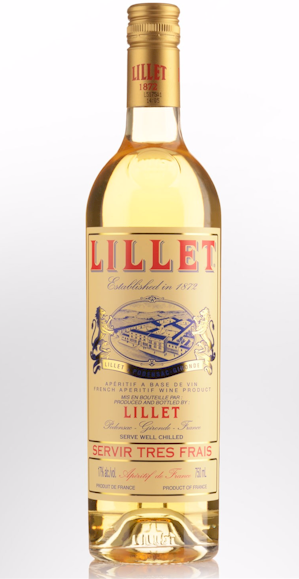
But there was also, one unique ingredient that is no longer available, Kina Lillet, the aromatised wine that gives the Vesper its distinct, bitter edge. Kina Lillet was a proprietary blend of sweet wines and macerated fruits with the unique addition of quinine, its signature ingredient.
In the 1700’s, a French scientist named Charles Marie de la Condamine discovered that quinine, a compound found in cinchona bark, is an excellent treatment for malaria. Cinchona is a genus of flowering plants. It is native to the tropical Andean forests of western South America. Cinchona bark is used in powered or distilled from, of the bark of the shrub, to make quinine.
Having some remedy for mosquito-infested territories, where the British and the French Foreign Legion were expanding into, like India and Africa in the 1800’s, this was great news! But quinine is very, very bitter. What to do? Mix it with something else like today, in Tonic water or as in yester-years, Kina Lillet. These drinks were called qinquinas (kɛ̃kinas), or wines flavored with quinine. So, the idea worked successfully. The soldiers got the quinine they needed in a drink they enjoyed. It worked so well, the soldiers developed a taste for qinquinas and kept drinking them after they came home. France’s most popular one was, Kina Lillet. So popular in fact, it spread oversea to even post-prohibition America.
Oh, and if you sit at the bar too long or develop leg cramps, quinine just might help? 🙂
Gin has long been a favorite clear alcoholic drink in the United States. People even made ‘bathtub gin’ during prohibition. Vodka was not favored for a long time. It was thought to be mostly a drink of Russia and there was a time in this country where WE were on an anti-communist kick and WE the People, certainly were not about to drink vodka. A man by the name of Smirnoff (a Russian), sold his livelihood for cheap to an American and with some ‘creative’ marketing, some ginger beer, lime and special copper mugs, with Smirnoff vodka, the Moscow Mule was born in America, with Vodka made right here. 🙂
Now, some prefer their martinis to be solely based on vodka where others prefer gin. Adding vermouth or olive juice to make a dirty martini came later. But that Vesper, the Vesper used both gin and vodka and Kina Lillet.
About 1986, tastes changed and Kina Lillet fell out of favor and Lillet dropped the name Kina, along with the quinine. Today, they offer Lillet Blanc which is supposed to contain quinine, but it’s not the same. Calling this a Vesper today, is just not the same either. In Rochester, NY, there is a pub and grill named,‘The Vesper.’
The Vesper (pub and grill), have of course, what they call, The Vesper Martini. Just remember, Kina Lilliet has not been made since 1986. The Rochester pub relies on Lillet Blanc, which is labeled to contain quinine. But it’s not the same as Kina Lillet. If you scroll down the page of the website to their signature drink offerings, you will find what they call, ‘The Vesper’ and how it is made.
The Vesper
“A twist on the classic martini. James Bond made it famous, and if it’s good enough for 007, it’s good enough for you. You’ll feel classier immediately. Shaken, not stirred, with Zamir Vodka, Plymouth Gin, Lillet Blanc & lemon twist.”
The description according to their website at rocthevesper.com
There are two main problems with this. For one thing, missing is Gordon’s Gin. I’m not so concerned about their choice of vodka, but Lillet Blanc is NOT, the same thing as, Kina Lillet. So how could this be good enough for you, when it would NOT be good enough for 007?
The original drink was 3 parts Gordon’s gin, 1 part Vodka and ½ part of Kina Lillet, shaken (“not stirred”), with lemon peel. Despite that Lillet lists quinine on the label of its Lillet Blanc, it’s not the same and no mater what The Vesper of Rochester calls itself or its drink, it is not The Vesper Martini!
This entire post all began with my trying to discover and make for my brother-in-law Kevin, a Vesper Martini. Before continuing, this is a good spot for some back story.
I have painted a lot of houses inside and out in my past. I used a lot of oil-based or alkyd paint. To clean my brushes, I often used turpentine. Turpentine smelled like gin and gin like turpentine to me. I was danged if I was going to paint all day then drink anything that smelled like what I cleaned my brushes with! I did not like gin to put it mildly! Then in 2014, my wife and I were in Australia.
After a local fair one evening, son Jonathan and I stopped for a nightcap on the way home. He ordered a gin and tonic. I was in a curious mood and I asked if I could try it. I did and thereafter, it has become a favorite drink. Even it has certain ingredients I like. The gin is Bombay Sapphire. I like its blend of botanicals. Recently, I have once again confirmed my mother’s description of my personality which is, I have, “Champagne tastes with a beer pocketbook. “ 🙂
I have an acute sense of smell so what can I say, if I don’t like how something smells, I will not like how it tastes. I discovered Fever Tree brand of Tonic. A four pack of 12 ounce bottles can cost around $5.00. One can buy other tonics for a lot less, but to me, there is nothing better than Fever Tree tonic which has, real quinine in it!
I was never fond of vodka. To me, vodka was mostly a clear alcohol with little taste that blends well with other ingredients like fresh squeezed lime juice and simple syrup, for my beloved Vodka gimlet over ice. Believe it or not, I also use vodka in my pie dough to retard the gluten process when making pie. Maybe you can make pie? I could not. My recipe is about the same as any other, but I use half as much chilled water and replace it with chilled vodka. Science allows me to make a flaky, tasty crust every single time. The alcohol cooks out and there is no taste of vodka left behind, just delicious crust which really is, maybe 90% of what makes great pie! By the way, my taste buds have evolved. Not all vodkas are equal!!! I use and prefer Tito’s. And it’s made in the USA.
Martinis? Gin? Vodka? Some of both? Me? No way, until discovering…
…micro brewed beers (micro-breweries), are no longer a niche market. They have become the standard for excellence and quality, our tastes demand. Local wines? The same has become true. Local hard ciders are becoming hugely popular. Local distillers are producing gins and vodkas (and other spirits), which worry the big-name-brands. They should be worried! Often the locals are far superior in quality, purity and most importantly, taste, but also, they are often less expensive! Why? Put your money into the end product and less on marketing, transport overseas and hype!
These small independent breweries, wineries and distilleries may not have the volume of the big ones, but they certainly make up for it in quality and imagination and incredible innovations and taste explosions. Why in fact, the US government hold them to greater standards than the big established brands. Pretty much, you do get what you pay for from the little ones and a whole lot more!! And on the economic side, these small drink makers probably contribute greatly to the employment market. Small breweries, wineries and distilleries are everywhere nowadays, state by state. And all those that work in them that I have met, all seem to love their work where they see themselves as personally invested crafters of quality, rather than mere unknown workers of volume, for BIG-corp’s profit and bottom line. Hey, I believe there is much to be said about putting love in what you do. I believe love can actually improve the quality and taste of what is made!
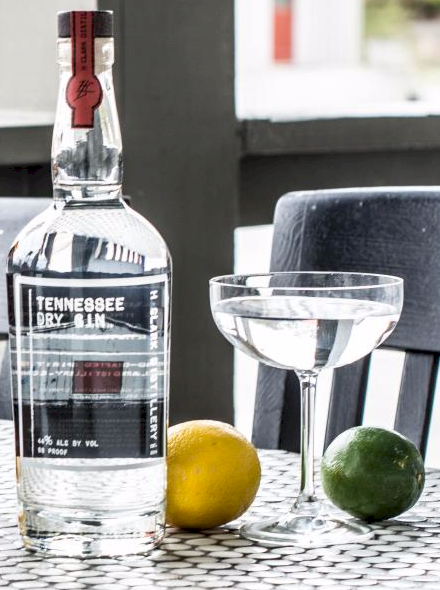
We recently returned from a trip and visited two small distilleries in Tennessee. One makes a true, 100%, excellent bourbon and a gin (more about the gin later), and the other had excellent and to my surprise, both a clear whiskey not oaked (not aged in oak barrels for that distinct taste and color of traditional whiskey), and a clear Rye (also not oaked). We bought some of all mentioned. That good? Oh, YES, that good!!! Oh, and one more thing about that little distillery (maybe a few thousands of gallons made per year as opposed to the big boys that produce tens-of-thousands of gallons an hour, day after day. H Clark Distillery is the first distillery in 106 years that can accurately and legally call its product, bourbon. Not even Jack Daniels, Dickel or Pritchards can call their offerings Bourbon! To do so, certain ingredients must be used and in certain ways. They all do this. The big three mentioned have another step they use, which is an organic process, but it disqualifies them from calling their product, bourbon. H Clark Distillery in TN, only uses the standard practice and ages their bourbon in brand-new oak barrels, for the taste, smoothness and amber color of true Tennessee, 100%, pure American Made Bourbon! And they make an incredible gin to rival say, Gordon’s gin! Again, more about this later.
So, what have we seen and learned and where have we been up to this point? Taking all the best points, our libation should be poured liquids to share with one another; to celebrate life, toast each other to-the-day and share some moments together. Should these beverages include alcohol, they should be finely crafted to produce the best taste possible and should be consumed responsibly. Now to be true, to drink responsibly, would NOT include alcohol or any drug or substance which can diminish our ability to act in an emergency, in the best and fastest way possible. But if we do drink or will drink, let us do so as the old adage says, with—“All things in moderation!”
One last thing to do here before giving my recipe for the Mano a Mano-tini or in short, the Mano-tini. What is in a name or what’s in a name? For one thing, I for one, am not about to try to make a Vesper, when ALL of the exact ingredients are not used (Kina Lillet is NOT available)! And I am NOT going to try to replicate it, while using alternatives and call it a Vesper. I will not even use the words Vesper Martini. But I will do two things. First, I will make, name and claim my own drink. Secondly, I will shorten Martini to just ‘tini,’ which will still suggest the type of drink it may be listed under, in the world of bar guides and mixology.
Have you ever heard or seen the words “mano a mano?” For a long time, I thought they were Latin words. They are not, they are originally, Spanish. I and many people thought and many still do think that they mean, man to man. That’s an easy stretch when the first three letters of mano is man. Is that sexist? Could not “man” be an all-inclusive noun, to describe all men, women and children as in mankind or humanity? I think yes, yes it could. But what is its meaning?
The god of words since 1823, Meriam Webster, defines “mano a mano” as: “in direct competition or conflict especially between twopeople.” Please note the words “two people” as I have underscored them.
OK, I can sort of understand how these words have and are still being used today. Perhaps images of hand to hand combat come to mind? And the original meaning of these Spanish words are pretty close to that (minus the combat part). 🙂
“Mano a Mano” just means, “hand to hand.” I like that, especially when talking about making a drink by hand, making it by hand and hand-ing’ it off to another to enjoy! From the hand of the bartender to the hand of the bar-sitter, from one lover’s hand to another’s hand, from one hand of a friend or an associate (even a stranger), to another’s hand, let us celebrate life and each other!
So without further adieu, I give you, ‘The Mano a Mano- (from my hand to yours) tini! 🙂
Most of its ingredients are made in America, and fitting and proper since most likely the “tini,” began in the USA!
Mano a Mano-Tini or Mano-Tini
Ingredients:
3 Parts H Clark Distillery Tennessee Gin (prevalent juniper notes at the start and finish)
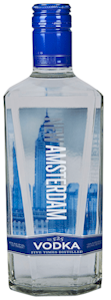
Note: Previously, I was using Tito’s Vodka, but they have gotten “too big for the britches” in my opinion or for sure, they have priced themselves out of my pocketbook! I now use New Amsterdam Vodka. Just as good as Tito’s (that was compared to Absolute), if not better, is made and bottled in Modesto, CA USA, and is moderately priced.
1 Part New Amsterdam Vodka (made in California and comparable to Absolute and less expensive)
½ part of Lillet Blanc (French)
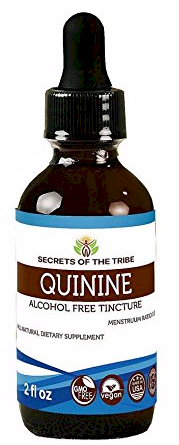
3-4 drops Cinchona (quinine distillate from South America)
3 parts H Clark Distillery Gin (made in Tennessee, USA)
1 part New Amsterdam vodka (made in California, USA)
1/2 part Lillet Blanc (made in France)
3-4 Drops of Quinnine Distillate (made with cinchona bark from South America)
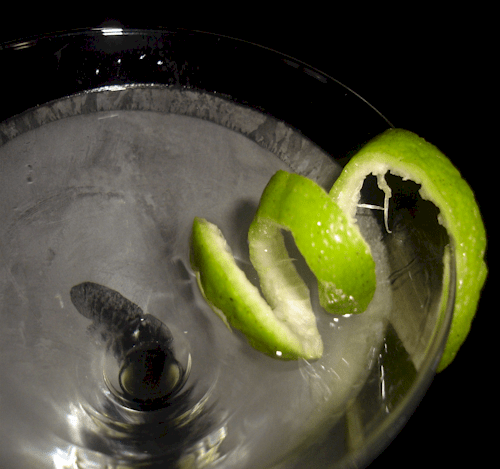
Lime peel twist
Instructions:
Add gin, vodka, Lillet, and the cinchona (quinine) drops to a cocktail shaker filled with ice. Shake well. Strain into martini glass. Garnish with lime peel (I like lime better than lemon peel, but use either to your liking.
If you use lemon peel, maybe you can call it, ‘The American 007’ and when “Bond, James Bond,” is in the USA, he will like it. 🙂 But mine is made with lime peel. I am for short just calling it, ‘The Mano-tini’
Dramatic effect
Walk on a darkened life stage
Unannounced and unknown
You are a stand
You are a microphone in hand
A single focused spotlight is upon you
Silent crescendo
Silent expectation rises
Will you sing A cappella
Will you voice something written
Will you sing impromptu
The eyes and ears of hearts trill
Waiting loudly in the seats of silence
Capriccio Concerto
Cavatina Grandioso
Interlude Intermezzo
Fifths Finale
Pages of blank staffs
No trebles or bass clefs
No signatures
No keys
No Majors
No Minors
No sharps
No flats
Only you can write and play the notes
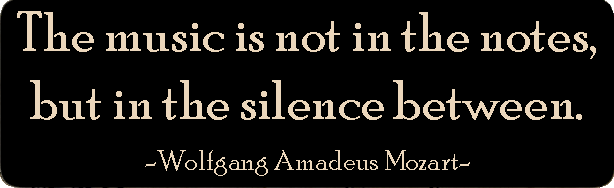
Between the notes silenceMusic is what is not heardReprise Refrain
Encore
Take thy bow virtuoso maestro
But first-
The world awaiting, is silently seated
This music is to be composed
Music like angelic voices
To be perfectly played
Sung as if with angelic voice
Unique as if from heaven
Pure as if from the lips of God
Are not in the notes
But in the rests
A beautiful silence
Music is undulating silenceMusic is everywhereEvery eye and every ear
Every heart and every soul
In anticipation
A beautiful silence
Awaiting the Opus Unique of…
You
It is your time
It is your moment
This the music of you
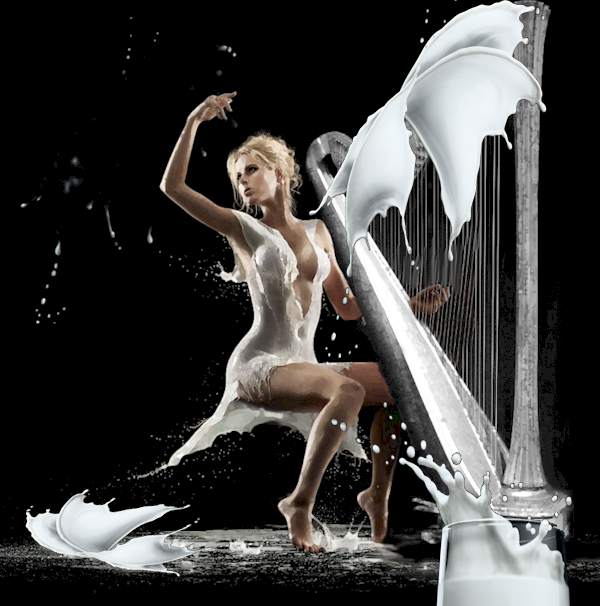
Musik ist geliebte Muttermilch — German – Music is Beloved Mother’s Milk
From the collection: ‘Staffs of Life’ By the same author
May your every need, be ever met
And your heart, always full
And all the best that’s yet to come,
May it be your crowning jewel
May love and hope ever find you,
sharing these two, with all you meet
And this, ever circling
will never find complete!
Following the Youtube video, you may click on the PDF file below for a copy of the entire poem, if you so desire. We hope you enjoy this work and such as it is (sound quality and an out of tune piano), may it fill your heart with believing, hope and love!
Press Play and enjoy the snow and the music while you read below! 🙂
Sorry, if you are viewing this on a smartphone as an Apple iPhone. They do not support the snow or the music, but here is the link to the music – Bing Crosby sining “White Christmas” – https://soundcloud.com/dahni-4/sets/holidays-1
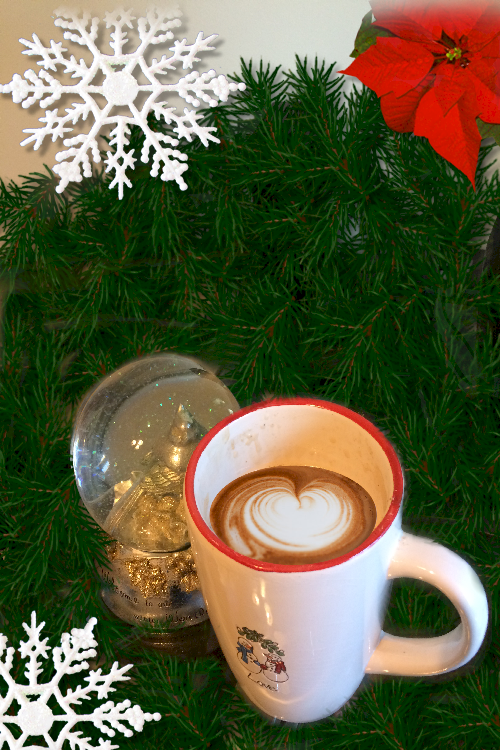
Tis’ the season and eggnog a reason. How about starting your day with some Latte Nogee (eggnog + espresso coffee)! It is pronounced [nah+gee]
What you will need:
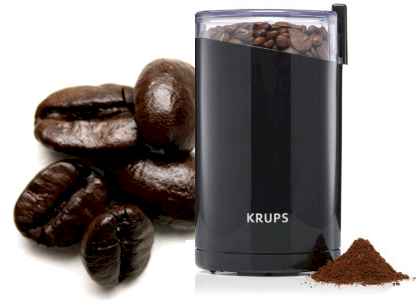
1. Good quality espresso beans and a grinder
You may use ground espresso if you prefer, but I like them as fresh as is possible. Some people believe beans should never be frozen as it changes the flavor as the beans go back and forth from the freezer. It’s about moisture. But I take out from the freezer, exactly what I need from the bag and return the rest to the freezer. I have never had a problem. The espresso beans I used just this morning have been in the freezer for 2 years and NO PROBLEMO! 🙂
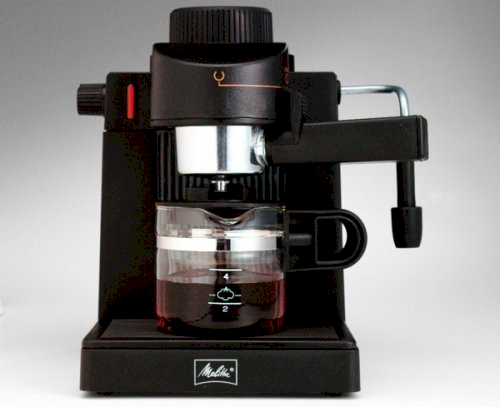
2. Some way to brew your espresso coffee. We rarely use our machine, but it is great to have around for special occasions and holidays. Our was a gift several years ago and it still works perfectly. Ours is a Melitta brand. The simple two-four cup espresso machines are not all that expensive (around $100) and well worth itI
3. The best eggnog you can find or make
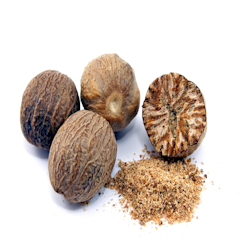
4. The best nutmeg you can find. Grind your own from a fresh nutmeg. You’ll be glad you did.
5. Milk to foam or froth
6. (2) big tall holiday mugs
Let’s DO IT!
1. Measure enough espresso coffee (finely ground) to make (2) 3 ounces of coffee. see. the picute of the machine above. It shows the pot having about 3 ounces of coffee that has been brewed. For single serve, this is all you need. But to share with another (and this is all the fun), double the bre pot.
2. Heat enough of your cold eggnog on the stove to fill each mug to about two- 2 1/2 inches from the top of each mug.
3. Brew your coffee and pour half into each mug
4. Pour about 1/2 cub of milk (or skim milk) into a stainless steel frothing pot and foam the milk from the leftover water/steam from your espresso machine.
4. Pour half of the heated eggnog into each mug.
5. Pour half of the frothy (foamed) milk into each mug.
6. Garnish with as much fresh ground nutmeg as you like or as an option –
7. Put a dollop of whipped cream on top of each cup then garnish with fresh nutmeg. Then –
When I was a child, our grandmother that we her ‘kidlits’ (as she called us), called her Nanny. This name was probably due to the trouble my brother had with the ‘g’ and ‘r’ sounds as in grandmother, grandma and granny. So Nanny just stuck.
Well Nanny used to sing this little song called ‘Jacky Frost.’ I loved it and still sing it, especially when the weather gets colder and/or as the holidays approach.
I married a music teacher with a master’s in music. She taught K-6 for over 25 years. But she had never heard of this song before I sang it. So I taught a teacher at least this one thing. 🙂
To my wife Susan’s credit, she was recently able to find the words and the music for this little known, perhaps forgotten, but enjoyable little tune for children of all ages. I will share it here for all, just in time for the holidays.
The lyrics to this song were adapted from the poem, “Jacky Frost”, by Laura E. Richards. You can find this poem in the collection “Tirra Lirra Rhymes Old and New” by Laura E. Richards.
The music was composed by Eleanor Smith, who included the song in her music textbooks designed for children. These textbooks are over 100 years old. You can find the song in “The Common School Book of Vocal Music” by Eleanor Smith. She adapted the poem just slightly to fit her melody.
Jacky Frost
Jacky Frost, Jacky Frost,
Came in the night;
Left the meadows that he crossed,
All gleaming white.
Painted with his silver brush
Every window-pane.
Kissed the leaves and made them blush,
Blush and blush again.
Jacky Frost, Jacky Frost,
Crept around the house,
Sly as a silver fox,
Still as a mouse.
Out our little Jenny came,
Blushing like a rose;
Up jumped Jacky Frost,
And pinched her little nose.