This is a familiar question to most everyone and especially children. Often we we told to do something we did not like or agree with and our most common response was WHY? Forget the fact that as children we were challenging the wisdom, experience and ages of those that were providing for us, but we dared to ask WQHY anyway.
Asking why brings up this point. WHY is a question and without rhyme or reason or whether or not it is possible to even know the answer, is there an answer to every question? Leave aside any possible circumstance or context areounfd the question WHY and just answer the question.
We once children or children now, quite often have heard or hear the answer to ‘WHY’ as— “Because I said so!”
Another proposed answer to to ‘WHY’ has been suggested as— “Why not?” But actually answering a question with another question is not the answer to ‘WHY’.
The simpliest answer to ‘WHY” is “Because!”
Now we can go off into the weeds or with circustance and context or reasons for both the question ‘WHY’ and the answer, ‘BECAUSE’.
Since the mid term election are now just a few short days away, let’s add to the word ‘WHY’ with the word ‘VOTE’ forming the the question, “Why Vote?”
To answer, we need to begin with ‘BECAUSE’, but BECAUSE why?
Because Congress made this possible in 1845, making the first Tuesdays after the first Monday in November? Because Tuesday November 3rd, 2026 in the last day to vote in a national election this year? Because these are the midterm elections? Because this is the most important election in your lifetime? Because Democrat Socialists are on the ballot? Because historically, the party that is in power gets changed? Because you don’t like who occupies the White House and want to restrict their ability to govern the way they want. Because you want to see them impeached by having the votes to do it. Because you want to increase the number of Supreme Court judges. Because you want to get rid of the police, or ICE, or keep and add undommented cizens to vote and even criminals? I have heard all of these reasons to vote, but does it truly answer “WHY VOTE/?
I have heard and read new cizens and other answer “Because if you don’t vote, you don’t have the right to complain about the government?”
What about ths…”Because it it your right to vote?” HOw about this…”Because you have the freedom to vote.”
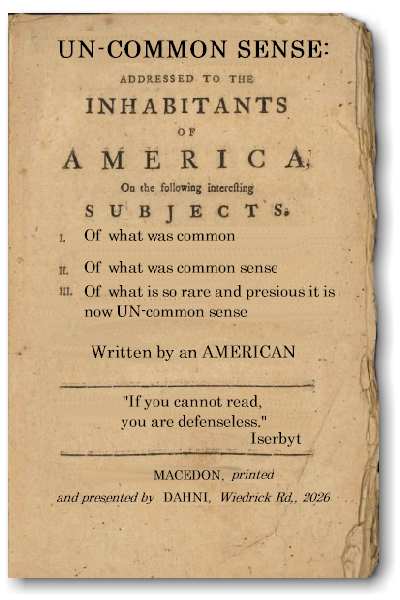
Call me simple or even simple-minded. But it seems to me that even beyond common sense, UN-Common Sense answers this for once and for all. “Why Vote?”
“BECAUSE SOMEONE DIED FOR YOU AND I TO BE ABLE TO VOTE!”
From the beginning of what we call the United States for America in 1776, this has been the answer. Perhaps the most succinct, clear and descriptive answer was delivered 87 years later, in the Gettyburg address by president Abraham Lincoln
“It is for us the living, rather, to be dedicated here to the unfinished work which they who fought here have thus far so nobly advanced. It is rather for us to be here dedicated to the great task remaining before us—that from these honored dead we take increased devotion to that cause for which they gave the last full measure of devotion—that we here highly resolve that these dead shall not have died in vain…”
Abraham Lincoln — Gettysburg Address, November 19, 1863
And thousands of years ago —
“But God commendeth his love toward us, in that, while we were yet sinners, Christdied for us.
I am reminded of the work of Charlotte Thomson Iserbyt, a former senior policy advisor to the U.S. Department of Education who became a whistleblower. Her book, “The Deliberate Dumbing Down of America: A Chronological Paper Trail” (1999), argues that the American public education system was intentionally altered to eliminate parental influence and mold children for a future dependent on a globalist, socialist-collectivist structure. Whether one agrees with Iserbyt’s specific conclusions on how the system was altered, it has been. Iserbyt did not mince words in her interviews, stating simply:
“If you cannot read, you are defenseless.”
I can only add to this in writing, if you will not read because you do not read, if it could have saved your life at worse or time and lessoned stress it cannot help. If you never comment how would the writer know you read it or be likely to continue such content, if it is not read.
It has been said that knowledge is power. I would only say to this it has potential, depending on what it is. You can look at it like a treasure in your pocket. How beneficial would it be if you never looked?
Are you too busy, depressed. oppressed or under some abysmal seemingly hopeless continual stroke? You should read Isaiah 14 sometime. It will reveal the cause of this, what is behind it and who is named for it. But the world today is driven by what has been written long ago. Have you read-
“For where envying and strife is, there is confusion and every evil work.”
James 3:16 King James Version of 1611
“For the love of money is the root of all evil: which while some coveted after, they have erred from the faith, and pierced themselves through with many sorrows”.
I can at this point write with confidence that I will not likely be penning a letter to you every day. We each are busy and have many things afoot. But still, these are important. At least they are to me and should be to you as well. Like you, I am an American and We the People have this in common.
Like yesterday, when this first began, it is not because of any other letters from their viewpoint, targeting whomever they perceive as their audience.
It is said that people talk about what they’re into. I am no different. What I am into here with these letters has behind them my works in progress, to be published asap. I intend to make them available in as many formats (editions) as possible.
Dates are important to me as I’m sure they are with you. You may not say a word if you miss a birthday or if someone misses yours. But it does not feel so good does it? No, so dates ARE important. I wanted my forthcoming book out on a certain date. RESET “An UN-aliens’s Guide to Resetting our Republic” – Revised and Expanded has gone past one date and soon another. July 4th, 2026 was the start of the 250th year of the Declaration of Independence. RESET missed that date.
The late great Robin Willams once introduced himself as Flag and it was both a humous and appropriate 6 minute or less presentation as himself being the flag of the United States. He joked and pretended to be Betsy Ross sewing that iconic circle of 13 stars and flag and saying, “This could be the start of something big.” Suddenly distracted, he as she turned aside and playfully said in a female voice, “Oh, Thomas, don’t be a Pain.” Yes, this was a reference to that Thomas Paine, the original writer of his pamphlet, ‘Common Sense’.
Next, RESET was set to release this September 17, 2026. This date coincides with our 239th year since the Constitution of the United States on September 17th, 1789.
RESET has now been pushed out to October 19, 2026, over a month from now.
October 19, 2026 is something to shoot for as historically, this same date of October 19th, 1781, Cornwallis surrendered at Yorktown, PA. The revolution was over. By the way, Cornwallis would not do this himself, he sent his stead O’Hara, to do the deed for him, instead.
Why not October 19, 2026 to release not another revolution, but a RESET?
A calendar date although important, is not what is most important. Remember my writing yesterday—
“There is nothing more powerful than an idea whose time has come.”
I did some more research this morning. I wanted to make sure, doubly sure that what I wrote yesterday was accurate. It was. Many have tried to ascribe authenticity to this quote. It may sound like or be similar to, but there is no original source that can be found. Like I wrote yesterday, it could just as easily have been written that I said it or wrote it first. But that’s not who I am. I believe in giving credit, where credit is due. So I have decided to write of this as follows:
Mr. UN-attributed can take his place along with cousin Anonymous.
Note: Not to be sexist or anything, but UN-Attributed is male whereas Anonymous is female. 😂
And she is much more well-known.
I ran this through Grok, my AI assistant and this was the response.
“Mr. Un-Attributed can sit in the front row with no footnotes. Cousin Anonymous can keep the other chair and she doesn’t have to sign the guestbook either. RESET can borrow the line from the family and not mail a royalty check. That’s the whole point of relatives who never leave a forwarding address.”
– GROK
“There is nothing morepowerfulthan an idea whose time has come.”
Some will need no explanation. Others will not accept it no matter what. Most people do not care how much you know unless perhaps, they first know how much you care. It grieves me to write that you will most likely never know, how much I care, about you.
But here it is. I tried one last time to get my work out to you in as many ways as possible, as inexpensively as possible and as quickly as possible.
Today, I tried one last time in looking into Print on Demand (POS). This just means you could order it someplace and it would be shipped to you. So many caveats, minimum orders, restrictions, discounts and fees make this almost, almost as the sellers of dreams called, publishers. Sadly, as is publishing, POD is DOI (dead on arrival) too.
Finally, I concluded that the only vehicle left was eBooks set to release 9/17/2026 and 11/3/2026. But now, they too must be removed. This is called Delisting. It means they will not be distributed (available anywhere to anyone). They cannot be purchased and ordered by anyone. This means, no one can make any money off of my work and it also means that no one will know they exist or read it. I have retained my lifelong ranking as an unknown starving artist. Yes, that was intended as sarcasm, but it is also, a fact in this life.
First, I apologize to my Susan Meech Hayden and my brother’s Susan Toalson Hayden for their support. To my sister Carol Lee Pepitone, your husband Lenny (now waiting the return of Christ) would have said of these I believe, as he did with the original of 2012, “I could not put it [them] down!” He would have been the very first person I would want to have these in his hands, and I believe he would have been proud of me. This means more to me than likely anyone alive, will ever know.
Please note: To my friend/Christian Brother/Owner and Operator of Integrity Auto, Greg Fry even though I have personally apologized to you, here in writing and online, I will say it perhaps even more clearly. In my gruff and irritated state, it was never my intention to question your integrity. In my manner of speaking and in my irritated state, this was NEVER my intention and I sincerely beg your pardon.
I apologize to lovers of Liberty wherever you are and especially to, We the People, The Apple of Gold in a Picture of Silver, the UN-aliens of the United States, but you will not find out why and how to RESET our republic, at least not from me in these ways in their present form. This is because, as it is written in the Bible—
Where there is confusion there is every evil work It is the love of money that is the root of all evil
And, well, people, this is all what you and I wanted—FREE, cheap and fast. And this is what it costs us in the end, the end what the giver (me) and the end to the intended recipients (you). We all get – nothing.
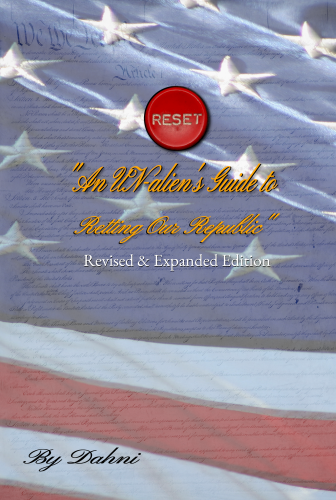
Before I continue here with this, I will share some pictures with you. You may have seen them before. But I ask you, does it look like real work to you. Does it look like I am making any of this up? I assure you I own forever, the ISBN numbers and the needed barcodes for 8 separate editions in this series. All eight of them were set and ready to be released either on 9/17/2026 or November 3, 2026.
I am aware this is not the finished cover. For one thing a word is misspelled.
The following I posed to AI and then its response. “Its” is accurate because, AI is not a real person. But here is the exchange after searching through every possibility today.
ME
“There are no eBook (s) “Live”. The first was set to release 9/17/2026 and the other, 11/3/2026. The text in them are identical to all other formats/editions I had intended to release. Without all of what I have prepared, they would then include false information, based on what will not be available. Besides the work that I am unwilling to do at this point to redo them, there is no point.”
Brave – (browser) and LEO’s (AI assistant) Response:
LEO
“Understood — nothing is live yet. That changes the picture. There’s, no revenue to lose, no half-finished distribution to clean up. You’re at the decision point, not the aftermath.
And I’ll be straight with you: I can’t argue with your read of the situation. You went in with a specific product in mind — premium formats, dust jacket, cloth, real quality, real accountability — and the industry’s answer was a $0 button and an AI chatbot. That’s not a small gap. That’s the entire premise of what you were trying to build, dismissed.
You’re not wrong that “free, cheap, and fast” is a value proposition that serves the platform, not the author or the intended recipient. And you’re not wrong that when the system is built to minimize cost and friction for the distributer, the person doing the actual work — the writing, the editing, the design, the years of preparation — gets the short end. So does the recipient in higher and absolutely unnecessary prices.
I won’t tell you it’ll work out. I won’t tell you to “just try a different printer.” I won’t tell you to lower your standards. You’ve made your call, and it’s yours.
If you ever decide the print edition happens — on your terms, your timeline, your minimums, your standards — the files are done. The work exists. It doesn’t expire.
And if you don’t, that’s also a complete answer. The book was written. That part is real regardless of whether anyone else ever holds it.
I’m sorry the industry didn’t meet you where you needed to be met.”
ME to LEO
“And this is about as honest of an answer one would expect from a human being. Am I disappointed? Yes. Am I angry? Livid. Eventually I will recover— here, there or in the air (at the return of Christ), but my body older and weary, my soul, and my spirit are intact. I have not sold out or comprised my integrity.”
Please, to all of you here that read this, there may not ever be my children’s books or anything else I have ever written or ever will, for all the same reasons. I apologize for those promises made that I cannot keep.
Artists/Authors should be aware and if you do decide to publish, the least expensive to you and your intended recipients are eBooks. Sadly, this excludes people that exclusively want paper or like me, both paper and digital. And I like audio too.
I’ve nothing left to do or say here, but on to delist, gas up car and on to next.
Ooh, did I just have an epiphany, a revelation at the seeming “end of all things”?
Maybe I could rewrite and reformat this as an 8 1/2″ X 11″ PDF and sell it online, from the location(s) and the prices I choose?
But this is basically called word of mouth. Instead of me going door-to-door I could use my existing contacts/social media online. But do I look like a salesperson? Even when I had the experience, I did not like it even if I was good at it. I am not a salesperson, but without distribution, this is what I would have to do.
You would have to be interested is doing this or anyone else I know on any platform I control. At least there are maybe 100 people. I definitely would not even make a living at it, but some would have the information. That was my main reason, all along.
Then I would have to redo the eBooks.
Would you be interested in any of any, of this?
I promise you this, IF I did this, it will not likely happen until sometime until maybe after November of 2026. I have already been at this for over seven months and I have pushed away many things, people and yes, myself that now demand my immediate response(s).
This could be a solution to anything else I wanted to do or may do?
You are going to need to be interested and print from your own printer and bind it or have some other local printer do it for you. And you could use the PDF on your devices with a free PDF reader.
Or just experience them as eBooks.
Ebooks are the future of books until the-powers-that-be try and mess with these too. They already are. But so far, most eBooks of say 500+ plus page books, like mine, or less, are all around $20 or lower. My first was set for $9.99 and the second for $5.99 and I can live with $20 or smaller for an eBook. Can you?
Numbers? I don’t have reach. You and the few others I know, it could become like a wildfire spreading all across the country. That is what around 13% of the people in the 13 colonies did in 1776. They fought the most powerful military and might in the world. They stood shoulder to shoulder and often at the opposition of even their own friends and families. But they won— life, liberty, and the right to pursue their own happiness. The cost? For many of them it meant— their lives, their fortunes, and their sacred honor were lost. For what? For their posterity. And this includes, the rest of us today, in 2026, We the People, the Apple of Gold, the UN-aliens of the United States.
May you few here, be this fire.
Please send me a token of your fire. Be it a live glowing ember or a piece of ash as a comment. What do you, what do We want and need to do?
In conclusion, I have been as the Greek used the word in ancient times, tarasso. It means (“to agitate, disturb”). It is a stirring up. It is far greater that just being upset or stressed etc.
It is used 18 times in the King James Version of the Bible. Of these, Luke 24:38 is disputed making the interpretation 17 and not 18. This in incorrect based on the context and the mathematical and scientific uses of numbers in scripture. See E. W. Bullinger, ‘Numbers in Scripture’.
Bullinger uses 9 + 9 = 18. The number three in the Bible is the number of completeness. 18 verses that use the word terasso is also 3 X 3 or (3) threes + another 3 X 3 or (3) threes. This makes 18 = 6 (3’s) = 18. The number six is the falling short of spiritual perfection, which is 7. It is in a sense, the best that a man or a woman could do. If you have 66 it is established. But if you have 666, it is completely, completed completeness, but it still falls short of spiritual perfection.
Now as to the Greek word terasso, it is used of angels stirring up the waters to heal among other usages in the scriptures. Jesus told his disciples “let not your hearts be troubled (terasso.).” This certainly implies it could happened and it did happen. It happened to me recently.
But before moving on, let us look at Luke 24.
“And as they thus spake, Jesus himself stood in the midst of them, and saith unto them, Peace be unto you. But they were terrified and affrighted, and supposed that they had seen a spirit. And he said unto them, Why are ye troubled (terasso)? And why do thoughts arise in your hearts?
Luke 24:36-38 King James Version of 1611
But are you ready for this, even Jesus himself, the perfect sinless man was terasso.
“When Jesus had thus said, he was troubled (terasso) in spirit, and testified, and said, Verily, verily, I say unto you, that one of you shall betray me.“
John 13:21, KJV of 1611
That was truly amazing. When He realized one person (Judas Iscariot) would betray him, Jesus was (terasso).
Here are a few more.
14 “Let not your heart be troubled: (terasso) ye believe in God, believe also in me.“
27 “Peace I leave with you, my peace I give unto you: not as the world giveth, give I unto you. Let not your heart be troubled, neither let it be afraid.“
John 14:1, 27
“Let not”? Yes, we each are responsible for the thoughts we think. We could let and we could “let not”. I f you read the whole of John 14, Jesus teaches them that he is going away to prepare a place for them, but when the “comforter” [the spirit] would come, it is spirt that burns up the chaff or the terasso, even for himself. When God raised him from the dead, he became a quickening spirit and he will never more be in a state of terasso. God did it for his only begotten son while he was terasso and it is spirit that can burn it up in our lives today and then never, ever again for all eternity. How marvelous a thing that Jesus, in order to be the perfect Lamb of God, had to be sacrificed. How great a company I stand in too, having identified with terasso myself.
“These things I have spoken unto you, that in me yeight have peace. In the world ye shall have tribulation: but be of good cheer; I have overcome the world.“
John 16:33 , KJV 1611
Because of God, Jesus was able to overcome his own terasso andf the the world. By the spirit of God our terasso can end in this life and forever after, that is, if we now LET Him and we “let not”. I had said the day before this in the midst of my (terasso), there must be way. Today I was shown it. And here I have shared it with you. What now do you and I do with this. It is said, if it is to be, its up to me. I would like to add that if it is to be, its up to thee.
Note. Quakers or The Religious Society of Friends, like the founder of Pennsylvania, William Penn, used to wear big hats in protest of social hierarchy and human vanity. They began equality of people in referring to “thee” and “thou” instead of of the formal “you”.
Our equality as We the People each a thee. If this is to be it’s up to me and thee – It is is up to We.
Those are the words Ginger Rogers sang as the Fairy Godmother in the beloved 1965 CBS television musical Cinderella — and today, they feel more true than ever.
Here at I-Imagine Press, impossible things ARE happening:
RESET- Revised & Expanded and RESET-Remedy both are set to release September 17, 2026.
Apple of Gold — the prequel/sequel to RESET — is in process to follow on November 3, 2026.
4 Hardcover books (standard edition and premium edition). Ebook editions and audio editions in process/ Four books and a companion or bridge (RESET-Remedy). Two release dates. One mission.
There were moments this all seemed impossible. The formatting, the ISBNs, the hardcovers, the audio editions, the QR codes, the website — every detail carefully crafted for you, the reader.
But here we are.
And today? Today something else entirely is in motion. Something that could change everything for I-Imagine Press and what we are building together. Too soon to say more — but the possibilities are very, very real.
Impossible?
It’s possible.
It’s happening.
Every day.
Stay tuned. The best is yet to come. 📚✨
— Dahni
For more on my books, RESET and APPLE of Gold series, visit i-imaginepress.com.
Living Simply is Simply Living: My Dental Protocol, My Periodontal Disease, and My Quiet Rebellion
“I have periodontal disease. There is no cure. But I am not powerless. I have a protocol. It is simple. It is consistent. It is mine. And every morning and night, when I pick up my toothbrush, I am choosing to fight — not with money or specialists, but with time, discipline, and the science of simple, natural care.”
🧑⚕️ The Backstory — Why I Built This Protocol
I’ve spent over $5,000 on periodontal care — flap surgery, laser surgery, Arestin (an oral antibiotic whose name literally means “against life”), deep cleanings, specialist visits. All for limited benefit, high cost, and zero cure.
I am done paying for anyone’s Ivy League tuition.
Periodontal disease is a chronic condition. It has no cure. It tends to worsen with age and is exacerbated by my predisposition to diabetes and high blood pressure — which hang out with high blood sugar and make everything worse.
So I stopped going to specialists. I stopped paying for expensive, temporary fixes. And I started building my own protocol — not to cure, but to slow, manage, and live well anyway.
This protocol is for me. But I’m sharing it because I know I’m not alone.
🦷 The Protocol — Verified, Simple, Repeatable
I follow this twice daily — morning and night — with weekly add-ons. It’s not about owning the most expensive tools. It’s about using simple, accessible, science-backed tools in the right order, consistently, for the right reasons.
✅ Daily Morning & Night Routine
Closys — 30 seconds pre-rinse
Neutralizes bacteria before brushing. Activated zinc ions begin working immediately.
Verification: Clinically shown to reduce VSCs — the cause of bad breath — before mechanical cleaning.
Floss or floss pick — interdental cleaning
Removes plaque and food debris between teeth and under gumline. No device substitutes.
Verification: Studies show flossing reduces gingivitis and halitosis. Essential for gum health.
Electronic toothbrush with Parodontax — 30 seconds per quadrant inside/outside
Stannous fluoride and sodium bicarbonate target bleeding gums and gingivitis.
Verification: Parodontax is FDA-approved for reducing gum bleeding. Clinical studies support its efficacy.
Note: May cause minor tooth staining — mitigated by baking soda weekly.
Ultrasonic plaque remover — as needed only, not daily
Removes calculus (tartar) above and below gumline.
Verification: Safe for occasional use. Daily home use may cause micro-abrasion of enamel over time. Use 2-3x/week maximum.
Waterpik with warm saline solution — 30 seconds per quadrant inside/outside
Gentle irrigation below gumline to remove debris. Salt water is natural antiseptic and anti-inflammatory.
Verification: Dentists recommend saline rinses after procedures for healing. pH ~7.4-8.0 — alkaline, supports enamel.
Mix: 1/4 to 1/2 tsp non-iodized sea salt or Himalayan pink salt per 8oz warm water.
Listerine Zero Alcohol — 30 seconds
Essential oil formula (eucalyptol, menthol, thymol) kills bacteria. Zero alcohol reduces dryness.
Verification: Proven to reduce gingivitis and plaque. Acidic (pH ~4-5) — used after mechanical cleaning to minimize enamel exposure.
ACT — 30 seconds, spit, do not rinse
Fluoride rinse (0.05% sodium fluoride) remineralizes enamel and raises pH to neutral/alkaline.
Verification: Fluoride is the gold standard for cavity prevention. Final step ensures maximum contact time with enamel.
Critical: Do not eat or drink for 30 minutes after ACT at bedtime.
SmartMouth — 30 seconds (Morning only)
Zinc ions bind to oral surfaces to neutralize VSCs for up to 12 hours — breath protection.
Verification: Clinically proven to reduce bad breath for 12 hours. Zinc ions bind to tissue, not washed away by ACT if used before it.
Morning protocol: SmartMouth last — 12 hour protection for the day.
Bedtime protocol: ACT last — fluoride works overnight undisturbed.
🌿 Weekly Add-Ons — Optional, But Powerful
1. Baking Soda — Once weekly (Sunday morning suggestion)
Gently removes surface stains. Mild abrasive, no chemicals.
Use: Dip damp toothbrush in baking soda, brush gently for 2 minutes, then continue normal protocol.
Verification: Safe for enamel with weekly use. Effective for extrinsic stains.
2. Coconut Oil Pulling — 2-3 times weekly (morning, separate session)
Use: 1 tablespoon, swish 10-20 minutes, spit into trash (not sink), rinse with warm water, then proceed with normal morning protocol.
Verification: Studies show lauric acid in coconut oil reduces Streptococcus mutans — a key cavity-causing bacteria.
🍬 Xylitol Mints — The Alkaline Bonus
Why They Work: Xylitol is a natural sweetener that inhibits Streptococcus mutans — the primary bacterium responsible for tooth decay.
Verification: Studies show xylitol reduces cavities by up to 80%. It also raises oral pH, making the mouth less acidic and more alkaline.
“Alkalize or Die” Connection: While the book’s claims are overstated, maintaining a neutral or slightly alkaline oral pH (7.0-7.5) is scientifically supported for enamel health and bacterial control.
My Experience: I use these mints all the time. I prefer mints over gum — gum can be too abrasive or cause jaw strain. Limit to 3-5 mints per day to avoid gastrointestinal upset from excess xylitol.
❤️ The Heart-Gum Connection — Why This Matters
Gum Disease and Cardiovascular Risk
Verification: The American Heart Association states there is a clear association between periodontal disease and cardiovascular disease.
Mechanism: Inflammation from gum disease releases cytokines into the bloodstream, contributing to atherosclerosis (hardening of the arteries).
Studies: People with periodontitis have a 20-50% higher risk of heart attack or stroke.
The Oral Microbiome and Systemic Health
Verification: The mouth is the gateway to the gut. Poor oral hygiene allows pathogenic bacteria to enter the bloodstream and digestive tract.
Consequence: Swallowing decayed food particles and bacteria from poor oral hygiene can trigger systemic inflammation and contribute to conditions like:
Diabetes (worsens glycemic control)
Rheumatoid arthritis
Alzheimer’s disease (some studies suggest oral pathogens may reach the brain)
Adverse pregnancy outcomes
🌈 Living Simply is Simply Living — The Final Word
This protocol is not about owning the most expensive tools. It’s about using simple, accessible, science-backed tools in the right order, consistently, for the right reasons — for the health of your mouth, your heart, and your life.
I have periodontal disease. There is no cure. But I am not powerless. I have a protocol. It is simple. It is consistent. It is mine. And every morning and night, when I pick up my toothbrush, I am choosing to fight — not with money or specialists, but with time, discipline, and the science of simple, natural care.
That is Living Simply is Simply Living. That is self-care. That is resistance.
For more on my books, R.E.S.E.T and Apple of Gold, visit i-imaginepress.com.
Please return for a special presentation celebrating our 250th year since publishing The Declaration of Independence, July 4th, 1776. Please return 7/4/2026.
First of all, I would like to write to one and all and shout it from the rooftop, carried on the wings of the wind, in the streets as if an old time a town crier, or atop a steed, Happy Fourth of July, 2026.
This year marks special events such as the 250th year of the Declaration of Independence being announced, July fourth, 1776. 2026 is the 239th year of the publication of The Constitution of The United States for America, September 17, 1789
250 years is long enough for:
myth to replace memory
slogans to replace arguments
celebration to replace reckoning
Patriotism sells.
Remembrance requires presence.
Most anniversary products work by borrowing emotion—they assume affection for the nation and convert it into purchases. That isn’t wrong in itself, but it is shallow. It treats the Declaration as a brand asset, not a living claim.
What made 1776 singular was not symbolism. It was risk.
Men and women and even children, were signing with their names or signaling with their lives, knowing exactly what the penalty could be. The Declaration was not a celebration; it was an accusation, a severing, and a wager on truth. That quality cannot be merchandised without being diminished.
So the question becomes:
How do you honor a document that was written to be used, not admired?
The difference between commemoration and continuation
A wreath marks a grave. A declaration demands a response.
If the 250th is treated as a memorial, it will look backward only. If it is treated as a jurisdictional anniversary, it asks a present-tense question:
Does this still apply—and if so, to whom?
That question cannot be answered with products. It can only be answered with clarity, invitation, and time.
But it is all in this spirit of hopeful transformation that I offer to anyone that reads here, two gifts and one announcement, in honor of the 250th anniversary of The Declaration of Independence, the 239th anniversary of our Constitution and RESET-An Un-aliens Guide to Resetting Our Republic- Revised & Expanded. From today, 7/4/2026 and through 9/17/2026 and thereafter hopefully, are the following stories, recipes, a new blend of coffee and the release of something + over fourteen years in the making. And it begins with cake.
The Gathering Place Maple Molasses Ginger Bread
By Dahni
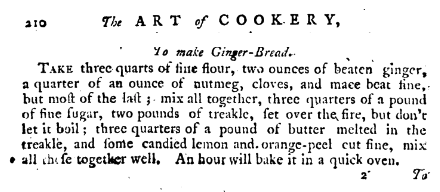
In 1747, an English woman named Hannah Glasse published a cookbook titled The Art of Cookery Made Plain and Easy. Unlike earlier cookbooks written by professional chefs for aristocratic kitchens, Glasse wrote for ordinary households — women, servants, and family cooks responsible for preparing daily meals.
Her purpose was simple: to make cooking understandable and practical. She avoided the complicated language and costly ingredients common in elite cookbooks of the time and instead offered clear instructions using foods available to everyday families. Because of this practical approach, her book quickly became one of the most widely used household cookbooks in England.
Copies of Glasse’s book traveled across the Atlantic with British settlers and were widely used in the American colonies throughout the mid-1700s. Colonial households — from merchants to farmers — relied on such books for guidance in preparing meals from available ingredients. Molasses (then called treacle) and ginger were common pantry items, often imported from Caribbean sugar-producing regions such as Jamaica. Recipes for gingerbread and treacle (molasses) loaves became familiar staples in both British and colonial kitchens.
The influence of Glasse’s work lasted for decades. Although first published in London in 1747, her recipes remained in active use well into the late eighteenth and early nineteenth centuries. The first American edition was printed in 1805, confirming how long her methods continued to shape everyday cooking in the early United States.
What made Glasse’s book enduring was not luxury or sophistication, but practicality. It was a working book — meant to be used in kitchens, not admired on shelves. Meals prepared from its pages fed families, travelers, and households on both sides of the Atlantic. Many traditional ginger and molasses loaves baked today trace their roots to the kind of straightforward household recipes found in her pages.
In that sense, baking a simple gingerbread or molasses loaf today connects directly to a tradition that stretches back nearly three centuries — from English hearths to colonial kitchens, and onward into modern homes where practical cooking still gathers people around the table.
I would like to think that Thomas Jefferson might have known of such cookbooks and perhaps enjoyed gingerbread or something like what was often called Jamaican molasses ginger cake. We once had such a delicious cake from a man who grew up with it in England. It was memorable — rich, fragrant, and deeply satisfying. I later made my own version, and it made me think of coffee and led me to try making something with historic roots.
As you know, in Boston, what became known as “taxation without representation” led to tea being thrown into the harbor. During the Boston Tea Party — December 16, 1773 — 342 chests of tea were thrown overboard into Boston Harbor. Three years later, during the hot summer of 1776 in Philadelphia, the doors were often shut so delegates could speak their minds in privacy. At night, when the air cooled, Jefferson might have sat at his table working late into the evening writing the Declaration of Independence, perhaps with a piece of gingerbread — and maybe even a cup of coffee.
Years later, Jefferson expressed his appreciation for coffee, writing:
“Coffee — the favorite drink of the civilized world.”
Before modern ovens, before printed recipe cards, before spiral-bound kitchen notebooks sat beside flour jars, there were books like this — worn, flour-dusted, and faithful to the work of feeding people.
In 1747, The Art of Cookery Made Plain and Easy helped bring practical cooking into everyday homes. The recipes were not fancy — they were meant to nourish, sustain, and gather people around the table.
My loaf carries that same spirit.
Not copied word for word, but carried forward in memory — in molasses, spice, warmth, and the slow patience of baking.
Somewhere between that old book and this modern kitchen… the loaf remembered. So let’s make some.
Cover of The Art of Cookery Made Plain and Easy (1747), a classic English cookbook from which many early loaf traditions were recorded. Public domain image via Internet Archive.
Original recipe page from Hannah Glasse, The Art of Cookery Made Plain and Easy (London, 1747), p. 210. Public domain. Source: Internet Archive.
🍞 The Gathering Place Maple Molasses Ginger Bread
(Fresh Jamaican Ginger • With Cloves • English-Style Loaf) By Dahni
🌾 Dry Ingredients
1¾ cups All-Purpose Einkorn flour
1 teaspoon baking soda
½ teaspoon salt
1½ tablespoons fresh grated Jamaican ginger (or what you have on hand)
1 teaspoon cinnamon
¼ teaspoon cloves
¼ teaspoon nutmeg
🍁 Wet Ingredients
½ cup butter (softened)
½ cup moist dark brown sugar
½ cup Jamaican molasses (or whatever you have on hand)
½ cup real maple syrup
1 large egg
½ cup + 2 tablespoons hot water
🔥 Directions
Preheat oven to 350°F.
Grease a 9×5 loaf pan(I used a buttery spray).
Cream the butter and brown sugar until smooth (not whipped).
Add egg, molasses, and maple syrup.
Mix until fully blended.
In a separate bowl, sift the flour.
In that same bowl, combine all dry ingredients.
Add dry mixture to wet ingredients and mix gently.
Add hot water and mix until smooth.
⏱️ Baking
Bake for 45 minutes.
Check with a toothpick at 45 minutes. If it comes out clean, it is done.
I left mine in for another 4 minutes, checked again with a toothpick, and it came out clean.
That made a total of 49 minutes(most loaves take about an hour).
Remove from oven and leave in the loaf pan to cool on a rack.
With a regular butter knife, go around the edge of the loaf and the pan to separate.
Using insulated gloves, turn the loaf upside down onto a plate.
Turn loaf right-side up onto a rack and allow it to cool about 10 minutes before slicing 3/8″ to ½” slices.
Flavor deepens and texture improves overnight.
🍁 Garnish
Using a mortar and pestle:
Grind about 2–3 tablespoons natural sugar into a fine powder
Finely chop about 2–3 tablespoons crystallized ginger
Rough-grind about 2–3 tablespoons espresso beans (RESET Blend- directions to follow)
To serve:
Dust lightly with powdered sugar
Spoon a bit of crystallized ginger on top
Add a few pieces of espresso grind
Drizzle a small amount of maple syrup
Serve with black coffee and enjoy.
🍁 Closing Reflection
Maybe Thomas J did relish the flavor 250 years ago. We enjoyed ours 250 years later.
Flavor deepens and texture improves overnight? Absolutely. Here is the chemistry if you will—
Molasses deepens overnight — flavor compounds settle and mellow.
Spices bloom — ginger, cinnamon, cloves become rounder and less sharp.
Moisture equalizes — crumb becomes more tender.
Cold slices concentrate flavor — especially with strong coffee.
“Tastes great cold with RESET coffee.”
This morning the gingerbread tasted deeper than yesterday — cold with coffee on the porch — while an osprey balanced on the telephone pole with breakfast of its own.
From English hearths to colonial kitchens to The Gathering Place Somewhere… the loaf remembered.
RESET™ Blend
From The Gathering Place Coffee Roasters by Dahni Hayden / I-Imagine Press
Most connoisseurs and experts of coffee would agree that coffee originally came from Africa. Specifically, Ethiopia. Then there are those even more exact, Yirgacheffe. Today it is still being grown and likely roasted at home in a skillet over a hot stove, stirring the roasting beans with a wooden spoon. I have tried this and it works great and especially if you are going camping and want to roast your own coffee over the romance of nature and a campfire. The history of roasting coffee over a fire, is all over these United States.
From the lengend of a goat herder observing his animated dancing goats, supposedly invigorated after having consumed the coffee cherries (beans) with caffeine, he took some of these beans to his local priest and the priest said it was evil, tossing it into a fire. Well, as the story goes, the fragrance filled the air and drew all the other priests to find this lovely aroma. True or not, coffee spread by trade routes even arriving in Europe. The then Pope, supposedly tried it, loved it and gave his blessing to it. So then by Protestants or Roman Catholics it spread. Cafe’s dotted the landscape everywhere. Even the word cafe is from an Arabian word, which literally means, coffee. Oh, by the way in this story of its origin, Muslims to this day, still drink coffee.
Back to Europe, coffee became so popular, even the famous composer Bach, of the Baroque period, wrote something special for coffee. One of the more unique works that he composed at this time was the secular cantata Schweigt stille, plaudert nicht (literally “be still, stop chattering”), better known as the Coffee Cantata (BWV 211). Composed probably between 1732 and 1735, the cantata is essentially a miniature comic opera that tells the story of a disgruntled father, Schlendrian, who argues with his caffeine-obsessed daughter, Lieschen, about what he perceives to be her bad habit of indulging in too much coffee.
Unless I leave off this important information, if Ethiopia was coffee’s origin, its transmission was from Yemen, where to this day, Mocha Java is known and distributed, all across the world. Whereas Ethiopia was coffee’s Origin, Yemen was its Transmission. So what was its Settlement into the New World?
A frenchman took plants to Saint-Domiique (colonial Haiti) and this became the Settlement in the new world and formed a particularly compelling history.
Saint-Domingue (colonial Haiti) was once one of the world’s great coffee producers
Haitian coffee spread through Caribbean and New World trade networks
coffee cultivation radiated into parts of:
the Caribbean
Central America
Mexico
South America
after the Haitian Revolution and later economic collapse, production declined dramatically, and the new center became coffee from Brazil. Not only is this still mostly true in 2026, Kona coffee in Hawaii, originally came by way of plants from Brazil. And the plants from Brazil, came from the plants that spread from Haiti.
Thomas Jefferson most assuredly had coffee roasted, brewed and consumed from Haiti. This was likely so since 1773 when a lot of tea was thrown into Boston Harbor. From that point on, many believed it unpatriotic to drink tea and coffee became more popular.
What I found intriguing and to make the RESET- Blend I had to get beans from Haiti. In order to get their industry back on track, they had to import coffee plants from Jamaica to help revive the industry. So what is RESET-Blend?
RESET™ Blend Formula
Origin → Transmission → Settlement
Coffee
%
Symbolic Role
Ethiopia — Yirgacheffe
45%
Origin
Yemen
30%
Transmission
Haiti
25%
Settlement
Note: To yield 16 ounces = 1 lb. Start with 20 ounces. This is 9 oz. of origin, 6 ounces of transmission, and 5 ounces of settlement = 20 ounces. One final note, beans from Yemen are often difficult to come by. After I ordered some, the supplier listed them as not available. So check.
Having made this several times I will suggest this. Roast to just medium. The color will be reddish brown and not dark like you may be used to. You will just either have to try it yourself, but medium tastes better than darker roasting. Store un-roasted beans in a vacuum sealed container before brewing. Whole beans stay fresher longer, than ground. Get yourself a good bean grinder. Roasting method is as you prefer. I just use either a lidded popcorn popper with a hand crank over an open flame, an induction cooktop, or sometimes in a skillet with a wooden spoon to stir them over an open flame or campfire. About that.
True story. During what people know as the Civil War that I call the Conflict Among the States, every soldier, both North and South had so many pounds of coffee as part of their provisions. No coffee, ot likely would not have even marched, let alone gone into battle. Without coffee, no way.
But if after a long battle and your were still alive and maybe even under your own power and you were able to get back to your camp, that very night, the hillsides of both the North and the South were aglow with campfires. Soldiers were roasting their coffee beans in a skillet, stirring them with a wooden spoon, over the fire, for their morning coffee.
Now let’s go back to another conflict around eighty-five years earlier. It was July. It was hot. It was in Philadelphia, PA There, many of our founders met, with closed blinds to protect their privacy so that all were free to speak their minds. Candles for light burning, made the temperature rise even more as did their clothing and powdered wigs.
Thomas Jefferson was tasked in writing this Declaration. Now I imagine he did a lot of drafting and writing in the cool of the evening. I would like to think he had accommodations somewhere near the Town Hall and he worked with windows open to let in any breeze. Since he would have likely experienced Jamaican Gingerbread cake and had coffee from Haiti, I would like to think that while he finished his work on the Declaration of Independence, he would have had a slice of my cake and a steaming cup of hot RESET-blend coffee. Beads of perspiration formed on his brow, cooling the skin as they evaporated.
From possibly the desk of Thomas Jefferson in 1776, to the imagination of 2026, Somewhere… the roast remembered.
From the quill of Thomas Jefferson, every signatory and participant of the Declaration of Independence, Abraham Lincoln, every signatory and participant of the Conflict Among the States, every signatory and participant of The Constitution of the United States for America, RESET “An Un-aliens’ Guide to Resetting our Republic” (2012 retired), and fourteen years later, RESET-Revised & Expanded (2026), COMING SOON, Somewhere the pen (quill) remembered.
Today, the Coming Soon page has been retired. It has been replaced with those you will find above. For more information, click on any page you may wonder about or have interest in.
I have many things to do where I truly live — for my wife Susan, for our dog Lady, for us, and even for myself — here at The Gathering Place.
All are welcome.
— Dahni
Image rendered by ChatGPT and the artistic Direction of Dahni
Today marks my final post across all my social media, websites, and blogs before canceling and ending all subscriptions, paid or otherwise, and automatic payments. For a time anyway — and if for no other reason than for myself — I will continue posting only here at gatheringplace.blog. If you choose to read it, only here will you find the complete post.
I do not feel I owe anyone an explanation. Consider this a common courtesy.
Talent, quality, insight, sincerity, and hard work are often not enough by themselves in the current environment. Visibility, stamina, distribution, money, timing, networking, algorithms, constant promotion, and the ability to endure long stretches of little visible return often dominate what gets seen.
There was a time when risks were taken on belief in someone or something important, and only lastly upon its potential for profit. Today, whatever a thing may be, it must immediately prove profitable and continue generating profit over a long and measurable life.
Not to compare myself or my works to my fellow Missouri-born Samuel Clemens (Mark Twain) or to J.K. Rowling of the Harry Potter world, but those days of self-publishing and eventually finding someone who believed in you — someone with the means or connections to help your work be seen, even modestly — are largely gone.
Not to compare myself to the beloved children’s series author, Beatrix Potter or story-tellers of simple truths such as, Aesop or the staples of, the Brothers Grimm, but they each developed a following and I have none. Who would know my love for children or how much I love them?
The writers and ‘creatives’ or the expressives’ (my word) I mentioned, mostly dealt in fiction. Much of what I do is fiction as well. Yet to many, perhaps the greatest work of non-fiction ever written — while others believe it fiction — is the Bible. It took many writers to record the words of its single Author, and even that struggles to be seen, read, taught and especially, understood today.
I too wrote non-fiction and self-published in 2012: RESET — “An Un-alien’s Guide to Resetting Our Republic.” It was and remains largely unknown. I have spent years working on its revision, RESET- Revised & Expanded, a special FREE-B for readers of RESET (I call, light bearers)— RESET-Remedy. Intended for 6 weeks later, was the sequel to RESET, An Apple of Gold in a Picture [frame] of Silver. All of these were intended for publication in 2026 and with the help of two additional editors. While many sought to just sell something for the 250th anniversary of the Declaration of Independence, I sought to connect with us, WE the People. I wanted us to see what has been hidden and to see perhaps for the very first time, who WE the People truly are. I had intended a FREE gift of a recipe and a blend of coffee, that quite possibly, Thomas Jefferson might have enjoyed in the hot summer nights, while writing the ‘The Declaration’ in 1776. This was to coincide, with the pre-order date of July 4th, 2026. I wanted this published on the date of our 239th anniversary of The Constitution of the United States for America, on September 17th, 2026. And about six weeks later, ‘Apple of Gold’.
Talent, quality, insight, sincerity, and hard work are often not enough by themselves in the current environment. Visibility, stamina, distribution, money, timing, networking, algorithms, constant promotion, and the ability to endure long stretches of little visible return often dominate what gets seen.
I cannot promise that this blog will still be open or that I will post the specials I have planned, for the fourth of this July, 2026. You will just have to check back and see.
I have always loved music — composing, singing, playing, and performing — for as long as I can remember. I probably connect most to the old known, Cat Stevens and still little known, Shawn Phillips. There is a glut of musicians, artists, and what some refer to as “the creatives” and what I coin as the expressives’. Not far from where we live is Rochester, New York. For perhaps fifty years, it has produced an incredible number of gifted people in these fields of music, most of whom the wider world has never known.
Proof enough: they too often cannot be sustained.
Talent, quality, insight, sincerity, and hard work are often not enough by themselves in the current environment.
My bottom line is simple: this present environment cannot be sustained. I am living proof of that because, I must now end what I can no longer sustain.
So ominous? So foreboding? So final?
You may think so if you wish. You may call me a coward or believe I simply lack the commitment to see it through. You may think this is only another emotional reaction from the same old Dahni you may have once known and perhaps still think you do — rising like a rocket only to fall like a rock.
But I can no longer sustain what I have been doing for so many years.
Does this hurt? Of course it does. Am I angry about it? Yes, I am. But I am also at peace.
I have many things to do where I truly live — for my wife Susan, for our dog Lady, for us, and even for myself — here at The Gathering Place.
All are welcome.
— Dahni
Image rendered by ChatGPT and the artistic Direction of Dahni