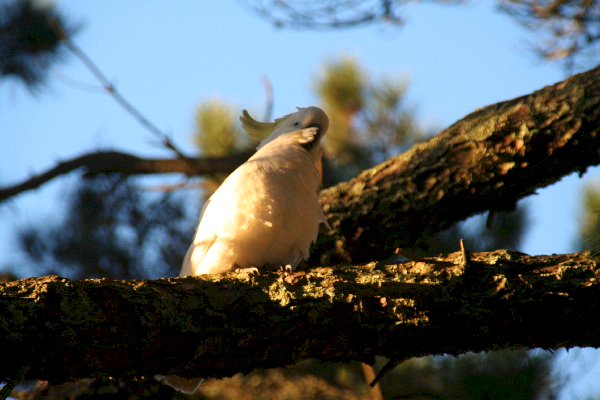
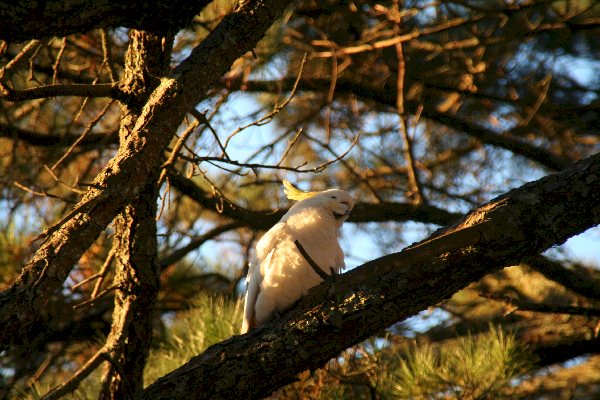
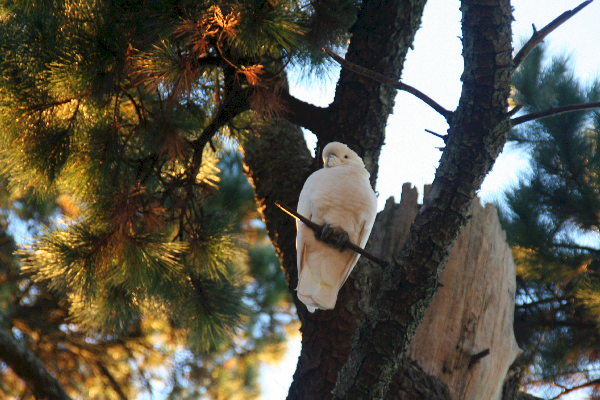
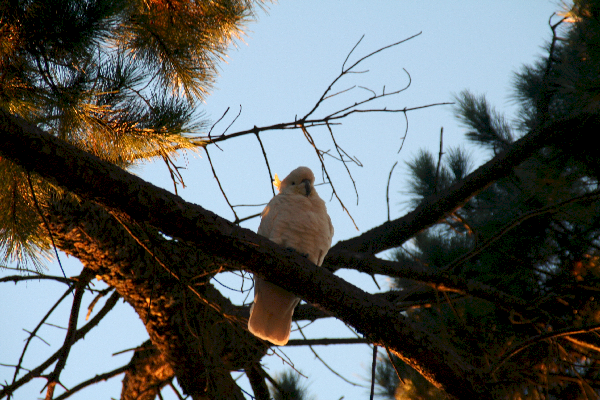
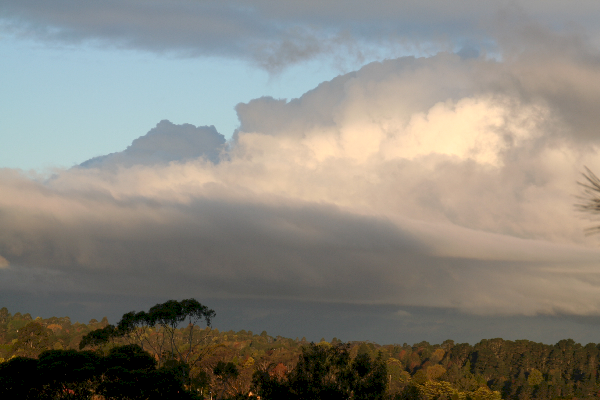
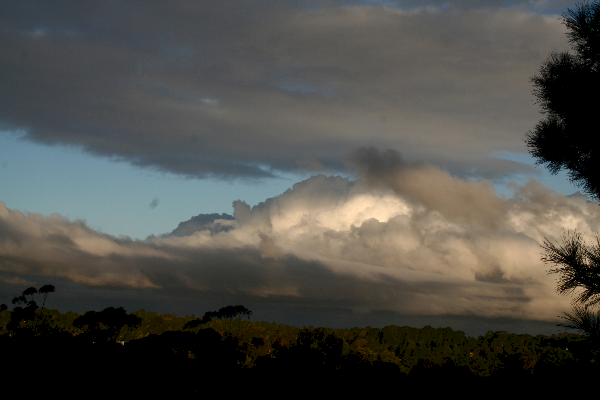
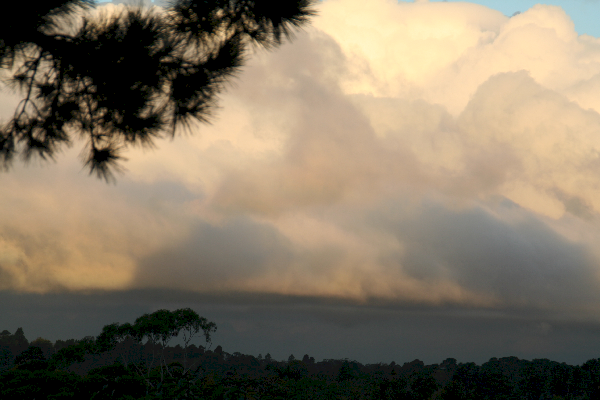
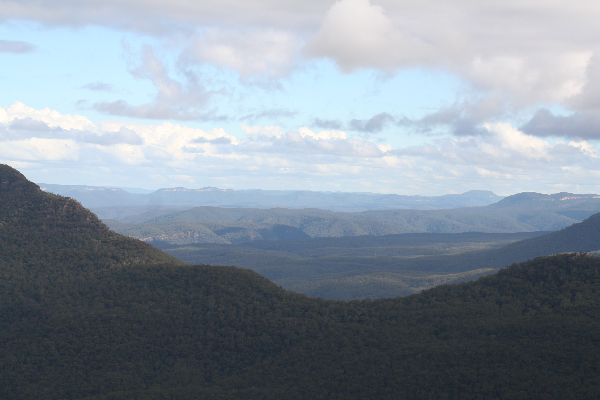
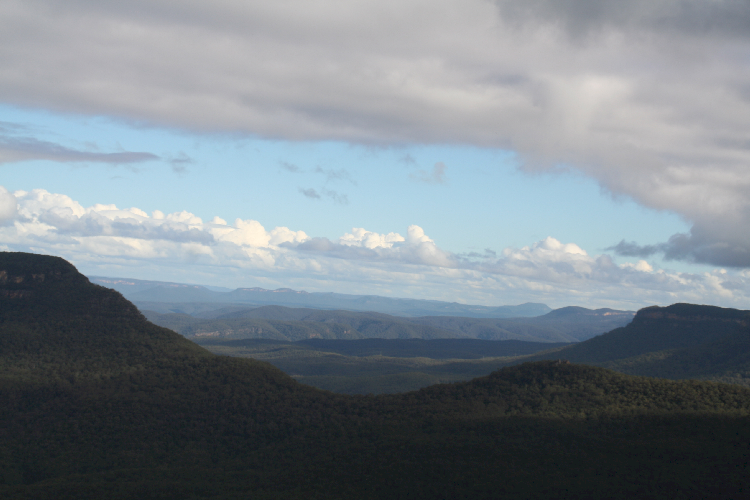
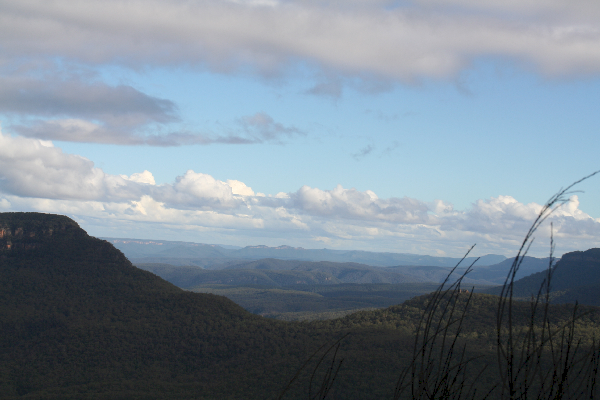
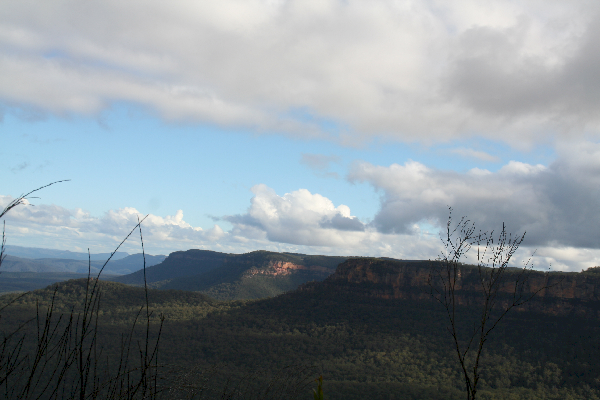
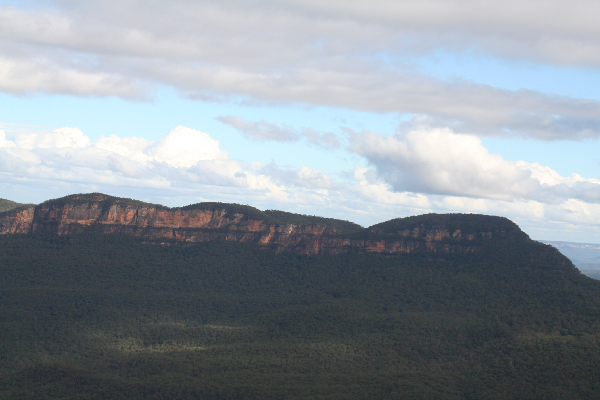
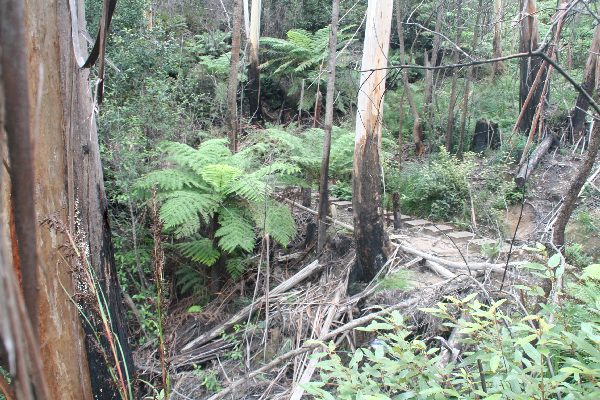
Guhday Mates, from Donnie The Blue Mountains guide (yours). 🙂
Australian late Fall – April 12th, 2014
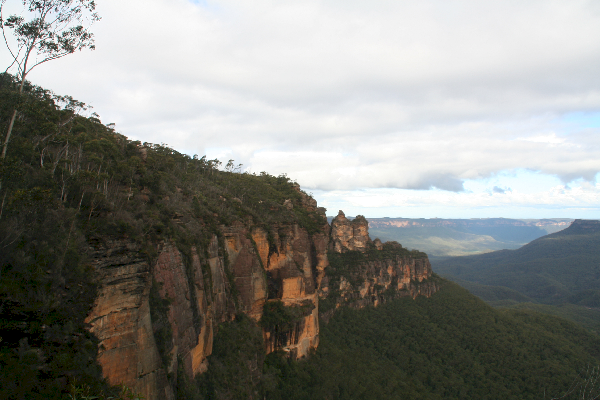
Today, we journey into and through the Blue Mountains near Katoomba, New South Wales, Australia. It is an awe inspiring journey into some of the finest, picturesque and photographic adventures, I have ever experienced. But our adventure is for more than just the area’s calling card which is, The Three Sisters Rock formations. For more on the Three Sisters, their lengends, The Three Exploers and etc. from this blog, click The Three Somethings
Our trip begins at Echo Point and The Three Sisters, then we will hike around the mountains and through the forest to Katoomba Falls. The trek is quite rigorous, but I am sixty years old and if I can do it, so can you! My Keene sandals are more than up to the task. Wear warm clothing (long pants, a nice wool shirt and an undershirt, a hat and some sunglasses if you like, but we will be passing through the forest floor of shade and shadows). Grab some water and a camera and prepare yourself to transcend into an incredible state of mind as we ascend the mountains and descend towards the falls. The air is crisp and clear. The sun is full and the clouds are gorgeous. We may even see some bird of prey, soar the thermals above the mountains.
Caution: There will be times that you feel as if you are all alone. You may be able to hear yourself think? You may at times be so at peace within the quiet that the only sound you may hear if you stop moving is, the sound of your own heartbeat. That my friends and companions, is the sound of exuberant joy! 🙂
Glad not alone, for you are not alone. We are all pilgrims here, just passing through. It is a gift to us and to all. The Blue Mountains was made for all to enjoy. For joy, get en (in) to it, all of it and all of your all – en-joy!
Our trip below Echo Point along the mountain side to the falls, will take about 2 hours in and back another way. It is a well made path, but there may be some water from many small mountain streams that may trickle over it sometimes. This will be some good exercise, but well worth it. I do highly recommend this trip to most anyone of fair to good health. Take it slowly if you must, as they say here down under, “No worries!” Catch every breath from every moment that leaves you breathless from such breathtaking views! 🙂
Immerse yourself in this, perhaps a once in a lifetime experience. So, this ends and your vicarious adventure begins with photographs and captions. Enjoy!
Dahni
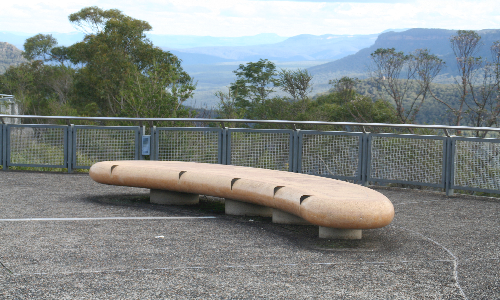
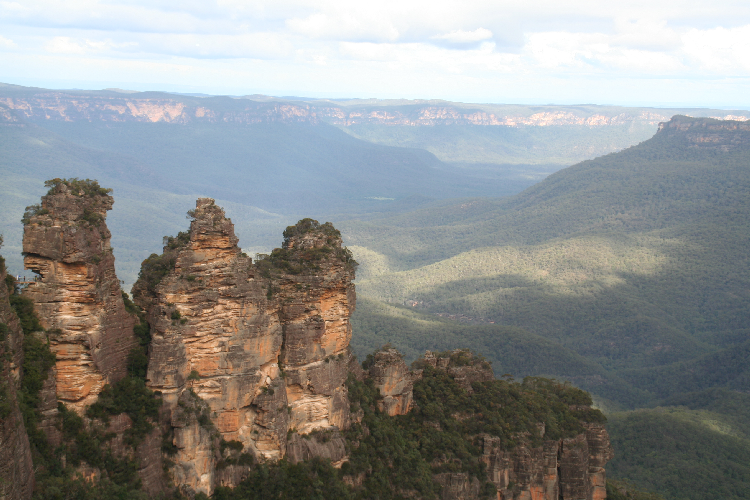
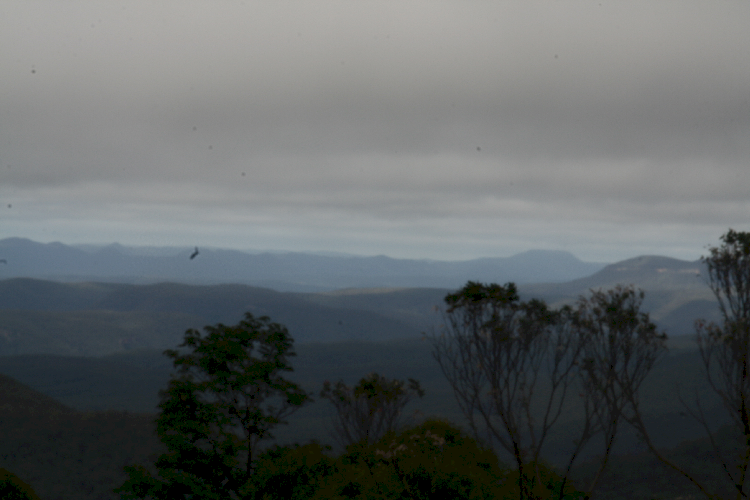
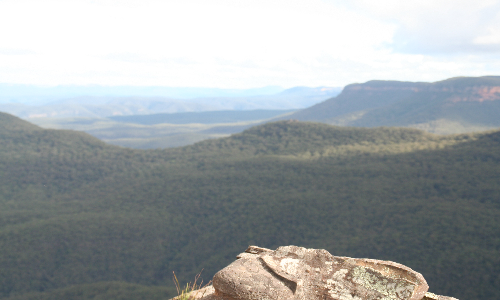
The Boomerang Bench at Echo PointThe Three Sisters at Echo PointBird of Prey Over The Blue Mountains
Note: The Haze over the mountains from which it derives its name is from the oils released from the thousands of many varieties of eucalyptus trees that cover the mountains.
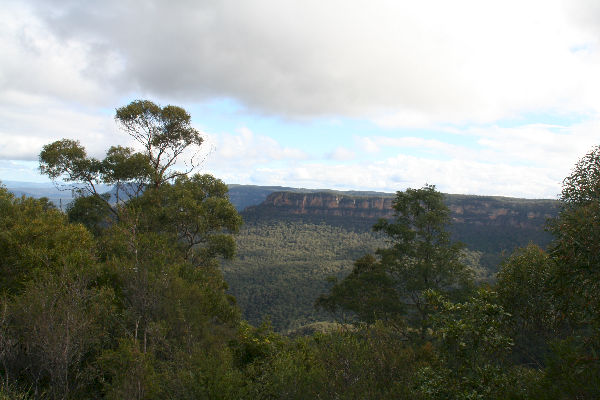
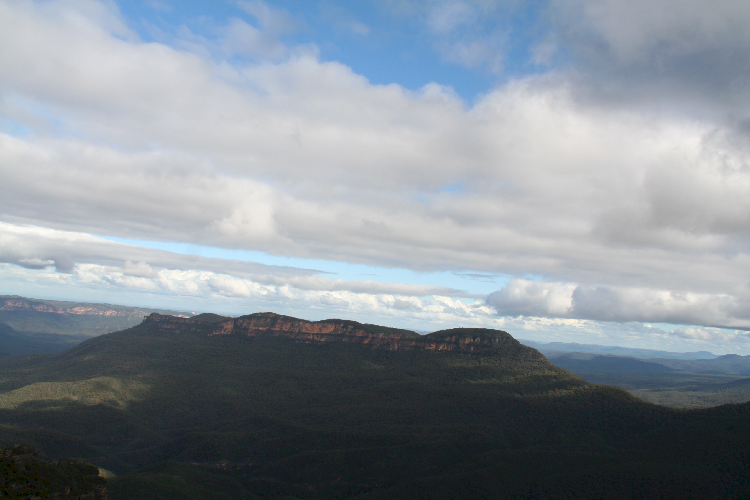
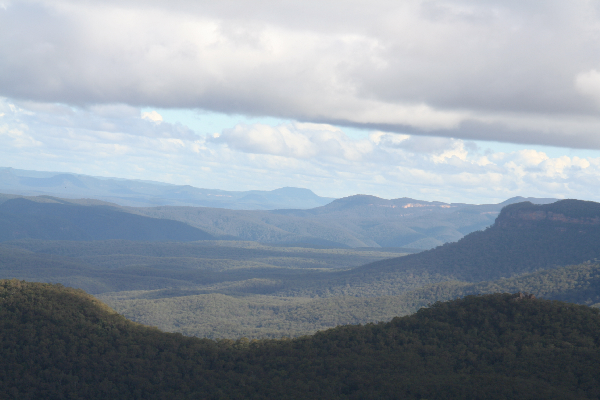
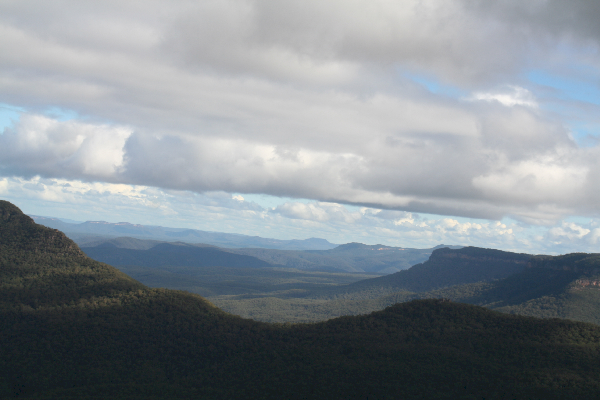
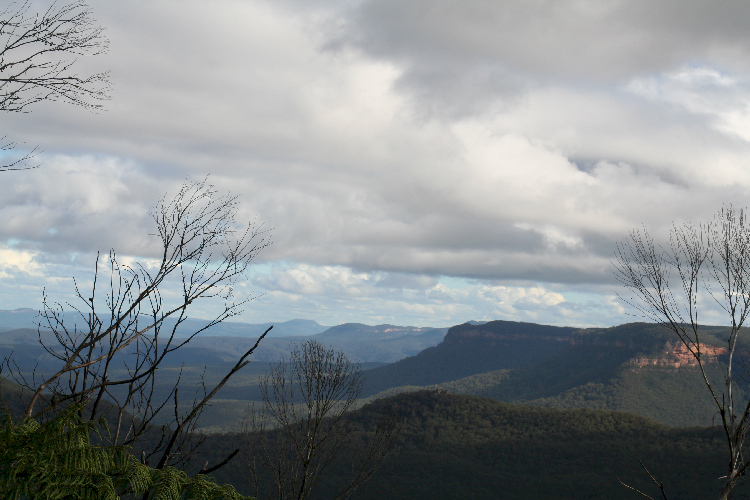
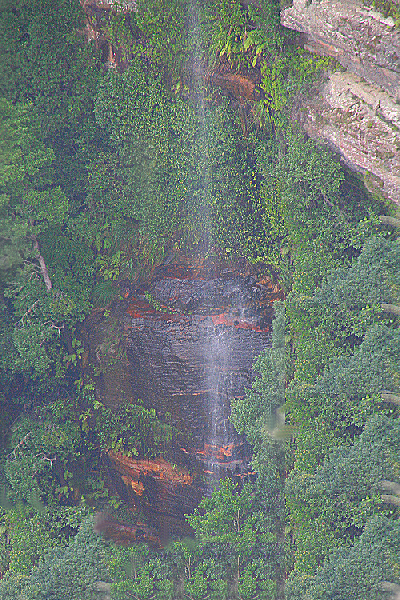
Another ViewThe Sunlit BluffsBlues, Greens and PurplesAnother View IIOne of My Favorite ViewsSubdued & BluedMy Favorite ViewAt Cliff’s EdgeThe Three Sisters from another point of viewMoving through the forestMajesticSunlight on The Cliffs IIInside the Living ForestThe Mysterious EucalyptusKatoomba Falls
Our journey ends here as close to the falls as we could reach as the lower path was closed. We will just have to return for more views and closer views sometime in the future or in our dreams. My sincerest thanks for allowing me to be with you in this place of beauty. You are beautiful and Donnie Luvs Yah!
Donnie
P.S. WE THANK YOU AUSTRALIA, FOR SHARING YOUR TREASURE!!! 🙂
Guhday Mates from Donnie, your Aussie Blue Mountains guide
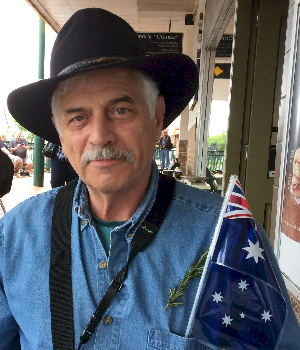
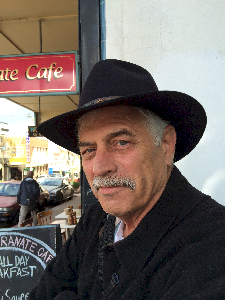
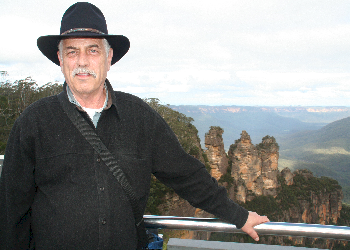
Yes, tis’ me! I am no longer wearing shades, eating eucalyptus leaves and looking like a Koala Bear! 🙂 A brand new, Akubra hat, exclusive to this one hat store (The Hattery) and this area and actually dark navy blue and appropriately named, Blue Mountains,will do that to you! 🙂
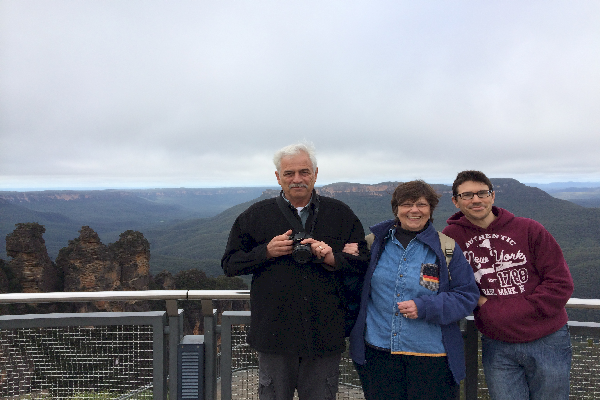
I am standing at a rail at Echo Point in front of The Three Sisters/Explorers/Rock Formations/Somethings, immediately behind me to your right.
Last weekend (April 11-14), we had the breathtaking, perhaps a-once-in–lifetime experience of the Blue Mountains around Katoomba, N.S.W. (New South Wales or NSW), Australia. NSW is a province or like a state in the US. It is a large area and includes: Sydney, Katoomba, The Blue Mountains and Camden (where we are staying), among others cities, towns and areas. I wrote “perhaps a-once-in-a-lifetime experience,” as we never know where the roads we travel or may one day travel lead, until we take them or find ourselves upon them.
But the road we traveled this weekend, was only about an hour’s drive from Camden to Katoomba. Traveling by car, we noticed large parcels of land and large beautiful homes as if estates or ranches. And there was an enormous amount of construction going on. We were told a brand new International airport has been approved to be built soon and that there are estimates which suggest that over 1,000 people are moving to this area every month. But for us, soon, in the distance, we could see our destination, The Blue Mountains and the gradual, soon-to-be, ear pooping ascension up into them.
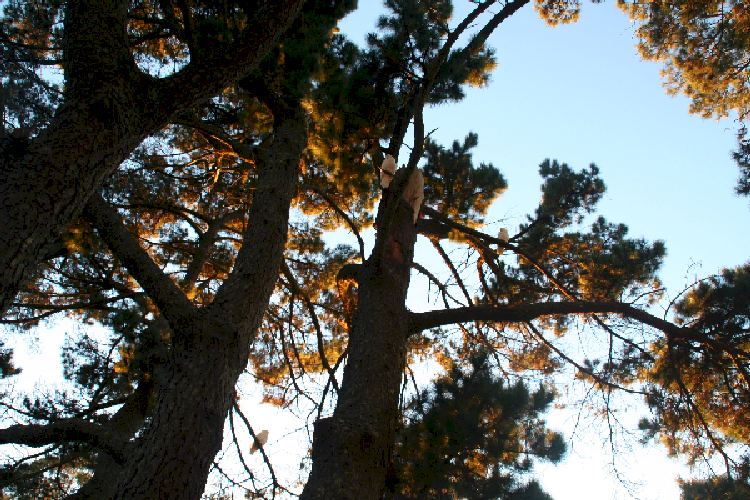
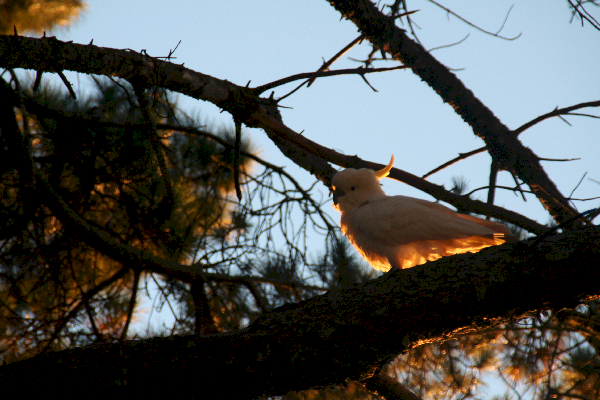
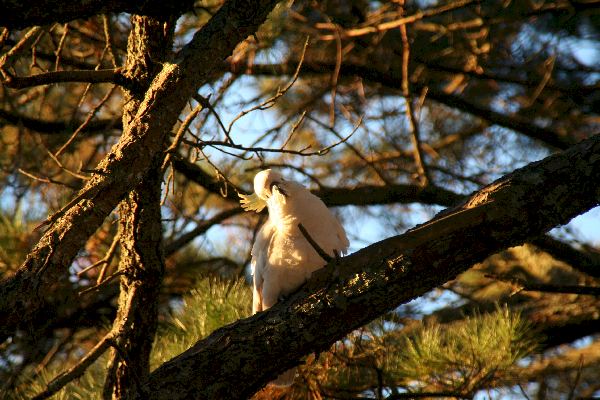
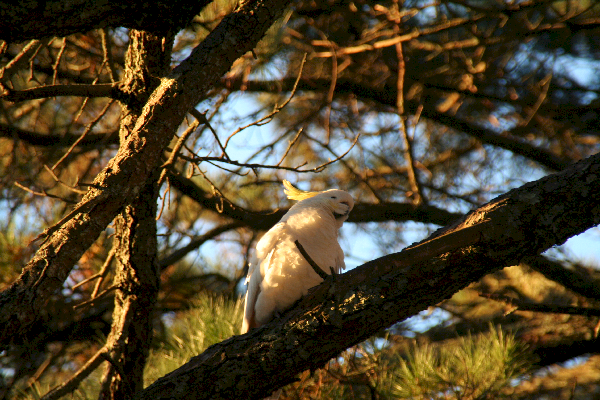
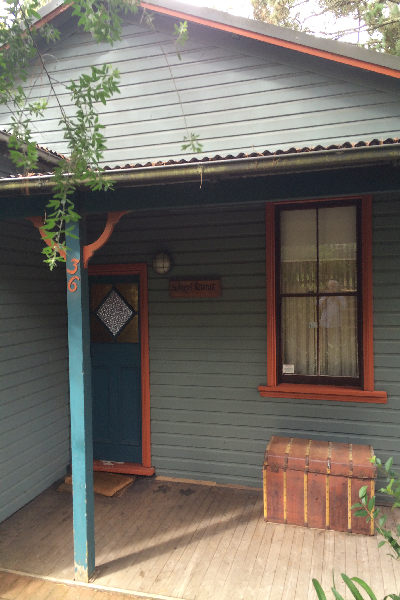
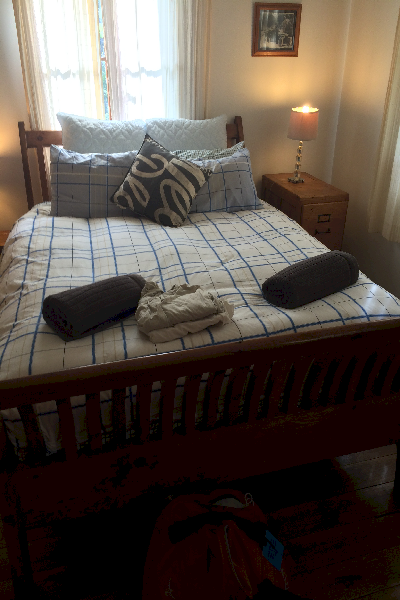
With all due respect and credit to Jimmy Buffet, the change in altitude, definitely inspired a change in attitude. The temperatures were cooler, the air seemed to be more pure and with much less humidity. All these factors were a much needed and appreciated relief. We checked into our cottage, unpacked and set out to explore Katoomba and find some grub (food). At another time I will share more about Katoomba, our cottage, the hundred or so sulfur crested cockatoos that flew over our heads, more about my hat and perhaps other things, but today, this is about, The Blue Mountains and more specifically, The Three Somethings. 🙂
The Three Sisters, The Three Somethings or The Three Explorers?
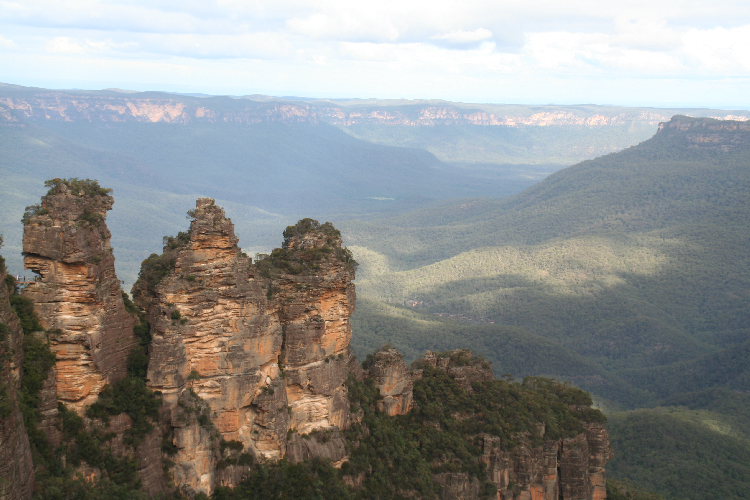
The Three Sisters is the Blue Mountains’ most spectacular landmark, equated by numbers of people that visit and their comments. Located at Echo Point in the town of Katoomba, around 1.6 miles or 2.5 kilometers from the Great Western Highway. This spectacular view and destination is experienced by millions of people each year.
The picture above was taken in the early morning when we were about the only ones there. The smaller picture above with me in it, was taken the same day, hours later, but it was then crowded with people. I was asked to take a picture for a lady and her friend and she in kind, took a couple of me.
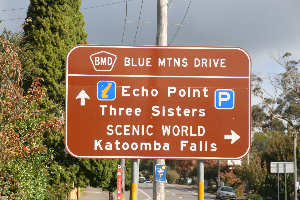
Road Sign
But, The Three Sisters/Three Explorers/Three Somethings is essentially an unusual rock formation. The character of these formations change throughout the day and throughout the seasons as the sunlight brings out the magnificent colors. These rocks are also floodlit until around 11 pm each evening looking simply spectacular, set against the black background of the night sky.
Each stand at 922, 918 & 906 meters or 3,025, 3,012, & 2,972 feet tall, respectively.
That’s over 3000 feet above sea level! It has come to represent three sisters, who according to Aboriginal legend were turned to stone or to represent three actual explorers to the region in 1813. The legends are two, so lets start with those.
The Three Sisters
Legend I
The Aboriginal dream-time legend has it that three sisters, ‘Meehni’, ‘Wimlah’ and Gunnedoo’ lived in the Jamison Valley as members of the Katoomba tribe.
These beautiful young ladies had fallen in love with three brothers from the Nepean tribe, yet tribal law forbade them to marry.
The brothers were not happy to accept this law and so decided to use force to capture the three sisters, causing a major tribal battle.
As the lives of the three sisters were seriously in danger, a witch doctor from the Katoomba tribe, decided to turn the three sisters into stone to protect them from any harm. While he had intended to reverse the spell when the battle was over, the witch doctor himself was killed. As only he could reverse the spell to return the ladies to their former beauty, the sisters remain in their magnificent rock formation as a reminder of this battle for generations to come.
The Three Sisters
Legend II
Three sisters, Meenhi, Wimlah and Gunnedoo had a father who was a witch doctor. His name was Tyawan.
Long ago there was a Bunyip who lived in a deep hole who was feared by all. The bunyip, or kianpraty, is a large mythical creature from Aboriginal mythology, said to lurk in swamps, billabongs, creeks, riverbeds, and waterholes. A Billabong is a Wiradjuri word (essentially a dead language that efforts to revise are in progress) that is used for an isolated pond that is left behind after a river changes course. Billabongs are usually formed when the path of a creek or river changes, leaving the former branch with a dead end.
Passing the hole was considered very dangerous, therefore whenever Tyawan had to pass the hole in search for food, he would leave his daughters safely on the cliff behind a rocky wall.
One fateful day, Tyawan waved goodbye to his daughters and descended down the cliff steps into the valley.
Meanwhile, at the top of the cliff, Meenhi was frightened by a large centipede which suddenly appeared before her. Meenhi took a stone and threw it at the centipede. The stone continued on its journey and rolled over the cliff, crashing into the valley below which angered the Bunyip.
The rocky wall behind Meenhi, Wimlah and Gunnedoo, then began to split open and the three sisters were left stranded on a thin ledge at the top of the cliff. All the birds, animals and fairies stopped still as the Bunyip emerged to see the terrified girls.
As the Bunyip began to approach the girls, to protect them from harm, their father Tyawan used his magic bone to turn them into stone.
Angered by this, the Bunyip then began to chase Tyawan. Becoming trapped, in order to flee from the Bunyip, Tyawan changed into a magnificent Lyre Bird, yet in the process dropped his magic bone. Tyawan and his three daughters were now safe from the Bunyip.
Once the Bunyip had disappeared, Tyawan returned in search of his magic bone, yet this was never to be found.
The Lyre Bird has been searching for this magic bone ever since. Remaining in rock formation, The Three Sisters stand silently overlooking the valley, hoping that one day he’ll find the bone and turn them back to their former selves.
When visiting The Three Sisters, if you listen carefully you may be able to hear the Lyre Bird, Tyawan, as he continues his quest for his lost magic bone.
The Three Explorers
Not legend 🙂
“In May 1813, Gregory Blaxland, William Lawson and William Charles Wentworth, set off on the first successful European crossing of the Blue Mountains. Tracing what is now the Great Western Highway route between Glenbrook and Mount Victoria, the explorers reached Mount York, before descending into the Kanimbla (now Hartley) Valley and then ascending Mount Blaxland, arriving back at the colony, a month later in June.
Gregory Blaxland (17 June 1778-1 January 1853) was an English pioneer farmer and one of the three explorers to cross the Blue Mountains in 1813. The Blaxlands were friends of Sir Joseph Banks. Gregory sailed in the William Pitt on September 1805 with his wife, 3 children, 2 servants, an overseer, a few sheep, seed, bees, tools, groceries and clothing. He bought 80 head of cattle on arrival in the Sydney colony and entered the meat trade.
William Lawson (2 June 1774-16 June 1850) was educated in London and became a qualified surveyor. In June 1799 he paid 300 hundred pounds for a commission in the NSW Corps, arriving in 1800. After a post on Norfolk Island, he returned with Sarah Leadbeater and their children to NSW, eventually settling in Prospect. In 1813 he set out from Prospect to meet Gregory Blaxland and William Charles Wentworth at Blaxland’s South Creek farm, from which the three of them left for the expedition which discovered the first satisfactory route over the Blue Mountains. In 1814, Governor Macquarie offered each of the three explorers 1000 acres west of the Blue Mountains. Lawson accepted the offer and in July 1815, he crossed the Nepean and set out to drive 100 head of cattle to Bathurst to take up his property, which he named Macquarie. In 1819 Lawson was appointed Commandant of Bathurst and during this period, he led a further three major explorations to open up the Mudgee district, where he became the first and largest landholder. Lawson went on to play an important part in the horse breeding and racing industry of early Australia and became a member of our first partly-elective Legislative Council from 1 July 1843 until 20 June 1848. William Lawson, known as ‘Old Ironbark’, often walked to Sydney on business, returning the next day. William Lawson died on 16 June 1850 and was interred in a family vault at St Bartholomew’s Anglican Cemetery, Prospect.
William Charles Wentworth (13 August 1790-20 March 1872) was an Australian poet, journalist and politician as well as one of the three explorers to cross the Blue Mountains in 1813. W. C. Wentworth was one of the leading figures in early colonial New South Wales. He was the first native-born Australian to achieve a reputation overseas, and was a leading advocate for self-government for the Australian colonies.”
Source: Historical notes collected by Robert Brown
Old Ironbark, William Beard
Horsemen of the First Frontier (1788-1900), K.R. Binney
Australian Dictionary of Biography http://www.prospectheritagetrust.org.au/page5.html
So how these three explorers were associated with these three rock formations, I have no clue other than the number three (3). I made the comment that if you look to the right of the ‘The Three Sisters,’ in the picture above, it looks like to me, one or all of them may have had little rock formations or children? 🙂 So, I suppose which of the legends or historical journals you choose to accept or believe, depends on the level of your romantic or imaginative nature. If this helps, there was only one place I found that mentioned the The Three Explorers, and it was a local motel bearing this name, close to Echo Point and the otherwise known as, The Three Sisters. Well, here is another theory, it’s the Three Amigos or The Three Stooges?! 🙂
Three Sisters & Three Amigos or Three Stooges 🙂 Donnie, Susan & Jonathan
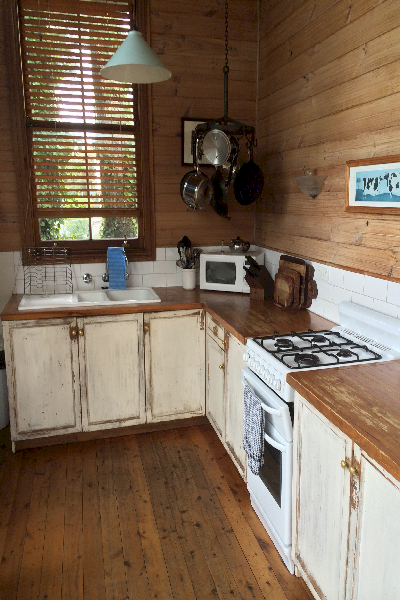
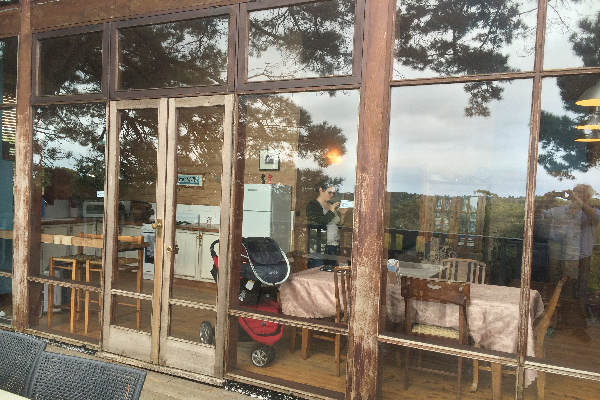
We just recently returned from the Blue Mountains where we rented a rustic cottage with a gorgeous overlook in Katoomba, NSW, (New South Wales), Australia. While I’m picking and choosing the pictures, I’ll give you an update and background information.
The day before we left, baby Felix came down with the croup. Mom, Papa and Grandma took him to the emergency room about 5:00 am – 7:30. I held down the fort with the three cats, one dog and the three chickens (Chooks).
Felix received some medicine and was given instructions that he should definitely go to the Blue Mountains and that all should enjoy the weekend! We followed those instructions to the letter! 🙂
Today, Tuesday 4/15, he went to the doctor and we received a good report. He is a happy boy again and Mom, Papa and Felix just returned from a walk to the supermarket, for stuff to put into the chicken soup, son Jonathan and Mom Susan are making for dinner. We had a lot of chicken left over from last night. Last night? Yes, last night. After we all got back from the Blue Mountains, Jonathan, Susan and I drove to Sydney for dinner. It was NOT an ordinary dinner, to say the least!
We were invited to this dinner and shared it with 16 other people, in a Jewish home. It was part of the Jewish Festival of Passover and called the seder.
The seder, the ceremonial feast held on the first two nights of Passover, is one of the most intricate rituals in the Jewish calendar, kicking off an eight-day stretch of complicated and demanding dietary restrictions. The initial meal, which ranges from eating bitter herbs to reciting Talmudic passages in a foreign language, usually lasts for several hours—and dinner isn’t served until more than halfway through.
The festival commemorates the exodus from Egypt, a key step in the formation of the Jewish people. The seder is not just a retelling of the story, like the weekly Torah readings in synagogue; it’s an invitation for Jews to relive the liberation from slavery as if they had actually been there in Egypt, to teach the narrative to the next generation, and to claim the history of their people as part of their own individual identities. But even in orthodox Judaism, families have long been accustomed to inviting non-Jews to share in this meal, alongside of them. I suppose this is because the desire for freedom and any exodus we may experience from bondage, is common to all.
But this particular seder was somewhat orthodox with some other unorthodox stuff, all thrown in together.
Guests included those from Poland, China, Sri Lanka, Australia and of course, we from the United States, but those are all the countries I can recall. Give me a break please, there were 18 people there besides me! 🙂
Just the guests themselves made an international and unusual impression. I am not quite sure, but I think all the major religions were represented at this dinner. I do know that Judaism, Muslim, Hindi, Christian and Roman Catholics were present.
Parts of the service were read by our host in Hebrew and most was in English and read by whomever desired to read and from the text re-written with a more modern update, by one of the three daughters of our hosts. The reading was done from 2 iPads we passed around the room. 🙂
It was at least to me, quite humorous to hear the readings by those Jewish with an Australian accent.
Part of the service includes the necessity of having “new” plates and utensils for each part. By “new” I mean that the same plates, bowls and utensils had to be changed during the several courses of the service. But in our case, the “new” was plenty of plastic ware. I can’t recall how many plates, small plates, bowls and utensils we used, but it was a lot! Our hosts were very giving in buying all this stuff that was thrown away as we went through each part. Once the ware or utensil was used, it was immediately thrown into a large plastic trash bag. You would eat or drink one thing and then toss the plate or bowls or glass or whatever, as these were now the “old” and had to make way for the “new.” If that seems like a lot of effort, you should have seen all the food! No one left hungry and I would imagine it took 1-2 days of chopping, dicing, cooking and so forth, to prepare this meal! And there was no bread, only Matzo.
Matzo is a flat cracker like food made with flour and water that is baked without yeast or “leavening.” I actually liked it, especially with the pickled (vinegar) beet-horseradish used as part of their “bitter herbs” requirement for the service. I sat right next to our host Lindsay and across from his wife Cheryl. I think they liked me because, I loved the beet-horseradish so much and told them about my tearing eyes and purple thumbs from making this at home. 🙂
The conversations around the room were about Jewish meanings/symbolism, history, WWII history, veterinarian medicine, teaching, psychology, sports food, differences of food between the United States and Australia and other topics! There was so much going on that I was nearly speechless and just did a lot of listening. I know, to those of you that know me best, it’s about next to impossible, for me to keep my mouth shut! 🙂
The whole event from start to finish, took hours. Sometimes, OK, most of the time, it was just loud and raucous. I loved it! And especially among the three Jewish daughters and their mother and father, the banter back in forth was hysterical! I even told Lindsay that I couldn’t believe that from across the room in the midst of all this volume, any of his daughters could still hear if their names were mentioned in conversation with others, but they did!
There were two dogs hoping for scraps that made the rounds. There were a couple of cats, one that is 18 years old that did make the rounds. I think that cat must have sat in every person’s lap that attended this meal. They liked the cat and the cat sure seemed to love the attention and the stroking. I even petted Tibet, the cat. Lindsay confessed that he loves the two dogs, but hates the two cats. But he is still the one that feeds them and they know this, but just keep their distance the rest of the time. I really don’t think he hates them though! 🙂
I enjoyed all the food and even the sweet red wine with grapes from Israel, grown in California, and blessed by some Rabbi in Hoboken New Jersey before, being exported to Australia! 🙂
That was real, but also a joke as there were several like these from the host family including what they call the Jewish chicken soup, ‘Jewish Penicillin Soup’ (good for what ails you and sickness prevention) or simply, ‘Jew Soup.’ That might sound racist and not funny to some, but I’m not the one that said these things. Well, it’s what Susan & Jonathan made for tonight’s supper from the massive quantity of chicken our hosts sent us home with, for Caitlin, as she and Felix did not attend, to everyone’s disappointment, I might add. But all seemed satiated with not just the meal, but from pictures and videos shared by Papa, with Felix as the main attraction! 🙂
The reason we are having soup tonight is because, everyone here was not feeling too well, except for me, I HAD THE CHICKEN SOUP LAST NIGHT, (while Susan & Jonathan had the orange soup)! 🙂
It was so very nice of our hosts to open their home and their hearts and share the costs and time required to prepare their food with, so many non-Jewish people and even with strangers like me that they had never met. I mean come on, can you get any stranger than me? 🙂
I thought it not polite to take pictures, so there are none. but there are 18 other witnesses (not including the two dogs and two cats that it happened and that I was there! 🙂
But this experience is one I will never forget! It was informative, historical, delicious and hilarious with some really good conversation, all thrown in together. And I would like to think that there, just a for a few hours, it seemed the world people in all their many differences and separations, were all ‘In Common, for this meal!
OK, so that’s a lot of content, where’s the pictures? They are coming! It has been difficult for me to get these posts done on a regular basis. For one thing, we are doing a lot of stuff. For another, I have been having problems with my camera, which needs to be addressed when we get back home to the United States. Another problem I am having is with my laptop. It is good to have it, but it does not perform like or have all the programs I use on my desk top at home to edit and quickly reduce the size of pictures to post. I cannot just use full size pictures in these posts, as I will quickly go over my maximum allowance through my WordPress (free blog). The resolution on my laptop is not as good as my desktop at home. But there is much visually, I do want to share with you and I will just have to work it out when we return.
It has also been difficult for me to adjust here. Last night and while in the Blue Mountains, I was layered, including a wool shirt. This morning, I was wearing a short sleeve shirt, sandals with no socks and I would have had shorts on, but they were all in the laundry. This is how it is here, in Australia. It is fall or early winter here, while it is nearly spring 🙂 in New York where we live. In New York, we ‘fell back’ last fall, when daylight savings time ended. Daylight savings time just recently started here. When you are sleeping there, I am awake here. When I should be sleeping here, you are probably awake there. Sometimes here, it’s tomorrow there and sometimes your today is already yesterday here. Then there is the up and down thing. You are up there and we’re down under here. Please don’t ask about which direction the water swirls here as supposed to there, I have not seen it nor can I tell. And when we leave here in a couple of weeks, we leave on the morning of the 30th, spend the night in Tokyo on the 30th, wake up on the 30th, fly home and by the time we get home there, its already tomorrow here and yesterday there! Everything is really messed up, but people that live here, just like you there, are all probably doing fine. It must be just me that’s messed up! 🙂
Oh, about the hat. Yes, I found my Akubra hat, not the one I was looking for, but one better and $30 cheaper and at size 58 not 57, it fits great! More about that later. Closing for now until again. OK, one picture then! 🙂
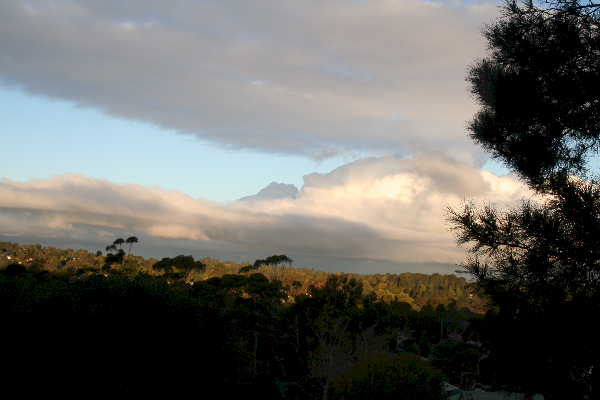
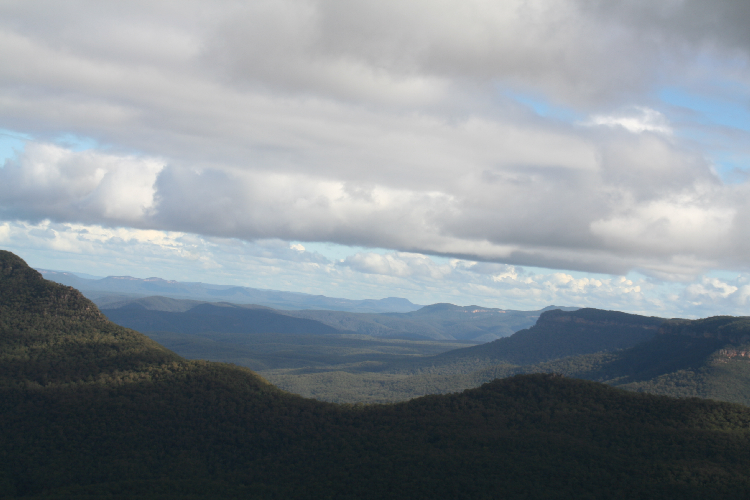
Blue Mountains from Echo Point, Katoomba, NSW, Austrailia
Guhday mates from Donnie, Your Aussie Koala eucalyptus tree specialist
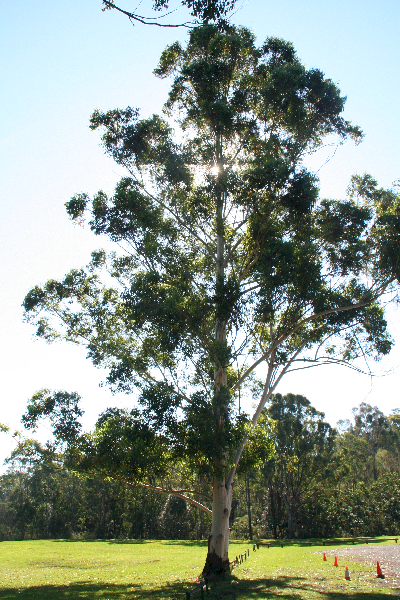
I could have just as easily called this post, On: Gum Trees because, it is. And a Gum Tree is certainly easier to say than perhaps, an Eucalyptus Tree and I suppose it is, even though gum trees and eucalyptus trees are related and not to mention our cousin myrtle.
Let me see if I have this straight. Not every gum tree is an eucalyptus tree, but every eucalyptus tree is a gum tree? Huh? What? These trees are called gum trees and are classified as trees and shrubs which have smooth bark which exudes a lot of sap from any break in the bark. Hence, sap, sappy, gummy or gum.
As a Koala Bear, surely you would think that I am quite particularly partial to eucalyptus trees and especially since I dine on their delicious leaves! 🙂 But I am not the only one in Australia that loves the“eucalypts” (as they are often called here down under) and not everyone loves them like I do!
The kookaburra sometimes sings from a Coolabah (a type of eucalypt), waltzing Maltilda often rests against one as does her swagman, just to mention a few. For more information about these names, terms and characters on this blog, see Waltzing Maltida, Damper and the Kookaburra song from Music Down Under.
By the way, the Coolabah is also the name of a certain style of a special Australian hat made by Akubra. I am hoping and waiting for a email that my size and color has bee found. I am anticipating a simple reference that reads: Found Hat – Bring Head! 🙂 If you are an Aussie reading this and you can help me locate one in black size 57 I will love you forever! 🙂
Long Straight and Tall
With the eucalyptus/gum/coolabah species of trees having so many varieties, it’s obvious that there are many of them in the country of Australia. Many of them grow really tall and grow mostly straight. They are excellent for timber and for telephone/utility poles. I have seen several in our neighborhood where one seems to be its natural color, another tinted green as a preservative I assume and another with saw cut beveled edges. Perhaps the differences may be understood by the dates when they were installed and methods that have evolved through the years
These are remarkable trees with little that bother them, but there are a few exceptions. There is one insect, Psyllids that leave behind sugary secretions on the underside of the leaves they ingest. These sugary secretions are called Bell Lerps and attract some ants and the beautiful sounding birds called the, Bell Birds. Yes, this is exactly what they sound like! For more information see on this blog: Bell Birds
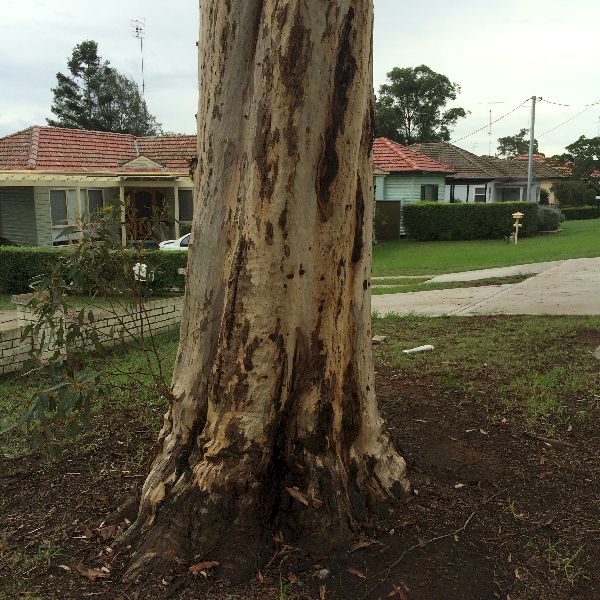
Closeup of a seemingly naked tree
There is a very rare type of eucalyptus known as the White Gum which is nearly extinct, but it is seen in and around Camden, New South Wales, Australia.
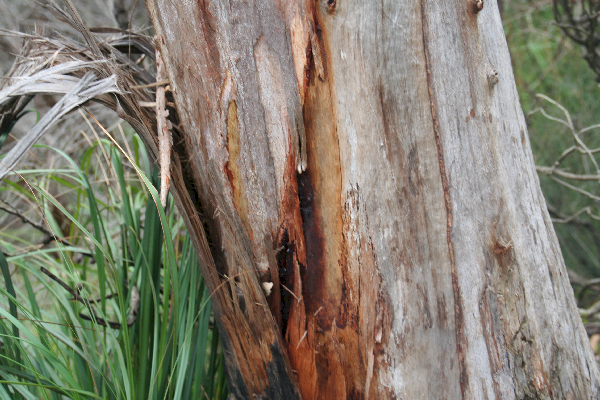
Many of these eucalyptus trees shed their bark annually. And here in Australia, the bark is just simply called, ‘fuel.’ The trees might look like they’re naked, but the bark will grow back.
In addition to the bark falling off in either strips or chucks (depending on the variety) sometimes, entire branches will fall off. The Aussies know this, but for us foreigners that do not, signs are sometimes placed near some of these trees, especially in the Australian summer (December to February) to alert and protect others from unexpected and sudden branches falling. These fallen branches are actually hollowed out from within by termites and yet the tree still survives.
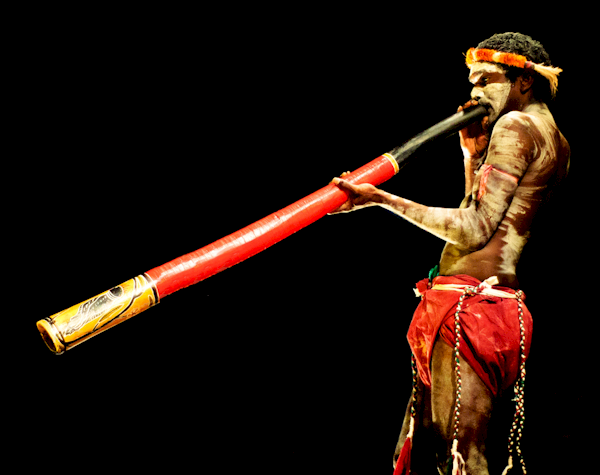
The Aborigines, walking in the forest would tap on the appropriate size of fallen branches they were seeking, to determine the quality of sound it made. Some of these chosen fallen and hollow branches are suitable for the famous didgeridoo instruments, used in Australia. They are carved, and decorated by skilled craftsmen and artisans.
The Didgeridoo is quite possibly the oldest instrument in the world – and still one of the best. Forever associated with Aboriginal Music, the sound of Australia is now available everywhere and growing in popularity.
Aboriginal Man Playing a Digeridoo
Modern Music with a Digeridoo, Xavier Rudd – http://www.xavierrudd.com/
It is estimated that there are over 700 varieties of eucalyptus tree with just 15 of these outside of Australia, but of those 15, only nine are not found in Australia. I suppose you could say, we Aussies have cornered the world marketplace on “eucalypts.“
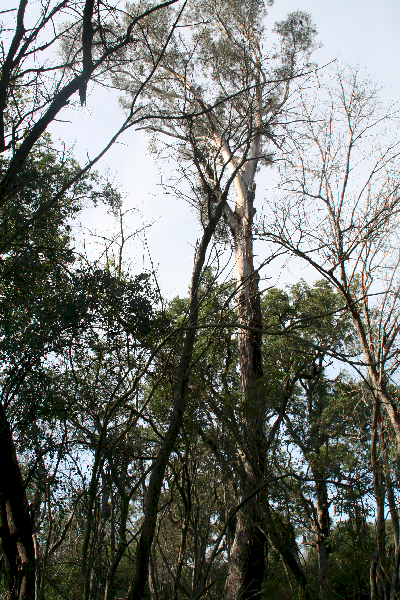
The tree looks dead, but it’s not
Other uses of these amazing trees are: pulp, paper, charcoal, ornamental uses, as an antiseptic, disinfectants, dyes, insect repellents, mosquito repellents, cough drops, deodorizing, decongestants, toothpaste, sweets and bees from their flowers produce delicious honey.
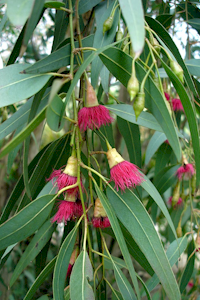
Image from Wikipedia – Eucalyptus leucoxylon var. ‘Rosea’ showing flowers and buds with operculum present
They are fast growing and some trees, even if cut off from the roots, will grow back. Their roots dig deep into the earth and to some people, this water sucking tree is a good thing, as it helps to reduce the spread of malaria from stagnant pools of water the roots will just suck dry. To others, these sponge-like trees steal the water from everything else that needs it.
Due to the depth its roots reach in the earth, they are often called – prospectors, gold prospectors. Yes, you read that correctly, gold! They will actually transfer some all the way into its leaves. These gold-leaf-nugget-clusters may not be worth collecting, but they can sure tell one that this tree, where the gold may be found in its leaves, could be sitting on a fortune below its roots in a huge vein of gold!!!! 🙂
Some believe these trees are not so great as they are a fire hazard. Much of the time, Australia can be quite arid and dry, even though humidity, for example, just yesterday was at 98%. Bush fires have spread and burned perhaps, 1000’s and 1,000’s of acres. And the eucalyptus does not endear itself to many, when it contributes greatly to these consuming fires, since it sheds its bark and drops branches – adding fuel to the fires. But how quickly whole forests grow back and how fertile the soil, after a fire, is amazing. Despite how anyone may feel about these trees (favorably or unfavorably) they have most likely been here a whole lot longer than people have. And the most amazing thing to me about these trees and the purpose of this post is, their ability to adapt.
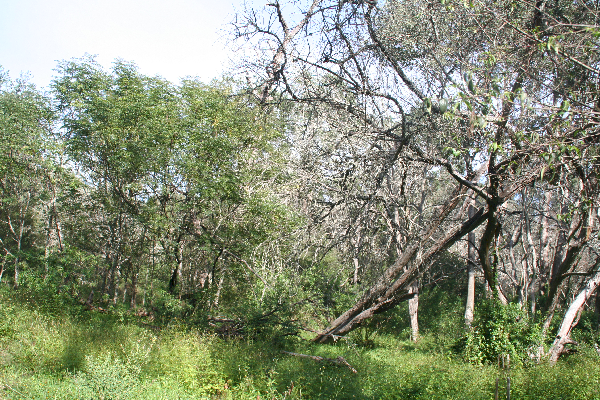
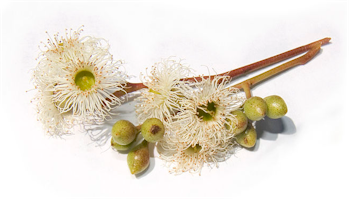
A small local forest as it might have looked a hundred years agoImage from Wikipedia – Eucalyptus melliodora, showing flowers and opercula
To continue life, life most reproduce itself. It is no different for these trees. They grow, flower and are pollinated by bees. They produce fertile seeds and many are as hard as, little green rocks. The trees drop bark which is like surrounding their trunks with kindling to attract fire!
Its bark, sap and leaves are full of volatile chemicals. The Blue Mountains (which we will be visiting this weekend) is so-named because of, a blue-like haze from the tree-leave combustible chemicals in the air. It’s like these trees are waiting for and setting up conditions for a lightening strike to start the fires that will destroy them.
But here is the conclusion of the seemingly purposed set-up of its own destruction and continuation. There are two dominant theories on this. Some believe those hard as rock seeds will not open unless there is a fire. Others believe that they will only open when the soot mixes with water, after a fire Whatever is factually accurate the truth is, these trees continue their species through FIRE and they seem to try and bring the fires!!!!
Seeds will only open to either fire or soot mixed with water
Guhday mates from Donnie, Your Aussie Koala Coles’ Trolley Expert
Well, first off, I do apologize for this post running a little behind. I have been working on several to try and get ahead. We are leaving on Friday, I believe, for the weekend to the Blue Mountains and I’m not sure if I will have Internet/WIFI access until we get back to Camden, Sunday night? So, after today’s post, I will schedule a couple of posts to publish automatically around midnight of Eastern Standard time (EST) in the United States.
For today, On: Trolleys.
I’m not exactly sure, but I think Australians refer to “trolleys” as anything that has wheels and moves including: elevators and escalators, but certainly what we call shopping carts in the United States.
In Camden, New South Wales (NSW), Australia, the two local and frequently visited places by the general public, for grocery shopping are: Woolworth’s (not the familiar past 5 and dime department store) and Coles’. This post is about Coles’ and their trolleys (shopping carts).
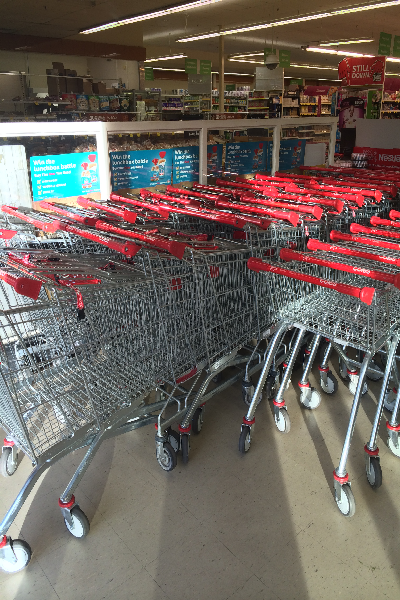
Have you ever grabbed a shopping cart at the store and it seems like you always get the one that has a flat spot on one wheel and as it rolls it goes frump, frump, frump, squeaks or just doesn’t roll right? Me too! Problem solved at Coles’!
Coles’ Trolleys
OMG, these have BIG O’ HUGE wheels and roll so smoothly, you check between the wheels and the floor, just to make sure the trolley (cart) is not actually floating over the floor! As shown above, there is one size for quick shopping of a few items or the average size for more items or say, your weekly grocery shopping. I say “weekly” shopping loosely as, it appears just like in Japan, many people shop daily. Like Japan, Australian refrigerators are smaller than in the U.S.A., which seems to suggest that many Aussies shop frequently. They also, as the Japanese, like their stuff, really fresh!
There are, of course, some other carts with baby seats similar to the car seat or child-restraint seats used in most vehicles. The baby seat carts are attached to the trolley/cart and have seat belts.
There are trolleys/carts for those that are walking impaired or challenged.
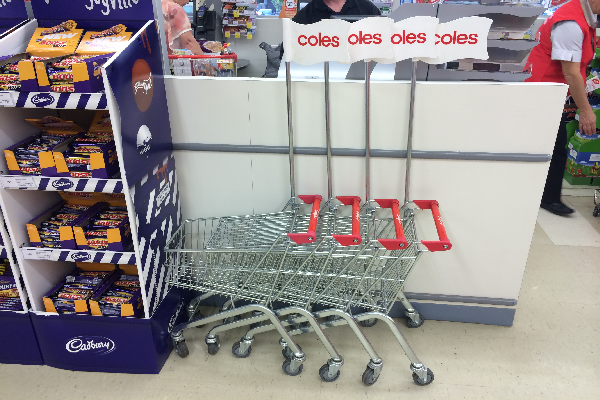
Then there is another kind of trolley/cart that I have never seen before!
Jolly Trolleys for Kids
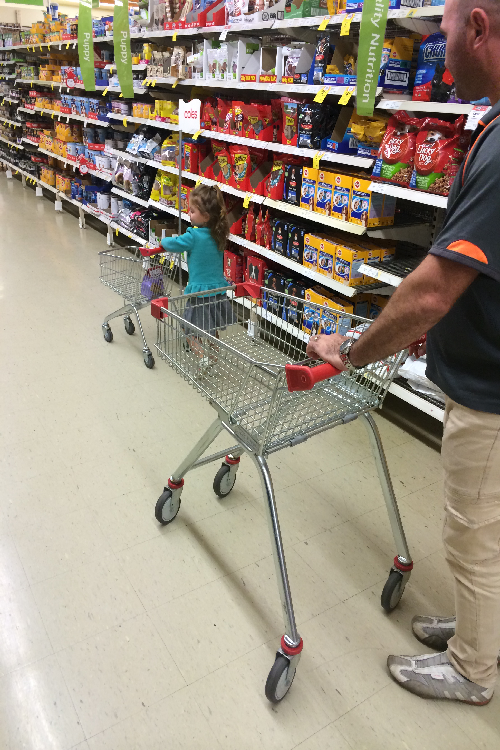
These are much more than just adorably cute! They are constructed with the same quality of materials as all the others. The flags attached are not to advertise the name of the store. The flags are so the adults (any responsible adult) can easily find the kids. And the trolleys/carts are for much more than mere amusement, to keep the children occupied. They are important teaching aides. And they help instill in the child the – “I’m not a little kid, I’m a grown-up,” attitude, most kids desire to embrace. And each child is instructed that if they do not return the cart to the place where they got it at the end of their shopping experience, they will not be allowed to use one next time. That’s a pretty good lesson in personal responsibility, good manners and discipline.
Father and daughter shopping
Notice how the little girl is in front, leading her father? Oh, and she is taking this so seriously too, just like an adult! 🙂
Oh, I love these trolleys/carts! They are the best made and the easiest to steer and guide and glide that I have ever seen! And yes, just like in the United States, I’ve seen these in and around the neighborhood. I know of no complaints at Coles’ so, I guess these wandered off trolleys/carts, make their way back home, eventually! 🙂
With all this sincere and honest praise about these trolleys/carts, there is just one problem…
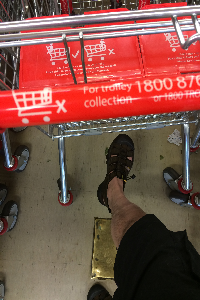
…what’s missing in this picture?
Yes, what’s missing in the above picture? Yes, that’s my foot you see. But there is no bottom rail!!! I can neither be pushed nor run fast and jump on and ride this cart through the store and the parking lot! 😦
I suppose these were built this way because, either my wife Susan told them they should or they just knew I was coming! 🙂
Guhday mates from Donnie, Your Aussie Koala Camden Show guide
Well the Camden Show. Where do I begin? The Show was held April 4th and 5th, 2014 in Camden, New South Wales, Australia. I probably took close to 300 pictures and with the exception of perhaps a small handful, I’m pretty happy with the rest of them. Choosing which ones to share and sizing them (down) has been quite time consuming. But I had the time.
Thus far during our stay here, it seems we have some activity on one day, followed by a day of rest. This has worked out very nicely for me. I’m not sure what factor or factors may be involved (my age, physical condition, the high humidity, intense sun or all of the above), but walking a lot and the activities have pretty much left me spent the following day. Adjusting to the time zone and/or jet lag may have made their contribution to my tiredness as well? But nothing hurts, I feel great and enjoy the walking just like we did much of it in Japan too. Days have been really pleasant. The temperature rose during our visit to the show, but was cooled off by the weather-predicted rain or actually, the downpour. It was nice, fun and funny. We were all able to duck into a large tent of interesting demonstrations and wait out the rain.
Well anyway, back to pictures. I have chosen 50, yes 50. That may seem like a lot and they are not because I believe they are such great shots that I want to share them with you, but because they reflect the wonderful Camden Show. It is very similar to any county fair you may have ever been to, but still different. So I will just start with pictures and some text and some captions and see how it goes. Perhaps it will end up with more posts about the show? Here we go.
Lady in a lovely 1960’s style dress as we walked inBalloons and colorsInteresting – Lady Funerals?Beautiful display all made from fruits, vegetables and seedsHorse and Riders nicely dressed and groomedWhip crackingSusan’s New Aussie HatAussie HatsPainted Pony. Do you see the silhouette of the head of a horse on its side?Aussie Coats – lanolin/bees wax coated
Well yes, camels! We missed the camel race, pooh. 😦
Authentic Aussie Wear Wearers 🙂Brahma Bull Yee hah mates I mean partners! 🙂Some baaaaad Sheepies 🙂Sheep Shearers Shearing Sheep 🙂Close Shave Sheep Shearer!Beary CuteAussie Snake WomanBuy what you want and put it in a show bag
Show bag shops were everywhere. Very decorative and artistic billboards. You find the stuff you want for a certain price and then put it all in a show bag. There were many of these vendor/shop/kiosks. Very popular with the youts (youths). 🙂
Henna Tattoos anyone?There go the sheep again, heading for their sheep shearingSand Sculpture First Prize. WOW, did the artists know they would win?Cattleman Cattle Cart Hauling20 Cattle Cart Team 🙂Kite flying and there were several balloons lost to the clouds.Large Christian Commune eatery.
The Common Ground is a totally self-supported and self-sufficient Christian Commune. The support themselves by places like these eateries. We ate in one in Picton Australia where I recorded the Bell Birds. see: Bell Birds here
They make their own clothing and grow their own organic food, some of which they use in their restaurants. Their food is excellent! I believe they have a sister cafe in Ithaca, NY in the United States.
Common Ground
Bundaberg Distillery Display
This was an interesting and miniature museum. It was filled with history of the company which is a major producer of rum in Australia. Various shapes of bottles were on display as well as the process involved in how rum is made from raw cane sugar. We even got to taste samples of the molasses. The next picture is of a bottle of rum made to look like one of those pirate movie pistols.
Rum PistolPetting Zoo for the kids. OK, kids younger than me. 🙂
Soft & Fluffy Feely Touchy Thingies
Touchy Feely For Kids of Every Age
Old Carriage and a Wheel Maker
Blacksmith making horseshoes
All kinds of…
…Rides!
Beautiful Horses and……Clydesdale Horses too!
Airplane displays and rides.Cotton & Wool Displays
A Real Cotton Ball
Edible Art for KidsMore Edible ArtA Bloomin’ OnionA Beautiful Swan Fit For Feasting
There was something for everyone at the Camden Show! So many different kinds of food, animals, shows, rides, demonstrations and people of all ages having fun. It rained both days and was not perhaps the greatest for the vendors pocketbooks, but it was a wonderful experience. They even put down straw and other materials so people did not have to walk through the mud. That’s was real nice and something I have never seen in the United States at any of the fairs I have ever been to. And the children were all so engaged, curious and their excitement was well contained, controlled and managed. People were all, for the most part, nice, friendly and well behaved. No alcohol was allowed except for the two wineries that gave samples. All in all it was a wonderful time. I was like a young child again. I would have loved every minute of both days, rain and all, but glad for the time I had. It was all eye candy for me. My camera was not unhappy either. 🙂
After we left the tent where we ducked under after the downpour of rain had stopped, we had to take the ardent and difficult task of getting home. WE HAD TO WALK LESS THAN SIX MINUTES TO GET HOME!!! 🙂 Around 9:00 PM, we watched the fireworks from the middle of our street. That was perhaps the closest and best view of fireworks I have ever had. And it was produced by a world class and world renown top pyrotechnical company, F0ti International, based in Australia.
Then two of us walked back to the carnival at night and watched the wild Brunby run. The Running of the Brunby are wild ponies in Australia, similar to the Mustangs of the southwest in the United States. So I will conclude this post with a small Youtube video I made and uploaded.
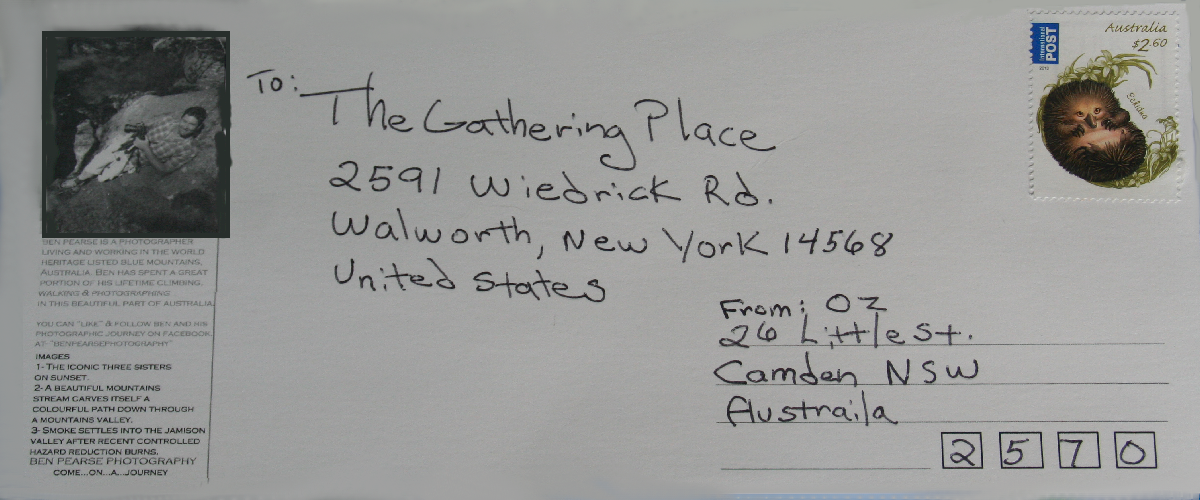
Guhday Mates, from Donnie, Aussie, your friendly Koala tour guide 🙂Mailbox where we are, 26 Little StreetPostcard mailbox
Like many mailboxes the world over, many here are unique and suggest some of the personality of those they belong to.
I love the post card mailbox shown in the picture! 🙂
But since our short time here in Australia, at least here in Camden NSW Australia, I noticed the mailboxes are quite low to the ground. Having the type of perspiring mind, I mean inquiring mind that I do, 🙂 I wanted to know why?
I asked several people including our hosts for a reason. They did not know the answer. Along with my question about the mailboxes, I wanted to know how the mail is distributed here and if our hosts had ever seen their mail delivered. In the two years or so since Johnathan and Caitlin have lived here, neither had ever seen their mail delivered. It was just a matter of never being here or noticing when it was dropped off.
This is a really laid-back area. They are not so focused on the mail delivery as say, we in the United States might be. I know when our mail is delivered and sometimes, I wait for it and from time to time, even say “hello” and/or “thank you” to our mail person.
By the way, I’m sorry to use the politically correct crap word “person” which does not distinguish whether or not the deliverer is male or female. OK, I get the “equality thing,” but I’m glad I am am a man and that my wife is a woman and she’s pretty OK with it too. And our mail “person” is a woman. I call her our mail lady and she likes it.
In the pictures shown thus far, the mailboxes are approximately two and half to three feet off the ground. That’s a little low for the postal delivery vehicles in the United States that distribute mail is rural areas like where we live in the country. In this area of Australia, I have not seen any mailboxes attached to the homes. Each are about 5-10 feet from the curb of the street.
Well, as it happened and just the other day, I was outside when it was mail time. My mystery has been solved! 🙂
Motor Scooter Mail Delivery System
The scooter the driver is on, actually looks like something a child would drive as it is, pretty small. I’m sure it is great on gas here and/or natural gas. Natural gas is big here and many of the public transportation buses we saw in Sydney have signs above them that read: Powered By Natural Gas.
Most likely the other reason this vehicle is small is because, the driver actually drives up on the lawn, pulls the mail from the two side bags on the scooter and then drives to the next address. No tracks or treadmarks were left in anyone’s lawn that I could see. And the driver wearing rain gear because of it having rained this day. The ground was soft. So this scooter with mail and rider did not appear heavy enough to even leave a dent in anyone’s yard.
I am not sure how newspapers or magazines are delivered here. See round tube in picture #1 above.
Also, I’m not sure what happens if there are large packages as the mailboxes are quite small. I do think the driver in the picture actually delivered to the house, perhaps a larger package then what would fit in the box. I was down the street when I snapped the picture. The driver shutoff the scotter and was just getting back on when I took it.
Anyway, mail delivery in Australia seems quite efficient, the scootter was pretty quiet and overall, I think it’s pretty awesome!
Well, not even a year ago if you would have told me I would be in Australia, I would have been just as surprised then as I am now! Once the reality set in (whenever that was), one thing for sure I wanted to see here (besides grand baby Felix, his Mom & Dad and the animals of Australia) was the Sydney Opera House. I would have been glad, just to see it from the outside and with a further glad, to seeing it inside. I spent several hours on line at http://theoperahouseproject.com/ looking at a timeline of the making of this beautiful architecture. I invite you to click on the link above, do yourself a favor and do the same thing! It is interesting, informative and awe inspiring!!
Harbor BridgeDarling HarborSydney Opera House sails
WOW, were we in for a surprise! Surprise and excitement is really an understatement!!! Why? Well not only would we see outside and inside of ‘The House’ we were treated to a whole day downtown Sydney, a fabulous dinner of fresh oysters and on-and-on, and tickets to a live performance of the world-class Sydney Orchestra and choir! Did I mention or emphasize enough the word, “LIVE’?!”
DESCRIPTION:
“My name is Maximus Decimus Meridius, commander of the Armies of the North, General of the Felix Legions and loyal servant to the TRUE emperor, Marcus Aurelius. Father to a murdered son, husband to a murdered wife. And I will have my vengeance, in this life or the next.”
Powerful, spine chilling and epic. Ridley Scott’s blockbuster, Gladiator, comes to Sydney for its world premiere, and the film score will be performed live in concert by the Sydney Symphony Orchestra and Lisa Gerrard.
The Sydney Opera House will transform into the Roman Coliseum as Hans Zimmer and Lisa Gerrard’s sweeping and dramatic score, among the all-time favorites, is brought to life by a full symphony orchestra while the movie is played in high definition live on the giant screen above.
Gladiator, winner of five Academy Awards, and a Golden Globe for Best Original Score – Motion Picture follows loyal Roman general Maximus Decimus Meridius (Russell Crowe – born in New Zealand, but now an Australian citizen), who is betrayed when the emperor’s ambitious son, Commodus (Joaquin Phoenix), murders his father and seizes the throne. His family dead, and reduced to slavery, Maximus rises through the ranks of the gladiatorial arena to avenge the murder of his family and his emperor.
Now I have seen this movie a couple of times previously, but NEVER like this! There was an intermission where you could move about, get something to drink, go outside and etc., but OMG, by the start of the rest of the movie, I kind of got lost into the music itself and the vocals from the choir and the lead vocals from Lisa Gerrad that actually performed on the original soundtrack for the movie. The timing and the volume and the acoustics of the opera house were incredible!
Inside Sydney Opera House
The performance received and was much-well-deserved of a long, standing ovation! And by the way, the people of Australia generally and genuinely love to dress up when they go out. It was nice to see this!
Many years ago and even before my time, 🙂 the first movies were black and white and before the “talkies” (movies with sound), background music was performed by a sole pianist, some other musician, musicians or a small orchestra. Our experience at the Sydney Opera House was like a trip back in time. By this I mean, the old becoming new again. Obviously we cannot go to the movie, rent one or buy one and expect like “fries come with that,” to count on a live symphony and chorus to show up. But WOW, wouldn’t it be great if this was the common thing!
For me, I have never appreciated the importance of music in a film as much as I now do! And it was just beyond words to express my gratitude for this experience, for the incredible seats and to not only hear this music “live,” but to see the musicians as they played and the vocals as they were sung by such a world-class orchestra, choir and the vocalist that sung on the original soundtrack. All together, this was perhaps a lifetime experience being first in Australia, 2nd in this theater, 3rd to experience the movie/live music/visual display acoustics and to share this with my best friend and the love of my life! And I am thankful that Jonathan and Caitlin our ‘gifters,’ were here to join us and that they had some much needed time together. A big shout out to Wendy that took care of baby Felix, so they could enjoy date night! 🙂
I do apologize for some of the pictures above as they are not to my satisfaction. I have been having some difficulty with my camera recently. Also, the favorite digital media card for many professionals and me is compact flash. Unfortunately, it is a terrible design for downloading via a card reader to my computer. Before I left for our trip, I bought a new card reader so I could download my pictures to our laptop. Yesterday, the pins got bent and I had to get a new reader today. Today was raining so I spent it recouping my energy, and catching up with pictures and posts. I will need to address my camera with perhaps something new after we get home and I find some money or knock out all my teeth so the tooth fairy can visit me big time! 🙂
Sydney Opera House is a marvel of vision and construction. I believe I am correct in saying that each year, Sydney and Australia celebrate this icon in what is called, ‘The Lighting of the Sails.’ This year, the event starts on May 23 through June 9th, 2014. I would love to be here for this, but we will already be home. Each year it is different. I will close with a beautiful picture from http://vividlive.sydneyoperahouse.com/lighting-the-sails/?gclid=CO-Ph9Pixr0CFQUJvAodA7IAIg and two (2) YouTube videos, highlights from 2013 and 2012. If possible, crank up the volume and watch these FULL SCREEN! Enjoy! 🙂
I only thought we were in the country until we actually went into the country. It was a nice ride from Camden to Picton, New South Wales, Australia about 16 miles. We saw rolling hills and cows and sheep much like anyplace I have ever seen. If not for driving on the right side of the car and on the left side of the road, it all looked similar to anything I’ve ever seen. On occasion there would be a sign that read, “Stay in line unless overtaking,” meaning the center lane was for passing ONLY. Somehow, before we leave, I will snap a picture of the road sign for Kangaroo Crossing. But again, everything seemed quite the same. WOW, was I about to be surprised!
Our destination was the Razorback Inn, a quaint out-of-the-way place to eat that was established in 1849.
The Razorback InnMenu from ‘Common Gound’
The eatery is now run by a Christian Commune called, ‘Common Ground.’ They make their own clothes, live in the area, and run the restaurant including making all the food from scratch and natural and wholesome ingredients. A s delicious as the food was and as charming as the place was, this was not the most memorable experience, of this experience to me. It was in fact, the Bell Birds. Yes, that is what you read, what I wrote and what was meant! And as the name implies, the birds have some association with bells because, however they make this sound, they sound exactly like bells!!!!!!
The Bell Bird or the Bell Miner (Manorina melanophrys), commonly known as the Bellbird, is a colonial honeyeater found in southeastern Australia. The common name refers to their bell-like call. “Miner” is an old alternative spelling of the word “myna” and is shared with other members of the genus Manerina. The birds feed almost exclusively on the dome-like coverings of certain psyllid bugs, referred to as “bell lerps,” that feed on ucalyptus sap from the leaves. The “bell lerps” make these domes from their own honeydew secretions in order to protect themselves from predators and the environment.
Bell miners live in large, complex social groups. Within each group there are subgroups consisting of several breeding pairs, but also including a number of birds who are not currently breeding. The non-breeders help in providing food for the young in all the nests in the subgroup, even though they are not necessarily closely related to them. The birds defend their colony area communally aggressively, excluding most other passerine species. They do this in order to protect their territory from other insect-eating birds that would eat the bell lerps on which they feed. Whenever the local forests die back due to increased lerp psyllid infestations, bell miners undergo a population boom.
The sound is beautiful and quite enchanting. It is difficult to believe that you are hearing these sounds and that they are made by birds. Adding to this difficulty is their size. They are so small and so fast, it is almost next to impossible to see them in the trees and capture them with a camera. The following pictures of the Bellbird are not mine. I was able to capture their unimaginable and unbelievable sound, but I found a wonderful video on Youtube, so I will use this to share with you.
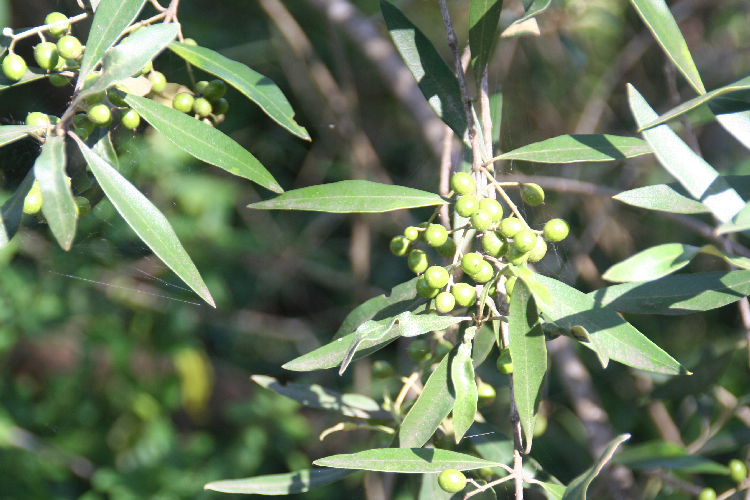
Gum Tree (a species of eucalyptus) where the Bellbirds love to feed