Among the many traditions that come with ringing in the new year, the singing of “Auld Lange Syne” has become a custom of almost every gathering at midnight of New Year’s Eve. But what do these words mean?
“Auld Lange Syne” was originally a poem written by Scotland’s favourite poet, Robert Burns in 1788. It was eventually set to the tune of a traditional folk song. The title of the Scottish tune translates to “times gone by” and is about remembering friends from the past and not letting them be forgotten.
Now, at the conclusion of almost every New Year’s celebration, partygoers join hands with the person next to them to form a great circle around the dance floor. At the beginning of the last verse, everyone crosses their arms across their breast, so that the right hand reaches out to the neighbor on the left and vice versa.
I chose the Youtube video (presented below) with Susan Boyle because, I just love her soothing voice, her love for singing, the emotion she projects; I love her heart and simplicity and she was, born in, Blackburn, West Lothian, Scotland.
Susan Boyle, album ‘The Gift’ – Auld Lang Syne
Auld Lang Syne
Should auld acquaintance be forgot
And never brought to mind?
Should auld acquaintance be forgot
And auld lang syne
Chorus:
For auld lang syne, my dear
For auld lang syne
We’ll take a cup o’ kindness yet
For auld lang syne
And surely ye’ll be your pint stowp
And surely I’ll me mine
And we’ll take a cup o’ kindness yet
For auld lang syne
Chorus:
For auld lang syne, my dear
For auld lang syne
We’ll take a cup o’ kindness yet
For auld lang syne
We twa hae run about the braes
An pou’d the gowans fine
But we’ve wander’d mony a weary fitt
Sin’ auld lang syne
Chorus:
For auld lang syne, my dear
For auld lang syne
We’ll take a cup o’ kindness yet
For auld lang syne
Auld Lang Syne
(modern English translation)
Should old acquaintances be forgotten,
And never brought to mind?
Should old acquaintances be forgotten,
And days of long ago!
Chorus:
For times gone by, my dear
For times gone by,
We will take a cup of kindness yet
For times gone by.
We two have run about the hillsides
And pulled the daisies fine,
But we have wandered many a weary foot
For times gone by.
Chorus:
For times gone by, my dear
For times gone by,
We will take a cup of kindness yet
For times gone by.
We two have paddled (waded) in the stream
From noon until dinner time,
But seas between us broad have roared
Since times gone by.
Chorus:
For times gone by, my dear
For times gone by,
We will take a cup of kindness yet
For times gone by.
And there is a hand, my trusty friend,
And give us a hand of yours,
And we will take a goodwill drink (of ale)
For times gone by!
Chorus:
For times gone by, my dear
For times gone by,
We will take a cup of kindness yet
For times gone by.
And surely you will pay for your pint,
And surely I will pay for mine!
And we will take a cup of kindness yet
For times gone by
Chorus:
For times gone by, my dear
For times gone by,
We will take a cup of kindness yet
For times gone by.
Press Play and enjoy the snow and the music while you read below! 🙂
Sorry, if you are viewing this on a smartphone as an Apple iPhone. They do not support the snow or the music, but here is the link to the music – Bing Crosby sining “White Christmas” – https://soundcloud.com/dahni-4/sets/holidays-1
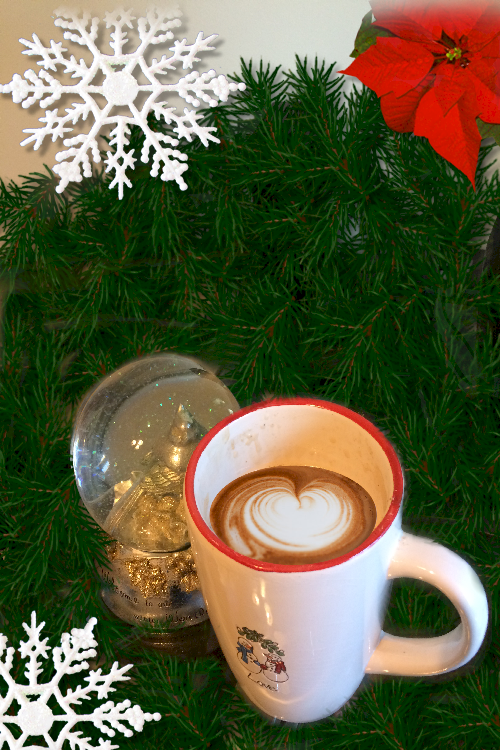
Tis’ the season and eggnog a reason. How about starting your day with some Latte Nogee (eggnog + espresso coffee)! It is pronounced [nah+gee]
What you will need:
1. Good quality espresso beans and a grinder
You may use ground espresso if you prefer, but I like them as fresh as is possible. Some people believe beans should never be frozen as it changes the flavor as the beans go back and forth from the freezer. It’s about moisture. But I take out from the freezer, exactly what I need from the bag and return the rest to the freezer. I have never had a problem. The espresso beans I used just this morning have been in the freezer for 2 years and NO PROBLEMO! 🙂
2. Some way to brew your espresso coffee. We rarely use our machine, but it is great to have around for special occasions and holidays. Our was a gift several years ago and it still works perfectly. Ours is a Melitta brand. The simple two-four cup espresso machines are not all that expensive (around $100) and well worth itI
3. The best eggnog you can find or make
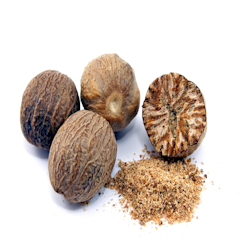
4. The best nutmeg you can find. Grind your own from a fresh nutmeg. You’ll be glad you did.
5. Milk to foam or froth
6. (2) big tall holiday mugs
Let’s DO IT!
1. Measure enough espresso coffee (finely ground) to make (2) 3 ounces of coffee. see. the picute of the machine above. It shows the pot having about 3 ounces of coffee that has been brewed. For single serve, this is all you need. But to share with another (and this is all the fun), double the bre pot.
2. Heat enough of your cold eggnog on the stove to fill each mug to about two- 2 1/2 inches from the top of each mug.
3. Brew your coffee and pour half into each mug
4. Pour about 1/2 cub of milk (or skim milk) into a stainless steel frothing pot and foam the milk from the leftover water/steam from your espresso machine.
4. Pour half of the heated eggnog into each mug.
5. Pour half of the frothy (foamed) milk into each mug.
6. Garnish with as much fresh ground nutmeg as you like or as an option –
7. Put a dollop of whipped cream on top of each cup then garnish with fresh nutmeg. Then –
When I was a child, our grandmother that we her ‘kidlits’ (as she called us), called her Nanny. This name was probably due to the trouble my brother had with the ‘g’ and ‘r’ sounds as in grandmother, grandma and granny. So Nanny just stuck.
Well Nanny used to sing this little song called ‘Jacky Frost.’ I loved it and still sing it, especially when the weather gets colder and/or as the holidays approach.
I married a music teacher with a master’s in music. She taught K-6 for over 25 years. But she had never heard of this song before I sang it. So I taught a teacher at least this one thing. 🙂
To my wife Susan’s credit, she was recently able to find the words and the music for this little known, perhaps forgotten, but enjoyable little tune for children of all ages. I will share it here for all, just in time for the holidays.
The lyrics to this song were adapted from the poem, “Jacky Frost”, by Laura E. Richards. You can find this poem in the collection “Tirra Lirra Rhymes Old and New” by Laura E. Richards.
The music was composed by Eleanor Smith, who included the song in her music textbooks designed for children. These textbooks are over 100 years old. You can find the song in “The Common School Book of Vocal Music” by Eleanor Smith. She adapted the poem just slightly to fit her melody.
Jacky Frost
Jacky Frost, Jacky Frost,
Came in the night;
Left the meadows that he crossed,
All gleaming white.
Painted with his silver brush
Every window-pane.
Kissed the leaves and made them blush,
Blush and blush again.
Jacky Frost, Jacky Frost,
Crept around the house,
Sly as a silver fox,
Still as a mouse.
Out our little Jenny came,
Blushing like a rose;
Up jumped Jacky Frost,
And pinched her little nose.
Guhday Mates, from Donnie your Aussie Katoomba travel guide
On April 11 through the morning of April 14th, 2014, we went to The Blue Mountains and rented a cottage (see last post) in Katoomba, New South Wales, Australia.
Today, I want to share with you some of the flavor of Katoomba. It was a quaint, charming and eclectic community – MY KIND OF PLACE! Besides the fact that it is located in The Blue Mountains and is quite hilly to walk the streets, it reminded me of Telluride, Colorado in the United States. Telluride is a community in the Rocky Mountains where people come to ski in the winter and it is also a hub to get to Aspen or Vale when those areas are closed to airports or other transportation, due to the weather. Although Telluride and Katoomba do not share the same type of weather conditions, it’s their common flavor that is similar to me. Telluride basically started as a ‘hippie communue’ back in the sixities. I suppose as many of them grew up and decided to get jobs and start a ski resort? 🙂
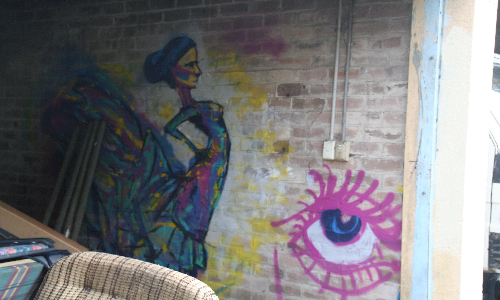
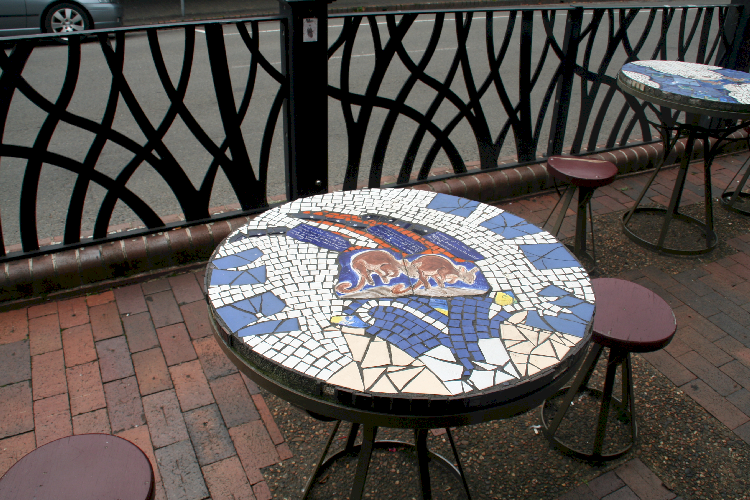
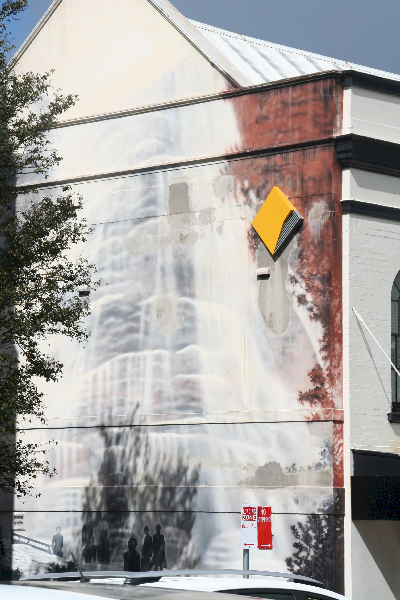
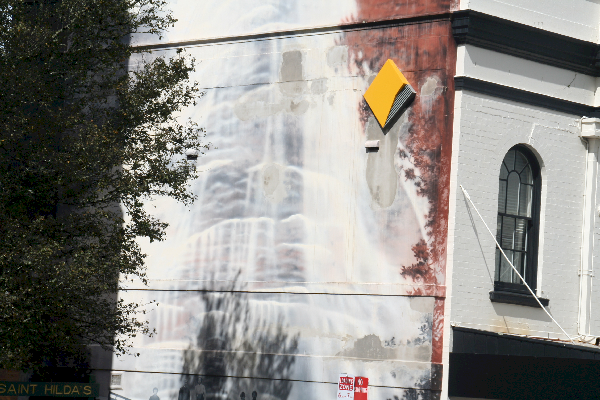
In Katoomba, there are many young people, arts and crafts, just like in Telluride. Our pictorial journey below, begins with an example of some local artwork, a mural painted on a brick wall of an abandoned garage across the road from our cottage. We saw this as we were heading into town.
Mural on wall of abandoned garage
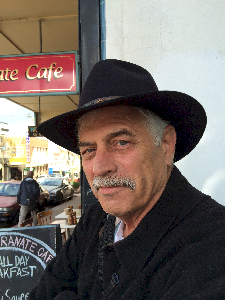
In Katoomba, we noted many wonderful and fashionable hats on the heads of many people, young and old, male and female. ‘The Hattery,’ where I found and purchased my Akubra hat you see me wearing in the picture above, is from Katoomba. For more information about my hat in a previous post on this blog see: Hats
But Kotoomba is more than just a young/artistic/eclectic community, it is a travel destination! Katoomba is the city host or gateway to The Blue Mountains and both attract many people from around the world, every year. We noted many differnet people, accents and languages being spoken while we were here. There are several popular and international establishments and connections here. A friend from the United States informed me that soon after we returned from our trip to this area, Prince William & Kate of England were planning on visiting the following week. The English and Australian connection is just one example of many international connections.
Our first night here as we were walking to downtown for some food, some one-hundred (at least) sulfur crested cockatoos flew over our heads. Caitlin stayed at the cottage with baby Felix and she saw them fly right over our deck and into the eucalyptus trees of the Blue Mountains, right around sunset. Even though I did not get a picture of this amazing sight, in a future post, I will share pictures of four of these beautiful birds and sppecifically one that certainly seemed to want to pose for me, from the huge evergreen near the deck of our cottage.
But this night, on recommendation of a local librarian, we went to dinner at an authentic Korean restaurant. Susan and Jonathan ordered each a different entree and I chose one that is supposed to be one of the most popular among street people in Korea. Dduk Bok-ki was so incredible, both Susan and Jonathan wished they had ordered it! It was a sweet rice, shaped like tube pasta, but not hollow. It was made from rice flour and steamed. It was included in this huge plate of steamed vegetables. You could have it mild, medium or hot. I chose medium. It was inexpensive, delicious and so filling and yet, I can’t believe I ate the whole thing, even sharing a lot with Susan and Jonathan, I was stuffed with delight!
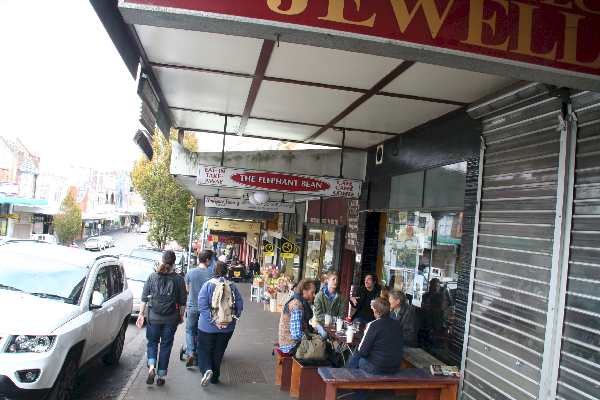
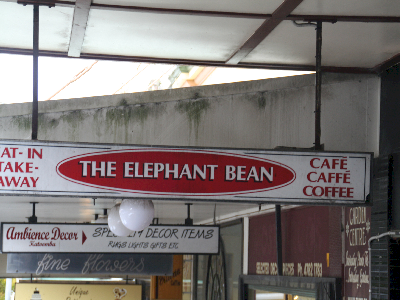
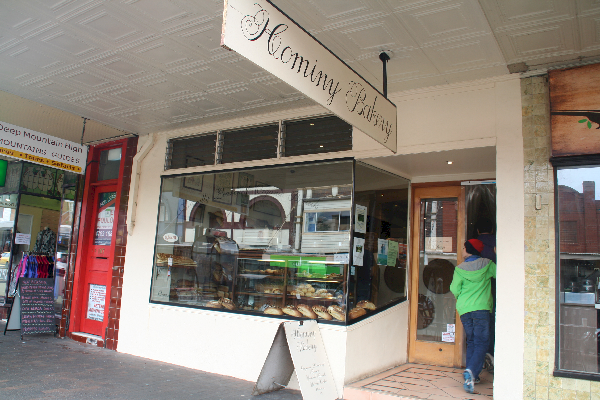
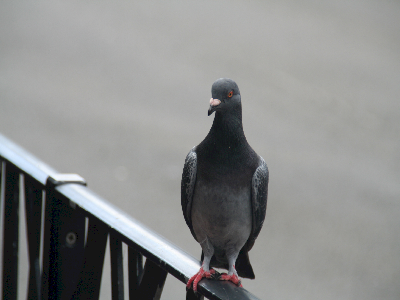
Other foods include the best coffee I have either ever had or it’s been so long, I cannot recall any better. This we purchased from a little, almost a hole in the wall, cafe from the Elephant Bean Coffee. Then there was the most incredible fresh-baked croissant from a cute little bakery, I’ve ever eaten and shared the crumbs with a local pigeon. 🙂
In another post in the future, I will share about some Australian beverages, including the chili wine we tasted and bought in Katoomba. Yes, you read that correctly, Chili wine made entirely out of 100% chili. It was sweet and hot. We intended to bring it home, but we opened it as soon as we got back to the cottage and finished it off the next day when we got back home to Camden. It was fantastic with cheese and now that I’ve come to appreciate oysters (at least Australian and Apalachicola, Florida oysters in the US), DEFINITELY WITH OYSTERS!!! I’m almost sorry we drank it with out purchasing another bottle to bring home, but “no worries,” this Australian exclusive product, has a website and this wine can be ordered online and shipped to your door!!!! 🙂
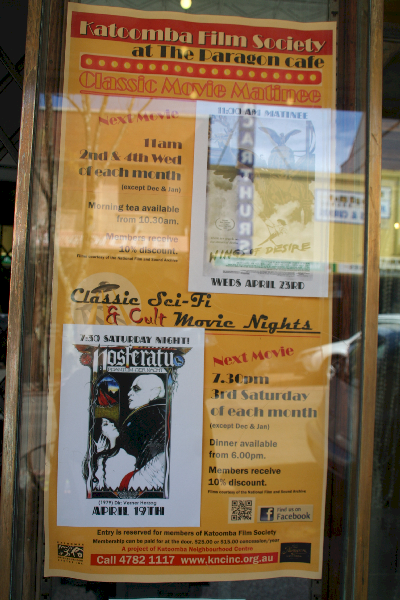
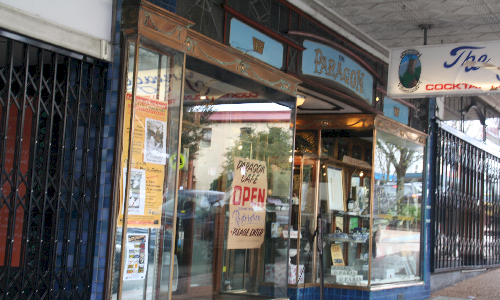
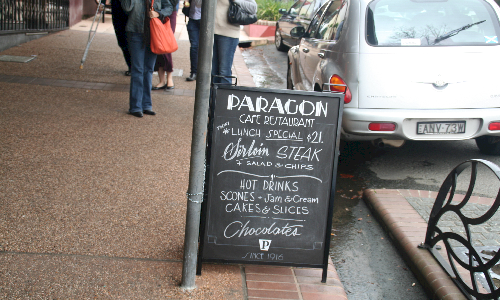
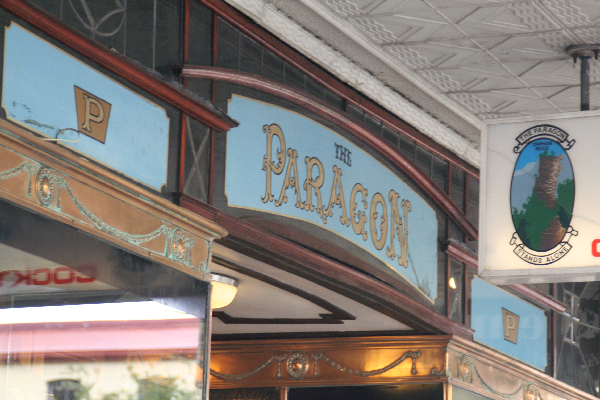
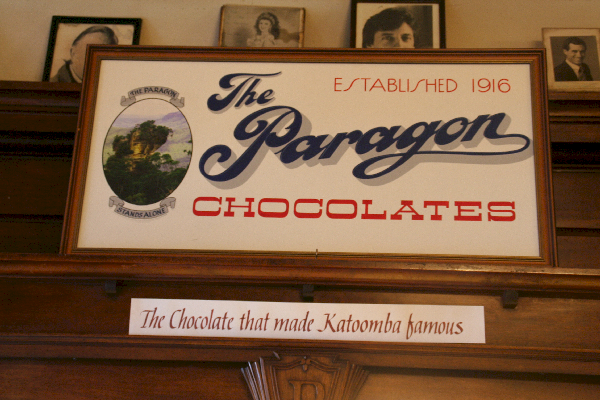
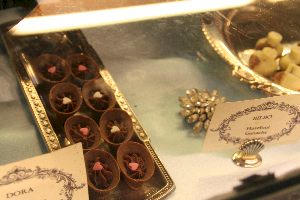
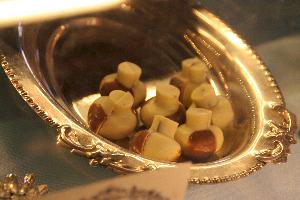
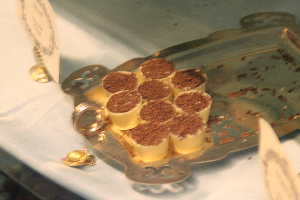
We had dinner and some chocolate at the Paragon restaurant. This place could have a post and then some, all its own. It was a mixture of Greek/Romanesque architecture and art-deco and hand carved reliefs on the walls. It does make me wonder if the garden area behind our cottage might actually be owned by the owners of this restaurant or some related family members? The food was fabulous and but of course, WE HAD TO TRY THEIR CHOCOLATE! According to their interior signage, it’s the chocolate that made Katoomba famous. I have no way to prove or disprove that statement, but this place has been here since 1921 I believe, has a US connection (the wife of the owner was from the United States), and there are many pictures throughout the place of famous people that have signed their names and have eaten here. So what does that say to you?! Some of the pictures I recognized and some I did not. Art Acord (silent film western star), Clark Gable and Peter O’Toole. So, that’s pretty telling. You can search for the Paragon Cafe online and find many interesting things. They also have a page on Facebook.
There were many unusual and wonderful things to experience in Katoomba, but time and words fail me. The best that I can offer you are some humble pictures. I hope you enjoy them! 🙂
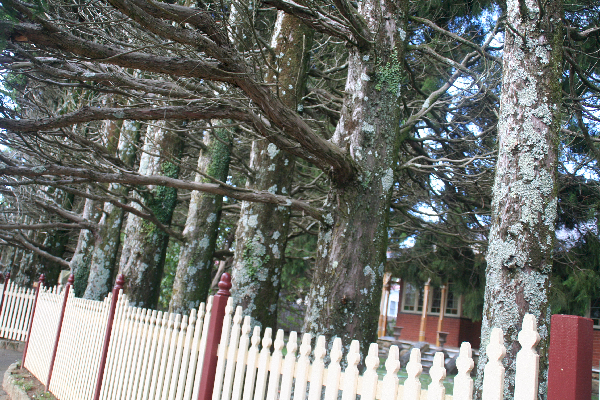
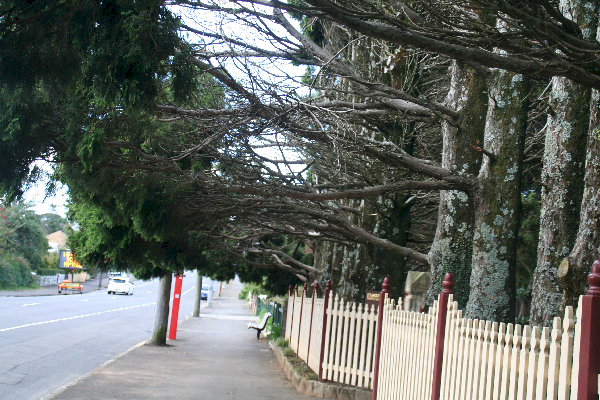
As stated previously, Katoomba is quite hilly and it exercises your heart, lungs and legs to walk here, but well worth the effort! The air was crisp, cool and clear at this time of the year during Australia’s late fall or early winter. Days were nicely pleasant with a couple of layers of long sleeve shirts and the nights build-a-fire cool. The downtown district is home to many cafes, shops and stores from the unusual, the bizarre and the, just lovely. There are examples of fine architecture in beautifully restored or well-maintained hotels and other buildings.
There were many unusual and wonderful things to experience in Katoomba, but time and words fail me. As I said, the best that I can offer you are some humble pictures, my personal recommendation to COME HERE if you ever have the opportunity and a link to some Irish music I recorded live, on my way back to the cottage one day. I hope you enjoy all that follows here! 🙂
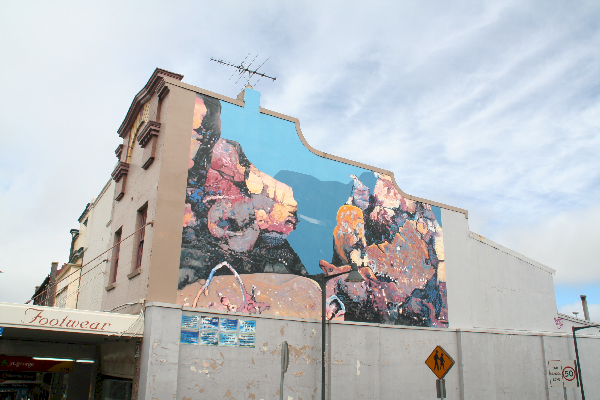
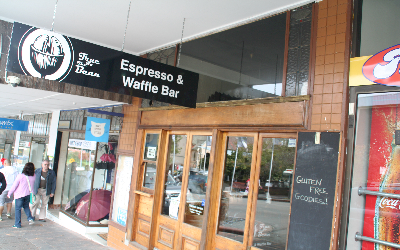
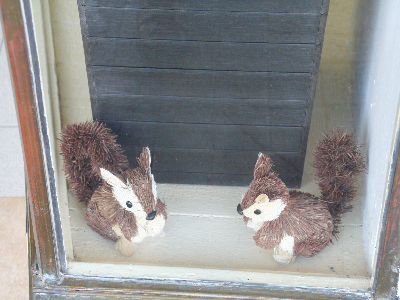
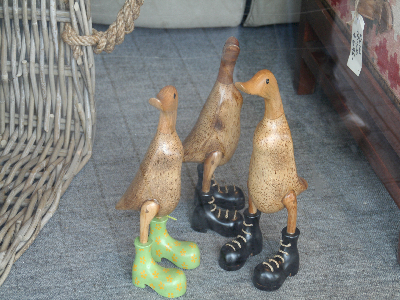
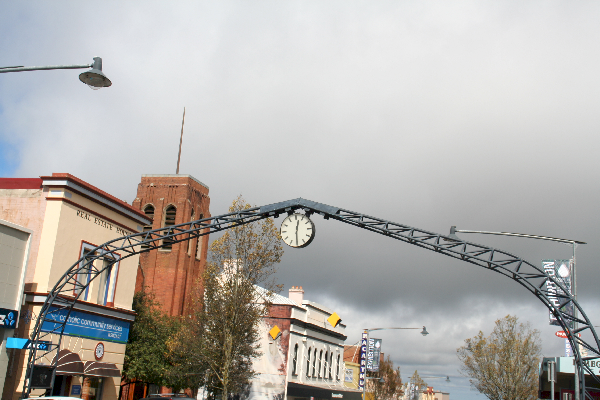
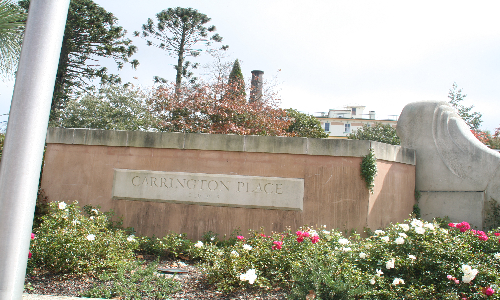
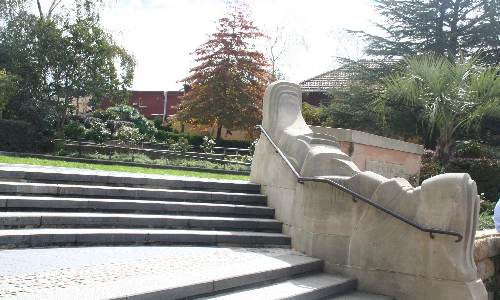
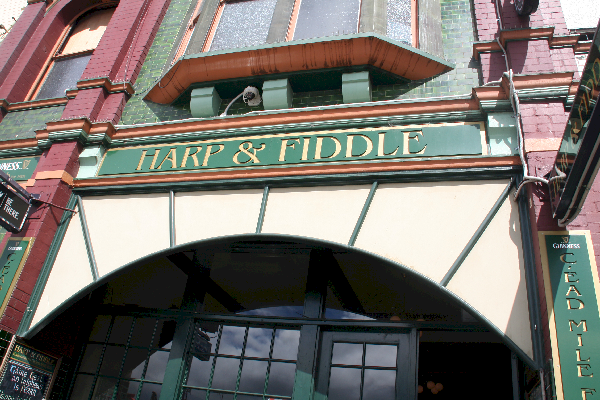
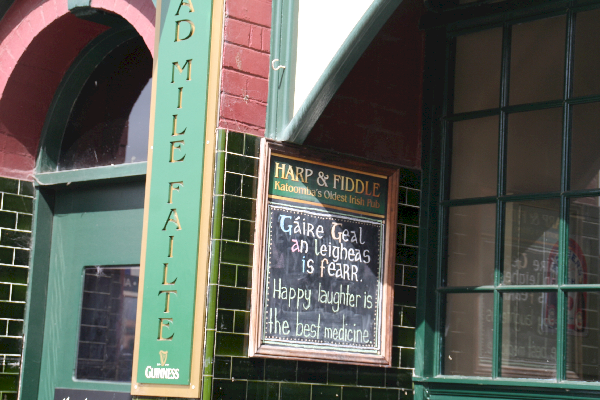
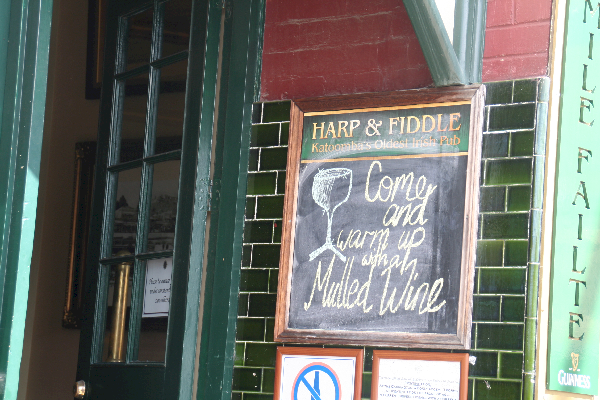
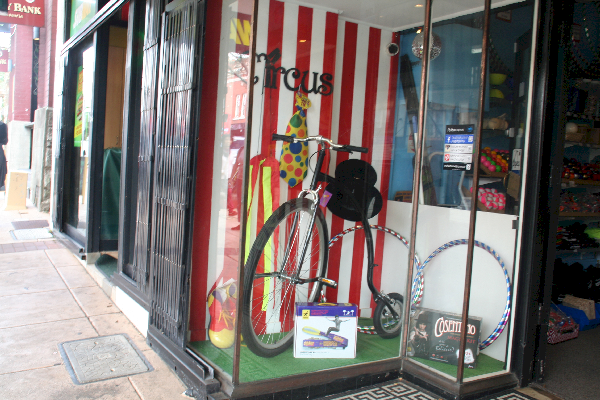
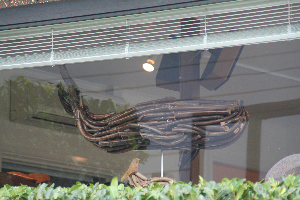
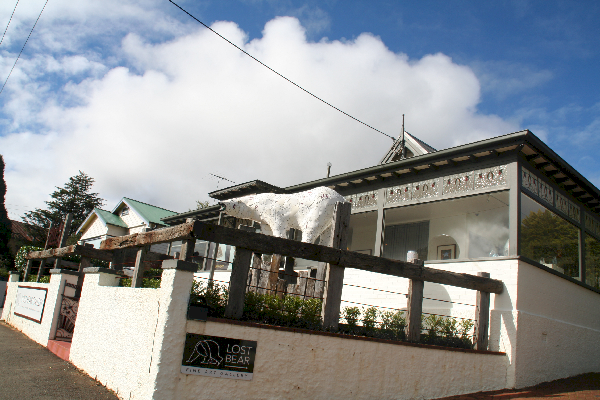
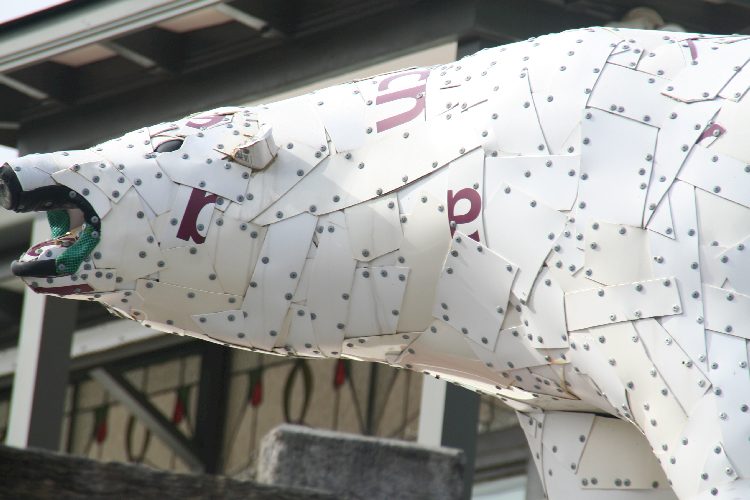
Mural on wall of the Three Sisters and etc., of The Blue Mountains at Echo PointDowntown Katoomba – sure why not espresso and waffles! 🙂The Elephant Bean Cafe (notice anyone familiar?)The Elephant Bean Cafe (awesome coffee)Bakery with fresh baked almond croissants. YAY! 🙂If you must eat croissants, why not artistically!Closeup of our tableAnd the pigeons enjoyed your crumbs 🙂My first ever female street performer. She was actually very good.Little Aussie squirrels picture, for my sister Carol LeeDucks or Kiwi birds in boots? I dunno, but they were cute, so I had to take this! 🙂Clock bridge over streetOld-time informative billMural of Katoomba Falls IMural of Katoomba Falls IICarrington Place (hotel) EntranceHand carved wall, Carrington Place EntranceIrish connectionIrish connection IIWant to Wassail me for some Mulled Wine? 🙂The circus in town? 🙂Paragon IParagon IIParagon IIIParagon Chocolate “The chocolate that made Katoomba famous”Chocolates IChocolates IIChocolates IIILost Bear Gallery (art gallery)Whale out of wooden sticks in window of Lost Bear GalleryOh, there the lost bear is! 🙂Closeup of found lost bear artNice wallInteresting walk IInteresting Walk II (same walk, different view)Can you see the heart shape?Last stop before heading back to our cottage and look what you saw and heard! :
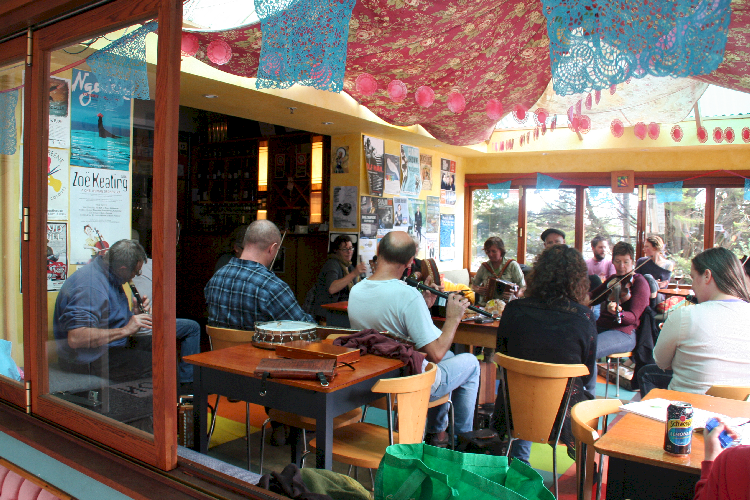
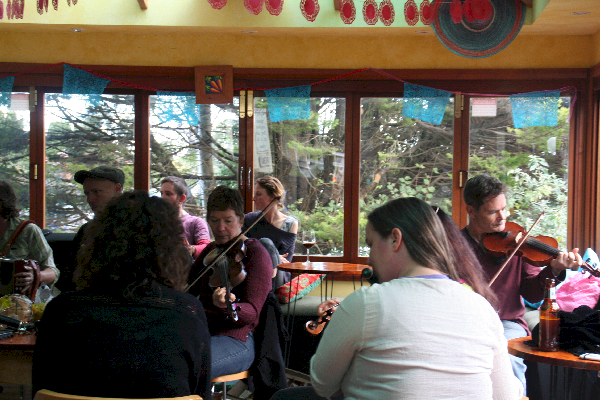
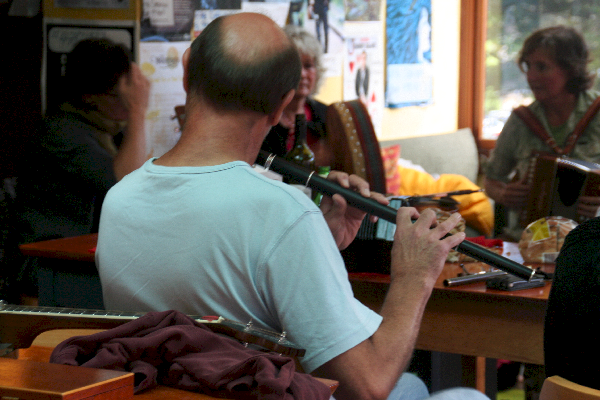
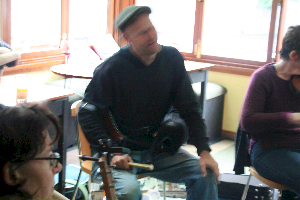
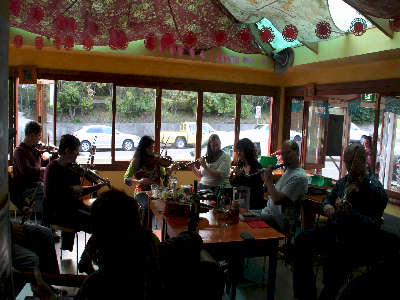
Locals, quite possibly of Irish roots, gathered in this pub for grub, beers and cheers and playing some really nice Irish jigs. There were children present and other watchers/listeners like me. Flutes, violins, guitar, banjo, a concertina (similar to an accordion) and one gent (laddie) played the Uilleann pipes. The bar was open and run by another international connection. She was anice lady from Vietnam. It was a gorgeous day and the windows were open in the pub.
Several flutists and violinists and concertina far leftFlute player closest to meUilleann Pipe Player
The uilleann pipes are the characteristic national bagpipe of Ireland. Earlier known in English as “union pipes”, their current name is a partial translation of the Irish-language term píobaí uilleann (literally, “pipes of the elbow”), from their method of inflation.There is no historical record of the name or use of the term ‘uilleann pipes’ before the twentieth century. It was an invention of Grattan Flood and the name stuck. People mistook the term ‘union’ to refer to the 1800 Act of Union; this is incorrect as Breandán Breathnach points out that a poem published in 1796 uses the term ‘union.’
The bag of the uilleann pipes is inflated by means of a small set of bellows strapped around the waist and the right arm (in the case of a right-handed player; in the case of a left-handed player the location and orientation of all components are reversed). The bellows not only relieve the player from the effort needed to blow into a bag to maintain pressure, they also allow relatively dry air to power the reeds, reducing the adverse effects of moisture on tuning and longevity. Some pipers can converse or sing while playing.
Guhday mates from Donnie, Your Aussie Koala Swagman
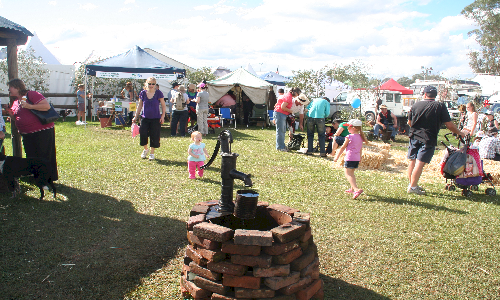
Today, I had intended to share our experience with The Camden Show on Saturday April 5th, 2014, here in Camden NSW Australia. But there are so many pictures I would like to share, I’m still working on it. But, but again, today’s post has pictures from this amazing show. I separated the pictures out for this post because, even though they were taken at the Camden Show, this post should be considered as a whole other subject. The subject is, Damper. Before I explain what damper is, please allow me to set the stage.
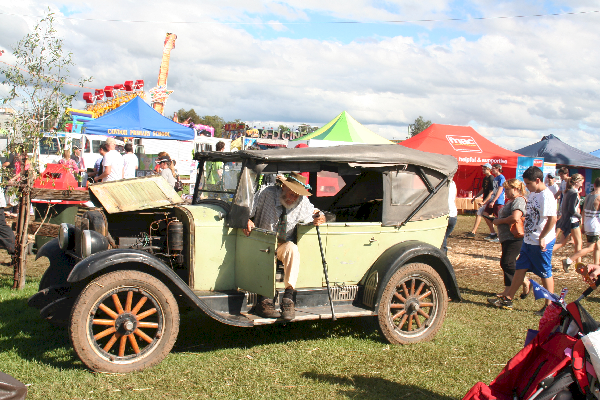
In previous posts we looked at such things as the Kookaburra Song which mentions the Swagman. The swagman is a bit of a character in Australian folklore and a very real person or persons, that out of necessity lived very meagerly. Their common mode of transportation was their two feet. Their traveling companion was Matilda, the pack on their back. They traveled around in this manner because, many were poor and moved from place to place seeking better opportunity. If any were well-off-enough to have four-wheeled transportation, it was most likely well-worn and kept together with whatever they could find for parts and that their wit could muster. Their home and kitchen was a campfire. They took shade and some protection from a Coolabah tree, a kind of eucalyptus. Their Billy boil (a metal pot carried on their back for water and to make tea over fire) was essential. Food was often scarce and they needed something easily affordable, simple, easy to make and something filling, to rid themselves of hunger. This common food was called Damper.
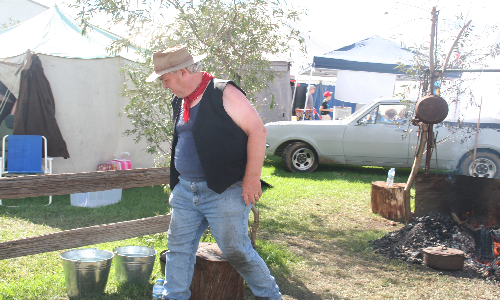
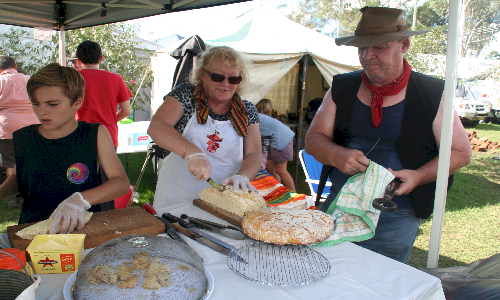
Let’s enter the campsite look of a Swagman. And kudos to those that presented this visual and informative and DELICIOUS display at the Camden Show!!! 🙂
Some Swagmen might have had some old wheels like thisBill the Swagman
Bill the swagman.
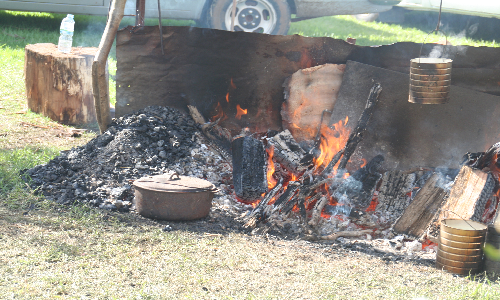
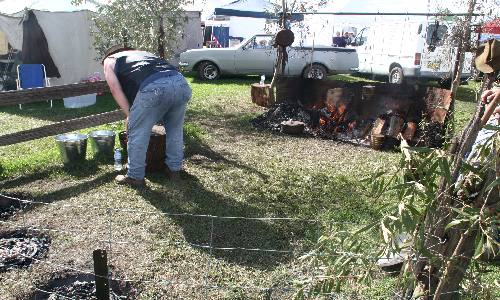
They would look for a nice place to set up camp. Their campfire area would look something like this.
Swagman KitchenMust have water or bring it to make your billy boil and damper
So what is damper? It’s delicious, that’s what it is! 🙂
Damperis a traditionalAustraliansoda breadprepared byswagmen,drovers,stockmenand other travellers. It consists of awheat flourbasedbread, traditionally baked in the coals of a campfire. Damper is an iconic Australian dish. It is also made in camping situations in New Zealand, and has been for many decades.
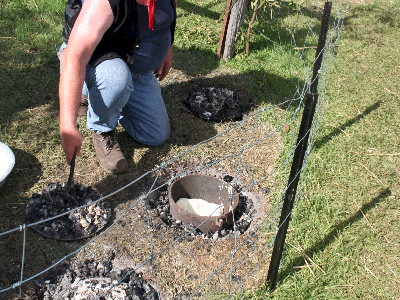
Preparing damper
Damper was originally developed bystockmenwho traveled in remote areas for weeks or months at a time, with only basic rations of flour, sugar and tea, supplemented by whatever meat was available.The basic ingredients of damper were flour, water, and sometimes milk.Baking sodacould be used for leavening. The damper was normally cooked in the ashes of the camp fire. The ashes were flattened and the damper was placed in there for ten minutes to cook.
mixture in pot over hot coals
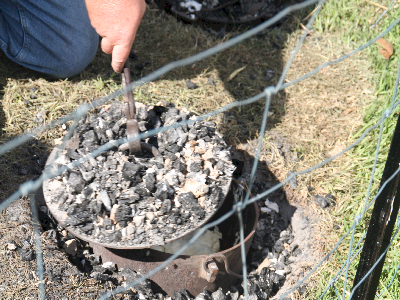
Following this, the damper was covered with ashes and cooked for another 20 to 30 minutes until the damper sounded hollow when tapped.
Damper is covered with a lid of hot coals
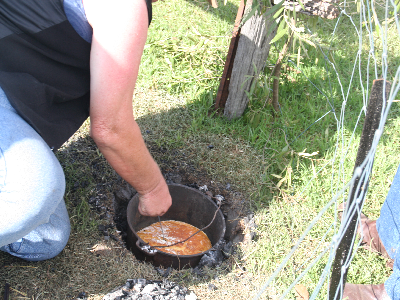
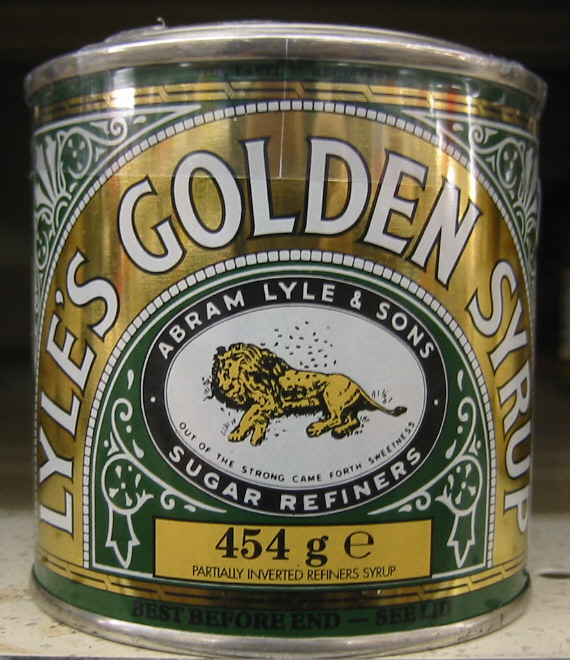
Alternatively, the damper was cooked in a greasedcamp oven.Damper was eaten with dried or cooked meat orgolden syrup, also known as “cocky’s joy”. Cocky’s joy – were small farmers who settled or perched (like a bird) on the portions of his land that wasresumed for agriculture. Some believe they were first called this from the area of Cockatoo Island, hence the word “perched.” So the joy of the Cocky’s was to be able to have land to settle and something to sweeten their damper, which was by tradition, golden syrup.
Damper done down under and ready to come up and eaten
Golden syrupis a paletreacle (un-crystallized syrup made from refining sugar).It is a thick, amber-colored form ofinverted sugar syrup, made in the process of refiningsugar caneorsugar beetjuice intosugar, or by treatment of a sugar solution with acid. It is used in a variety of baking recipes and desserts. It has an appearance similar tohoney, and is often used as a substitute by people who do not eat honey. I like to use this instead of Karo syrup (high fructose) when making my pecan pie. I think it is better for us than high fructose corn syrup and I like the added character it brings. It is more expensive than Karo syrup, but worth every extra cent!
Golden Syrup
Molasses, or dark treacle, has a richer color than golden syrup, and a stronger, slightly bitter flavor.
Slather on some butter and pour on some golden syrup and dig in! 🙂 Thank you Swagman Bill!
I have been promised an authentic Australian Damper recipe. Can’t wait to get it and make it for YOU, when we get home! 🙂
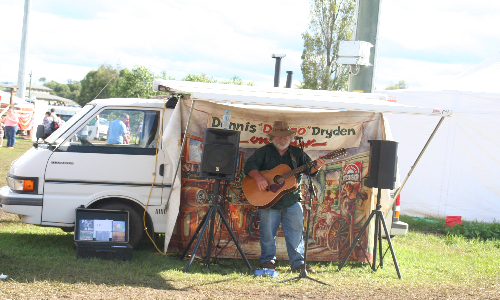
Take it away Dingo Dennis!
Dennis Dingo Dryden
Waltzing Matilda Australian unofficial National Anthem
Lyrics by
A.B. Paterson
Once a jolly swagman camped by a billabong,
Under the shade of a Coolibah tree,
And he sang as he watched and waited till his billy boil,
You’ll come a Waltzing Matilda with me.
Waltzing Matilda, Waltzing Matilda,
You’ll come a Waltzing Matilda with me,
And he sang as he watched and waited till his billy boil
You’ll come a Waltzing Matilda with me.
………………..
Down came a jumbuck to drink at that billabong
Up jumped the swagman and grabbed him with glee,
And he sang as he shoved that jumbuck in his tucker bag
You’ll come a Waltzing Matilda with me.
Waltzing Matilda, Waltzing Matilda,
You’ll come a Waltzing Matilda with me,
And he sang as he shoved that jumbuck in his tucker bag
You’ll come a Waltzing Matilda with me.
…………………
Up rode the squatter mounted on his thorough-bred
Down came the troopers One Two Three
Whose that jolly jumbuck you’ve got in your tucker bag
You’ll come a Waltzing Matilda with me.
Waltzing Matilda Waltzing Matilda
You’ll come a Waltzing Matilda with me
Whose that jolly jumbuck you’ve got in your tucker-bag
You’ll come a Waltzing Matilda with me.
………………….
Up jumped the swagman sprang in to the billabong
You’ll never catch me alive said he,
And his ghost may be heard as you pass by that billabong
You’ll come a Waltzing Matilda with me.
Waltzing Matilda Waltzing Matilda
You’ll come a Waltzing Matilda with me
And his ghost may be heard as you pass by that billabong
You’ll come a Waltzing Matilda with me.
Waltzing Matilda Australian unofficial National Anthem
Lyrics by
A.B. Paterson
Swagman
Once a jolly swagman camped by a billabong,
Under the shade of a Coolibah tree,
And he sang as he watched and waited till his billy boil,
You’ll come a Waltzing Matilda with me.
Waltzing Matilda, Waltzing Matilda,
You’ll come a Waltzing Matilda with me,
And he sang as he watched and waited till his billy boil
You’ll come a Waltzing Matilda with me.
………………..
Down came a jumbuck to drink at that billabong
Up jumped the swagman and grabbed him with glee,
And he sang as he shoved that jumbuck in his tucker bag
You’ll come a Waltzing Matilda with me.
Waltzing Matilda, Waltzing Matilda,
You’ll come a Waltzing Matilda with me,
And he sang as he shoved that jumbuck in his tucker bag
You’ll come a Waltzing Matilda with me.
…………………
Up rode the squatter mounted on his thorough-bred
Down came the troopers One Two Three
Whose that jolly jumbuck you’ve got in your tucker bag
You’ll come a Waltzing Matilda with me.
Waltzing Matilda Waltzing Matilda
You’ll come a Waltzing Matilda with me
Whose that jolly jumbuck you’ve got in your tucker-bag
You’ll come a Waltzing Matilda with me.
………………….
Up jumped the swagman sprang in to the billabong
You’ll never catch me alive said he,
And his ghost may be heard as you pass by that billabong
You’ll come a Waltzing Matilda with me.
Waltzing Matilda Waltzing Matilda
You’ll come a Waltzing Matilda with me
And his ghost may be heard as you pass by that billabong
You’ll come a Waltzing Matilda with me.
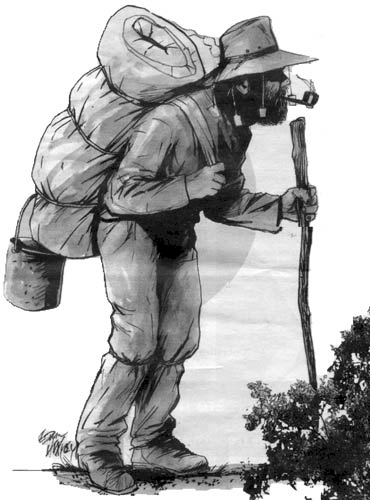
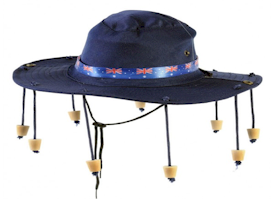
Swagman’s cork hat
Swagman a term describing an underclass of transient temporary workers, who traveled by foot from farm to farm carrying the traditional swag (bedroll). Also characteristic of swagman attire was a hat strung with corks to ward off flies. Kind of like a hobo or someone during the 1920-30’s during the depression when times were tough and work was hard to come by.
Billabong means drinking spot or pool in an intermittent stream. Because of the very dry conditions in out-back Australia, streams and rivers can often become dry leaving only a few water-holes where stock are able to drink
Coolibah tree is a type of Eucalyptus. It is is used to treat snake bites. The tree inhabits the arid and semi-arid open woodland areas of Australia. Its common name is of Aboriginal origin and Aborigines used part of the tree to treat snakebites.
billy boil is to make tea over a campfire
Waltzing Matilda is the knapsack on the back of a swagman. Where he goes, Maltilda waltzes with him.
Jumbuck is an Australian slang word for sheep
Tucker bag – a storage bag for food
Squatter in this instance means landowner
This tune is a traditional Scottish Melody and the words are by A. B. Paterson who is generally referred to as Banjo Paterson. He also wrote the Kookaburra Song.
Being in Australia, I thought I should share some music. What better songs than ‘Down Under’ by the 80’s Australian band, Men at Work and a childhood favorite, The Kookaburra Song by Marion Sinclair in 1932.
“Marion Sinclair wrote the song in 1932 for a contest being held by the Victorian Girl Guides.
The competition was for an ‘Australian round’ song. Her song, the Kookaburra Song won and was introduced by Marion at the World Jamboree in Frankston, Victoria in 1934. It was instantly a hit with the girls and has become a much loved song all over the world.
This is a fun children’s song. A gum tree is a name for the eucalyptus tree. There are more gum trees than any other kind of tree in Australia.
Lawsuit The Kookaburra song was involved in a copyright dispute with the Aussie band Men at Work over their song (I come from the land)”
The Song, ‘Come from the Land’ or simply ‘Down Under’ had a flute riff which the Australian Court ruled is an infringement of the copyrighted tune, ‘The Kookaburra Song.’ Despite the controversy between the two songs, and even former members of ‘Men at Work,’ both songs are wonderful and are shared here via YouTube videos. But first, what does a Kookaburra look and sound like?
Now for the lyrics and followed by the video of, ‘Down Under.’
Travelling in a fried-out Kombi
On a hippie trail, head full of zombie
I met a strange lady, she made me nervous
She took me in and gave me breakfast
And she said:
“Do you come from a land down under
Where women glow and men plunder
Can’t you hear, can’t you hear the thunder
You better run, you better take cover.”
Buying bread from a man in Brussels
He was six foot four and full of muscle
I said, “Do you speak-a my language?”
He just smiled and gave me a Vegemite sandwich
And he said:
“I come from a land down under
Where beer does flow and men chunder
Can’t you hear, can’t you hear the thunder
You better run, you better take cover.”
Lying in a den in Bombay
With a slack jaw, and not much to say
I said to the man, “Are you trying to tempt me?
Because I come from the land of plenty.”
And he said:
“Oh! Do you come from a land down under (oh yeah yeah)
Where women glow and men plunder
Can’t you hear, can’t you hear the thunder
You better run, you better take cover.”
Even though this video is about 14 years old and was filmed during the Olympics in 2000 in Australia, note both the familiar icons on stage and the enthusiasm of the crowd. They (the Aussies) loved this song, seem to connect to it and it was treated as an almost unauthorized national anthem. The term Down Under is a colloquialism referring to all things Australian, New Zealand or just one or the other. it is also known as “The Land Down Under” for its position in the southern hemisphere. This is because when one looks at a map in the most common way, Antarctica at the ‘bottom’ of the page, north appears to be “up” and south; “down.”
By the way, it rained this evening then cleared off. I am not a star specialist nor do I know the difference between the big and little dipper, but the sky was full of stars and what ever ‘dipper’ I was looking at, I have never seen it appear so close!
Anyway, despite the term “down under’s” wide usage, it is rarely used by Australians themselves, many of whom regard it with some derision. Nevertheless, Australians are not above using it themselves, as exemplified by Men at Work song “Down Under” which has become a patriotic rallying song. Australia’s most famous boxing champion, Kostya Tszyu, was nicknamed as “The Thunder From Down Under”.
According to Roger Ebert, “No film set in Australia is allowed to use the word Australia in its title where “Down Under” is an acceptable alternative. For example, we don’t get The Rescuers in Australia or Quigley in Australia.”
And now for the childhood favorite the world over, The Kookaburra Song.
The Kookaburra Song
By Marion Sinclair in 1932
Kookaburra sits on the old gum tree,
Merry merry king of the bush is he.
Laugh, Kookaburra, laugh, Kookaburra,
Gay your life must be!
Kookaburra sits on the old gum tree,
Eating all the gum drops he can see.
Stop Kookaburra, stop Kookaburra
Save some there for me!
Kookaburra sits on the old gum tree,
Counting all the monkeys he can see.
Laugh Kookaburra, laugh Kookaburra
That’s not a monkey, that’s me!
Here is another video that I thought you might also enjoy.
In 2006, Susan and I were (together) 🙂 , in Japan.
Not everyday, but quite often I would begin my mornings with a cup of coffee from a McDonald’s in Moriyama, literally right across the street from where we were staying. It was always clean and always inviting. It was a comfortable place to hang out. I would listen to music over their sound system always in Japanese. And always, I was clueless to the meaning of the words being sung. This did not prevent me from enjoying it anyway as music, a universal language, has a way of communicating.
One particular morning when I came in, somewhere around the end of July, a new song was playing. I was instantly drawn to the beautiful sounds and the soothing voice of the singer. Armed with a book of Japanese words with pronunciations and English translations and my limited understanding, I set out to try and find out what I could about the song. Our friend and adopted daughter, Yukari, told me it was from an animated movie called Gedo Senki (Tales from Earthsea). Knowing that I had become fond of Japanese music (traditional and modern), her brother made me a DVD with several videos of Japanese Music, including this particular song. To this day, I cannot find this disk. But one day before we left Japan, I was inside a music store and all I could remember or pronounce was Gedo Senki. A store clerk helped me find the CD with this song as a single. It has taken me nearly eight years, to find out all the information I wanted to know then and the translation of the words in English. I share here with you friend-reader that you may enjoy this haunting and beautiful song as I have.
Gedo Senki (Tales from Earthsea ゲド戦記 is a feature anime film from Studio Ghibli, released in Japan on July 29, 2006. It was the first film directed by Gorō Miyazaki, son of Hayao Miyazaki. The movie is loosely based on a combination of plots and characters from the first, third, and fourth books of the Earthsea series, A Wizard of Earthsea, The Farthest Shore, and Tehanu, by Ursula K. Le Guin.
The singer is Aoi Teshima (手嶌葵 Teshima Aoi, born June 21, 1987 in Hakata, Fukuoka, Japan. Aoi Teshima is a Japanese singer and voice actor. In March 2005, she acted in “Japan-Korea slow music’s world” in South Korea and her performance was favorably received among the audience. Her performance attracted the attention of anime director Gorō Miyazaki. Toshio Suzuki was also very impressed when he listened to her demo version of Bette Midler’s “The Rose.” On June 7, 2006, she finally released a song called “Therru’s song” (テルーの唄 Terū no Uta.
Aoi Teshima is in essence, a shy and humble choir girl whose unobtrusive voice soothes your senses and reminds you of our love for nature, for the purity of life and for love itself. I love this song and more so in Japanese, but I will also share the English words and music to follow.
Teru no Uta (Therru’s song)
Music by Hiroko Taniyama – Lyrics by Miyazaki Goro
words in Japanese, and sung by Aoi Teshima
JAPANESE
Yuuyami semaru kumo no ue
Itsumo ichiwa de tonde iru
Taka wa kitto kanashi karou
Oto mo todaeta kaze no naka
Sora wo tsukanda sono tsubasa
Yasumeru koto wa deki nakute
Kokoro wo nani ni tatoe you
Taka no you na kono kokoro
Kokoro wo nani ni tatoe you
Sora wo mau yo na kanashi sa wo
Ame no sobo furui wakage ni
Itsumo chiisaku saite iru
Hana wa kitto setsuna karou
Iro mo kasunda ame no naka
Usu momo-iro no hanabira wo
Medete kureru te mo nakute
Kokoro wo nani ni tatoe you
Hana no you na kono kokoro
Kokoro wo nani ni tatoe you
Ame ni utareru setsuna sa wo
Hitokage taeta no no michi wo
Watashi totomo ni ayunderu
Anata mo kitto samishi karou
Mushi no sasayaku kusahara wo
Tomo ni michiyuku hito dakedo
Taete mono iu koto mo naku
Kokoro wo nani ni tatoe you
Hitori michiyuku kono kokoro
Kokoro wo nani ni tatoe you
Hitoribocchi no samishi sa wo
sung by, Aoi Teshima
Teru no Uta (Therru’s song)
Music by Hiroko Taniyama – Lyrics by Miyazaki Goro
words in English, arranged and sung by Saskia Kusrahadianti
ENGLISH
Far, far above the clouds
Soaring with the wind
A falcon flies alone
Silent as the sky
I hear his lonely cry
Never can he rest
I walk with you alone
An empty winding road
We’re far from
The ones we love
Never can they turn
Never can we see again
Countries of our birth
When will I ever find
A place to call my home
Sadness circling
Like a falcon in the sky
When will I ever find
A way to speak my heart
To someone who knows
What it is to be alone
Far, far above the clouds
Against the setting sun
A falcon flies alone
Silent as the sky
I hear his lonely cry
Never can he rest
I long to spread my wings
And fly into the light
Open this lonely heart
To one who understands
When will I ever find
A way to speak my heart
When will I ever find
A place to call my home
Sadness and loneliness
A falcon in the sky
When will I ever find
A way to speak my heart
To someone who knows
What it is to be alone
sung and arranged by, Saskia Kusrahadianti
If you are interested in more information about this song, how I came to hear it and a higher quality mp3 audio file in Japanese, please start at the following page and click through:
Note: The mp3 file is located at http://dahni.com/DahniDaily/Japan6.htm and is intended for HIGH SPEED Internet users, otherwise, it may take some time to download and hear it.
Her name is Miyoko Shida [Rigolo]. She is Japanese and presently lives in Paris, France. She is approximately 52 years old. She has taken the last name of her mentor, Rigolo. Her art is called, The Sanddorn Balance.
The Sanddorn balance began over 15 years ago when Swiss theatre producer Mädir Eugster Rigolo developed a balancing act for the stage production SANDDORN. The play is set in knee-deep sand; the only props are the withered ribs of date and coconut palm leaves, which Maedir Eugster collected from the most beautiful beaches in the world. After many years it now enjoys worldwide success on vaudeville, museums, galas, exhibitions, circuses, and Cirque du Soleil among many other venues.
The Sanddorn balance astonishes nearly everyone it touches and has received the highest awards.
In February 2013, Mädir Eugster Rigolo was presented with the Kamiwaza award in Japan. In Japan, Kamiwaza is the title given to a master with superhuman abilities. The award of Kamiwaza meant that the art of Sanddornbalance had truly arrived in the land of Zen: concentration, mindfulness and conscious perception in search of absolute reality convene in the 15-minute-long performance.
This honour solidified the decision Mädir Eugster had made shortly beforehand: For more then 15 years, he was the only person to perform his fragile piece of art. He now teaches his two daughters and consults and trains and inspires many others.
“Now I will pass on this knowledge. I am very happy that I have found people who now share my experiences and will develop them further,” Maedir Eugster explains. “I trust my successors: They will guard this treasure, develop it further and give it a life of its own. The Sanddornbalance bears many secrets, and every single performer can draw one of them out and present it in their own way.”
Mädir Eugster Rigolo
Some sit in disbelief as the art unfolds. Some refuse to suspend that disbelief and mock such with stupid remarks as, I can think of better things to do with my time or with a feather.” Some think it is a mere trick or ‘magic.’ Though it can be explained by the laws of physics, it negates the concentration, the focus, balance, grace, physical strength and the actor’s ability to pull in the audience, absolutely required to MAKE THIS ALL HAPPEN! And if I have left anything else necessary to do this, I sincerely apologise!
What is this thing, this Sanddorn balance, you are about to see for yourselves? For one thing, it is beautiful! It is as much of a dance as any dance. It is being in the NOW. You can see this in the eyes, expressions, and movements of the dance. There are no doubts, no hesitations, no questions. Every moment is purposed and purposeful, and NEW and NOW, though the same dance has been performed countless times. There is a reason and a purpose for every movement, every expression, and every stick. Not only is the dancer drawn into their own dance, the audience is drawn in as well. Her breathing becomes our breathing; her heartbeat, our heartbeat. It is music. It is a story unfolding and we are not only on the same page, we each are its words.Time is suspended! We are not thinking about what’s for dinner or what we will put on tomorrow or do tomorrow. We are in the now!
Watching this will center you; anchor you into the moment of sublime beauty. Briefly, our ego is lost to the wonder of this poetry in motion.
What else can this teach us? Everything and everyone is connected in some way or another. As this drama unfolds, we can see how fragile and yet how vitally important each of these connections really are or we will collapse. This point is illustrated clearly, at its conclusion. But also, not one of us will be quite the same at the end as we were at the beginning. Ahh, yes, every moment of life is unique, to be enjoyed, savored; lived! Thus a great truth is reveled to us or re-revealed within us.
No matter what you may think or believe, life, all of life is, spiritual. Who among us does NOT desire peace and harmony? Zen masters, Buddhist priests, yoga practitioners and many others, spend often, years developing the ‘tuning.’ And yet who among us are also not deeply affected by some measure of peace and harmony, by being drawn into the very ballet of it, by those who have reached some measure of it?
It all starts with a feather and all we have that we bring into the dance, our sticks and the gravity-glue of all our stuff we use to prop ourselves up with. Then we let it all go. It is only the feather that remains! I am certain you will understand this more fully, when you get into the dance!
“All the master dancer Miyoko Shida required from me was the technique for the Sanddorn Balance; the expression and interpretation she brings to it is pure Miyoko Shida. I am proud that Miyoko Shida has also now taken the name Rigolo.”
If you have not already sent in your RSVP, got your passport in order, have your Visa for Australia and you are not packed and ready to go to Japan and Australia, then all I’ve got to say to you is…












 gatheringplace.blog