
by Donnie Hayden © 2014, all rights reserved
For those of you for whatever reason(s) are not with us traveling in Australia, we sent you a card. Hope you like it!!! 🙂
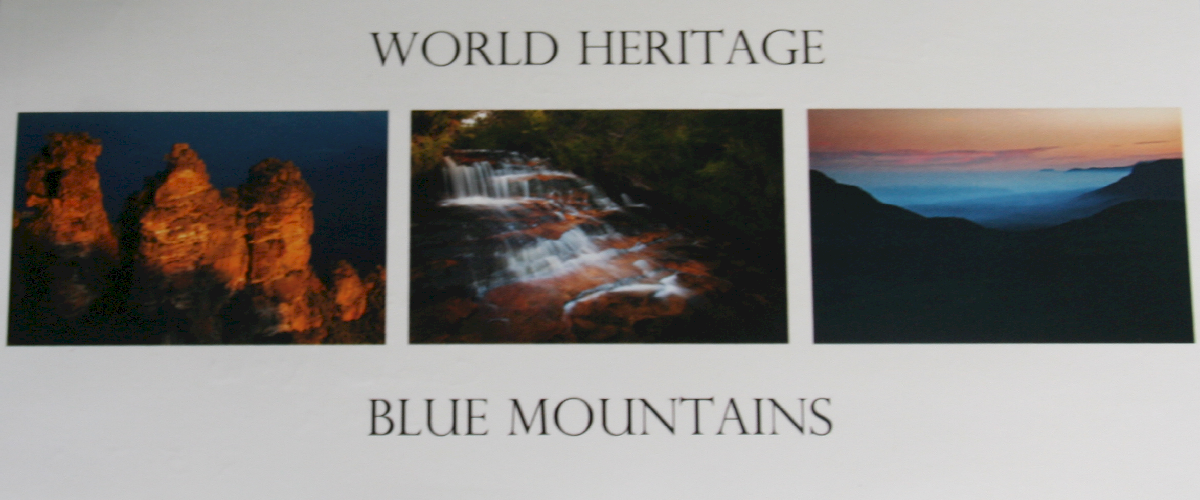
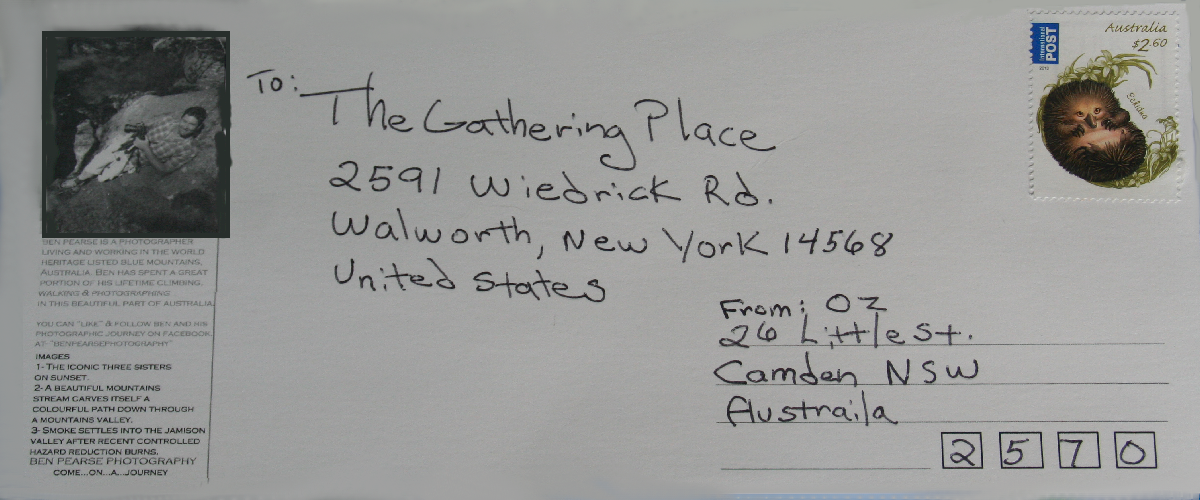

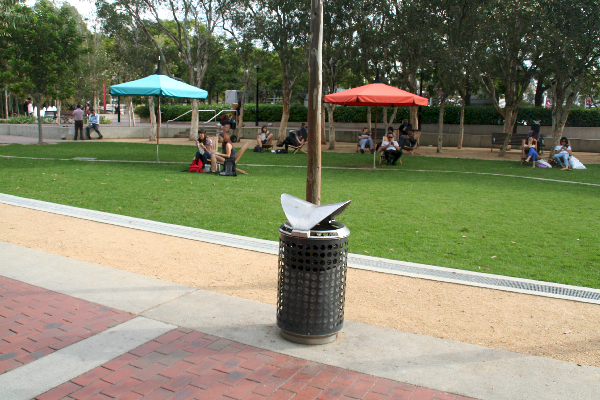
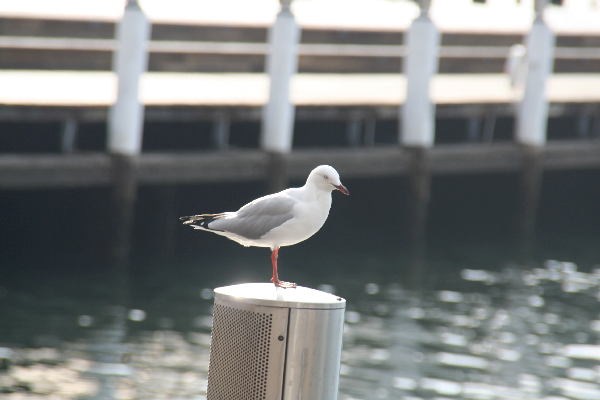
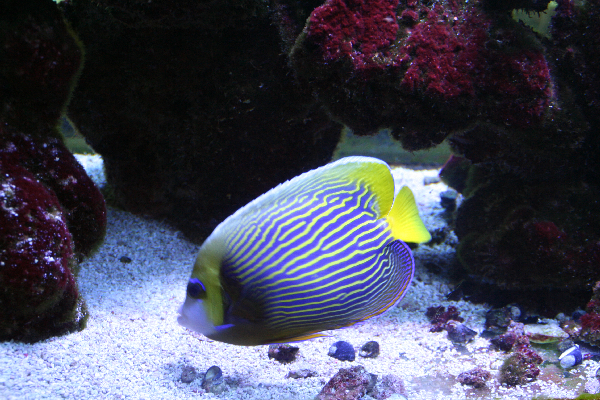
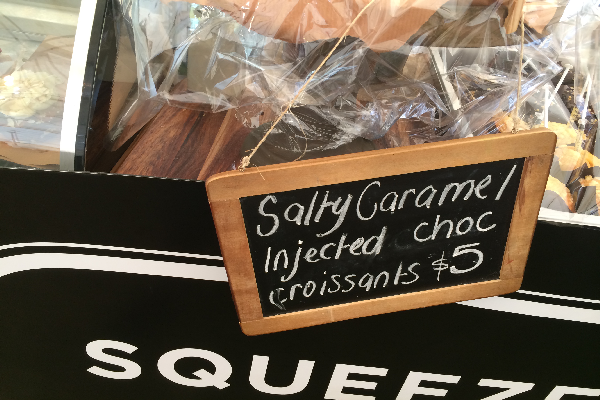
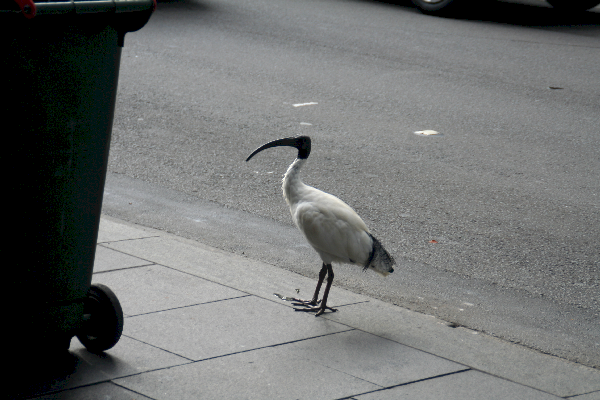
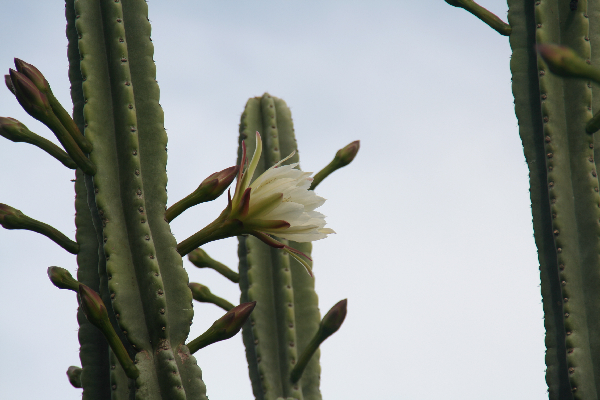
While I am getting new pictures from our Weekend in the Blue Mountains, I thought I would just share some pictures with you, Out N’ Bout Down Under! 🙂
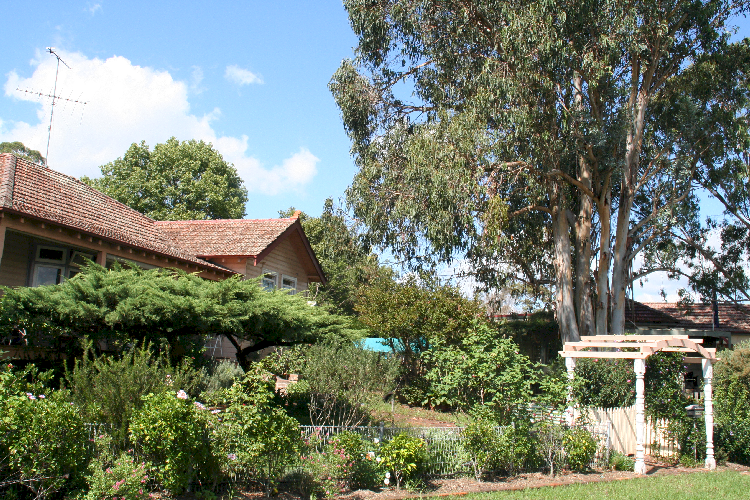
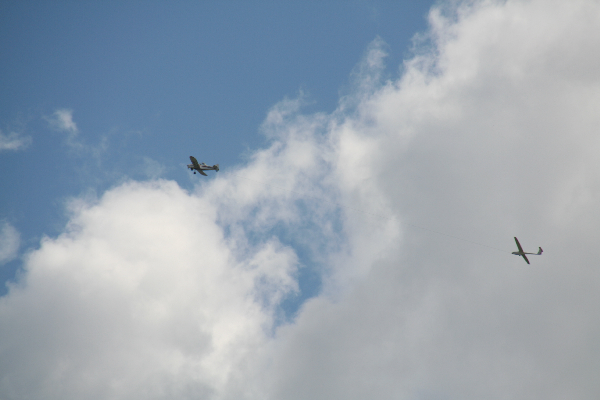
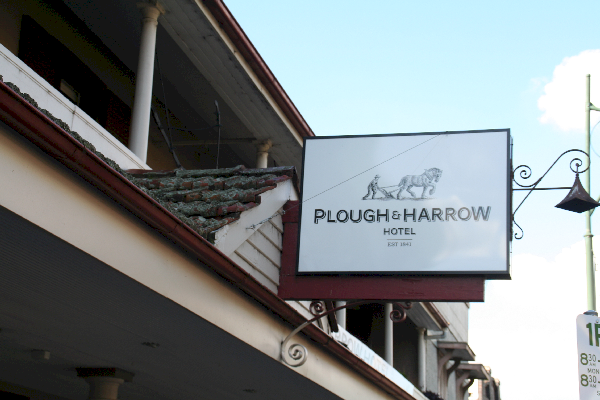
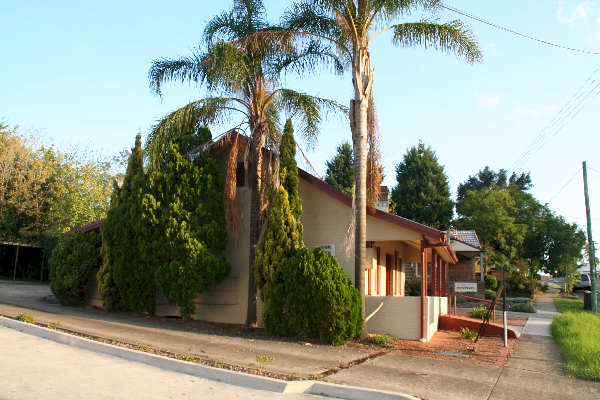
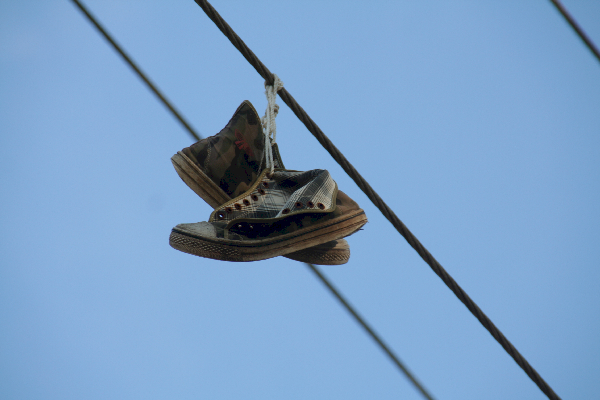
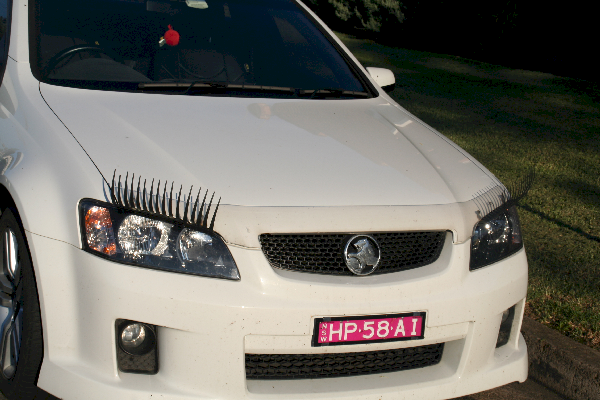
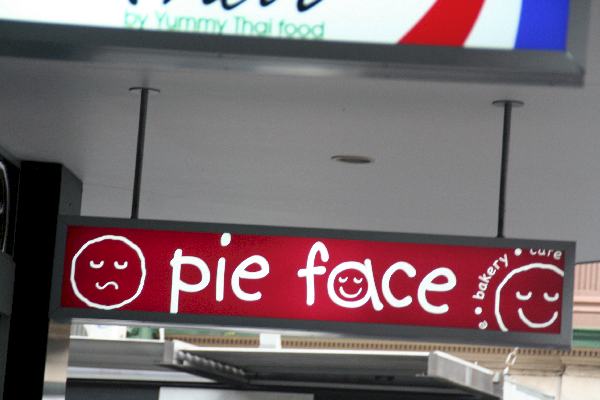
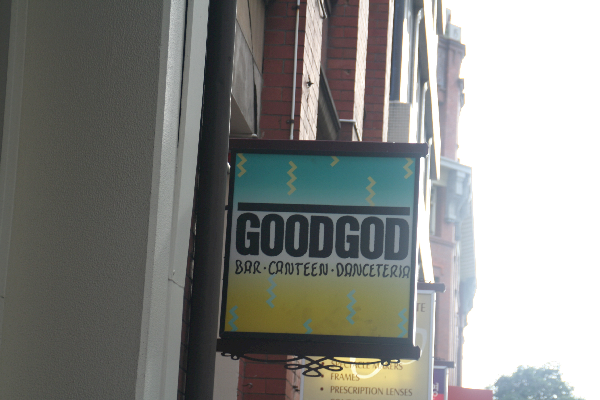
Note: All images, photographs and content on this post and this blog unless otherwise noted, are © 2014 by Dahni & I-Magine, all rights reserved.
We have been to the grocery store or as they call them here, supermarkets several times since we have been in Australia. Each time, I have seen many products with the name of John West on the label.
So, I thought it would be informative and fun to share some stuff I found with you.:)
Today, John West is a brand famous throughout the world.
In the early 1800’s though, John West was a man; an ambitious migrant from Linlithgow in Scotland who went on to chase gold seams in California, mill the giant timber of Canada and Oregon and most importantly, export salmon to the world.

The first fish John West processed were salted, packed in barrels and shipped from Oregon’s Colombia River to California and then on around Cape Horn to nourish the hungry workers of Britain’s industrial north.
Seeing the potential – and being the inventive and ambitious Scot that he was – John West not only co-founded the Westport Cannery, he devised and built his own automated can filling machine to get it up and running.
And the rest, as they say, is history.
John West has been a fixture in the kitchens of Australia for the best part of half
a century and today is one of the nation’s best loved food brands.
From About Us –
http://johnwest.com.au/about-us
Enjoy these funny YouTube videos 🙂
Into The Woods
Tuna Tempters
Snatch and Grab
Man & Bear
by Donnie Hayden
© 2014, all rights reserved
First of all, you need to know that I know that Susan is and always will be my first and number one LOVE! She knows this and she knows that I know this is true! But there is room in all of our lives for many loves. Thank God this is true, because I now have some new loves!
Yeh, yeh, technically, we are supposed to like stuff or things, but love people. OK then, I have some new stuff thingies that I really, really way really to infinity and beyond really and truly LIKE a HEAPING HELPING OF A WHOLE LOT OK?!!!! 🙂
It all starts with lovely ginger. Delicious, spicy and all, but it has a lot of other uses and benefits.
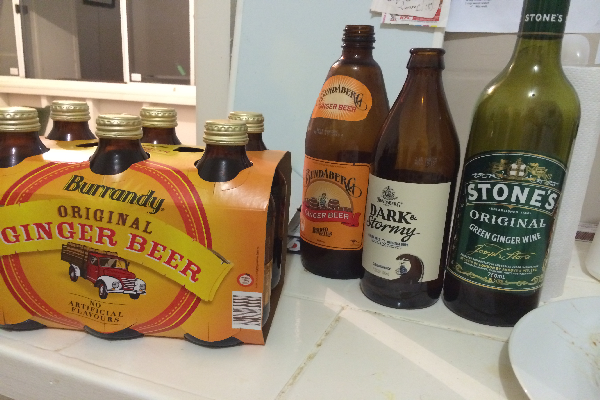
All of these above are delicious and very beneficial as an aide to digestion, upset stomach, motion sickness and other uses. Australia is full of all kinds of ginger beverages. But to follow is my latest discovery. I don’t much care for the taste of champagne. I never have, until NOW!
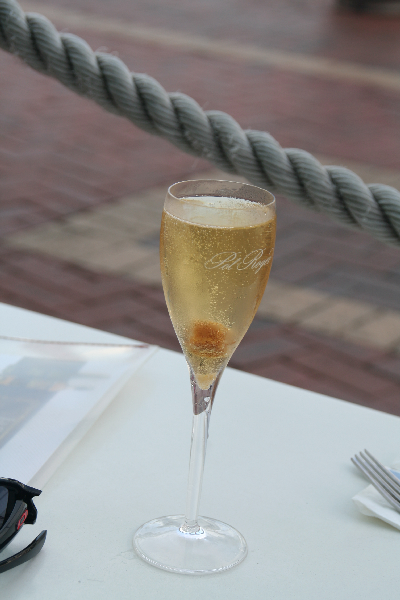
OMG, this is absolutely incredible. I’ve have been scratching my head and have come up with my own recipe for making beautiful ginger sugar cubes to add to some champagne. I can’t wait to try this for you when we get home!
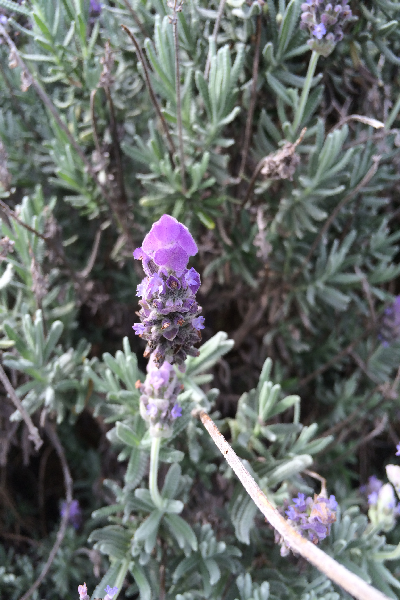
Now we move on to Lavender. I love it’s fragrance and calming effect. Lavender grows all around us here in Australia. I love to take a walk and throughly and thoroughly enjoy their nasal delights that are especially fragrant in the air after a rain. But as they say in Australia, “No Worries,” you can always grab a leaf or so and crush it and roll the oil around on your hand and you have instant hand-fresh. Lavender is great for soap and as an air-freshener. But if it is food grade, it is a delicious flavor to add to salads, breads and deserts.
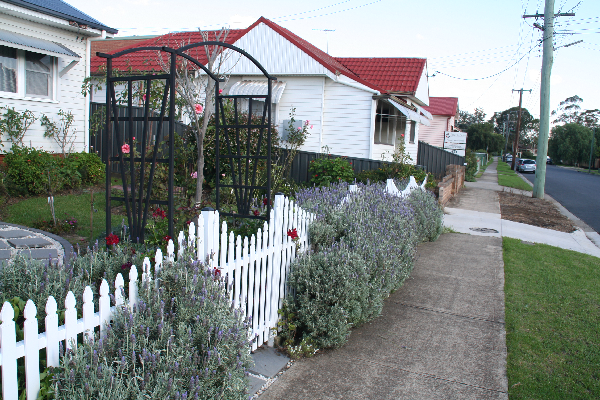
The flowers are beautiful too!
Ever since we were in Japan and I had several cones of Green Tea ice cream, I have been thinking of a way to make it at home with coconut milk to make it more delicious/nutritious with less calories. Now, I am not only excited to begin work on this when we return to the states, but why not Lavender Ice Cream out of coconut milk too?!
Ginger and Lavender can be found in the United States, so why am I so inspired to work with these while here in Australia? For one thing, there is so much of both all around us here. And finally because, it is Australia that has inspired me! Thank You Australia! I’ll send you my recipes when they are to my liking. 🙂
by Donnie Hayden
© 2014, all rights reserved
I could have just as easily called this post, On: Gum Trees because, it is. And a Gum Tree is certainly easier to say than perhaps, an Eucalyptus Tree and I suppose it is, even though gum trees and eucalyptus trees are related and not to mention our cousin myrtle.
Let me see if I have this straight. Not every gum tree is an eucalyptus tree, but every eucalyptus tree is a gum tree? Huh? What? These trees are called gum trees and are classified as trees and shrubs which have smooth bark which exudes a lot of sap from any break in the bark. Hence, sap, sappy, gummy or gum.
As a Koala Bear, surely you would think that I am quite particularly partial to eucalyptus trees and especially since I dine on their delicious leaves! 🙂 But I am not the only one in Australia that loves the “eucalypts” (as they are often called here down under) and not everyone loves them like I do!
The kookaburra sometimes sings from a Coolabah (a type of eucalypt), waltzing Maltilda often rests against one as does her swagman, just to mention a few. For more information about these names, terms and characters on this blog, see Waltzing Maltida, Damper and the Kookaburra song from Music Down Under.
By the way, the Coolabah is also the name of a certain style of a special Australian hat made by Akubra. I am hoping and waiting for a email that my size and color has bee found. I am anticipating a simple reference that reads: Found Hat – Bring Head! 🙂 If you are an Aussie reading this and you can help me locate one in black size 57 I will love you forever! 🙂
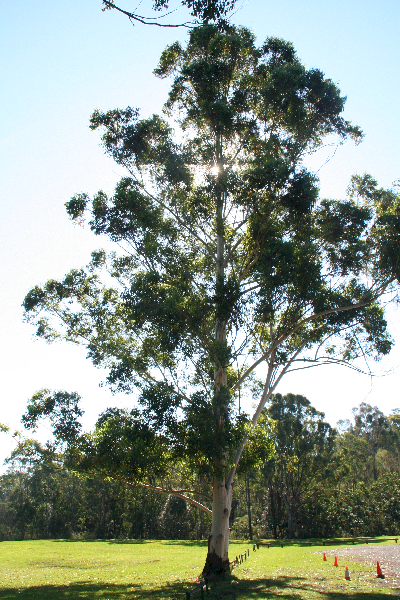
With the eucalyptus/gum/coolabah species of trees having so many varieties, it’s obvious that there are many of them in the country of Australia. Many of them grow really tall and grow mostly straight. They are excellent for timber and for telephone/utility poles. I have seen several in our neighborhood where one seems to be its natural color, another tinted green as a preservative I assume and another with saw cut beveled edges. Perhaps the differences may be understood by the dates when they were installed and methods that have evolved through the years
These are remarkable trees with little that bother them, but there are a few exceptions. There is one insect, Psyllids that leave behind sugary secretions on the underside of the leaves they ingest. These sugary secretions are called Bell Lerps and attract some ants and the beautiful sounding birds called the, Bell Birds. Yes, this is exactly what they sound like! For more information see on this blog: Bell Birds
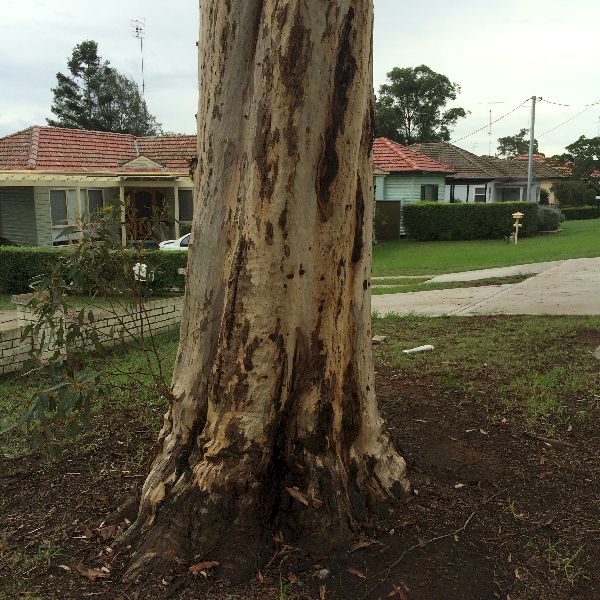
There is a very rare type of eucalyptus known as the White Gum which is nearly extinct, but it is seen in and around Camden, New South Wales, Australia.
Many of these eucalyptus trees shed their bark annually. And here in Australia, the bark is just simply called, ‘fuel.’ The trees might look like they’re naked, but the bark will grow back.
In addition to the bark falling off in either strips or chucks (depending on the variety) sometimes, entire branches will fall off. The Aussies know this, but for us foreigners that do not, signs are sometimes placed near some of these trees, especially in the Australian summer (December to February) to alert and protect others from unexpected and sudden branches falling. These fallen branches are actually hollowed out from within by termites and yet the tree still survives.
The Aborigines, walking in the forest would tap on the appropriate size of fallen branches they were seeking, to determine the quality of sound it made. Some of these chosen fallen and hollow branches are suitable for the famous didgeridoo instruments, used in Australia. They are carved, and decorated by skilled craftsmen and artisans.
The Didgeridoo is quite possibly the oldest instrument in the world – and still one of the best. Forever associated with Aboriginal Music, the sound of Australia is now available everywhere and growing in popularity.
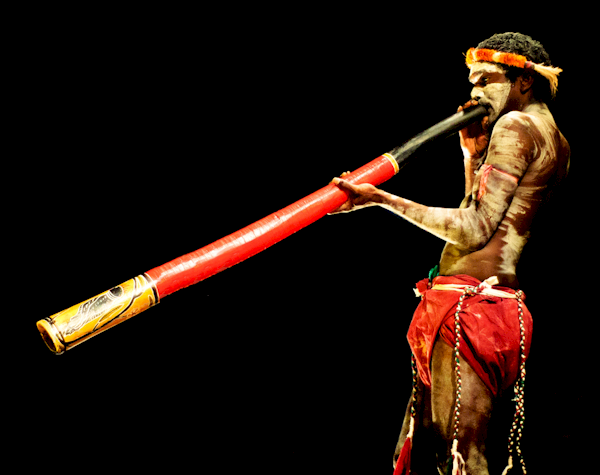
Modern Music with a Digeridoo, Xavier Rudd – http://www.xavierrudd.com/
It is estimated that there are over 700 varieties of eucalyptus tree with just 15 of these outside of Australia, but of those 15, only nine are not found in Australia. I suppose you could say, we Aussies have cornered the world marketplace on “eucalypts.“
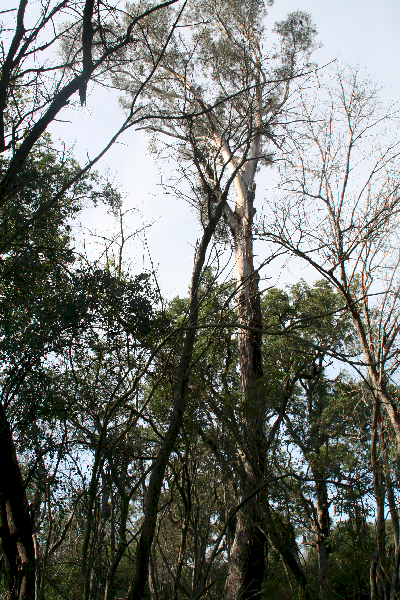
Other uses of these amazing trees are: pulp, paper, charcoal, ornamental uses, as an antiseptic, disinfectants, dyes, insect repellents, mosquito repellents, cough drops, deodorizing, decongestants, toothpaste, sweets and bees from their flowers produce delicious honey.
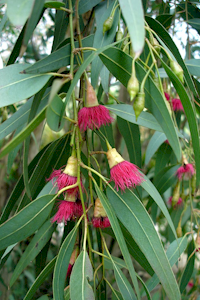
They are fast growing and some trees, even if cut off from the roots, will grow back. Their roots dig deep into the earth and to some people, this water sucking tree is a good thing, as it helps to reduce the spread of malaria from stagnant pools of water the roots will just suck dry. To others, these sponge-like trees steal the water from everything else that needs it.
Due to the depth its roots reach in the earth, they are often called – prospectors, gold prospectors. Yes, you read that correctly, gold! They will actually transfer some all the way into its leaves. These gold-leaf-nugget-clusters may not be worth collecting, but they can sure tell one that this tree, where the gold may be found in its leaves, could be sitting on a fortune below its roots in a huge vein of gold!!!! 🙂
Some believe these trees are not so great as they are a fire hazard. Much of the time, Australia can be quite arid and dry, even though humidity, for example, just yesterday was at 98%. Bush fires have spread and burned perhaps, 1000’s and 1,000’s of acres. And the eucalyptus does not endear itself to many, when it contributes greatly to these consuming fires, since it sheds its bark and drops branches – adding fuel to the fires. But how quickly whole forests grow back and how fertile the soil, after a fire, is amazing. Despite how anyone may feel about these trees (favorably or unfavorably) they have most likely been here a whole lot longer than people have. And the most amazing thing to me about these trees and the purpose of this post is, their ability to adapt.
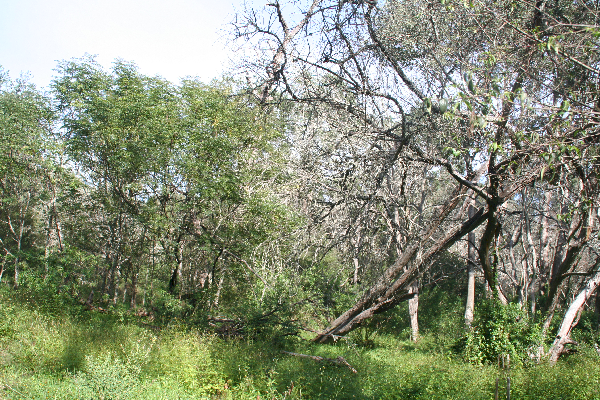
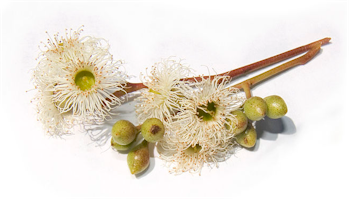
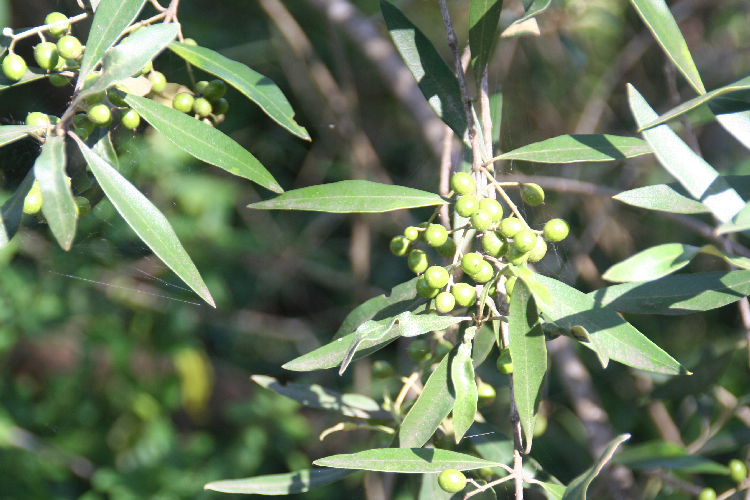
To continue life, life most reproduce itself. It is no different for these trees. They grow, flower and are pollinated by bees. They produce fertile seeds and many are as hard as, little green rocks. The trees drop bark which is like surrounding their trunks with kindling to attract fire!
Its bark, sap and leaves are full of volatile chemicals. The Blue Mountains (which we will be visiting this weekend) is so-named because of, a blue-like haze from the tree-leave combustible chemicals in the air. It’s like these trees are waiting for and setting up conditions for a lightening strike to start the fires that will destroy them.
But here is the conclusion of the seemingly purposed set-up of its own destruction and continuation. There are two dominant theories on this. Some believe those hard as rock seeds will not open unless there is a fire. Others believe that they will only open when the soot mixes with water, after a fire Whatever is factually accurate the truth is, these trees continue their species through FIRE and they seem to try and bring the fires!!!!
by Donnie Hayden
© 2014, all rights reserved
Well, first off, I do apologize for this post running a little behind. I have been working on several to try and get ahead. We are leaving on Friday, I believe, for the weekend to the Blue Mountains and I’m not sure if I will have Internet/WIFI access until we get back to Camden, Sunday night? So, after today’s post, I will schedule a couple of posts to publish automatically around midnight of Eastern Standard time (EST) in the United States.
For today, On: Trolleys.
I’m not exactly sure, but I think Australians refer to “trolleys” as anything that has wheels and moves including: elevators and escalators, but certainly what we call shopping carts in the United States.
In Camden, New South Wales (NSW), Australia, the two local and frequently visited places by the general public, for grocery shopping are: Woolworth’s (not the familiar past 5 and dime department store) and Coles’. This post is about Coles’ and their trolleys (shopping carts).
Have you ever grabbed a shopping cart at the store and it seems like you always get the one that has a flat spot on one wheel and as it rolls it goes frump, frump, frump, squeaks or just doesn’t roll right? Me too! Problem solved at Coles’!
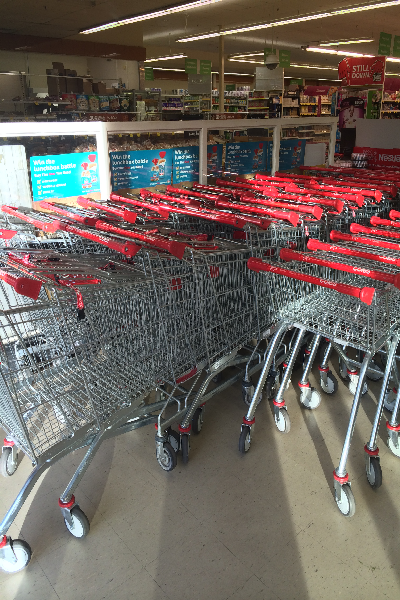
OMG, these have BIG O’ HUGE wheels and roll so smoothly, you check between the wheels and the floor, just to make sure the trolley (cart) is not actually floating over the floor! As shown above, there is one size for quick shopping of a few items or the average size for more items or say, your weekly grocery shopping. I say “weekly” shopping loosely as, it appears just like in Japan, many people shop daily. Like Japan, Australian refrigerators are smaller than in the U.S.A., which seems to suggest that many Aussies shop frequently. They also, as the Japanese, like their stuff, really fresh!
There are, of course, some other carts with baby seats similar to the car seat or child-restraint seats used in most vehicles. The baby seat carts are attached to the trolley/cart and have seat belts.
There are trolleys/carts for those that are walking impaired or challenged.
Then there is another kind of trolley/cart that I have never seen before!
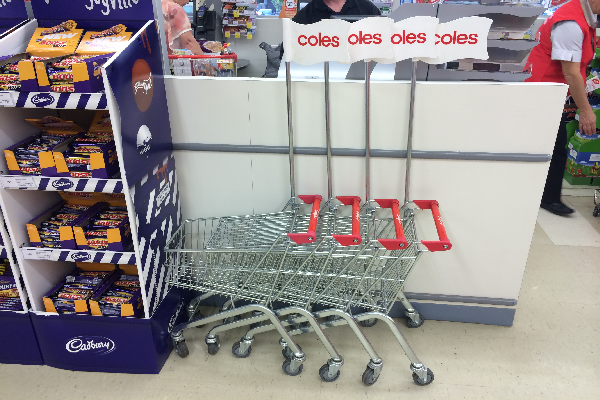
These are much more than just adorably cute! They are constructed with the same quality of materials as all the others. The flags attached are not to advertise the name of the store. The flags are so the adults (any responsible adult) can easily find the kids. And the trolleys/carts are for much more than mere amusement, to keep the children occupied. They are important teaching aides. And they help instill in the child the – “I’m not a little kid, I’m a grown-up,” attitude, most kids desire to embrace. And each child is instructed that if they do not return the cart to the place where they got it at the end of their shopping experience, they will not be allowed to use one next time. That’s a pretty good lesson in personal responsibility, good manners and discipline.
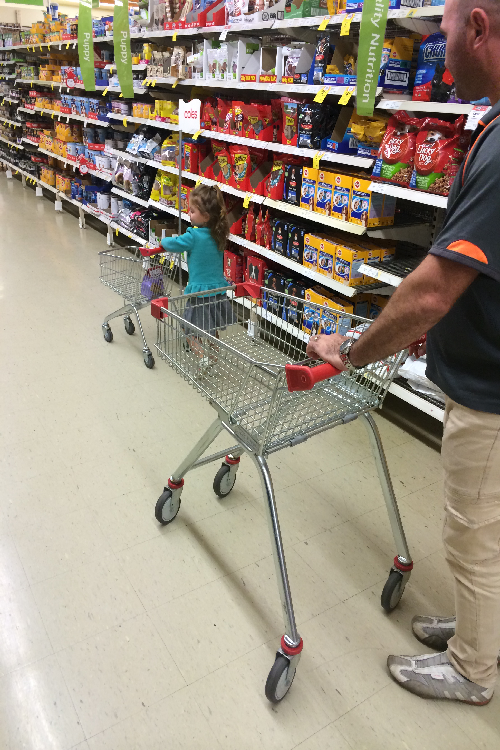
Notice how the little girl is in front, leading her father? Oh, and she is taking this so seriously too, just like an adult! 🙂
Oh, I love these trolleys/carts! They are the best made and the easiest to steer and guide and glide that I have ever seen! And yes, just like in the United States, I’ve seen these in and around the neighborhood. I know of no complaints at Coles’ so, I guess these wandered off trolleys/carts, make their way back home, eventually! 🙂
With all this sincere and honest praise about these trolleys/carts, there is just one problem…
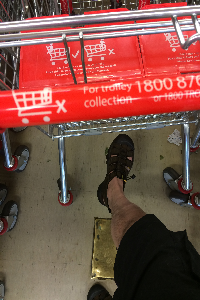
Yes, what’s missing in the above picture? Yes, that’s my foot you see. But there is no bottom rail!!! I can neither be pushed nor run fast and jump on and ride this cart through the store and the parking lot! 😦
I suppose these were built this way because, either my wife Susan told them they should or they just knew I was coming! 🙂
For quite some time, we have been told and have been taught that the world was at some time past, was once, one large land mass in the midst of water, we now call oceans and seas.
Then also, some time ago, the popular catch-phrase – ‘a global village’ was coined to show that the world is really a small place and that we are all connected by some commonality called, “the human race” or simply put, humanity.
Yes, yes, I know that I, as a Koala, am an arboreal (tree hanger-outer) herbivorous (leaf eating) marsupial (pouch carried) mammal (milk fed), Phascolarctidae (the only extant bear that lived in a pouch), cousin to the wombat, native to Australia, and not a human bean! 🙂
But I have made an all-important discovery!
Despite our many differences in language, culture, the many pigments within our skin, our beliefs, economic status, education, intellect, talents and skills and whether we are female, male or a child, we all have much in common. Principally, each of us desire life, liberty and the pursuit of, “happily ever after,” at least every once in awhile.
Oh sure, there are birds and bugs and plants and animals here and where ever your there is that are no place else on earth, and everything I guess got land-locked whenever the great land divide took place, but there is still proof we were once all connected!
And now, for the first time ever, I, yours truly, here in Australia, at almost the bottom of the world or just plainly, here down under, have undeniable and irrefutable PROOF that we were all once connected!!!!!
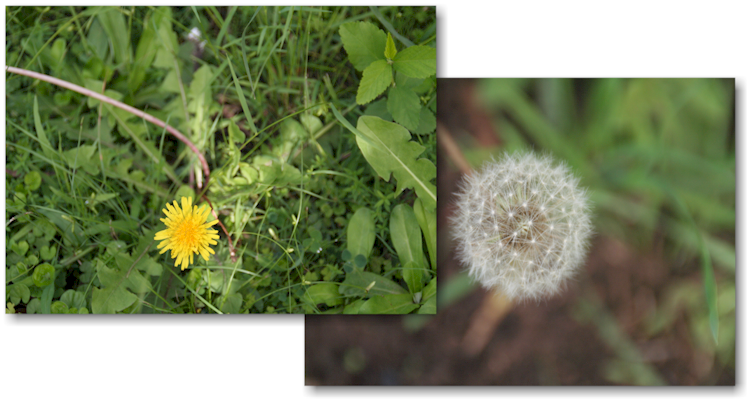
Note: And I don’t want to hear anything about this being possible because of bird migration either! 🙂
by Donnie Hayden
© 2014, all rights reserved
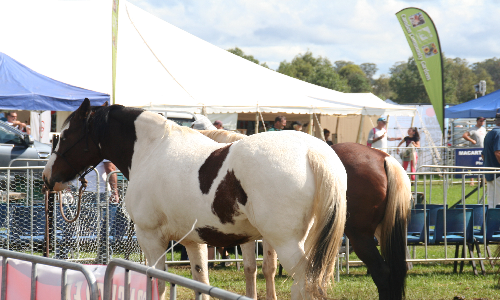
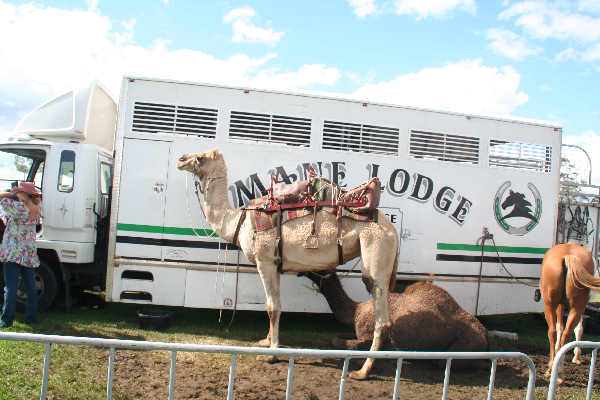
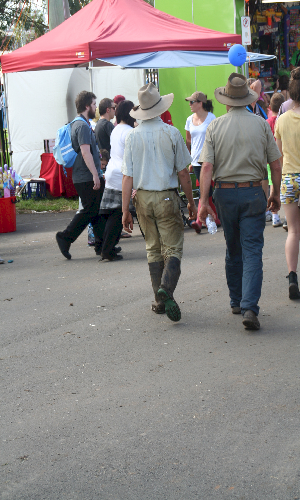
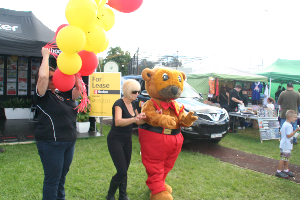
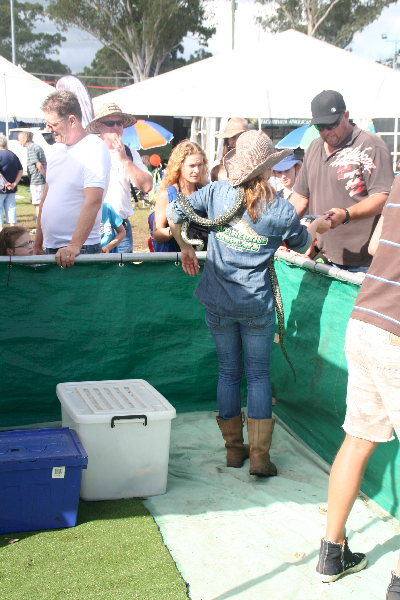
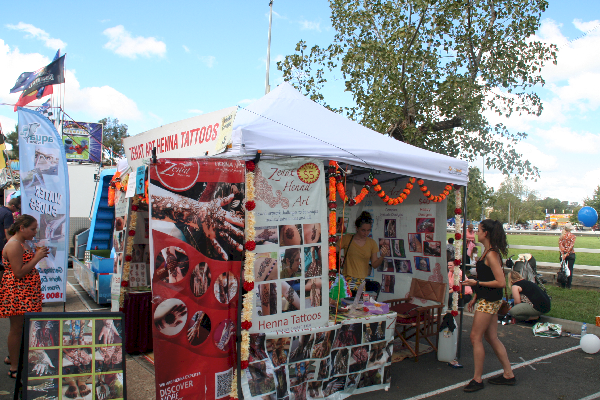
Well the Camden Show. Where do I begin? The Show was held April 4th and 5th, 2014 in Camden, New South Wales, Australia. I probably took close to 300 pictures and with the exception of perhaps a small handful, I’m pretty happy with the rest of them. Choosing which ones to share and sizing them (down) has been quite time consuming. But I had the time.
Thus far during our stay here, it seems we have some activity on one day, followed by a day of rest. This has worked out very nicely for me. I’m not sure what factor or factors may be involved (my age, physical condition, the high humidity, intense sun or all of the above), but walking a lot and the activities have pretty much left me spent the following day. Adjusting to the time zone and/or jet lag may have made their contribution to my tiredness as well? But nothing hurts, I feel great and enjoy the walking just like we did much of it in Japan too. Days have been really pleasant. The temperature rose during our visit to the show, but was cooled off by the weather-predicted rain or actually, the downpour. It was nice, fun and funny. We were all able to duck into a large tent of interesting demonstrations and wait out the rain.
Well anyway, back to pictures. I have chosen 50, yes 50. That may seem like a lot and they are not because I believe they are such great shots that I want to share them with you, but because they reflect the wonderful Camden Show. It is very similar to any county fair you may have ever been to, but still different. So I will just start with pictures and some text and some captions and see how it goes. Perhaps it will end up with more posts about the show? Here we go.
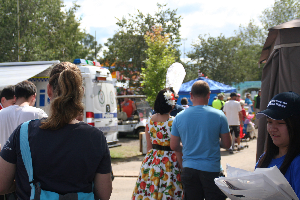
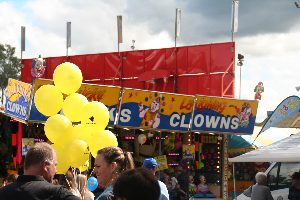
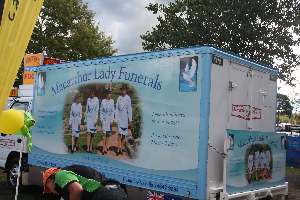
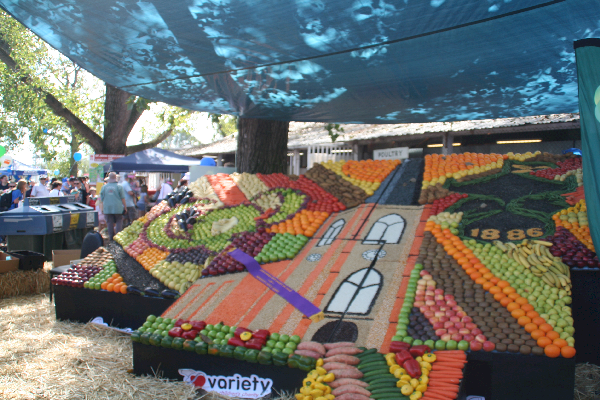
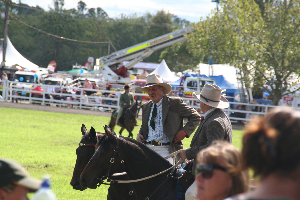
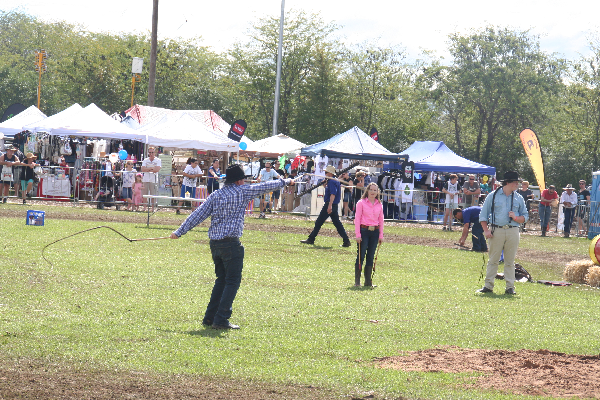
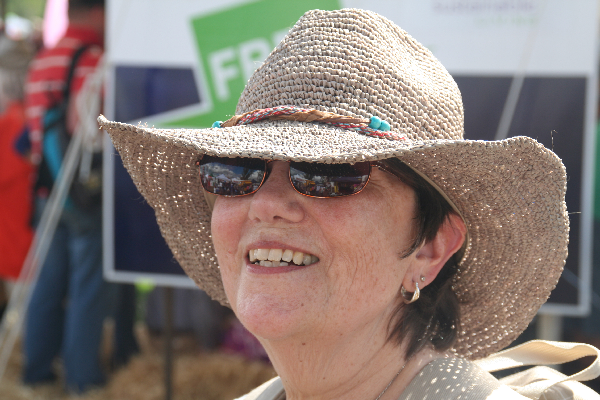
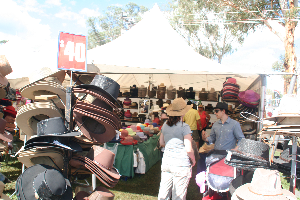
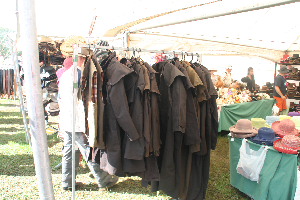
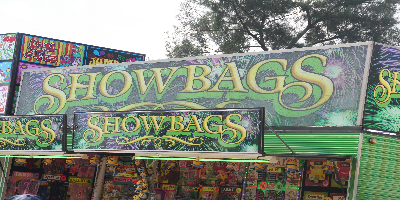
Show bag shops were everywhere. Very decorative and artistic billboards. You find the stuff you want for a certain price and then put it all in a show bag. There were many of these vendor/shop/kiosks. Very popular with the youts (youths). 🙂
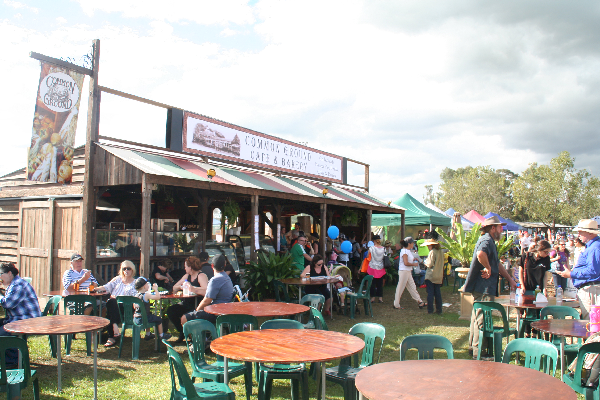
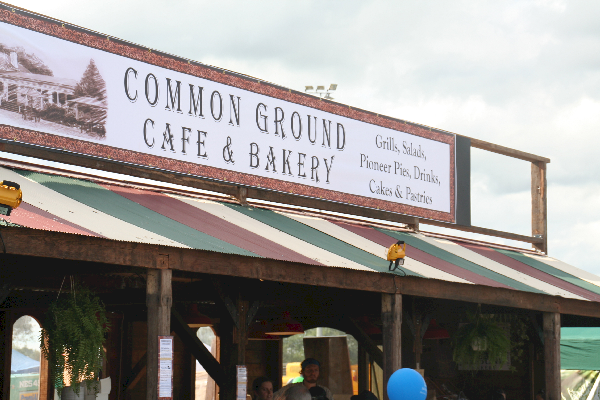
The Common Ground is a totally self-supported and self-sufficient Christian Commune. The support themselves by places like these eateries. We ate in one in Picton Australia where I recorded the Bell Birds. see: Bell Birds here
They make their own clothing and grow their own organic food, some of which they use in their restaurants. Their food is excellent! I believe they have a sister cafe in Ithaca, NY in the United States.
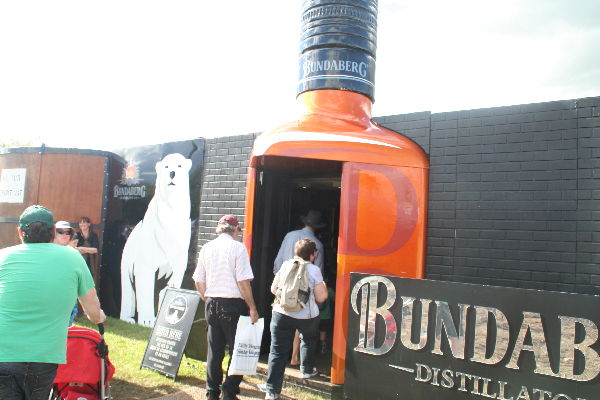
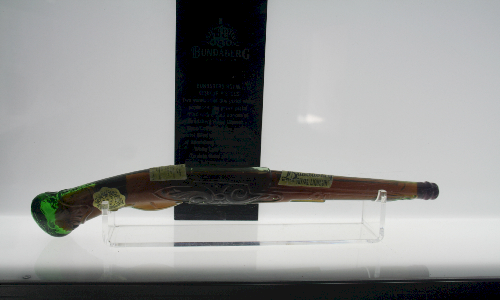
This was an interesting and miniature museum. It was filled with history of the company which is a major producer of rum in Australia. Various shapes of bottles were on display as well as the process involved in how rum is made from raw cane sugar. We even got to taste samples of the molasses. The next picture is of a bottle of rum made to look like one of those pirate movie pistols.
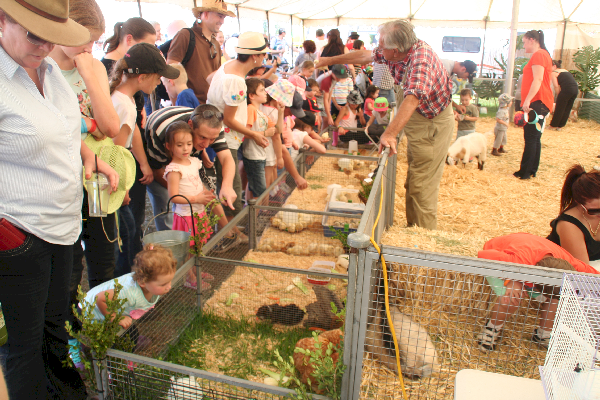
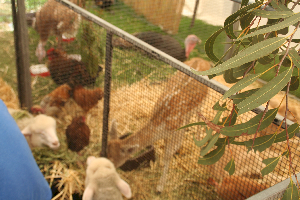
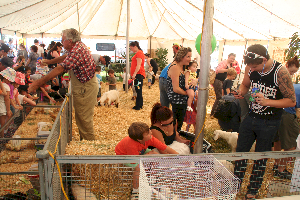
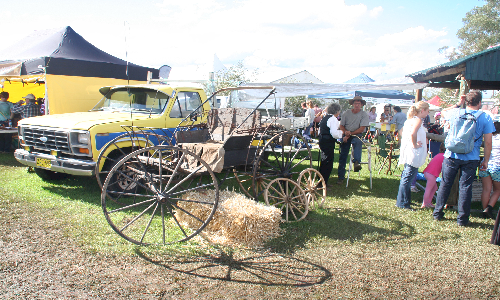
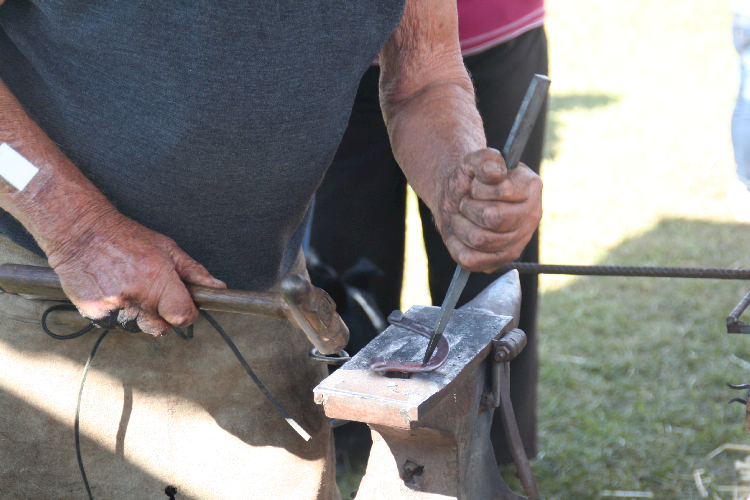
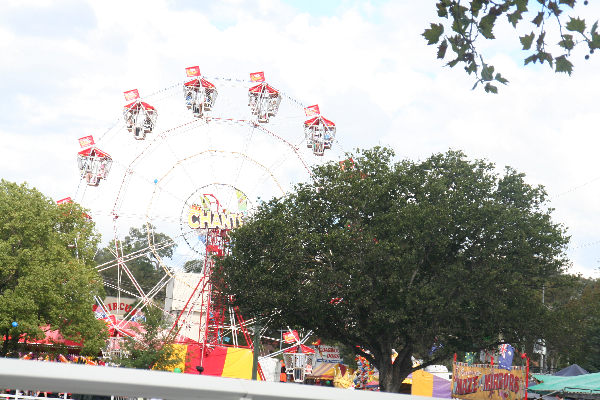

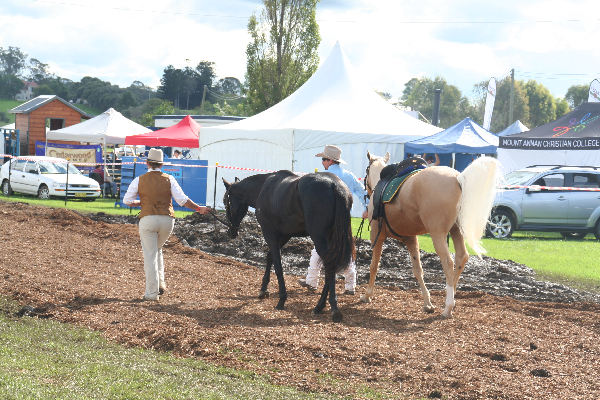
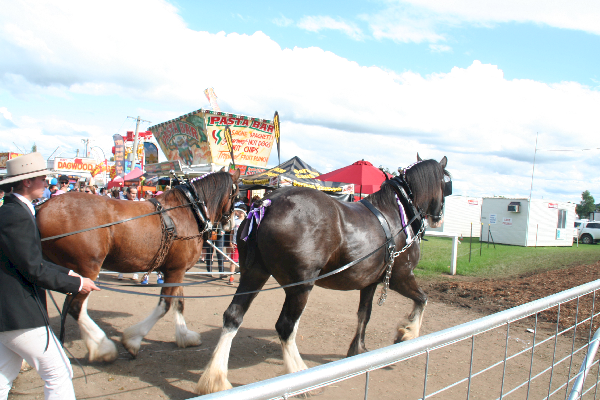
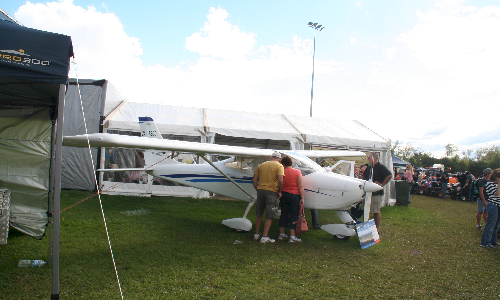
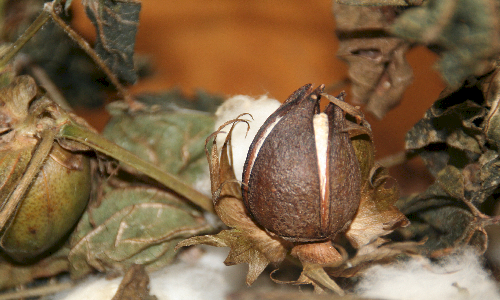
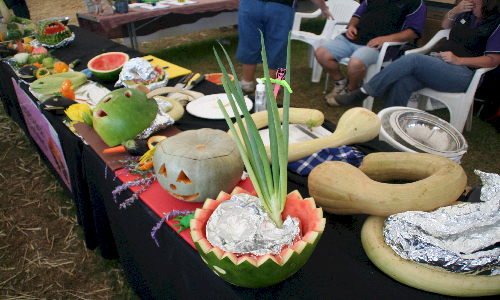
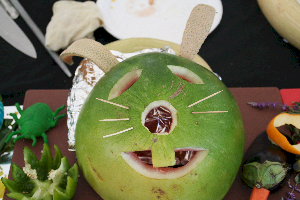
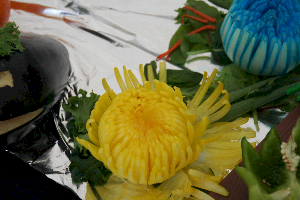
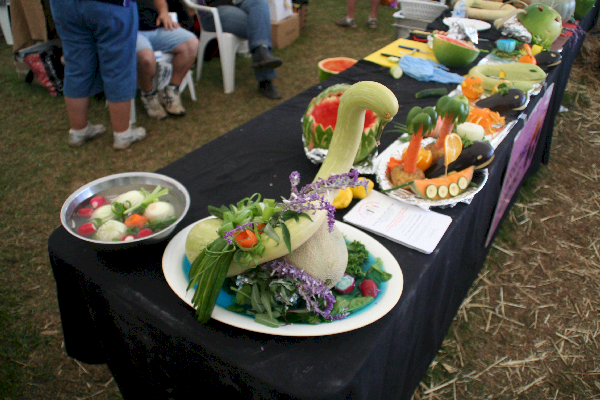
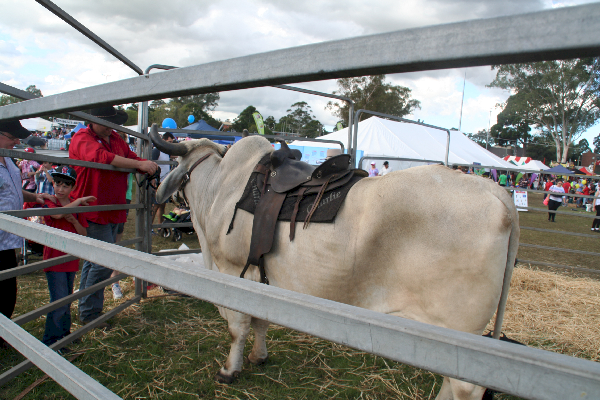
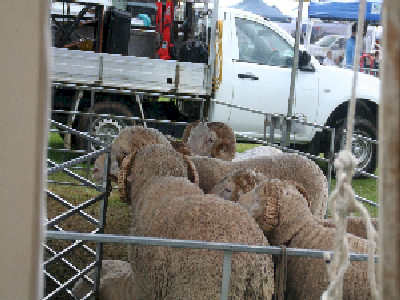
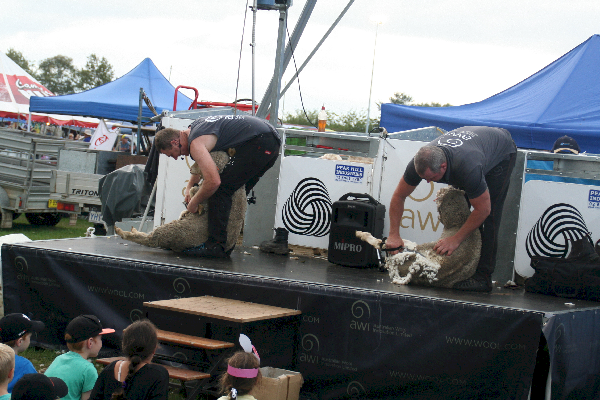
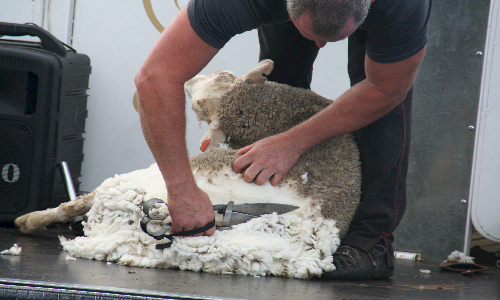
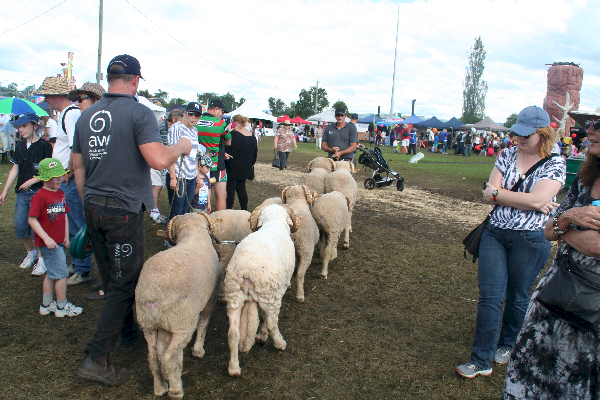
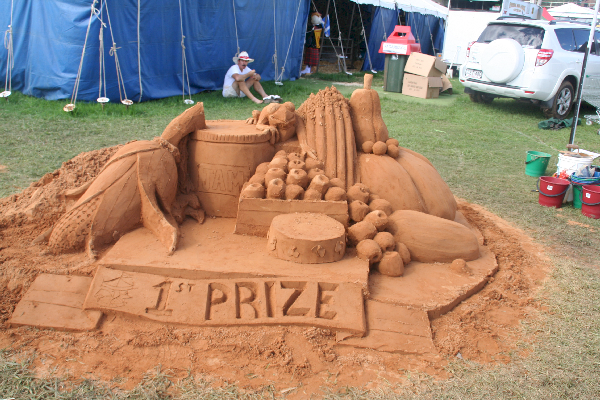
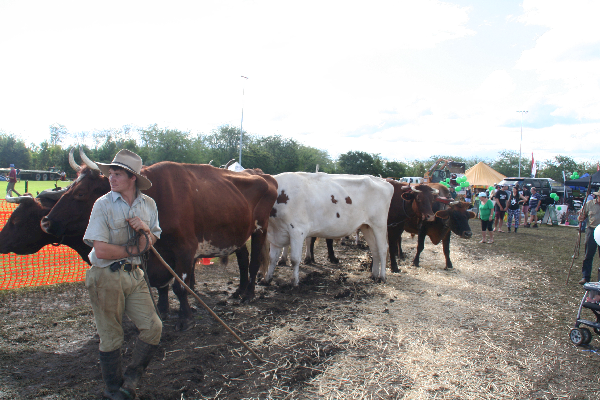
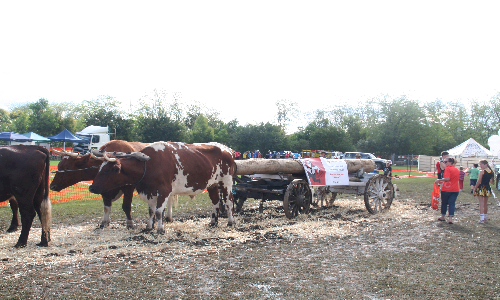
There was something for everyone at the Camden Show! So many different kinds of food, animals, shows, rides, demonstrations and people of all ages having fun. It rained both days and was not perhaps the greatest for the vendors pocketbooks, but it was a wonderful experience. They even put down straw and other materials so people did not have to walk through the mud. That’s was real nice and something I have never seen in the United States at any of the fairs I have ever been to. And the children were all so engaged, curious and their excitement was well contained, controlled and managed. People were all, for the most part, nice, friendly and well behaved. No alcohol was allowed except for the two wineries that gave samples. All in all it was a wonderful time. I was like a young child again. I would have loved every minute of both days, rain and all, but glad for the time I had. It was all eye candy for me. My camera was not unhappy either. 🙂
After we left the tent where we ducked under after the downpour of rain had stopped, we had to take the ardent and difficult task of getting home. WE HAD TO WALK LESS THAN SIX MINUTES TO GET HOME!!! 🙂 Around 9:00 PM, we watched the fireworks from the middle of our street. That was perhaps the closest and best view of fireworks I have ever had. And it was produced by a world class and world renown top pyrotechnical company, F0ti International, based in Australia.
Then two of us walked back to the carnival at night and watched the wild Brunby run. The Running of the Brunby are wild ponies in Australia, similar to the Mustangs of the southwest in the United States. So I will conclude this post with a small Youtube video I made and uploaded.
Final Night of the 2014 Camden Show
by Donnie Hayden
© 2014, all rights reserved
Today, I had intended to share our experience with The Camden Show on Saturday April 5th, 2014, here in Camden NSW Australia. But there are so many pictures I would like to share, I’m still working on it. But, but again, today’s post has pictures from this amazing show. I separated the pictures out for this post because, even though they were taken at the Camden Show, this post should be considered as a whole other subject. The subject is, Damper. Before I explain what damper is, please allow me to set the stage.
In previous posts we looked at such things as the Kookaburra Song which mentions the Swagman. The swagman is a bit of a character in Australian folklore and a very real person or persons, that out of necessity lived very meagerly. Their common mode of transportation was their two feet. Their traveling companion was Matilda, the pack on their back. They traveled around in this manner because, many were poor and moved from place to place seeking better opportunity. If any were well-off-enough to have four-wheeled transportation, it was most likely well-worn and kept together with whatever they could find for parts and that their wit could muster. Their home and kitchen was a campfire. They took shade and some protection from a Coolabah tree, a kind of eucalyptus. Their Billy boil (a metal pot carried on their back for water and to make tea over fire) was essential. Food was often scarce and they needed something easily affordable, simple, easy to make and something filling, to rid themselves of hunger. This common food was called Damper.
Let’s enter the campsite look of a Swagman. And kudos to those that presented this visual and informative and DELICIOUS display at the Camden Show!!! 🙂
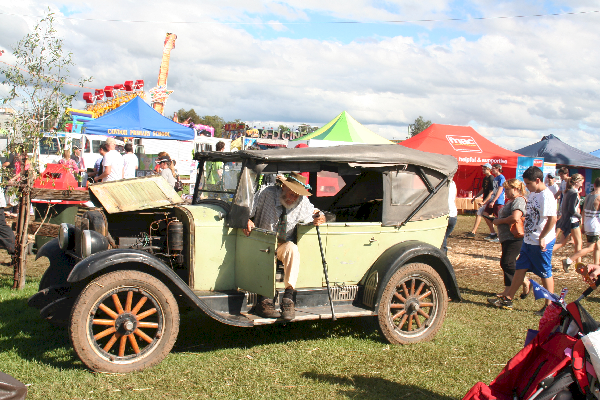
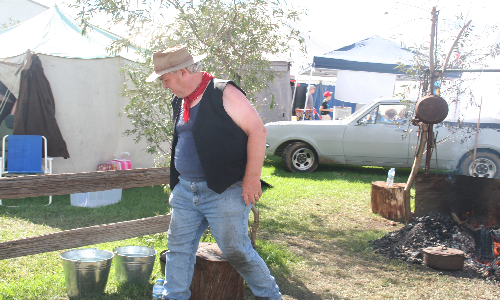
Bill the swagman.
They would look for a nice place to set up camp. Their campfire area would look something like this.
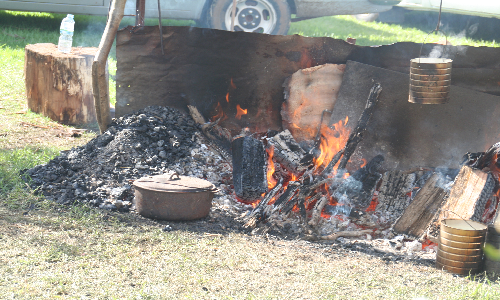
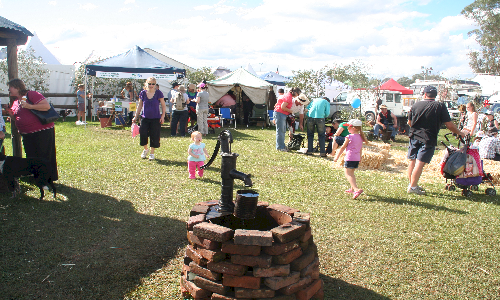
So what is damper? It’s delicious, that’s what it is! 🙂
Damper is a traditional Australian soda bread prepared by swagmen, drovers, stockmen and other travellers. It consists of a wheat flour based bread, traditionally baked in the coals of a campfire. Damper is an iconic Australian dish. It is also made in camping situations in New Zealand, and has been for many decades.
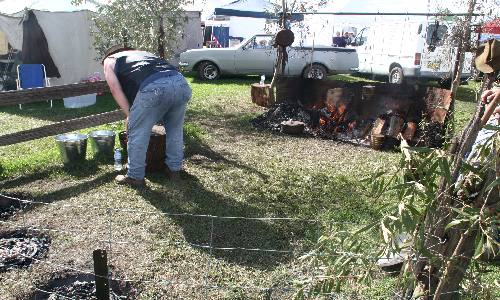
Damper was originally developed by stockmen who traveled in remote areas for weeks or months at a time, with only basic rations of flour, sugar and tea, supplemented by whatever meat was available. The basic ingredients of damper were flour, water, and sometimes milk. Baking soda could be used for leavening. The damper was normally cooked in the ashes of the camp fire. The ashes were flattened and the damper was placed in there for ten minutes to cook.
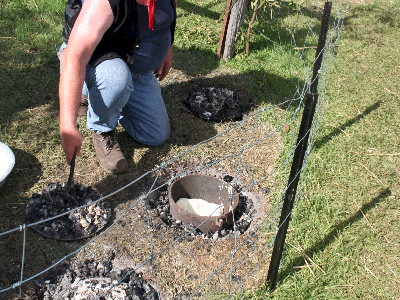
Following this, the damper was covered with ashes and cooked for another 20 to 30 minutes until the damper sounded hollow when tapped.
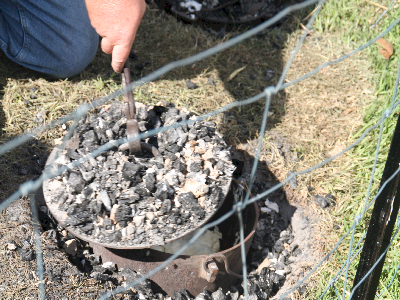
Alternatively, the damper was cooked in a greased camp oven. Damper was eaten with dried or cooked meat or golden syrup, also known as “cocky’s joy”. Cocky’s joy – were small farmers who settled or perched (like a bird) on the portions of his land that was resumed for agriculture. Some believe they were first called this from the area of Cockatoo Island, hence the word “perched.” So the joy of the Cocky’s was to be able to have land to settle and something to sweeten their damper, which was by tradition, golden syrup.
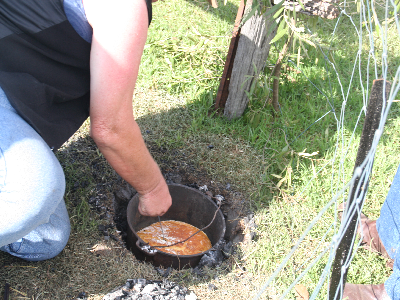
Golden syrup is a pale treacle (un-crystallized syrup made from refining sugar). It is a thick, amber-colored form of inverted sugar syrup, made in the process of refining sugar cane or sugar beet juice into sugar, or by treatment of a sugar solution with acid. It is used in a variety of baking recipes and desserts. It has an appearance similar to honey, and is often used as a substitute by people who do not eat honey. I like to use this instead of Karo syrup (high fructose) when making my pecan pie. I think it is better for us than high fructose corn syrup and I like the added character it brings. It is more expensive than Karo syrup, but worth every extra cent!
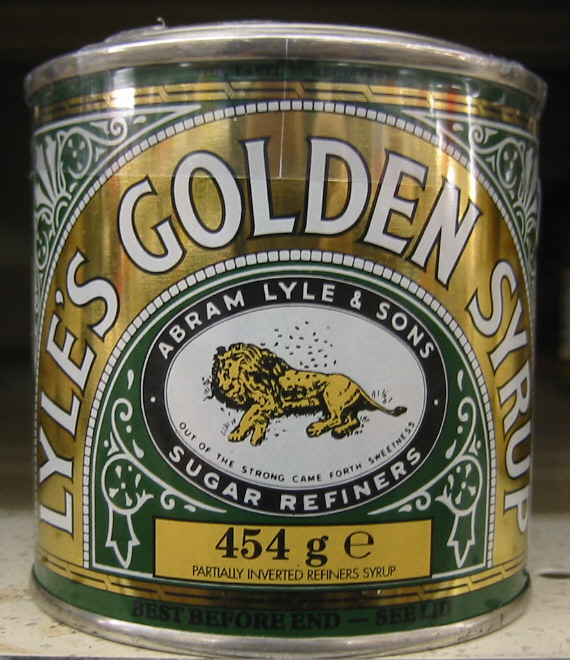
Molasses, or dark treacle, has a richer color than golden syrup, and a stronger, slightly bitter flavor.
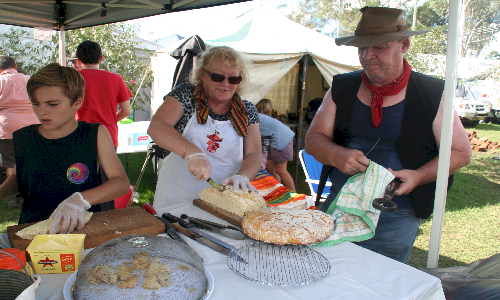
I have been promised an authentic Australian Damper recipe. Can’t wait to get it and make it for YOU, when we get home! 🙂
Take it away Dingo Dennis!
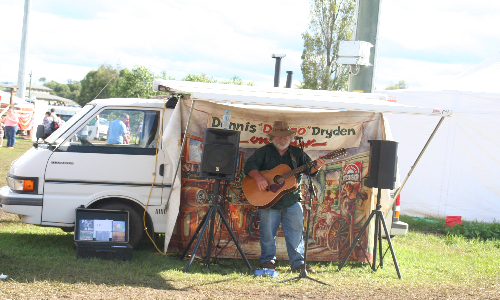
Waltzing Matilda
Australian unofficial National Anthem
Lyrics by
A.B. Paterson
Once a jolly swagman camped by a billabong,
Under the shade of a Coolibah tree,
And he sang as he watched and waited till his billy boil,
You’ll come a Waltzing Matilda with me.
Waltzing Matilda, Waltzing Matilda,
You’ll come a Waltzing Matilda with me,
And he sang as he watched and waited till his billy boil
You’ll come a Waltzing Matilda with me.
………………..
Down came a jumbuck to drink at that billabong
Up jumped the swagman and grabbed him with glee,
And he sang as he shoved that jumbuck in his tucker bag
You’ll come a Waltzing Matilda with me.
Waltzing Matilda, Waltzing Matilda,
You’ll come a Waltzing Matilda with me,
And he sang as he shoved that jumbuck in his tucker bag
You’ll come a Waltzing Matilda with me.
…………………
Up rode the squatter mounted on his thorough-bred
Down came the troopers One Two Three
Whose that jolly jumbuck you’ve got in your tucker bag
You’ll come a Waltzing Matilda with me.
Waltzing Matilda Waltzing Matilda
You’ll come a Waltzing Matilda with me
Whose that jolly jumbuck you’ve got in your tucker-bag
You’ll come a Waltzing Matilda with me.
………………….
Up jumped the swagman sprang in to the billabong
You’ll never catch me alive said he,
And his ghost may be heard as you pass by that billabong
You’ll come a Waltzing Matilda with me.
Waltzing Matilda Waltzing Matilda
You’ll come a Waltzing Matilda with me
And his ghost may be heard as you pass by that billabong
You’ll come a Waltzing Matilda with me.
For more about Waltzing Matilda here, see also: http://wp.me/p4jGvr-k9
by Donnie Hayden
© 2014, all rights reserved
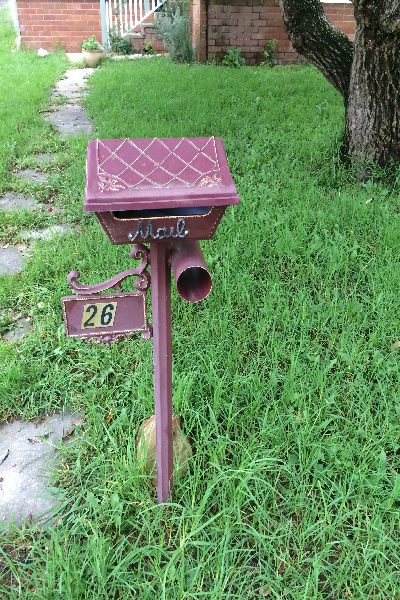
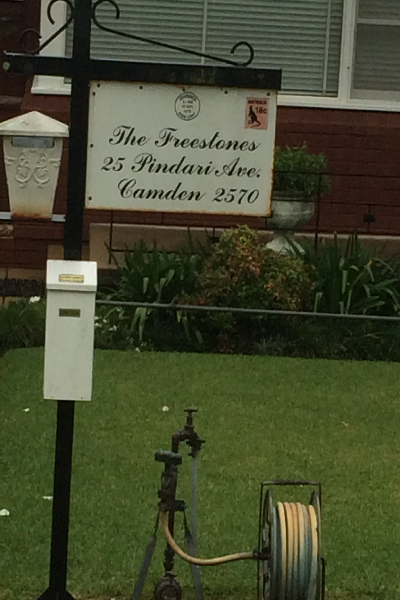
Like many mailboxes the world over, many here are unique and suggest some of the personality of those they belong to.
I love the post card mailbox shown in the picture! 🙂
But since our short time here in Australia, at least here in Camden NSW Australia, I noticed the mailboxes are quite low to the ground. Having the type of perspiring mind, I mean inquiring mind that I do, 🙂 I wanted to know why?
I asked several people including our hosts for a reason. They did not know the answer. Along with my question about the mailboxes, I wanted to know how the mail is distributed here and if our hosts had ever seen their mail delivered. In the two years or so since Johnathan and Caitlin have lived here, neither had ever seen their mail delivered. It was just a matter of never being here or noticing when it was dropped off.
This is a really laid-back area. They are not so focused on the mail delivery as say, we in the United States might be. I know when our mail is delivered and sometimes, I wait for it and from time to time, even say “hello” and/or “thank you” to our mail person.
By the way, I’m sorry to use the politically correct crap word “person” which does not distinguish whether or not the deliverer is male or female. OK, I get the “equality thing,” but I’m glad I am am a man and that my wife is a woman and she’s pretty OK with it too. And our mail “person” is a woman. I call her our mail lady and she likes it.
In the pictures shown thus far, the mailboxes are approximately two and half to three feet off the ground. That’s a little low for the postal delivery vehicles in the United States that distribute mail is rural areas like where we live in the country. In this area of Australia, I have not seen any mailboxes attached to the homes. Each are about 5-10 feet from the curb of the street.
Well, as it happened and just the other day, I was outside when it was mail time. My mystery has been solved! 🙂
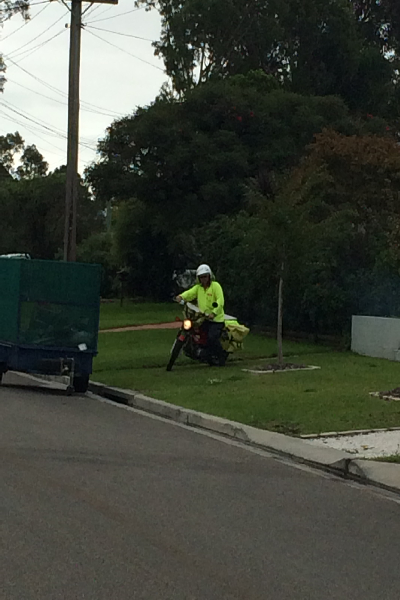
The scooter the driver is on, actually looks like something a child would drive as it is, pretty small. I’m sure it is great on gas here and/or natural gas. Natural gas is big here and many of the public transportation buses we saw in Sydney have signs above them that read: Powered By Natural Gas.
Most likely the other reason this vehicle is small is because, the driver actually drives up on the lawn, pulls the mail from the two side bags on the scooter and then drives to the next address. No tracks or treadmarks were left in anyone’s lawn that I could see. And the driver wearing rain gear because of it having rained this day. The ground was soft. So this scooter with mail and rider did not appear heavy enough to even leave a dent in anyone’s yard.
I am not sure how newspapers or magazines are delivered here. See round tube in picture #1 above.
Also, I’m not sure what happens if there are large packages as the mailboxes are quite small. I do think the driver in the picture actually delivered to the house, perhaps a larger package then what would fit in the box. I was down the street when I snapped the picture. The driver shutoff the scotter and was just getting back on when I took it.
Anyway, mail delivery in Australia seems quite efficient, the scootter was pretty quiet and overall, I think it’s pretty awesome!

